

Illustrative child and parent discussing a silver-crowned tooth teaching model
Children’s Dentistry

Pediatric Stainless Steel Crowns in Georgetown

Your child is nervous, and the word “crown” has not helped. For parents in Georgetown, here is a calm guide to stainless steel crowns for baby molars: why they are used, how the visit can be paced and how to prepare a worried child.

Georgetown · preparing a worried child

Small steps for a big-sounding word

To an adult, “crown” is just dental shorthand. To a five-year-old who already dislikes the chair, it can sound enormous. Before you explain it to them, it helps to understand it clearly yourself.

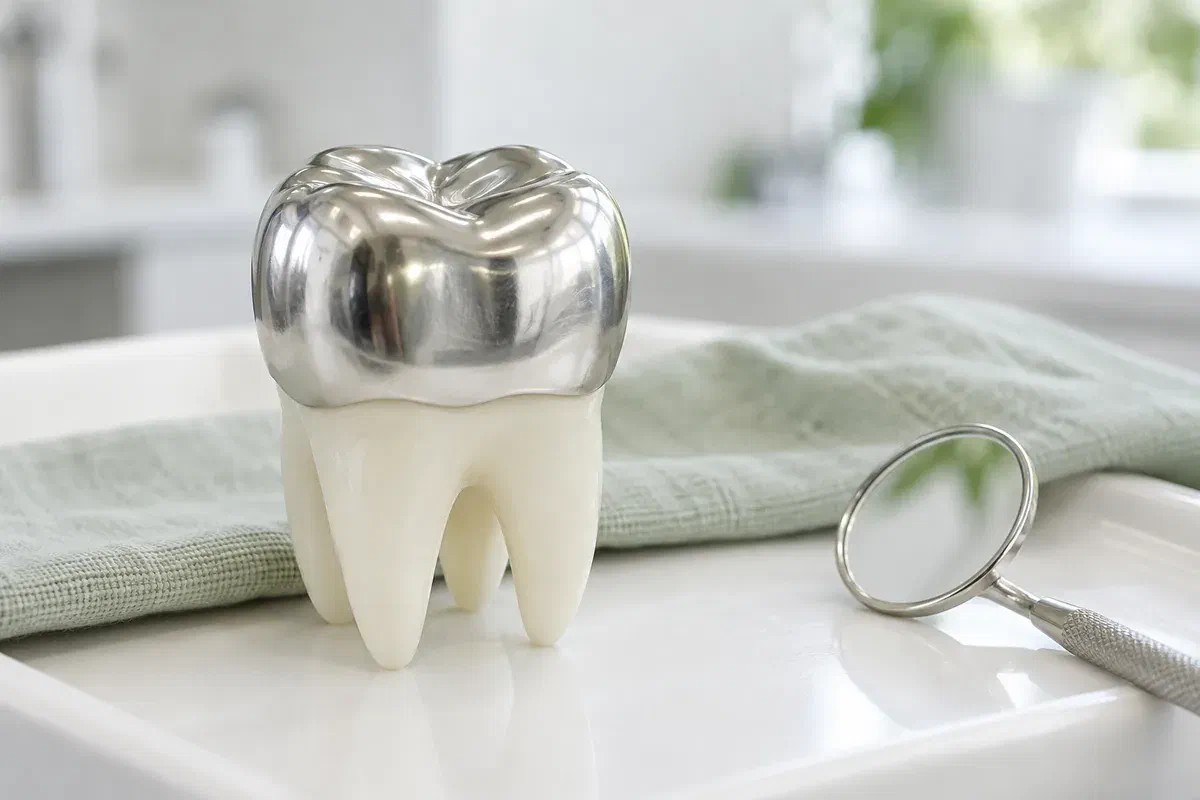
A stainless steel crown for a child is a ready-made silver cap. The dentist chooses one that suits the tooth and fixes it over everything showing above the gum on a back baby tooth, so it is fully covered. It tends to be suggested when a primary molar is too broken down for a filling to stay reliably, or once the nerve inside has been treated.

For a nervous child, how the visit is run matters as much as the crown. Tell the dentist what worries your child, what helps them settle and how they let you know they have had enough. Then ask about the reasons for the crown, other options and follow-up. Your child can ask questions too, and simple, honest answers usually help most.

Talk about pacing a crown visit
Illustrative molar teaching model with a smooth stainless steel crown
Behind the recommendation

What the dentist is weighing

Repair options change with the extent of decay, the surfaces affected and the condition of the nerve. Share symptoms, past treatment and how earlier visits went for your child.

A tooth damaged across several sides

When decay spreads over multiple surfaces, a filling may have too little sound tooth to grip. Tell the dentist about previous repairs that failed. They can explain whether covering the whole tooth is the better match for what is left.

Nerve treatment that needs a final step

Pulpotomy or pulpectomy deals with the inside of a baby tooth, and the outer restoration is a separate stage. Ask if a crown is planned to complete it. Once a tooth stops aching it is easy to postpone, but the last step still matters.

Anxiety, sensory needs and allergies

Describe what makes visits hard for your child, such as sounds, tastes, lying back or unfamiliar people. Mention any nickel or metal allergy and past reactions, and whether a silver tooth bothers them. These details shape the approach as well as the material.

Pain, swelling or a bump on the gum can mean the tooth needs more than a crown. Bring this up when booking so the first visit is planned with it in mind.

Why it can be worth it

One sturdy restoration can mean fewer repeat repairs.

Think of the cap as a sleeve over the top and sides of a molar, so a tooth weak in several places is supported all at once. For some baby teeth with heavy decay, thin walls or recent pulp therapy, that can be preferable to a large filling that may need redoing. It all depends on the diagnosis.

The goal is a restoration that lasts until the baby tooth comes out on its own. Cement can fail and metal can thin with use, and decay or infection can still affect the tooth inside. Daily cleaning and regular reviews carry on, and for an anxious child, short, positive checkups can help build confidence.

Patient information: AAPD — restorative dentistry for children

Steadier support for a fragile tooth

Ask the dentist to show which areas are weakened and why that rules out a simple filling. Extending a big filling over thin walls is not always the wiser route. The choice should reflect the tooth’s build and how much chewing it does.

Keeping the baby tooth in service

Baby molars act as placeholders for the adult teeth developing below them, and they do real chewing work for years. How long this one still has to go is part of the decision. Ask whether the permanent tooth underneath changes the recommendation.

Fitting the crown into the bigger plan

If other teeth need care, ask how treatment will be sequenced and whether shorter visits suit your child better. Prevention advice belongs in the plan as well; one finished crown is not the end of looking after your child’s teeth.

Pacing the appointment

What happens, and where your child can say stop

Preformed metal crowns can be placed using different methods. The dentist should explain which one is planned and how it suits both the tooth and your child’s comfort.

  1. Meet, examine and explain

    The dentist listens to your concerns, checks the tooth and arranges X-rays only when clinically called for. Together you work out if the nerve needs care first and if the molar is worth restoring. Raise other options, appearance, allergies and support or referral for anxiety.

  2. Choose a method that fits

    A conventional crown usually involves freezing, clearing decay and shaping the tooth. Some baby molars can instead be crowned using the Hall technique, which skips that preparation. It only works for teeth meeting specific criteria, so it cannot be promised in advance.

  3. Fit the crown at your child’s pace

    A preformed crown is tried for size and then fixed with dental cement. The details depend on the method. Agree beforehand on a signal your child can use to pause, and ask the team to tell them what each sensation is before it happens.

  4. Finish with a bite check and praise

    Ask what your child may notice when chewing and what would mean a call. Confirm numbness precautions and the next appointment. End on something your child did well; it can make the next visit easier.

The rest of the day

Comfort first, routines soon after

Aftercare advice differs with the method and with whether freezing was used. A quiet afternoon can help a nervous child settle. If another adult will care for them, pass on the instructions.

Soft food and a watchful eye

Go by the clinician’s advice about meals. Until the freezing has worn off, gently remind your child not to bite or suck on their lip or cheek. Ask which pain relief is suitable, and report pain that is severe or getting worse.

Brushing without a battle

The crown edge and nearby teeth still need daily cleaning. Keep brushing short and calm, with as much adult help as your child still needs, and floss the way you were shown. Tell us if one area keeps trapping food or your child resists brushing there.

Things worth a phone call

Ring the clinic if your child says the crown is wobbly, if it pops off, or if the metal seems to have a hole in it. Store a crown that falls out in a closed container and call; do not attempt to refit it or leave it loose in the mouth. Keep up regular reviews, even short ones.

Patient information: Guy’s and St Thomas’ — stainless steel crowns for children

Other routes to consider

The tooth decides what is possible; your child helps decide how.

For each suitable option, compare what preparation involves, how it looks, what follow-up it needs and its limits. A nervous child’s needs are part of that comparison.

When covering the tooth is clinically sound

Stainless steel crown

Suggested for some damaged primary molars, including ones treated at the nerve. You should be told how it would be placed and whether there are material concerns. It stays fixed on the tooth rather than coming off at mealtimes.

When a different repair suits the tooth

A filling or another crown type

A smaller cavity may be fine with a direct filling, and another crown material may be possible in some cases. Appearance, remaining structure, what placement involves and how your child copes all count. Ask which alternatives genuinely apply.

When a crown would not solve the cause

Treating the nerve or removing the tooth

An inflamed or infected nerve may need treating before anything goes on top, and a molar beyond repair may be better taken out. Ask how the findings shape the choices. Should removal be advised, keeping room for the adult tooth is a separate conversation.

For parents of anxious children

Questions about nerves, comfort and the crown itself

Worried children and their parents tend to ask similar things. Here are answers to start the conversation.

(905) 876-4488
How should I explain a crown to my child without scaring them?
Keep it simple: the tooth is getting a strong silver hat so it can keep working. Avoid words like hurt or needle unless your child asks. Let the dentist explain the details in a way suited to their age.
Can my child visit first just to meet the team?
Ask when booking. A short introductory visit or a look at the room beforehand can help some children feel more prepared.
What if my child gets too upset to finish the appointment?
The team can pause, and sometimes it is better to stop and plan a different approach. Ask in advance what would happen and what other options, including referral, may be available.
Is the Hall technique gentler for anxious children?
It avoids freezing and drilling for suitable teeth, which some children find easier. It is only appropriate when the tooth meets specific criteria, so ask whether your child’s molar qualifies.
Will the crown feel strange in my child’s mouth?
It may feel different at first, especially when biting, depending on the method. Ask what is expected. Call if your child has trouble eating, significant pain or a feeling that does not settle as described.
Can a parent stay in the room during the crown visit?
Ask the clinic about this when you book. Many children feel calmer with a familiar adult nearby, and the team can explain how best to support your child during treatment.
Children’s crowns for Georgetown households

Plan a visit that feels manageable.

From Georgetown, reach out to our Bronte Street practice about a crown your child has been advised to have, or a back baby tooth that is causing concern. We can talk through the findings, the options and how to make the appointment as comfortable as possible.

The method and material are chosen after assessment. Mention pain, swelling, allergies or your child’s anxiety when you call.

Visit Milton Dental Clinic
Unit 1, 342 Bronte St. S, Milton, ON L9T 5B7
Get directions Clinic hours
Monday–Thursday
11am–7pm
Friday–Sunday
By appointment only

Areas we serve

  • Milton
  • Oakville
  • Mississauga
  • Georgetown
  • Halton Hills
  • Acton
  • Campbellville
  • Brampton
  • Burlington
  • Puslinch
  • Rockwood
  • Erin
  • Caledon
  • Etobicoke
  • Old Milton
  • Bronte Meadows
  • Timberlea
  • Dorset Park
  • Dempsey
  • Clarke
  • Beaty
  • Coates
  • Harrison
  • Scott
  • Willmott
  • Ford
  • Bowes
  • Cobden
  • Walker
  • Mountain View
  • Milton Heights
  • Hawthorne Village
  • Valley View
  • Fallingbrook
  • Nassagaweya
  • Trafalgar
  • Esquesing
  • Nelson
  • Brookville
  • Moffat
  • Glen Williams
  • Norval
  • Limehouse
  • Stewarttown
  • Ashgrove
  • Hornby
  • Silver Creek
  • Speyside
  • Scotch Block
  • North Oakville
  • River Oaks
  • Glen Abbey
  • West Oak Trails
  • Palermo
  • Bronte Creek
  • College Park
  • Joshua Creek
  • Uptown Core
  • Preserve
  • Iroquois Ridge
  • Lisgar
  • Meadowvale
  • Meadowvale Village
  • Churchill Meadows
  • Erin Mills
  • Central Erin Mills
  • Streetsville
  • East Credit
  • Creditview
  • Heartland
  • Sheridan
  • Mount Pleasant
  • Credit Valley
  • Huttonville
  • Churchville
  • Springbrook
  • Northwest Brampton
  • Bram West
  • Fletcher's Meadow
  • Fletcher's Creek South
  • Alton Village
  • Orchard
  • Millcroft
  • Headon Forest
  • Tansley
  • Brant Hills
  • Tyandaga
  • Kilbride
  • Lowville
  • Aberfoyle
  • Morriston
  • Arkell
  • Hillsburgh
  • Freelton
  • Carlisle
  • Waterdown
  • Flamborough
  • Mountsberg

How can we help?

Milton Dental Clinic

Have a question about your smile? Choose the option that works best for you.

For urgent dental concerns, please call.
Messages are reviewed during clinic hours.