

Illustrative child and parent discussing a silver-crowned tooth teaching model
Children’s Dentistry

Pediatric Stainless Steel Crowns in Mississauga

Freezing and drilling, or a crown pressed on with no needle? Parents coming from Mississauga often hear about both. Here is how the dentist decides between conventional placement and the Hall technique for a child’s baby molar.

Mississauga families asking about technique

Will my child need a needle for this?

Maybe. It depends on how the crown is placed, and that depends on the tooth. Children often fixate on the needle, so it helps to understand both methods before the appointment and to know why one is being offered.

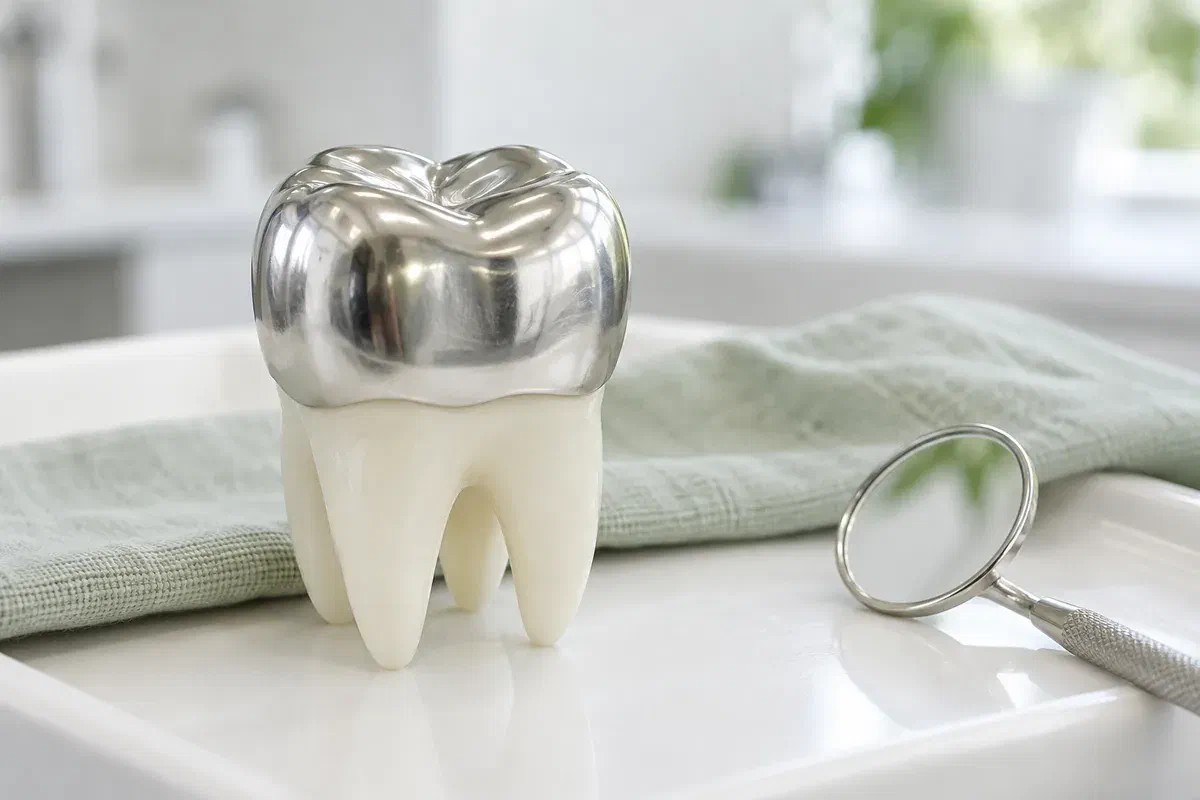
First, the crown: a stainless steel crown is a preformed metal cap, picked in a fitting size and seated over the visible portion of a back baby tooth. It covers the top and sides completely and is silver in colour. It is considered for primary molars with damage too extensive for a reliable filling, and for teeth that have had nerve treatment.

Then, the method. Conventional placement usually involves numbing, removing decay and shaping the tooth before the crown goes on. The Hall technique, used only for carefully selected molars, seats the crown with no drilling. Ask the dentist which one they suggest, why, and what your child will actually feel. An honest description at home, without promises either way, usually works better than a last-minute surprise in the chair.

Ask which placement method suits your child
Illustrative molar teaching model with a smooth stainless steel crown
What leads to a crown recommendation

Damage that goes deeper than it first appears

The suitable repair shifts with the extent of decay, how many surfaces are affected and the condition of the nerve. Mention symptoms and past treatment so nothing is missed.

Multi-surface decay or repeat repairs

When decay reaches several sides of a molar, a filling may have little sound tooth to bond to. Mention any repair that has failed or been redone. The dentist can tell you whether covering the tooth suits it better than a larger filling.

A tooth after pulp therapy

Pulpotomy and pulpectomy manage the inner tissue of a baby tooth. The restoration that protects the outside is a separate step. Ask whether the plan includes a crown, even once your child stops mentioning the tooth.

Allergies, anxiety and appearance

Tell the clinician about any metal allergy, nickel included, and earlier reactions. Mention needle fear, sensory sensitivities or communication needs, and how your child feels about a silver tooth. All of this can influence the method and material chosen.

If there is swelling, a gum boil or ongoing pain, the tooth may need more than a crown. Describe these signs when booking so the visit is planned around them.

Benefits of a well-chosen crown

Complete coverage, whichever method places it

Both techniques end in the same place: a metal cap enclosing the chewing surface and sides of the molar. That full coverage is the reason a crown is considered for baby teeth with heavy decay, weak walls or recent pulp treatment. The decision follows the diagnosis.

The intent is for the crown to serve until the baby tooth naturally comes out. It can still loosen or wear, and the tooth underneath can still develop trouble. Neither method changes that, so cleaning, prevention and regular reviews continue afterward, just as they would for any other tooth.

Patient information: AAPD — restorative dentistry for children

Support across several weakened surfaces

Ask the dentist to explain how the damage pattern led to this suggestion. Extending a very large filling into thin enamel walls is not always ideal. The advice should come from the tooth’s structure and the chewing it handles.

Space kept for the adult tooth

A restored baby molar can keep its place while the permanent tooth forms below it. When this tooth is expected to be lost matters. Ask whether the developing adult tooth affects the choice of treatment or method.

One item on a fuller plan

If several teeth need attention, ask how the crown fits with the rest and how many visits are involved. You should also receive prevention advice so care reaches the whole mouth, not only the molar with the most damage.

Two routes to one crown

How the dentist chooses and carries out the method

The steps vary with the technique. The dentist should explain which one is proposed for your child’s tooth and what makes it the right fit.

  1. Assess and agree on the approach

    Symptoms are discussed, the tooth is examined and images are taken where clinically warranted. The dentist considers whether the nerve is involved and whether the tooth meets the criteria for a particular method. Ask about alternatives, appearance, allergies and comfort options.

  2. Conventional preparation or Hall placement

    With the conventional route, local anaesthetic is typically used, decay is managed and the tooth is shaped. With the Hall technique, the crown is seated over a suitable tooth without that preparation. The second option is not right for every decayed or painful molar.

  3. Fit the crown and cement it

    The clinician selects a preformed crown, checks the fit and fixes it with dental cement. With the Hall approach, your child may help press it into place by biting. Agree on a signal for breaks, and the team can explain pressure as it happens.

  4. Check the bite and go over aftercare

    Ask what your child may feel when closing their teeth, which differs by method, and what should prompt a call. Confirm numbness precautions if anaesthetic was used, and the next review. Know how any remaining treatment will be scheduled.

Looking after the crown

Same routine, a little more attention

Aftercare depends on the technique and on whether anaesthetic was used. If your child is going to another caregiver afterward, ask for advice you can hand over.

Mind numb areas at the first meal

Follow the guidance on when and what to eat. If freezing was used, make sure your child does not bite their lip, cheek or tongue while it wears off. Ask about suitable pain relief; significant or worsening pain should be reported.

Brush the crown and the gum margin

The gum line around the crown and the teeth on each side still need cleaning every day. Keep supporting your child’s brushing as their age requires and clean between teeth as instructed. Mention any spot that keeps catching food.

Call about a loose or worn crown

Contact the clinic if the crown shifts, falls out or appears worn through. Keep it in a closed container if it comes off; do not glue it back or leave it in your child’s mouth. Routine reviews still matter when everything seems fine.

Patient information: Guy’s and St Thomas’ — stainless steel crowns for children

Restoration choices to compare

Start from the tooth’s condition, then talk method.

For each suitable option, ask about preparation, appearance, follow-up and limitations. Not every tooth can have both a white repair and a minimal one.

When full coverage is appropriate

Stainless steel crown

Recommended for some damaged primary molars or after pulp treatment. The dentist should explain whether conventional or Hall placement is planned, along with any material concerns. It is fixed in place, not a cover that comes off at mealtimes.

When a different restoration suits

A filling or another crown material

A smaller defect may suit a direct filling, and other crown materials may be considered in selected cases. Appearance, remaining tooth, what placement requires and your child’s needs all matter. Ask which alternatives are realistic here.

When coverage alone cannot help

Inner treatment or extraction

An affected nerve may need treatment before any restoration, and a tooth that cannot be restored may need removal. Ask how the diagnosis changes the options and whether spacing for the adult tooth should be assessed separately.

Technique questions

What parents ask about the two methods

Most questions are about needles, drilling and what the appointment will feel like. The dentist can explain the method chosen for your child.

(905) 876-4488
What makes a tooth suitable for the Hall technique?
The dentist looks at the extent of decay, signs of nerve involvement, symptoms and your child’s ability to cope with the visit. Teeth that do not meet the criteria are usually crowned another way. Ask which findings guided the choice.
Does the Hall technique mean no drilling at all?
For suitable teeth, the crown is seated without removing decay or shaping the tooth. Sometimes small spacers are placed between teeth beforehand to make room. Ask what your child’s visit will involve.
Is a crown placed without drilling as reliable as a conventional one?
For selected teeth, the Hall technique is an established approach. What matters is whether your child’s tooth meets the criteria. Ask the dentist to explain the reasons for the method they recommend.
Will my child’s bite feel odd after a Hall crown?
It can feel high at first, because the crown sits over a tooth that was not shaped. The dentist can tell you what to expect and how long it may take to settle. Call if eating is hard or pain is significant, and avoid encouraging your child to clench or grind to make it feel normal.
Can my child pull the crown off if it bothers them?
It is cemented and should stay put. Ask your child not to pick at it. If it does come loose or off, keep it safe, away from their mouth, and contact the clinic.
Can the crown appointment be arranged around a trip from Mississauga?
Ask about appointment times when booking, especially if other teeth or a sibling also need care. Many people coming from western neighbourhoods such as Meadowvale or Churchill Meadows plan around school hours. Allow time for any numbness to wear off before your child eats.
From Mississauga to our clinic

Talk through the method before the day.

Contact our Bronte Street practice to discuss a crown recommendation or a damaged baby molar. We will explain what we find, which placement method suits the tooth and how this care fits your child’s wider plan.

The technique and material depend on assessment. Let us know about pain, swelling or metal allergies when you call.

Visit Milton Dental Clinic
Unit 1, 342 Bronte St. S, Milton, ON L9T 5B7
Get directions Clinic hours
Monday–Thursday
11am–7pm
Friday–Sunday
By appointment only

Areas we serve

  • Milton
  • Oakville
  • Mississauga
  • Georgetown
  • Halton Hills
  • Acton
  • Campbellville
  • Brampton
  • Burlington
  • Puslinch
  • Rockwood
  • Erin
  • Caledon
  • Etobicoke
  • Old Milton
  • Bronte Meadows
  • Timberlea
  • Dorset Park
  • Dempsey
  • Clarke
  • Beaty
  • Coates
  • Harrison
  • Scott
  • Willmott
  • Ford
  • Bowes
  • Cobden
  • Walker
  • Mountain View
  • Milton Heights
  • Hawthorne Village
  • Valley View
  • Fallingbrook
  • Nassagaweya
  • Trafalgar
  • Esquesing
  • Nelson
  • Brookville
  • Moffat
  • Glen Williams
  • Norval
  • Limehouse
  • Stewarttown
  • Ashgrove
  • Hornby
  • Silver Creek
  • Speyside
  • Scotch Block
  • North Oakville
  • River Oaks
  • Glen Abbey
  • West Oak Trails
  • Palermo
  • Bronte Creek
  • College Park
  • Joshua Creek
  • Uptown Core
  • Preserve
  • Iroquois Ridge
  • Lisgar
  • Meadowvale
  • Meadowvale Village
  • Churchill Meadows
  • Erin Mills
  • Central Erin Mills
  • Streetsville
  • East Credit
  • Creditview
  • Heartland
  • Sheridan
  • Mount Pleasant
  • Credit Valley
  • Huttonville
  • Churchville
  • Springbrook
  • Northwest Brampton
  • Bram West
  • Fletcher's Meadow
  • Fletcher's Creek South
  • Alton Village
  • Orchard
  • Millcroft
  • Headon Forest
  • Tansley
  • Brant Hills
  • Tyandaga
  • Kilbride
  • Lowville
  • Aberfoyle
  • Morriston
  • Arkell
  • Hillsburgh
  • Freelton
  • Carlisle
  • Waterdown
  • Flamborough
  • Mountsberg

How can we help?

Milton Dental Clinic

Have a question about your smile? Choose the option that works best for you.

For urgent dental concerns, please call.
Messages are reviewed during clinic hours.