

Illustrative child and parent discussing a silver-crowned tooth teaching model
Children’s Dentistry

Pediatric Stainless Steel Crowns in Oakville

“Will everyone see it?” is a common first reaction to a silver crown. For Oakville parents weighing a stainless steel crown on a baby molar, here is how the look, the purpose and the placement fit together.

For children coming from Oakville

Silver on the outside, support underneath

Kids notice colour first. Tell a seven-year-old that a back tooth needs a stainless steel crown and the next question is often whether friends will spot it. That worry deserves a real answer, along with the reason the crown is being suggested at all.

A pediatric stainless steel crown is a preformed metal cap. The dentist selects one of the right size and fits it over the visible part of a primary molar, so the whole top and sides are covered. It is used when a baby back tooth has more damage than a filling can reliably support, or once treatment inside the tooth is complete.

Because these crowns sit on back teeth, they are often less visible than children fear. Still, appearance is a fair concern. Ask the dentist what they found, which options truly fit this molar and how it will be checked afterward. Your child can ask too, and should get answers in words they understand.

Ask how a crown would look and why
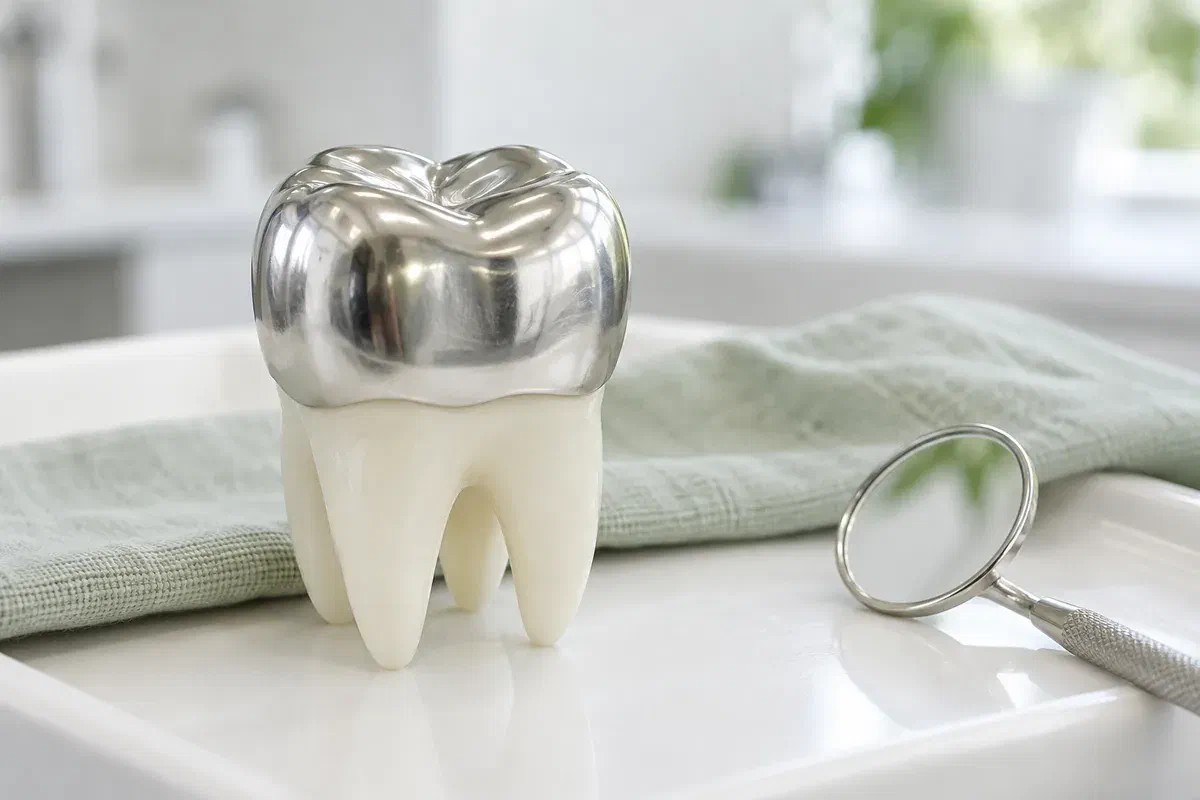
Illustrative molar teaching model with a smooth stainless steel crown
When covering the tooth comes up

Is there enough tooth left to hold a filling?

That question drives most crown recommendations. Depth of decay, the surfaces involved and the health of the nerve all count, so share symptoms and earlier treatment at the visit.

Decay spread across more than one side

A molar with damage on several surfaces may not give a filling enough sound structure to grip. Tell the dentist about fillings that have broken or been replaced. They can explain whether a full covering is better suited to what remains.

After a pulpotomy or pulpectomy

These treatments manage the nerve tissue inside a baby tooth, and the outer restoration is a separate stage. Ask whether a crown completes the plan. Your child feeling better does not mean the final step can be skipped.

Looks, allergies and sensory needs

If your child is self-conscious about a silver tooth, say so. Also mention known allergies, such as nickel, and any earlier reactions, along with sensory or communication needs. These details belong in the decision about material and approach.

Pain, swelling or a bump on the gum may signal a problem beyond what a crown can address. Mention any of these when you book so the assessment covers them.

The practical upside

Full coverage for a tooth that is weak in several places

A stainless steel crown wraps the entire visible part of a molar instead of repairing a single spot. For some baby teeth with extensive decay, fragile walls or recent pulp treatment, that complete coverage is what makes it worth considering. Diagnosis comes before the choice of material.

It is meant to serve the tooth until the tooth is naturally lost. Crowns can still loosen or wear, and the tooth inside can develop new problems. Good brushing, prevention and reviews stay on the list, crown or no crown.

Patient information: AAPD — restorative dentistry for children

A sturdier option when damage is widespread

Ask the dentist to point out the weakened surfaces and why they matter. A very large filling across thin walls is not always the better path. The advice should rest on the tooth’s structure and chewing role, not on a general preference.

Keeping the baby tooth working a little longer

Saving a suitable primary molar can help it hold space and keep chewing while the adult teeth develop. The expected timing of its natural loss frames the conversation. Ask whether the developing permanent tooth changes the plan.

Part of a complete treatment list

A crown may sit alongside other treatment needs. Ask which teeth need care and how the visits will be arranged. Prevention advice should be part of the plan as well, so care continues beyond the tooth that needs the most work.

How the visit unfolds

From a closer look to a crown that fits

Preformed metal crowns can be placed using different methods. The dentist should name the approach planned for your child and explain why it suits the findings.

  1. Diagnose and decide together

    The dentist goes over symptoms, examines the tooth and takes images if they are clinically indicated. You talk about whether the nerve needs treatment and whether the molar can be restored. Bring up appearance, alternatives, allergies and any comfort or referral questions here.

  2. Shape the tooth, or use the Hall approach

    Conventional placement often means numbing the area, removing decay and shaping the tooth. Selected primary molars may suit the Hall technique instead. It has specific criteria, so it should not be assumed for every sore or decayed tooth.

  3. Fit the crown and fix it with cement

    A preformed crown in the right size is tested for fit and then secured with dental cement. Details vary with the tooth and the method. Your child should have a simple way to signal discomfort, and the team can describe sensations as they happen.

  4. Bite check and going-home advice

    Ask what your child might notice when chewing and closing, and what should prompt a call. Confirm numbness precautions and any return visit. If other teeth still need work, know when that will be scheduled.

Caring for the crown at home

Treat it like any other tooth, and keep watching.

Follow the instructions for the technique and any freezing used. If your child goes back to school or to another caregiver the same day, ask for advice you can share.

Help with eating until feeling returns

Stick to the clinician’s advice about food and timing. While the mouth is numb, watch that your child does not bite their lip, cheek or tongue. Ask about suitable pain relief; pain that is strong or worsening should be reported to the clinic.

Brush the crown and the gum edge

The margin at the gum and the teeth next to the crown still need daily cleaning. Continue helping with brushing as fits your child’s age, and clean between teeth as shown. If one spot keeps trapping food, let the team check it.

Report looseness, wear or ongoing discomfort

Get in touch if the crown moves, comes off or looks worn. Keep a crown that falls out in a container and call us; do not reattach it or let it sit loose in your child’s mouth. Regular reviews still matter when things look fine.

Patient information: Guy’s and St Thomas’ — stainless steel crowns for children

Looks versus what the tooth needs

Compare options against the tooth, not only the colour.

For each suitable choice, ask how preparation, appearance, follow-up and limitations differ. A tooth-coloured repair is not always possible when a lot of the tooth is gone.

When full coverage suits the findings

Stainless steel crown

A metal crown may be advised for a primary molar with significant damage or after pulp treatment. The dentist should explain the placement method and any material concerns. It is fixed in place for the long term, not a removable cap.

When a different restoration fits

Tooth-coloured filling or another crown material

A smaller cavity may suit a direct filling, and another crown material may be considered in selected cases. Appearance, remaining structure, placement needs and your child’s situation all weigh in. Ask which alternatives really apply here.

When a cap alone will not solve it

Nerve treatment first, or extraction

If the pulp is affected, care inside the tooth may be needed before any restoration. A tooth that cannot be restored may need removing. Ask how the diagnosis changes the options and whether spacing for the adult tooth needs its own assessment.

Questions about appearance and more

Will it show? And other things worth asking

Most questions fall into two groups: how the crown looks and how it holds up. The dentist can answer both.

(905) 876-4488
How noticeable is a stainless steel crown on a back baby tooth?
It is silver, so it can be seen when your child opens wide or laughs. In everyday talking it is usually less obvious because it sits toward the back. If the look worries your child, raise it at the assessment.
Is there a white alternative to a metal crown for a baby molar?
Sometimes. A tooth-coloured filling or a different crown material may suit certain teeth. Whether it is appropriate depends on how much tooth remains and how placement would work, so ask the dentist which options fit this case.
How can I help my child feel okay about a silver tooth?
Talk about it simply and positively, and let them ask the dentist questions directly. Some children like to see a model first. Focusing on what the crown does for the tooth often helps more than focusing on the colour.
Will the metal crown come away when the baby tooth is ready to fall out?
Generally, yes. The crown stays with the tooth and both are lost together when the tooth sheds naturally. Reviews continue in the meantime in case anything needs attention sooner.
Can we plan the crown visit around school and the drive from Oakville?
Usually, yes. Ask about appointment times when booking, and allow time afterward for numbness to wear off before lunch or activities. If more than one tooth needs work, ask how visits can be grouped sensibly.
Can my child brush a crowned tooth normally?
Yes, and they should. Brush the crown and the gum around it as part of the usual routine, and clean between teeth as advised. The crown is fixed and should never be taken off for cleaning.
Crown questions from Oakville

Get a clear answer about your child’s molar.

Contact our Bronte Street practice to discuss a recommended crown or a baby molar that is breaking down. We will explain what we see, which restorations suit it and how the plan fits with your child’s ongoing dental care.

Material and placement method are decided after assessment. Tell us about pain, swelling or known metal allergies when booking.

Visit Milton Dental Clinic
Unit 1, 342 Bronte St. S, Milton, ON L9T 5B7
Get directions Clinic hours
Monday–Thursday
11am–7pm
Friday–Sunday
By appointment only

Areas we serve

  • Milton
  • Oakville
  • Mississauga
  • Georgetown
  • Halton Hills
  • Acton
  • Campbellville
  • Brampton
  • Burlington
  • Puslinch
  • Rockwood
  • Erin
  • Caledon
  • Etobicoke
  • Old Milton
  • Bronte Meadows
  • Timberlea
  • Dorset Park
  • Dempsey
  • Clarke
  • Beaty
  • Coates
  • Harrison
  • Scott
  • Willmott
  • Ford
  • Bowes
  • Cobden
  • Walker
  • Mountain View
  • Milton Heights
  • Hawthorne Village
  • Valley View
  • Fallingbrook
  • Nassagaweya
  • Trafalgar
  • Esquesing
  • Nelson
  • Brookville
  • Moffat
  • Glen Williams
  • Norval
  • Limehouse
  • Stewarttown
  • Ashgrove
  • Hornby
  • Silver Creek
  • Speyside
  • Scotch Block
  • North Oakville
  • River Oaks
  • Glen Abbey
  • West Oak Trails
  • Palermo
  • Bronte Creek
  • College Park
  • Joshua Creek
  • Uptown Core
  • Preserve
  • Iroquois Ridge
  • Lisgar
  • Meadowvale
  • Meadowvale Village
  • Churchill Meadows
  • Erin Mills
  • Central Erin Mills
  • Streetsville
  • East Credit
  • Creditview
  • Heartland
  • Sheridan
  • Mount Pleasant
  • Credit Valley
  • Huttonville
  • Churchville
  • Springbrook
  • Northwest Brampton
  • Bram West
  • Fletcher's Meadow
  • Fletcher's Creek South
  • Alton Village
  • Orchard
  • Millcroft
  • Headon Forest
  • Tansley
  • Brant Hills
  • Tyandaga
  • Kilbride
  • Lowville
  • Aberfoyle
  • Morriston
  • Arkell
  • Hillsburgh
  • Freelton
  • Carlisle
  • Waterdown
  • Flamborough
  • Mountsberg

How can we help?

Milton Dental Clinic

Have a question about your smile? Choose the option that works best for you.

For urgent dental concerns, please call.
Messages are reviewed during clinic hours.