

Illustrative child and parent discussing a dental arch model with a clinician
Children’s Dentistry

Space Maintainers in Milton

A baby tooth that had to come out early leaves a question behind: does the gap need holding? Talk with our Milton team about whether your child needs a space maintainer, what kind might suit, and how it would be checked as the adult tooth develops.

After an early extraction in Milton

The gap is small. The planning behind it is not.

Sometimes a baby molar has to come out because of deep decay, years before the adult tooth beneath it is ready. Parents often leave wondering about the empty spot. Nearby teeth can drift into it, and a space maintainer is one way a dentist may keep that room open in particular cases. Plenty of early gaps never need one.

Our first job is to look closely. We consider which tooth is gone, how the teeth on either side are sitting, how far along the permanent tooth is, and how long ago the loss happened. Your child’s general oral health and needs are part of the picture too. Depending on those findings, the advice may be to watch, to fit an appliance, or to seek another opinion.

Parents in Milton also want to know what they are signing up for. An appliance has to be cleaned, checked at reviews, and eventually adjusted, replaced, or taken out. You should hear what the device is for and what it asks of you before you decide.

Ask about a gap from an early extraction
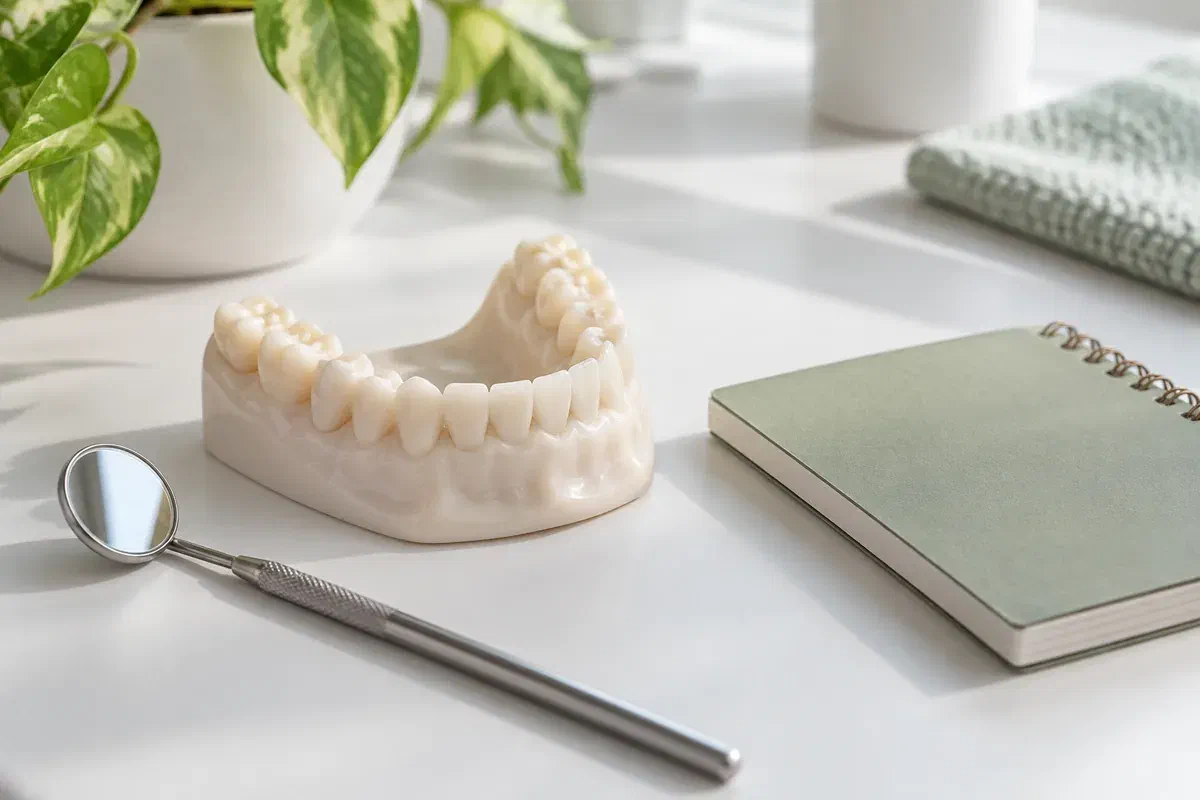
Illustrative lower dental teaching model beside a mirror and appointment notebook
Useful details for the first conversation

Three things shape the advice.

A little background helps the visit go further. You are not expected to judge the size of the gap or guess which appliance would fit; that is what the assessment is for.

How and when the tooth was lost

Let us know whether the tooth was extracted, knocked out, or came out some other way, and roughly when. Records from another dentist are welcome. Where the gap sits and how long it has been there help us place it within your child’s stage of development.

Where the adult tooth is in its journey

Imaging may be needed to see the permanent tooth and the bone and roots around it. A child’s age on its own is a poor guide to eruption timing. Ask what the images are meant to show and how the answer could steer the choice between watching, holding space, or a referral.

Daily care and the rest of the mouth

Any appliance creates new spots to keep clean. Tell us about trouble with brushing, current cavities, habits such as thumb-sucking, or any support your child needs. These shape whether a device can be looked after well or whether a different plan makes more sense.

When the tooth came out because of a fall or knock, the injury itself should be assessed first. Planning for the gap comes after damaged teeth and gums have been checked.

What a maintainer is for

Holding room open while growth carries on.

In general, a space maintainer is meant to stop the surrounding teeth from shifting into a gap left by an early loss. That is different from pushing teeth apart to win back room that has already been lost. If you are unsure which of those goals applies, ask the dentist to spell it out.

Any likely benefit has to be balanced against what can go wrong. Appliances can come loose, break, trap plaque, or press on gums or an erupting tooth if no one is reviewing them. A maintainer also cannot promise that the adult tooth will come in perfectly or that braces will never be discussed later.

Patient information: AAPD — developing dentition and space maintenance

A clear reason tied to your child’s gap

The recommendation should link back to the specific tooth that was lost and how the mouth is developing. Two children the same age can be given quite different advice. Ask what shift the plan is trying to prevent and how the appliance would do that.

Scheduled reviews while the jaw grows

Follow-up visits look at the condition of the device, the teeth holding it, and how the new tooth is progressing. Find out who will see your child for these checks and how often. No appliance should be left in indefinitely without someone confirming it is still needed.

Room to bring in another opinion

Where the pattern is more involved, a pediatric dentist or orthodontist may have helpful input. Ask what the referral is for and which records can travel with your child. The aim is one plan you understand that takes the whole growing mouth into account.

How the decision unfolds

Purpose first, appliance second.

The choice of device follows the clinical findings and what will work for your household. Ask whether the design being suggested is fixed in place or removable, and what each would mean day to day.

  1. Look at the gap and the history

    We examine your child’s mouth and go over how the tooth was lost and any earlier records. X-rays may be suggested to answer particular questions about eruption or the supporting teeth. Mention any soreness or change you have noticed, not just how the gap looks.

  2. Weigh watching against an appliance

    We talk through what each sensible option is meant to achieve, where it falls short, and what it asks of your family. You can ask whether the aim is to keep current space or whether an orthodontic opinion is needed for a different goal. The review schedule is agreed before anything goes ahead.

  3. Take records and fit the device

    Depending on the design, this can involve measurements, impressions, or other records. On fitting day we check how the appliance sits against the teeth and gums. Your child is encouraged to say if anything feels odd, and you will know how to tell us about discomfort later.

  4. Learn the routine and book the next check

    We show you and your child how to clean around the appliance and explain any eating or wear instructions. You will know what to do if it loosens. The next review looks at the device and the developing tooth, not only whether the appliance is still there.

Living with the appliance

Clean it daily and keep each review on the calendar.

Fixed and removable designs are handled differently, so follow the instructions for the one your child has. If something is unclear, ask before changing anything at home.

Brush the anchor teeth and the device

Keep helping your child brush, and use the cleaning approach we demonstrated. Ask how to work around bands or wires without catching them. If one area stays sore or is hard to keep clean, tell us rather than avoiding it.

Hands and tongue off the hardware

Let your child know the appliance is not something to fiddle with. Follow the food advice you were given about things that might knock it loose. Never try to squeeze a band, bend a wire, or glue anything back in place.

Keep the fit and eruption checks

Attend planned reviews even when everything feels fine. Let us know if a new tooth is showing or the device seems to be sitting differently. As your child grows, needs change, and adjustment or removal should be planned by the dental team.

Paths after a baby tooth is lost early

Watch, hold, or reassess the bigger picture.

Each approach has its own aim. Which one fits depends on how much room is left, how far eruption has progressed, and what else the exam shows.

When findings support waiting

Monitoring with no appliance

Some gaps are fine left alone. The dentist may suggest rechecking the new tooth and its neighbours after a set interval. Ask what change would alter the plan and when it would be worth coming back sooner.

When keeping current room is the goal

A fixed or removable maintainer

Designs vary and so do their care demands. The right one depends on which teeth can support it, the developing replacement, oral health, and how well your child can manage the routine. Every appliance should come with a monitoring plan.

When the concern goes beyond one gap

Orthodontic or pediatric dental opinion

If the space has already narrowed or eruption looks complicated, more assessment may help. Winning back room or managing alignment is a separate plan. A passive maintainer is not designed to undo changes that have already happened.

Space maintainer questions from parents

Straight answers for the early-gap stage.

Every child’s development is different, so ask about your child’s tooth and appliance rather than going by a friend’s or sibling’s experience.

(905) 876-4488
Our dentist pulled a baby molar for decay. Does that mean a spacer is automatic?
Not automatically. Whether a maintainer is suggested depends on the tooth involved, the room around it, eruption stage, and other findings. Some children are simply monitored; others may be offered an appliance or a specialist opinion. Ask how the advice relates to your child.
Will having the appliance fitted be uncomfortable for my child?
Children often notice pressure or an unfamiliar feeling at first, and experiences vary. The clinician checks the fit and can explain what is expected. Encourage your child to say if something feels sore, and contact the clinic if discomfort continues after fitting.
Can my child eat normally with a fixed space maintainer?
Most everyday foods are usually fine, but you will be given advice about sticky or very hard items that could loosen the device. Follow the instructions for your child’s specific appliance, and ask if you are unsure about a particular food.
Is there a point where the appliance comes out?
Yes, but the timing is individual. At reviews, the clinician checks eruption and whether the device is still doing its job. Removal is not based simply on how long it has been in, and it should never be taken out at home.
What should I do if the band feels wobbly on one side?
Phone the clinic soon and explain what seems loose. A partly detached appliance may need attention before the next planned visit. Ask your child not to play with it, do not try to re-cement it, and follow the advice you are given.
We live in town. How often will we be back for checks?
Intervals depend on the appliance and your child’s development, and we agree on a schedule at fitting. Living nearby can make visits easier to keep, and they matter even when the gap looks unchanged.
Book in Milton

Start with a clear look at the gap.

Reach our Bronte Street practice about a baby tooth lost early or an appliance already in place. Bring earlier advice and a rough date for the tooth loss so we can plan a focused assessment.

An appliance may or may not be suggested. Any recommendation or referral depends on your child’s development and the findings at the exam.

Visit Milton Dental Clinic
Unit 1, 342 Bronte St. S, Milton, ON L9T 5B7
Get directions Clinic hours
Monday–Thursday
11am–7pm
Friday–Sunday
By appointment only

Areas we serve

  • Milton
  • Oakville
  • Mississauga
  • Georgetown
  • Halton Hills
  • Acton
  • Campbellville
  • Brampton
  • Burlington
  • Puslinch
  • Rockwood
  • Erin
  • Caledon
  • Etobicoke
  • Old Milton
  • Bronte Meadows
  • Timberlea
  • Dorset Park
  • Dempsey
  • Clarke
  • Beaty
  • Coates
  • Harrison
  • Scott
  • Willmott
  • Ford
  • Bowes
  • Cobden
  • Walker
  • Mountain View
  • Milton Heights
  • Hawthorne Village
  • Valley View
  • Fallingbrook
  • Nassagaweya
  • Trafalgar
  • Esquesing
  • Nelson
  • Brookville
  • Moffat
  • Glen Williams
  • Norval
  • Limehouse
  • Stewarttown
  • Ashgrove
  • Hornby
  • Silver Creek
  • Speyside
  • Scotch Block
  • North Oakville
  • River Oaks
  • Glen Abbey
  • West Oak Trails
  • Palermo
  • Bronte Creek
  • College Park
  • Joshua Creek
  • Uptown Core
  • Preserve
  • Iroquois Ridge
  • Lisgar
  • Meadowvale
  • Meadowvale Village
  • Churchill Meadows
  • Erin Mills
  • Central Erin Mills
  • Streetsville
  • East Credit
  • Creditview
  • Heartland
  • Sheridan
  • Mount Pleasant
  • Credit Valley
  • Huttonville
  • Churchville
  • Springbrook
  • Northwest Brampton
  • Bram West
  • Fletcher's Meadow
  • Fletcher's Creek South
  • Alton Village
  • Orchard
  • Millcroft
  • Headon Forest
  • Tansley
  • Brant Hills
  • Tyandaga
  • Kilbride
  • Lowville
  • Aberfoyle
  • Morriston
  • Arkell
  • Hillsburgh
  • Freelton
  • Carlisle
  • Waterdown
  • Flamborough
  • Mountsberg

How can we help?

Milton Dental Clinic

Have a question about your smile? Choose the option that works best for you.

For urgent dental concerns, please call.
Messages are reviewed during clinic hours.