

Illustrative child and parent discussing a dental arch model with a clinician
Children’s Dentistry

Space Maintainers in Old Milton

An older sibling had a spacer, so the younger one will too? Not necessarily. Families in Old Milton can talk with us about whether a gap from an early-lost baby tooth needs holding, which design might fit, and how it would be reviewed.

One child, one gap, one decision

Why didn’t the advice match last time?

Many households in Milton’s historic downtown have been through children’s dentistry more than once. A parent may remember an older child wearing a band-and-wire appliance and expect the same for a younger brother or sister. Yet the reasons a dentist suggests holding space are specific to each mouth, and many early gaps are managed without any device.

Here is what drives the recommendation. When a primary tooth is lost ahead of schedule, neighbouring teeth can tip or slide toward the opening before the adult tooth arrives. We look at which tooth is missing, how much room remains, the stage of the developing tooth, how long the gap has existed, and your child’s overall needs. From there we may advise watching, an appliance, or another opinion.

Practical commitments belong in the same conversation. A maintainer needs regular cleaning, planned checks, and in time an adjustment, replacement, or removal. Before anything is fitted, you and your child should understand what it is meant to do and what looking after it involves.

Talk about your younger child’s gap
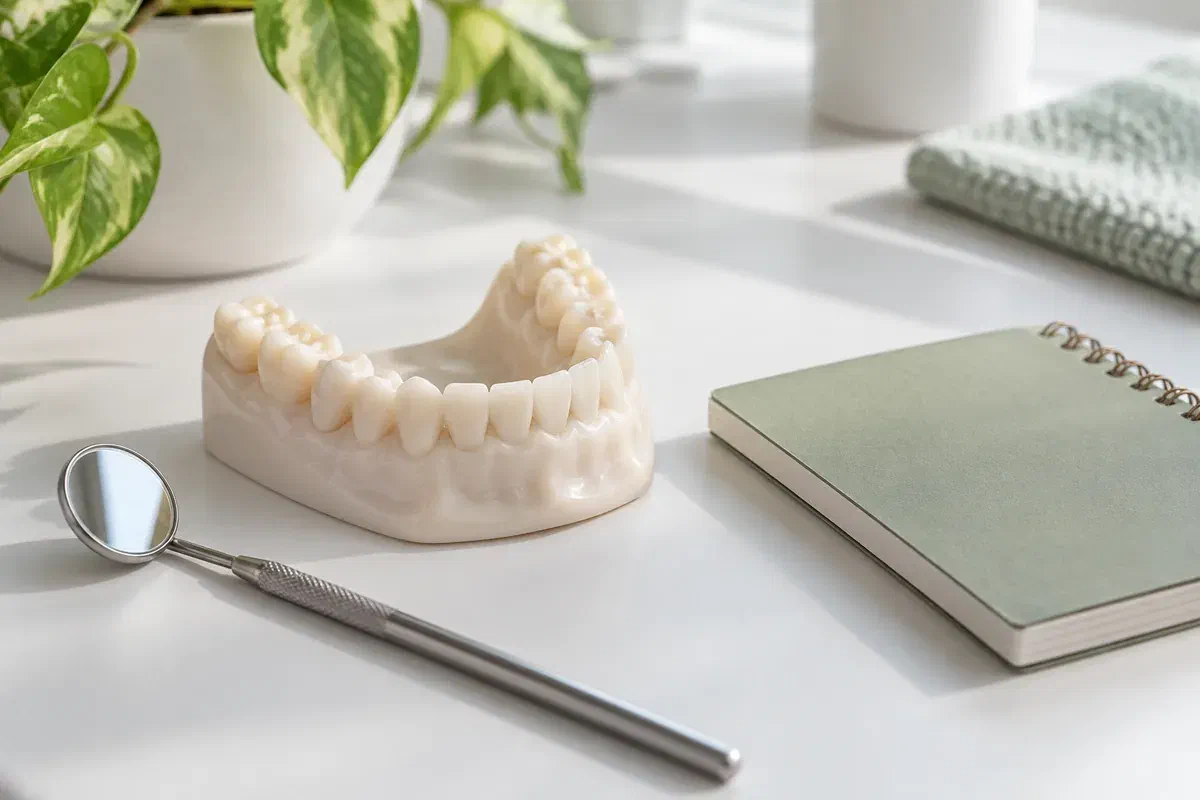
Illustrative lower dental teaching model beside a mirror and appointment notebook
What to bring along

A short history saves guesswork.

You do not need to measure the gap or pick an appliance. A few facts about how the tooth was lost and what you have already been told are the most useful starting point.

The story of the missing tooth

Was it extracted, lost to a bump, or did it come out on its own far too soon? An approximate date helps, as do any records from previous dental visits. Together they show where this gap fits in your child’s development.

Signs of the tooth underneath

To judge the permanent tooth and the structures around it, the dentist may ask for imaging. Birthdays are not a reliable measure of eruption. Ask what question an X-ray would answer and how the result could tip the plan toward observation, a maintainer, or referral.

Brushing, habits, and current health

An appliance means extra surfaces to keep clean. Let the team know about any cavities, finger or thumb habits, brushing struggles, or support needs. Those details help decide whether a device is realistic or whether something else would serve your child better.

A tooth lost in a recent accident needs its injury checked before anyone discusses space. Damaged teeth, gums, and lips come first.

The job a maintainer does

It guards a gap. It does not move teeth.

The usual aim of a space maintainer is to keep neighbouring teeth where they are after a baby tooth is lost early. Actively shifting teeth to recover space that has already closed is a separate task. Ask which of the two your child’s plan is meant to address.

Possible advantages sit beside real drawbacks. An appliance may loosen or break, gather plaque, or rub on gum tissue or an emerging tooth when it is not reviewed. It cannot ensure a perfect arrival for the adult tooth, and it does not rule out a future orthodontic discussion.

Patient information: AAPD — developing dentition and space maintenance

Reasoning specific to this tooth

A recommendation should make sense in light of the tooth that is missing and how the rest of the mouth is developing. Siblings can need different things even at the same age. Ask what movement the plan is meant to prevent.

Check-ins that keep pace with growth

Reviews look at the appliance, the teeth anchoring it, and how the adult tooth is coming along. Confirm who is responsible for those visits and when the next is due. A device that no one is checking should not simply stay in place.

A route to further advice

When the situation is more complex, a pediatric dentist or orthodontist may add useful perspective. Ask why a referral is being suggested and which records can be passed along. You should leave with a plan that covers the whole developing mouth.

Step by step

Why before which

Clinical findings and your household’s routine both shape the choice of device. Ask whether the design under discussion stays in the mouth or comes out, and how that changes daily care.

  1. Exam and background

    The dentist checks the mouth and reviews how the tooth was lost, along with any earlier records. Imaging may be recommended when a specific eruption question needs answering. Point out any tenderness or a change in the gap, even if it looks the same to you.

  2. Options side by side

    You hear what observation and each reasonable appliance could achieve, their limits, and the effort involved. If the space has already shrunk, ask whether an orthodontic view is needed instead. The follow-up schedule is settled before treatment starts.

  3. Records, then fitting

    Some designs require measurements or impressions before they can be made. When the appliance is placed, the clinician checks how it meets the teeth and gums. Your child can ask about anything that feels strange and will know how to let us know about soreness later.

  4. Home routine and next review

    Before you leave, we demonstrate cleaning around the device and go over any food or wear guidance. You will know the plan if it comes loose. The following visit checks both the appliance and the adult tooth, not just that the device is still there.

At home with a space maintainer

A tidy appliance, a kept appointment.

Care steps differ between fixed and removable designs. Stick to the instructions for your child’s device, and call before trying any change yourself.

Keep the area clean

Go on helping with brushing, and use the technique we showed you around the device. Ask how to clean near bands and wires without snagging them. A spot that stays tender or is tricky to reach is worth mentioning.

No fiddling or home repairs

Remind your child not to push the appliance with a tongue or pull at it with fingers. Follow the food guidance you received. Never tighten, bend, or glue any part of it if something seems different.

Show up for reviews

Planned checks still matter when your child feels fine. Mention a new tooth breaking through or a change in how the appliance sits. Growth can alter what is needed, so adjustments and removal are scheduled by the dental team.

Three different decisions

Not every early gap leads to an appliance.

Each path is aimed at a different outcome. The remaining space, eruption stage, and wider exam findings decide which is appropriate.

When the exam supports waiting

Watchful review

Some children are best served by a scheduled recheck of the new tooth and its neighbours. Ask what would prompt a change of plan and when an earlier visit would make sense.

When existing room needs protecting

Fixed or removable maintainer

Designs suit different situations and come with their own care demands. The choice depends on the supporting teeth, the developing replacement, oral health, and your child’s ability to manage the routine. A monitoring plan should be part of the package.

When more than one gap is in play

Referral for orthodontic or pediatric advice

If room has already been lost or eruption looks unusual, a further assessment may be wise. Recovering space or guiding alignment is a different kind of plan. A passive maintainer cannot reverse shifts that have already taken place.

Parents ask

Space maintainers, answered plainly

Your child’s mouth is the one that matters here. Ask about this tooth and this appliance rather than relying on what happened with another child.

(905) 876-4488
My older child wore a spacer. Will the younger one need one too?
Not necessarily. Each recommendation depends on which tooth was lost, the remaining room, eruption stage, and other findings. Brothers and sisters can need quite different plans. Ask the dentist to explain the reasoning for this child.
Is a front baby tooth handled differently from a back one?
The position of the lost tooth is one of the factors the dentist considers, along with timing and development. Ask how the location of your child’s gap affects the advice, rather than assuming one rule applies to every tooth.
If the gap has already narrowed, is it too late for a maintainer?
A passive appliance is meant to hold the space that is still there. Getting back room that has been lost is a different goal that may call for an orthodontic assessment. Describe how the gap has changed so the dentist can decide what to look at next.
Who decides when the appliance is finished with?
The dental team, at review visits. They look at eruption and whether the device still has a purpose. There is no fixed wear period, so do not remove it at home or let it stay without checks.
Can a maintainer affect how my child speaks?
Some children notice a new feeling when talking at first, depending on the design. Mention any persistent change in speech or comfort at a review so the clinician can check the fit.
We have known Old Milton for decades. Can our records from another dentist be used?
Yes. Bring or request previous records and any written advice. They help us understand when the tooth was lost and what was already discussed, so the assessment builds on what is known instead of starting over.
Old Milton families

Bring the history. We’ll look at the gap together.

Contact our Bronte Street practice, close to Milton’s historic downtown, about an early-lost baby tooth or an appliance your child already has. An approximate date and any past advice help us plan the visit.

A maintainer is only one possible outcome. Recommendations and referrals depend on your child’s development and exam findings.

Visit Milton Dental Clinic
Unit 1, 342 Bronte St. S, Milton, ON L9T 5B7
Get directions Clinic hours
Monday–Thursday
11am–7pm
Friday–Sunday
By appointment only

Areas we serve

  • Milton
  • Oakville
  • Mississauga
  • Georgetown
  • Halton Hills
  • Acton
  • Campbellville
  • Brampton
  • Burlington
  • Puslinch
  • Rockwood
  • Erin
  • Caledon
  • Etobicoke
  • Old Milton
  • Bronte Meadows
  • Timberlea
  • Dorset Park
  • Dempsey
  • Clarke
  • Beaty
  • Coates
  • Harrison
  • Scott
  • Willmott
  • Ford
  • Bowes
  • Cobden
  • Walker
  • Mountain View
  • Milton Heights
  • Hawthorne Village
  • Valley View
  • Fallingbrook
  • Nassagaweya
  • Trafalgar
  • Esquesing
  • Nelson
  • Brookville
  • Moffat
  • Glen Williams
  • Norval
  • Limehouse
  • Stewarttown
  • Ashgrove
  • Hornby
  • Silver Creek
  • Speyside
  • Scotch Block
  • North Oakville
  • River Oaks
  • Glen Abbey
  • West Oak Trails
  • Palermo
  • Bronte Creek
  • College Park
  • Joshua Creek
  • Uptown Core
  • Preserve
  • Iroquois Ridge
  • Lisgar
  • Meadowvale
  • Meadowvale Village
  • Churchill Meadows
  • Erin Mills
  • Central Erin Mills
  • Streetsville
  • East Credit
  • Creditview
  • Heartland
  • Sheridan
  • Mount Pleasant
  • Credit Valley
  • Huttonville
  • Churchville
  • Springbrook
  • Northwest Brampton
  • Bram West
  • Fletcher's Meadow
  • Fletcher's Creek South
  • Alton Village
  • Orchard
  • Millcroft
  • Headon Forest
  • Tansley
  • Brant Hills
  • Tyandaga
  • Kilbride
  • Lowville
  • Aberfoyle
  • Morriston
  • Arkell
  • Hillsburgh
  • Freelton
  • Carlisle
  • Waterdown
  • Flamborough
  • Mountsberg

How can we help?

Milton Dental Clinic

Have a question about your smile? Choose the option that works best for you.

For urgent dental concerns, please call.
Messages are reviewed during clinic hours.