

Illustrative child and parent discussing a dental arch model with a clinician
Children’s Dentistry

Space Maintainers in Rockwood

A space maintainer has a beginning and an end. Whether your child from Rockwood is just starting the conversation or you can see the adult tooth arriving beside the appliance, we help you understand each stage, from deciding to removal.

The whole life of an appliance

From the first gap to the last review

One evening, during brushing, you spot a white edge poking through the gum next to your child’s spacer. It is a good moment, and a common prompt for a call: does the appliance come out now? The answer depends on review findings, and it is easier to understand once you see the whole arc, from why the device was considered to when it is retired.

That arc starts with a baby tooth lost before its time. Nearby teeth can drift into the opening, so a dentist may suggest holding the space in particular cases, though plenty of children only need watching. The deciding factors are which tooth is missing and for how long, the room still there, how the permanent tooth is developing, and your child’s general oral health. Monitoring, an appliance, or specialist advice may follow.

Once fitted, a maintainer needs daily cleaning, regular reviews, and eventually a planned adjustment, replacement, or removal. Understanding that timeline from the start helps families from Rockwood know what to expect at each stage.

Ask where your child is in the process
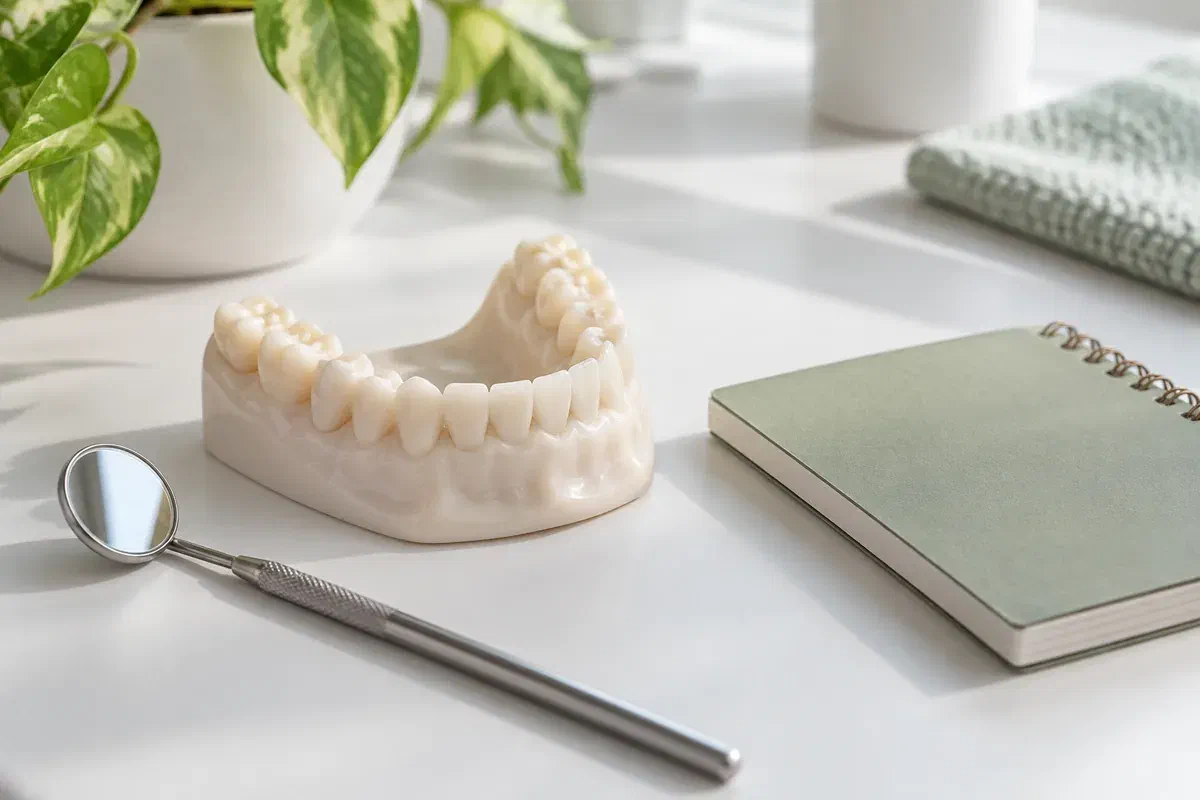
Illustrative lower dental teaching model beside a mirror and appointment notebook
Information for any stage

The history helps at the beginning and the end.

Share what you know about the gap and the appliance, if there is one. You do not need to judge whether it is time for a change.

The original tooth loss

Tell us how the baby tooth was lost, whether by extraction, injury, or very early shedding, and roughly when. If an appliance was fitted elsewhere, bring any records about it. This helps us see where your child is in the overall timeline.

Signs of the permanent tooth

A tooth showing through the gum is useful information, but imaging may still be suggested to see its position and surrounding structures. Age is not a reliable predictor of eruption. Ask what an image would add at this stage.

How care has been going

Let us know about brushing difficulties, sore spots, decay, habits, or support needs. These details affect whether a new appliance is a good idea and, for an existing one, whether anything needs attention.

If the gap followed a recent injury, that injury should be checked before space is discussed. Damaged teeth and gums come first.

The role it plays along the way

Holding the door until the new tooth walks through

Throughout its time in the mouth, a maintainer generally aims to keep the neighbouring teeth from closing the gap. It is not meant to recover space already lost, which is a separate, orthodontic matter. Ask which goal fits your child at the start, and revisit it at reviews.

Its usefulness has limits. A device left without checks may loosen, break, gather plaque, irritate the gum, or get in the way of the arriving tooth, which is one reason timing of removal matters. It cannot promise ideal eruption or rule out orthodontic care later.

Patient information: AAPD — developing dentition and space maintenance

A reason that holds up over time

The recommendation should connect to the specific lost tooth and your child’s development, and reviews should confirm it still applies. Children of the same age can be at very different points. Ask what the appliance is still guarding against.

Reviews that track the arrival

Each check looks at the device, its anchor teeth, and how far the adult tooth has come. Know when your child’s next visit is due and who will see them. An appliance should not linger once it no longer has a purpose.

Specialist input near the end, too

As adult teeth come in, a pediatric dentist or orthodontist may have helpful input on alignment. Ask what a referral would look at and how records will be shared, so the plan stays coherent.

Milestones

Four stages, start to finish

Each stage depends on findings and on what your family can manage. At the outset, ask whether a fixed or removable design is proposed and how that affects the timeline.

  1. Assess the early gap

    We examine the mouth, review how the tooth was lost and any records, and may suggest imaging for a particular eruption question. Mention any soreness or change in the space.

  2. Decide on a plan

    We compare watching with any suitable appliance, including aims, limits, and day-to-day demands. If space has already narrowed, orthodontic assessment may come first. The review schedule is agreed before treatment.

  3. Fit and settle in

    Some designs need impressions or measurements. At placement, the clinician checks the fit on the anchor teeth and against the gum, and your child can say what feels unusual. We show you how to clean around it and explain what to do if a part loosens.

  4. Review through to removal

    Later visits follow the device and the adult tooth. When eruption has progressed enough and the appliance has done its job, the clinician plans removal or a change. That decision is made at a review, never at home.

Through every stage

Care stays the same until the day it comes out.

Fixed and removable designs are handled differently. Use the instructions for your child’s appliance, and ask before changing anything, even near the end.

Keep cleaning carefully

Help your child brush the anchor teeth and appliance, using the method demonstrated. When a new tooth is coming through nearby, brush that area gently and well. Tell us about any spot that stays sore.

Resist the urge to remove it

Even when the new tooth is visible, do not pull, bend, or loosen the appliance. Discourage your child from pushing it with fingers or tongue, and follow food advice. Never glue or tighten anything.

Speak up when the tooth appears

If you see the adult tooth emerging, mention it and ask whether the next check should move earlier. Also report a change in how the device sits, or a sense that it is pressing on the new tooth. Removal or adjustment is planned with us, at a visit where the clinician can see how things have progressed.

Choices at the start

Not every gap begins with an appliance.

Each path has a different aim. Remaining room, eruption stage, and the broader exam guide which one is chosen.

When findings support observation

Watching the gap

Some children need only planned rechecks of spacing and eruption, with no device at any stage. Ask what would change the plan, and when an earlier visit would be useful.

When remaining space should be held

A fixed or removable maintainer

The design reflects which teeth can anchor it, how far the replacement has developed, overall oral health, and whether the care routine is realistic. Each design has its own demands, and each comes with a plan for reviews and eventual removal.

When space or eruption has already shifted

Specialist assessment

A narrowed gap or an unusual eruption pattern may call for a pediatric or orthodontic opinion. Getting space back is an active treatment goal that a passive maintainer cannot reach.

Questions about the later stages

When the new tooth starts to show

Every child’s timeline is different. Ask about your child’s appliance and eruption rather than going by a classmate’s experience.

(905) 876-4488
The adult tooth is coming through. Should the spacer come out right away?
Not necessarily. The clinician assesses how far the tooth has erupted and whether the appliance is still needed. Call to let us know, and ask whether the next review should be moved earlier.
What does removing a space maintainer involve?
It is done by the clinician at a planned visit, and the steps depend on the design. Ask what to expect beforehand so you can prepare your child, and ask what the area will need afterward in terms of brushing and follow-up.
Can an appliance get in the way of the tooth that is erupting?
If it is not reviewed, it may interfere with eruption or the gum. That is one reason regular checks matter, especially as the adult tooth approaches.
Will the teeth need anything else once the appliance is removed?
That depends on how the adult teeth come in. The clinician may suggest continued monitoring or an orthodontic assessment. Ask what will be watched afterward.
Can we stop going to reviews once the new tooth is visible?
No. Visibility does not show whether the supporting teeth, cement, gums, and erupting tooth are all in good shape. Keep the agreed checks until the plan is complete.
If our review from Rockwood has to be rescheduled, what should we do?
Call as soon as you know and we can find another time. Mention any changes you have noticed, such as a new tooth or a shift in the appliance, so we can judge how soon your child should be seen.
Rockwood children, any stage

Starting out or nearly finished, we can help.

Reach out to our Bronte Street practice for an early-gap assessment or to have an existing spacer checked as the adult tooth arrives. Bring a rough date of tooth loss and any records about the appliance.

Not every child needs an appliance, and timing of removal is individual. Advice follows your child’s findings and development.

Visit Milton Dental Clinic
Unit 1, 342 Bronte St. S, Milton, ON L9T 5B7
Get directions Clinic hours
Monday–Thursday
11am–7pm
Friday–Sunday
By appointment only

Areas we serve

  • Milton
  • Oakville
  • Mississauga
  • Georgetown
  • Halton Hills
  • Acton
  • Campbellville
  • Brampton
  • Burlington
  • Puslinch
  • Rockwood
  • Erin
  • Caledon
  • Etobicoke
  • Old Milton
  • Bronte Meadows
  • Timberlea
  • Dorset Park
  • Dempsey
  • Clarke
  • Beaty
  • Coates
  • Harrison
  • Scott
  • Willmott
  • Ford
  • Bowes
  • Cobden
  • Walker
  • Mountain View
  • Milton Heights
  • Hawthorne Village
  • Valley View
  • Fallingbrook
  • Nassagaweya
  • Trafalgar
  • Esquesing
  • Nelson
  • Brookville
  • Moffat
  • Glen Williams
  • Norval
  • Limehouse
  • Stewarttown
  • Ashgrove
  • Hornby
  • Silver Creek
  • Speyside
  • Scotch Block
  • North Oakville
  • River Oaks
  • Glen Abbey
  • West Oak Trails
  • Palermo
  • Bronte Creek
  • College Park
  • Joshua Creek
  • Uptown Core
  • Preserve
  • Iroquois Ridge
  • Lisgar
  • Meadowvale
  • Meadowvale Village
  • Churchill Meadows
  • Erin Mills
  • Central Erin Mills
  • Streetsville
  • East Credit
  • Creditview
  • Heartland
  • Sheridan
  • Mount Pleasant
  • Credit Valley
  • Huttonville
  • Churchville
  • Springbrook
  • Northwest Brampton
  • Bram West
  • Fletcher's Meadow
  • Fletcher's Creek South
  • Alton Village
  • Orchard
  • Millcroft
  • Headon Forest
  • Tansley
  • Brant Hills
  • Tyandaga
  • Kilbride
  • Lowville
  • Aberfoyle
  • Morriston
  • Arkell
  • Hillsburgh
  • Freelton
  • Carlisle
  • Waterdown
  • Flamborough
  • Mountsberg

How can we help?

Milton Dental Clinic

Have a question about your smile? Choose the option that works best for you.

For urgent dental concerns, please call.
Messages are reviewed during clinic hours.