
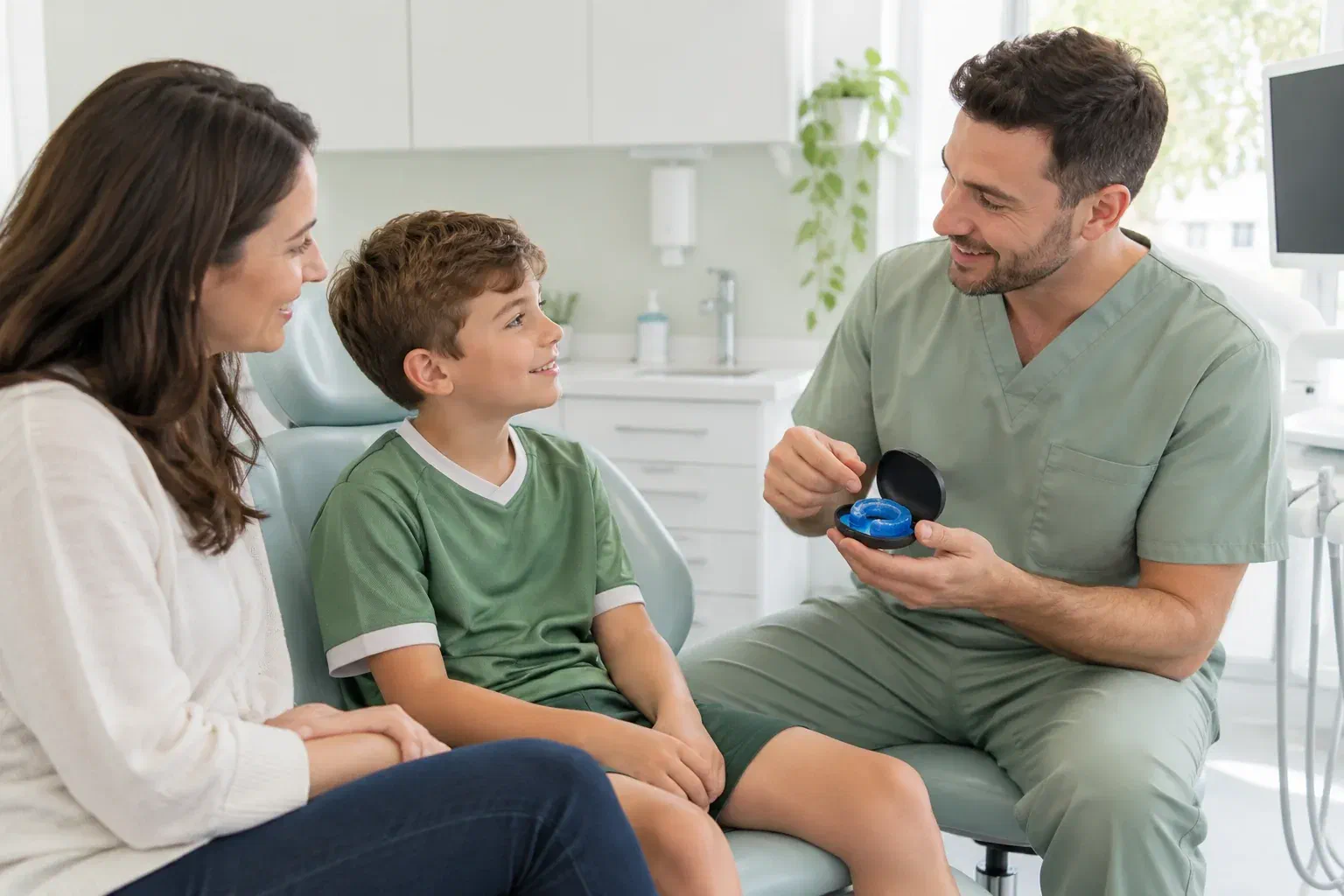
Illustrative young athlete and parent discussing a sports mouthguard with a clinician
Children’s Dentistry

Sports Mouthguards for Children in Acton

When a teammate chips a tooth, every parent on the sidelines starts asking questions. We give you straight answers about what a children’s sports mouthguard can and cannot do, which type may suit your child, and how fit, comfort and growth affect protection.

Honest answers for Acton parents

What does a mouthguard really protect?

Often it starts with someone else’s child: a stick to the face at practice, a chipped front tooth, a worried phone call. Suddenly the mouthguard your child barely wears becomes a topic at the dinner table, and so does the question of whether a better one would have made a difference.

The useful answer is specific. A guard is designed to help protect teeth and the soft tissue around them; how well it does that depends on how it fits and whether it is worn. Bring your child and their current guard, and tell us about the sports they play, loose or new teeth, any earlier injuries and orthodontic plans.

Your child’s view belongs in that conversation. If they find the guard awkward, too big or hard to breathe around, they will skip it when nobody is watching. Coming from Acton, it is worth raising those complaints in one visit so we can address them together.

Ask about a mouthguard for your child
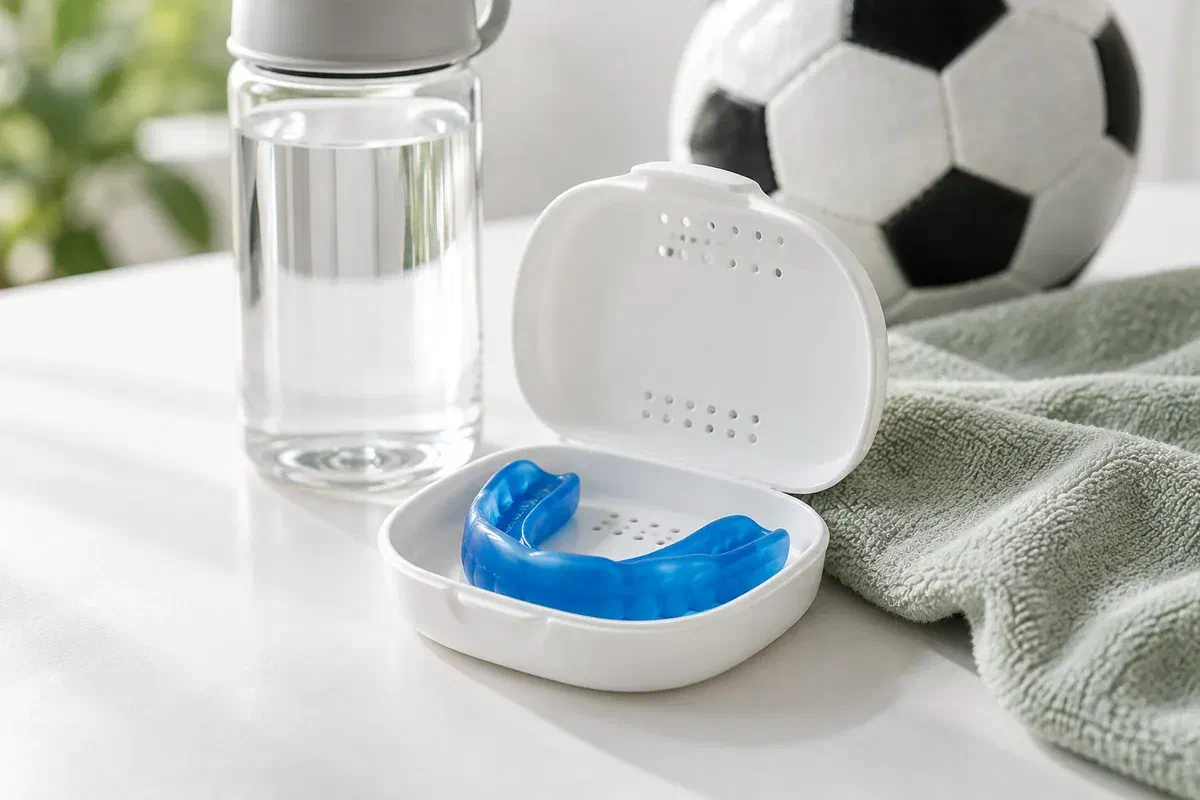
Illustrative blue sports mouthguard in a ventilated case beside sports equipment
What affects protection

Three factors behind a guard that helps

On an Acton field or a rink further afield, a guard can only do its part when it suits the activity and the mouth. Check it before play starts and whenever your child notices a change.

How much contact the activity involves

Body contact, falls and fast equipment raise the chance of a mouth injury, rule or no rule. Talk through each of your child’s activities and ask how a guard fits with the helmet, face protection and the way the sport is played.

Whether it stays in place

A guard that slips, needs biting to hold, or makes breathing and talking awkward is less likely to protect and less likely to be worn. Bring it in instead of trimming it, and make sure your child knows complaints are welcome.

Which teeth are present right now

Losing primary teeth, new permanent teeth and orthodontic movement can all change the fit. Mention any planned braces or appliance adjustments and ask the clinician how the guard should account for them and when it needs another look.

Wearing a guard does not mean an injury can be ignored. After a blow to the mouth, arrange an assessment when needed; protection lowers risk but cannot exclude damage.

The realistic picture

Meaningful protection, with honest limits

When it fits properly, a sports mouthguard helps reduce injuries to the teeth and to the gums, lips and cheeks. The Canadian Dental Association supports considering custom-fitted guards, because a guard that stays seated during play is better placed to do its job.

Here is the limit, plainly stated: a mouthguard does not make a sport safe. It complements a helmet, a face cage or visor, fair rules and a doctor’s assessment when a head injury is suspected. It is not concussion protection, and no guard can promise to prevent every dental injury.

Patient information: Canadian Dental Association — preventing sports-related oral injuries

A recommendation tied to the exam

The clinician considers your child’s teeth, bite and appliances rather than a size printed on a box. Ask how fit will be checked and how a suitable guard should feel. Your child’s comments help shape the advice.

Time to learn the basics

Practising with the guard in a quiet setting teaches your child how to insert it, take it out and store it. It is easier to ask questions there than at the rink. Ongoing discomfort deserves a call, not silence.

Ongoing review as the mouth develops

Growth keeps changing the fit. Ask which signs should bring you back and bring the guard to routine visits. Protection that suits each stage matters more than one guard that lasts for years.

What to expect

From questions to a fitted guard

Ask early, ideally before the season begins. Timing depends on the guard you choose, and the assessment does not come with immediate delivery.

  1. Start with your questions

    Tell us what prompted the visit, along with your child’s sports, level, current gear, earlier injuries and orthodontic treatment. Bring the existing guard. If your child struggles with things in the mouth, say so up front.

  2. Examine and explain the trade-offs

    The clinician checks the teeth, bite, eruption and appliances, then explains how custom and retail options differ for your child, including what each can and cannot offer. Ask about visits, cost and replacement before you decide.

  3. Records for a custom guard

    If a custom guard is chosen, records of the teeth are taken using the method the clinician arranges. Mention a strong gag reflex or sensory sensitivity in advance. Ask when it should be ready and whether a fitting is part of the plan.

  4. Fit, practise, and know the warning signs

    We check retention and comfort, and how your child breathes and speaks with the guard in. They practise with it while you hear about cleaning and storage. Ask when the next review should be, and which changes, like a new tooth or a tear, mean calling sooner.

Looking after the guard

Care keeps protection working.

Use the instructions for your child’s specific guard. Plan to supervise for a while until the routine becomes your child’s own.

Clean, dry and protect it

Rinse and clean the guard as you were shown, with products appropriate for its material. Let it air-dry and keep it in a ventilated case. Heat can warp it, so don’t leave it in a hot vehicle.

Look for damage, discourage chewing

Check regularly for tears, worn spots, distortion or sharp edges. Chewing wears a guard down, so encourage your child to wear it properly. Don’t share it, and don’t try to glue a damaged guard back together.

Reassess after changes

Bring the guard to dental appointments, and call earlier if it no longer seats comfortably. New teeth, lost teeth, fillings and braces can all change the fit. Whether it still fits matters more than how long you have had it.

Patient information: Fraser Health — choosing and caring for sports mouthguards

Types compared

Each kind of guard has strengths and limits.

Cost and access are fair considerations along with fit. Ask which options your child can wear correctly in their situation.

Where an individual fit is wanted

Custom-fitted sports guard

Fabricated from records of your child’s teeth, it is designed for the mouth that was assessed. It still requires fitting, care and review as teeth change. Ask what the process includes and whether your child’s stage of development affects replacement.

Where an accessible option is preferred

Retail guard, reviewed for suitability

Stock and mouldable guards differ in fit and preparation. Ask the dentist whether a particular guard is suitable, especially around braces or erupting teeth. Follow its instructions, and don’t assume a guard sold for children will fit your child well.

Where braces or an appliance are involved

Guard coordinated with orthodontic care

Your child’s orthodontic clinician can help choose a guard that allows for the appliance and the movement still planned. A retainer, aligner or night guard is not sports protection. Settle the plan before combining them.

Straight answers

What parents ask after an injury on the team

Questions cover protection limits, fit, cleaning and what to do after an accident. Knowing when to recheck the fit helps too.

(905) 876-4488
Would a better mouthguard have prevented my child’s teammate from chipping a tooth?
No one can say for certain. A well-fitted guard helps reduce the risk of dental injury, but it cannot remove it. Use the moment to review your own child’s guard, fit and activities with the dentist.
Does a mouthguard protect the lips and cheeks as well as the teeth?
A properly fitted guard can help reduce injuries to the soft tissues around the teeth as well as the teeth themselves. It is still one part of protection, along with suitable head and face equipment.
My child had a blow to the mouth while wearing a guard. Do they still need to be seen?
It is wise to get advice. A guard reduces risk but does not prove nothing was damaged. Contact the dentist, and seek emergency care for serious facial injury, breathing difficulty or signs of a head injury.
Is a mouthguard any defence against concussion?
It should not be relied on for that. A guard protects the mouth, while helmets, safe play and proper assessment after a hit remain essential. Follow the concussion protocol for your child’s sport and seek medical advice when needed.
Can a guard be too thick for a young child?
Yes, and bulk can make breathing, talking or keeping it in difficult. If your child reports this, bring it in for a fit review. Do not trim it at home, and ask about suitable protection meanwhile.
How should we store the guard after a game?
Clean it as directed, let it dry, and keep it in a ventilated protective case. Store it away from heat and out of reach of pets. Check it now and then for tears or warping.
Sports mouthguards for Acton children

Get clear answers, then a guard that fits.

Contact our Bronte Street practice to discuss sports protection for your child. Bring their current guard, a list of activities, and any details about braces or recent dental changes.

Which guard, how it fits, how long it takes to make and when to replace it are decided child by child. Having worn a guard never means an injury can be skipped over.

Visit Milton Dental Clinic
Unit 1, 342 Bronte St. S, Milton, ON L9T 5B7
Get directions Clinic hours
Monday–Thursday
11am–7pm
Friday–Sunday
By appointment only

Areas we serve

  • Milton
  • Oakville
  • Mississauga
  • Georgetown
  • Halton Hills
  • Acton
  • Campbellville
  • Brampton
  • Burlington
  • Puslinch
  • Rockwood
  • Erin
  • Caledon
  • Etobicoke
  • Old Milton
  • Bronte Meadows
  • Timberlea
  • Dorset Park
  • Dempsey
  • Clarke
  • Beaty
  • Coates
  • Harrison
  • Scott
  • Willmott
  • Ford
  • Bowes
  • Cobden
  • Walker
  • Mountain View
  • Milton Heights
  • Hawthorne Village
  • Valley View
  • Fallingbrook
  • Nassagaweya
  • Trafalgar
  • Esquesing
  • Nelson
  • Brookville
  • Moffat
  • Glen Williams
  • Norval
  • Limehouse
  • Stewarttown
  • Ashgrove
  • Hornby
  • Silver Creek
  • Speyside
  • Scotch Block
  • North Oakville
  • River Oaks
  • Glen Abbey
  • West Oak Trails
  • Palermo
  • Bronte Creek
  • College Park
  • Joshua Creek
  • Uptown Core
  • Preserve
  • Iroquois Ridge
  • Lisgar
  • Meadowvale
  • Meadowvale Village
  • Churchill Meadows
  • Erin Mills
  • Central Erin Mills
  • Streetsville
  • East Credit
  • Creditview
  • Heartland
  • Sheridan
  • Mount Pleasant
  • Credit Valley
  • Huttonville
  • Churchville
  • Springbrook
  • Northwest Brampton
  • Bram West
  • Fletcher's Meadow
  • Fletcher's Creek South
  • Alton Village
  • Orchard
  • Millcroft
  • Headon Forest
  • Tansley
  • Brant Hills
  • Tyandaga
  • Kilbride
  • Lowville
  • Aberfoyle
  • Morriston
  • Arkell
  • Hillsburgh
  • Freelton
  • Carlisle
  • Waterdown
  • Flamborough
  • Mountsberg

How can we help?

Milton Dental Clinic

Have a question about your smile? Choose the option that works best for you.

For urgent dental concerns, please call.
Messages are reviewed during clinic hours.