
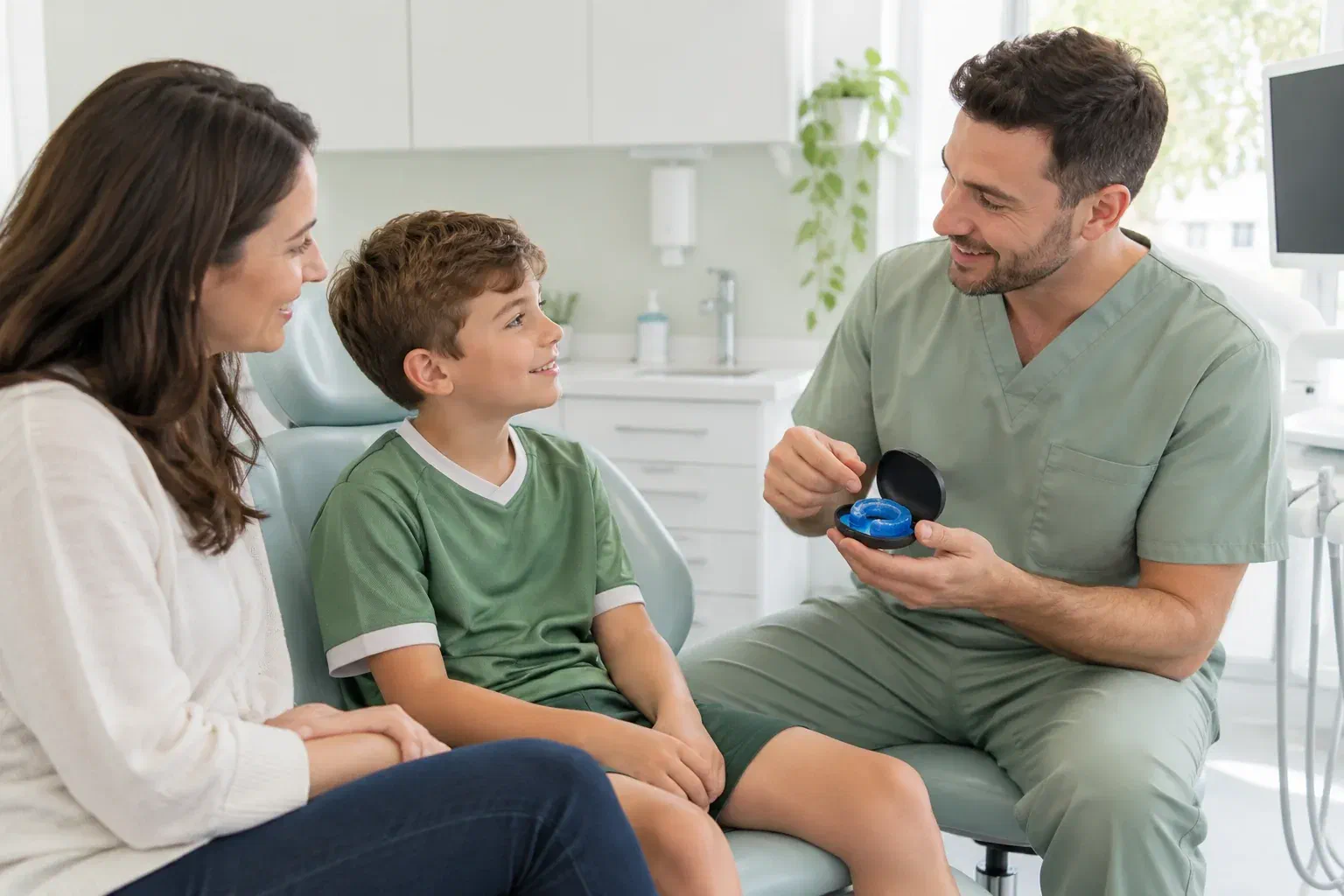
Illustrative young athlete and parent discussing a sports mouthguard with a clinician
Children’s Dentistry

Sports Mouthguards for Children in Caledon

As children move up to faster, more physical levels of play, they also start managing their own gear. We help preteens and teens choose a sports mouthguard that fits, feels manageable and suits braces or new molars, and we hand them the know-how to look after it.

Older kids and teens in Caledon

Bigger hits, more independence, a better-fitting guard

Somewhere around the preteen years, two things change at once. Play gets quicker and more physical, and parents stop packing the bag. That makes it a natural point to look again at the mouthguard, and to make sure your child understands why it matters and how to manage it alone.

Encourage your preteen or teen to lead part of the conversation. They can tell us which sports they play and at what level, what they like or dislike about the current guard, and whether they have had braces put on, new molars arrive, or any earlier injury to the mouth. Parents fill in the rest.

Older children are often more self-conscious, too. A guard that looks bulky, affects how they sound or feels awkward in front of teammates is easy to leave in a pocket. Talking through those concerns honestly is part of finding something they will use. Households across Caledon can ask for a visit that covers all of this at once.

Book a mouthguard visit for your preteen or teen
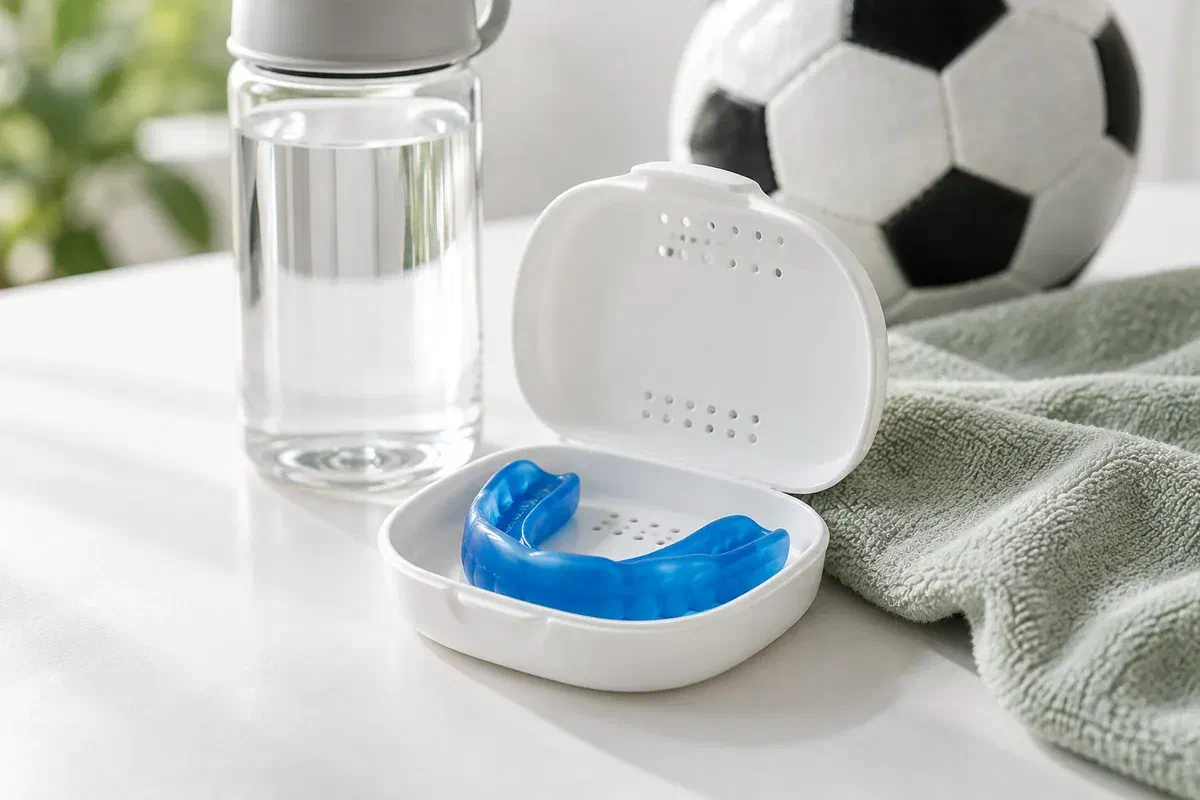
Illustrative blue sports mouthguard in a ventilated case beside sports equipment
New level, new questions

What shifts as your child gets older

The guard that suited a younger player may not keep up. Review it before tryouts and whenever teeth, braces or the sport itself change.

Faster, more physical play

Body contact, checking, tackles and harder shots raise the stakes for the mouth, and so do activities like mountain biking or snowboarding. Discuss all of them with the dentist, and ask how a guard works alongside the helmet, face protection and rules at each level.

A guard they won’t admit bothers them

Teens may hide that a guard slips, rubs or makes it hard to breathe or speak. Ask privately, and bring it for assessment instead of cutting it at home. Make it clear that saying it doesn’t work is better than quietly not wearing it.

Braces, second molars and growth spurts

Orthodontic treatment, molars erupting at the back and changes in the jaw can all alter fit. Share the orthodontic timeline with the clinician, and ask whether the guard should allow for planned movement and when it should be rechecked.

Even with a guard in, a hit to the mouth may need an injury assessment. Protection reduces risk but cannot confirm that teeth and soft tissues escaped damage.

What a good guard offers older players

Protection they can take ownership of

A properly fitted mouthguard helps reduce the risk of injury to the teeth and the surrounding soft tissue. Custom-fitted guards are an option the Canadian Dental Association encourages families to consider. For older players, a guard that stays seated during fast, physical play is better positioned to help.

It still has clear limits. A guard doesn’t stand in for a helmet, a cage or visor, sound rules or a medical check after a possible head injury. Be cautious of anyone suggesting it prevents concussion or rules out dental injury.

Patient information: Canadian Dental Association — preventing sports-related oral injuries

A fit based on a maturing mouth

The clinician considers your teen’s teeth, bite and any appliance, not a size chart. Ask how fit will be checked and what the guard should feel like, and let your teen describe their experience in their own words.

Skills to manage it independently

A calm try-on lets your teen practise inserting, removing, cleaning and storing the guard without a parent doing it for them. Encourage them to ask their own questions, and to report discomfort rather than put up with it.

A plan through the teen years

Growth and orthodontic treatment continue to change the fit. Ask which signs should prompt a visit, and remind your teen to bring the guard to dental appointments. The goal is protection that suits each stage.

How the visit runs

Your teen talks, we examine, together you decide.

Plan ahead of tryouts or the new season. Timing depends on the guard chosen, and an assessment doesn’t mean a guard is ready the same day.

  1. Hear from your teen first

    We ask about the sport, level, existing gear, earlier injuries and orthodontic treatment, and what your teen thinks of the current guard. Bring it along. Let us know if they find things in the mouth hard to tolerate.

  2. Examine and weigh the options

    The clinician checks the teeth, bite, erupting molars and appliances, then explains how custom and retail guards differ for your teen. Ask about visits, cost and likely replacement, and let your teen weigh in on the choice.

  3. Records for a custom guard

    If custom is chosen, records of the teeth are taken using the method the clinician arranges. Mention a strong gag reflex or sensory concerns beforehand. Ask how long it will take to make and whether a fitting appointment is part of it.

  4. Fit it and hand over the routine

    At the fitting we check that it stays in place and that your teen can breathe and speak with it. They practise handling it and learn cleaning and storage themselves. Agree on a review date, and on what to do about a tear, a braces adjustment or a change in fit.

Their guard, their routine

Care habits your teen can own

Follow the directions for the specific guard. Check in now and then, even once your teen is managing it on their own.

Clean, dry, case

Rinse and clean the guard after use as directed, with products suited to its material. Let it dry and store it in a ventilated protective case, not loose in a bag. Keep it away from heat, including a hot car.

Spot damage early

Look for tears, worn spots, warping and sharp edges. Chewing on the guard between shifts wears it down, so encourage proper use. Don’t lend it to teammates, and don’t try to fix damaged material with glue.

Reassess after changes

Bring the guard to dental visits and call sooner if it stops fitting comfortably. Braces adjustments, erupting molars and new restorations can all change the fit. How it sits today matters more than its age.

Patient information: Fraser Health — choosing and caring for sports mouthguards

Comparing types

Choose with your teen, not for them.

Cost and convenience count alongside fit. The right option is one your teen will wear properly and look after.

For an individual fit at a faster level of play

Custom-fitted sports guard

Built from records of your teen’s teeth, it is planned around their mouth as assessed. It still needs fitting, care and review, especially during orthodontic treatment or growth. Ask what the process covers and how long it is likely to fit.

For a more accessible choice

Retail guard, reviewed first

Stock and mouldable guards differ in fit and preparation. Bring the guard you are considering so the dentist can judge whether it suits your teen’s teeth and any braces. Follow the package directions closely.

For teens in orthodontic treatment

Guard coordinated with braces

Ask the orthodontic clinician about a sports guard that suits the appliance and the movement still planned. Aligners and retainers are not built to absorb impact. Confirm the plan before your teen wears more than one device during sport.

Questions from parents of older players

Mouthguards for preteens and teens

Common questions cover independence, braces, looks, cleaning and lost guards. Regular fit checks keep the answers current.

(905) 876-4488
My teen says the guard looks silly. How can we get them to wear it?
Listen to what bothers them, whether it is bulk, sound or appearance. A fit review may help, and some guard types offer choices in colour. Explaining what the guard protects can also help a teen decide for themselves.
At what age can my child take charge of their own mouthguard?
It varies. Many preteens and teens can manage cleaning and storage with occasional checks. Let the dentist show your child the routine, and keep an eye on the guard’s condition and fit.
Do second molars coming in affect the fit of a guard?
They can. As back teeth erupt, a guard may start to feel tight or no longer seat properly. Bring it in if your teen notices a change, and ask whether it can be adjusted or needs replacing.
Does a better guard mean less concussion risk at higher levels of play?
A mouthguard should not be relied on to prevent concussion. It protects the mouth, while helmets, safe play and proper assessment after a hit remain essential. Follow the league’s concussion protocol and seek medical advice when needed.
Should my teen keep wearing a guard after their braces come off?
Yes, if the sport calls for protection, but the guard will likely need to be reassessed or replaced since the teeth and appliances have changed. Ask the dentist about timing, and about how to protect any retainer.
Can a visit from Caledon cover both a checkup and a new guard?
Ask when booking. It may be possible to discuss the guard at a routine visit. A custom guard still needs records and a fitting, so ask how those appointments are likely to fit around your teen’s season.
Teen and preteen mouthguards for Caledon

A guard that keeps up with the game.

Contact our Bronte Street practice to plan a mouthguard visit. Ask your teen to bring their current guard and a list of their sports, and share details of braces or recent dental changes.

We discuss the guard type, fit, production time and when to replace it for each young player. An injury still needs assessment, with or without a guard.

Visit Milton Dental Clinic
Unit 1, 342 Bronte St. S, Milton, ON L9T 5B7
Get directions Clinic hours
Monday–Thursday
11am–7pm
Friday–Sunday
By appointment only

Areas we serve

  • Milton
  • Oakville
  • Mississauga
  • Georgetown
  • Halton Hills
  • Acton
  • Campbellville
  • Brampton
  • Burlington
  • Puslinch
  • Rockwood
  • Erin
  • Caledon
  • Etobicoke
  • Old Milton
  • Bronte Meadows
  • Timberlea
  • Dorset Park
  • Dempsey
  • Clarke
  • Beaty
  • Coates
  • Harrison
  • Scott
  • Willmott
  • Ford
  • Bowes
  • Cobden
  • Walker
  • Mountain View
  • Milton Heights
  • Hawthorne Village
  • Valley View
  • Fallingbrook
  • Nassagaweya
  • Trafalgar
  • Esquesing
  • Nelson
  • Brookville
  • Moffat
  • Glen Williams
  • Norval
  • Limehouse
  • Stewarttown
  • Ashgrove
  • Hornby
  • Silver Creek
  • Speyside
  • Scotch Block
  • North Oakville
  • River Oaks
  • Glen Abbey
  • West Oak Trails
  • Palermo
  • Bronte Creek
  • College Park
  • Joshua Creek
  • Uptown Core
  • Preserve
  • Iroquois Ridge
  • Lisgar
  • Meadowvale
  • Meadowvale Village
  • Churchill Meadows
  • Erin Mills
  • Central Erin Mills
  • Streetsville
  • East Credit
  • Creditview
  • Heartland
  • Sheridan
  • Mount Pleasant
  • Credit Valley
  • Huttonville
  • Churchville
  • Springbrook
  • Northwest Brampton
  • Bram West
  • Fletcher's Meadow
  • Fletcher's Creek South
  • Alton Village
  • Orchard
  • Millcroft
  • Headon Forest
  • Tansley
  • Brant Hills
  • Tyandaga
  • Kilbride
  • Lowville
  • Aberfoyle
  • Morriston
  • Arkell
  • Hillsburgh
  • Freelton
  • Carlisle
  • Waterdown
  • Flamborough
  • Mountsberg

How can we help?

Milton Dental Clinic

Have a question about your smile? Choose the option that works best for you.

For urgent dental concerns, please call.
Messages are reviewed during clinic hours.