
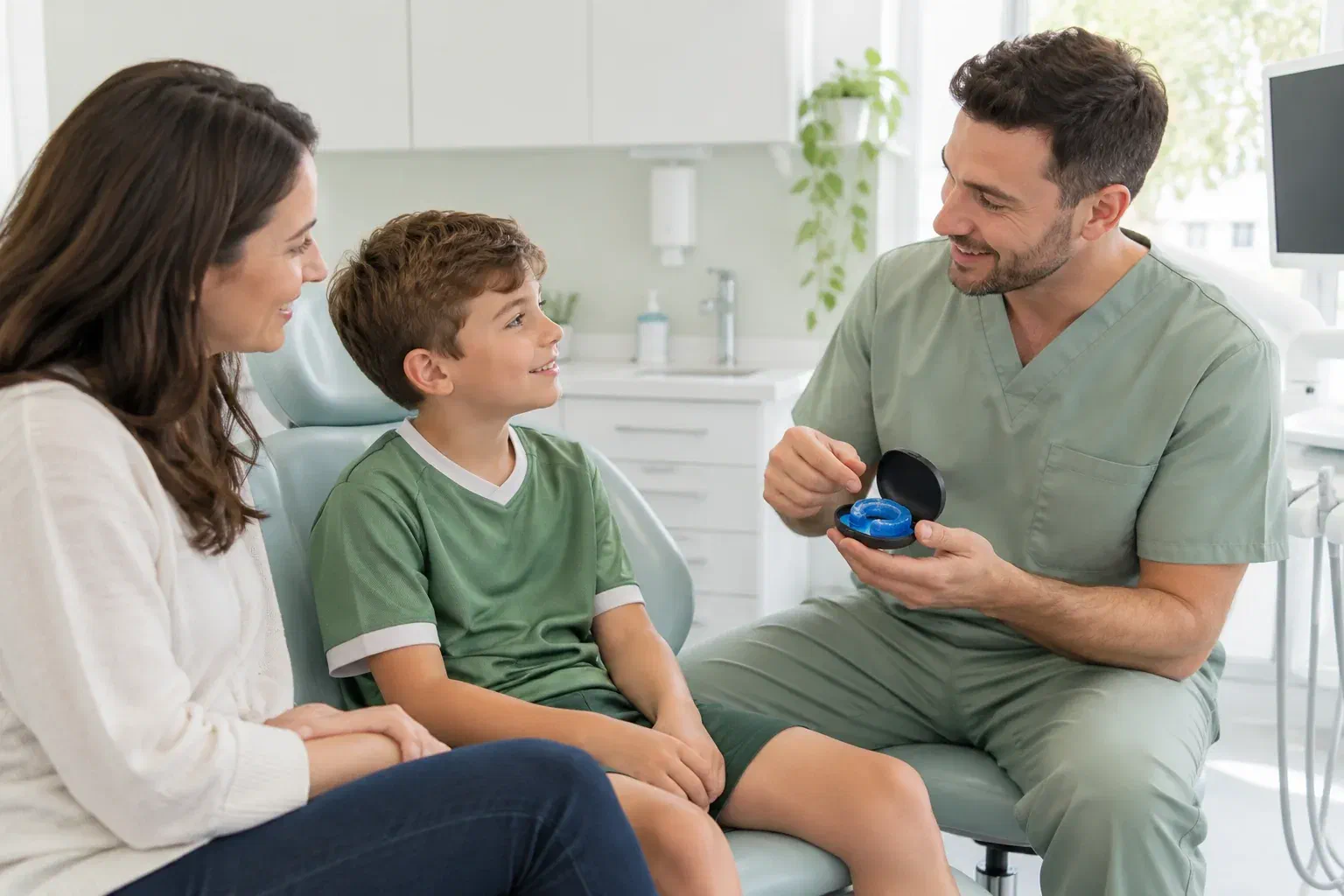
Illustrative young athlete and parent discussing a sports mouthguard with a clinician
Children’s Dentistry

Sports Mouthguards for Children in Etobicoke

A custom mouthguard usually means more than one appointment, so it pays to plan. We help you organise the assessment, records and fitting around your child’s season, explain the options clearly, and talk about what to do if an injury happens far from our office.

Planning visits from Etobicoke

Fewer trips, better timing.

When the dental office is not around the corner, the calendar matters. A custom sports guard involves an assessment, records of the teeth and a fitting, and those steps work best when they are mapped out against tryouts, the first game and school commitments rather than squeezed in at the last minute.

Making the most of each trip from Etobicoke starts at home. Pack your child’s current guard, a list of their sports, and notes about any teeth that have fallen out or come in recently. Tell us about past mouth injuries and orthodontic plans when you book, so the first visit can cover as much ground as possible.

We also want your child’s view. A guard they find bulky, loose or hard to speak through tends to vanish from the routine, and that problem is far easier to address in the chair than discovered halfway through the season.

Schedule your child’s mouthguard visits
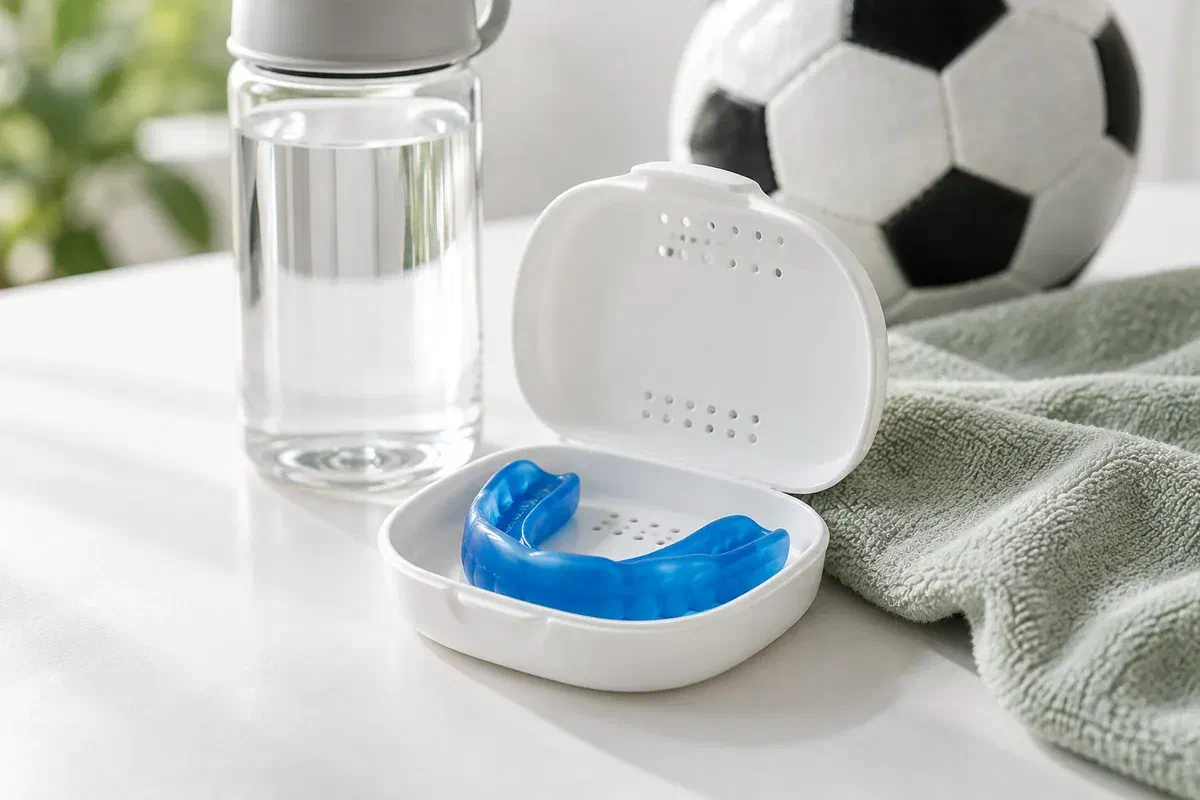
Illustrative blue sports mouthguard in a ventilated case beside sports equipment
Things to sort out early

Worth knowing before you make the first trip

Last year’s guard can quietly stop fitting. Bring it to the first appointment, and keep notes on any problems that come up between visits.

The full list of activities

Include everything with a risk of contact, falls or flying equipment, from league games to weekend skating and cycling. The dentist can discuss where mouth protection fits beside helmets, face shields and the rules of each activity, whether or not a guard is required.

Fit problems your child has been hiding

Ask directly whether the guard slips, rubs, or has to be clenched to stay up. Write down what your child says and bring the guard rather than trimming it. Children often keep quiet about discomfort if they think the guard is new and expensive.

Teeth that will change soon

Loose primary teeth, erupting adult teeth and planned braces can all shorten a guard’s useful fit. Share the orthodontic timeline so the plan can account for it, and ask how far ahead the next review should be booked to save extra trips.

After a knock to the mouth, an injury assessment may be needed even though a guard was worn. A mouthguard reduces risk but cannot confirm that teeth and tissues are unharmed.

Why a planned fit is worth it

A guard that fits is more likely to be worn, and to help.

Properly fitted mouthguards help reduce the risk of injuries to teeth and the soft tissues around them, and the Canadian Dental Association recommends considering custom-fitted guards. A guard can only contribute if it stays put during play, so time spent getting the fit right is time well used.

Remember what it can’t do. A mouthguard is not a substitute for a helmet, face protection, sensible rules or medical assessment after a possible head injury, and you should be cautious of any claim that it prevents concussion or guarantees against dental injury.

Patient information: Canadian Dental Association — preventing sports-related oral injuries

Advice based on an actual exam

The clinician looks at your child’s teeth, bite and appliances rather than going by an age on a package. Ask how fit will be checked at the fitting and what a good guard should feel like. Your child’s comments help guide the result.

Practice built into the fitting

At the fitting your child practises inserting, removing and storing the guard without game-day pressure. Ask every question you have while you are there, since it saves a call or another trip later. Report discomfort rather than accepting it.

Reviews timed with regular checkups

Because a growing mouth keeps changing, the fit needs revisiting. Ask which changes would justify a special visit and which can wait for the next routine appointment, and bring the guard each time you come in.

Mapping out the appointments

What each visit covers

Start planning several weeks before the season if you can. The timeline depends on the guard chosen, and the first assessment does not include a finished custom guard.

  1. Book with the details in hand

    When you call, mention the sport, age group, existing equipment, past injuries and orthodontic plans. Bring the current guard to the visit. Let us know about any difficulty your child has tolerating things in the mouth so the appointment can be paced well.

  2. Assessment and a clear comparison

    The clinician checks the teeth, bite, erupting teeth and appliances, and explains how custom and retail guards differ for your child. Ask how many visits each route involves, the cost, and when a replacement is likely, so you can plan the trips.

  3. Records, ideally at the same visit

    If you choose custom, ask whether records of the teeth can be taken during the same appointment, using the method the clinician arranges. Mention a strong gag or sensory concerns ahead of time, and confirm when the guard should be ready for fitting.

  4. Fitting and a care walkthrough

    At delivery we check retention, comfort, breathing and speech, and your child practises with the guard. We review cleaning and storage, and agree on the next review. Ask what to do if a tooth erupts, the guard tears, or braces change the fit before then.

Between visits

Look after the guard so it lasts until the next check.

Follow the instructions for your child’s guard material and design. Younger children usually need a parent to keep the routine going.

A daily clean-and-dry habit

Rinse and clean the guard as you were shown, with products suitable for its material. Let it dry before it goes back in a ventilated case. Heat can warp it, so don’t leave it in the car on a warm day or near a heater.

Quick inspections

Every week or two, check for tears, worn areas, warping or sharp edges. Encourage your child not to chew on it between plays. It should never be shared, and a damaged guard should not be repaired with glue.

Call before driving in

If the guard stops seating comfortably after a tooth comes out or comes in, after a filling, or after braces are adjusted, phone first and describe the change. We can advise whether it needs a visit now or can wait for the next appointment.

Patient information: Fraser Health — choosing and caring for sports mouthguards

Options and how many visits they take

Comparing guards with the calendar in mind

Cost, availability and travel are reasonable things to weigh along with the teeth. Ask which options your child can use well in their situation.

When an individual fit is wanted

Custom-fitted mouthguard

Fabricated from records of your child’s teeth, it is designed for the mouth assessed at that visit. It needs a fitting appointment, ongoing care and reviews as teeth change. Ask what is included and how growth may affect replacement timing.

When an accessible option is preferred

Reviewed retail guard

Stock and mouldable guards vary in fit and preparation. Bring the one you have, or plan to buy, so the dentist can comment on suitability with erupting teeth or braces. Follow the product instructions, and don’t assume a children’s size will fit well.

When an appliance changes things

Guard planned alongside braces

Coordinate with your child’s orthodontic clinician on a sports guard that leaves room for the appliance and future tooth movement. Retainers, aligners and night guards serve other purposes. Agree on a single plan before your child wears more than one device.

Planning questions

Getting it done without extra trips

Families ask about timing, the number of visits, growth and what to do after an injury. Some answers depend on your child’s teeth on the day.

(905) 876-4488
How many appointments does a custom mouthguard usually involve?
Typically there is an assessment, records of the teeth and a fitting, though how these are combined can vary. Ask when you book how the visits are likely to be arranged for your child and whether any steps can happen at the same appointment.
If my child injures a tooth at a game near home, should we drive to your office?
Not necessarily. Get prompt advice, and use closer urgent dental or medical care when that is the faster option. Serious facial injuries, breathing difficulty or signs of a head injury need emergency care right away.
Can the guard check be done during my child’s regular dental visit?
Often, yes. Bring the guard to routine appointments so its fit can be reviewed. If you are hoping to discuss a new guard at the same time, mention it when booking so time can be set aside.
Does a custom guard reduce concussion risk for my child?
A mouthguard should not be relied on for concussion prevention. It helps protect the teeth and soft tissue, while helmets, safe play and assessment after an impact remain essential. Follow the sport’s concussion protocol and seek medical advice when needed.
Is it worth getting a custom guard if new teeth are due soon?
Ask the dentist. Upcoming changes may affect how long the guard fits, which is part of the decision. The clinician can explain the trade-offs and suggest when a review would make sense.
What should we do if the guard cracks the week before a tournament?
Call and describe the damage. Don’t glue or trim it. Ask what suitable protection your child can use for the tournament and how a replacement can be arranged with as few extra trips as possible.
Children’s mouthguards for Etobicoke families

Map out the visits, then let your child play.

Call our Bronte Street practice to plan your child’s sports protection. Bring the current guard and a list of activities, and tell us about any braces or recent dental changes so we can make each trip count.

Guard type, fit, fabrication time and replacement are discussed individually. A dental injury still needs assessment even with a guard in place.

Visit Milton Dental Clinic
Unit 1, 342 Bronte St. S, Milton, ON L9T 5B7
Get directions Clinic hours
Monday–Thursday
11am–7pm
Friday–Sunday
By appointment only

Areas we serve

  • Milton
  • Oakville
  • Mississauga
  • Georgetown
  • Halton Hills
  • Acton
  • Campbellville
  • Brampton
  • Burlington
  • Puslinch
  • Rockwood
  • Erin
  • Caledon
  • Etobicoke
  • Old Milton
  • Bronte Meadows
  • Timberlea
  • Dorset Park
  • Dempsey
  • Clarke
  • Beaty
  • Coates
  • Harrison
  • Scott
  • Willmott
  • Ford
  • Bowes
  • Cobden
  • Walker
  • Mountain View
  • Milton Heights
  • Hawthorne Village
  • Valley View
  • Fallingbrook
  • Nassagaweya
  • Trafalgar
  • Esquesing
  • Nelson
  • Brookville
  • Moffat
  • Glen Williams
  • Norval
  • Limehouse
  • Stewarttown
  • Ashgrove
  • Hornby
  • Silver Creek
  • Speyside
  • Scotch Block
  • North Oakville
  • River Oaks
  • Glen Abbey
  • West Oak Trails
  • Palermo
  • Bronte Creek
  • College Park
  • Joshua Creek
  • Uptown Core
  • Preserve
  • Iroquois Ridge
  • Lisgar
  • Meadowvale
  • Meadowvale Village
  • Churchill Meadows
  • Erin Mills
  • Central Erin Mills
  • Streetsville
  • East Credit
  • Creditview
  • Heartland
  • Sheridan
  • Mount Pleasant
  • Credit Valley
  • Huttonville
  • Churchville
  • Springbrook
  • Northwest Brampton
  • Bram West
  • Fletcher's Meadow
  • Fletcher's Creek South
  • Alton Village
  • Orchard
  • Millcroft
  • Headon Forest
  • Tansley
  • Brant Hills
  • Tyandaga
  • Kilbride
  • Lowville
  • Aberfoyle
  • Morriston
  • Arkell
  • Hillsburgh
  • Freelton
  • Carlisle
  • Waterdown
  • Flamborough
  • Mountsberg

How can we help?

Milton Dental Clinic

Have a question about your smile? Choose the option that works best for you.

For urgent dental concerns, please call.
Messages are reviewed during clinic hours.