
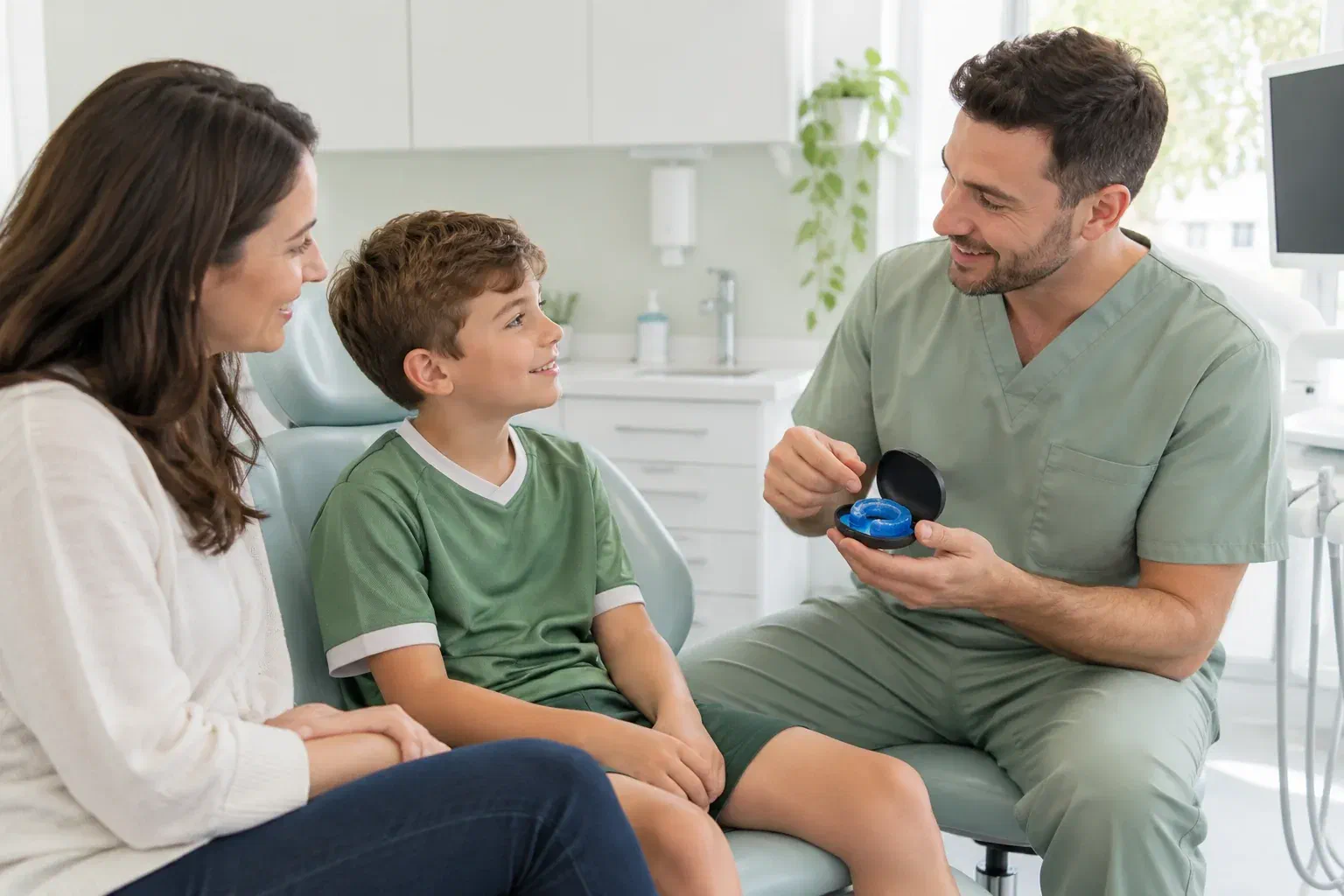
Illustrative young athlete and parent discussing a sports mouthguard with a clinician
Children’s Dentistry

Sports Mouthguards for Children in Georgetown

Between about six and twelve, teeth come and go on their own schedule, often in the middle of a season. We help you choose a sports mouthguard that suits a mixed set of baby and adult teeth, check it as gaps open and fill, and keep your child comfortable enough to wear it.

Georgetown · growing smiles

A gap-toothed grin under the helmet

Picture an eight-year-old who lost a front tooth on Tuesday and has a game on Saturday. The guard went in easily last month. Now there is a gap, a wobbly neighbour, and an adult tooth just breaking through. Mouthguards for children in this mixed stage need more attention than adult ones.

For families from Georgetown, the simplest step is to bring the guard and your child together. We can see how it sits against the teeth that are there today. Tell us which teeth have come out recently, which feel loose, and whether braces or an appliance are being discussed, along with any past injury to the mouth.

Children are often the first to notice a change. Ask yours whether the guard now presses on one spot, wiggles, or feels strange when they talk. A small complaint can be an early sign that the fit needs another look.

Book a fit check for a changing smile
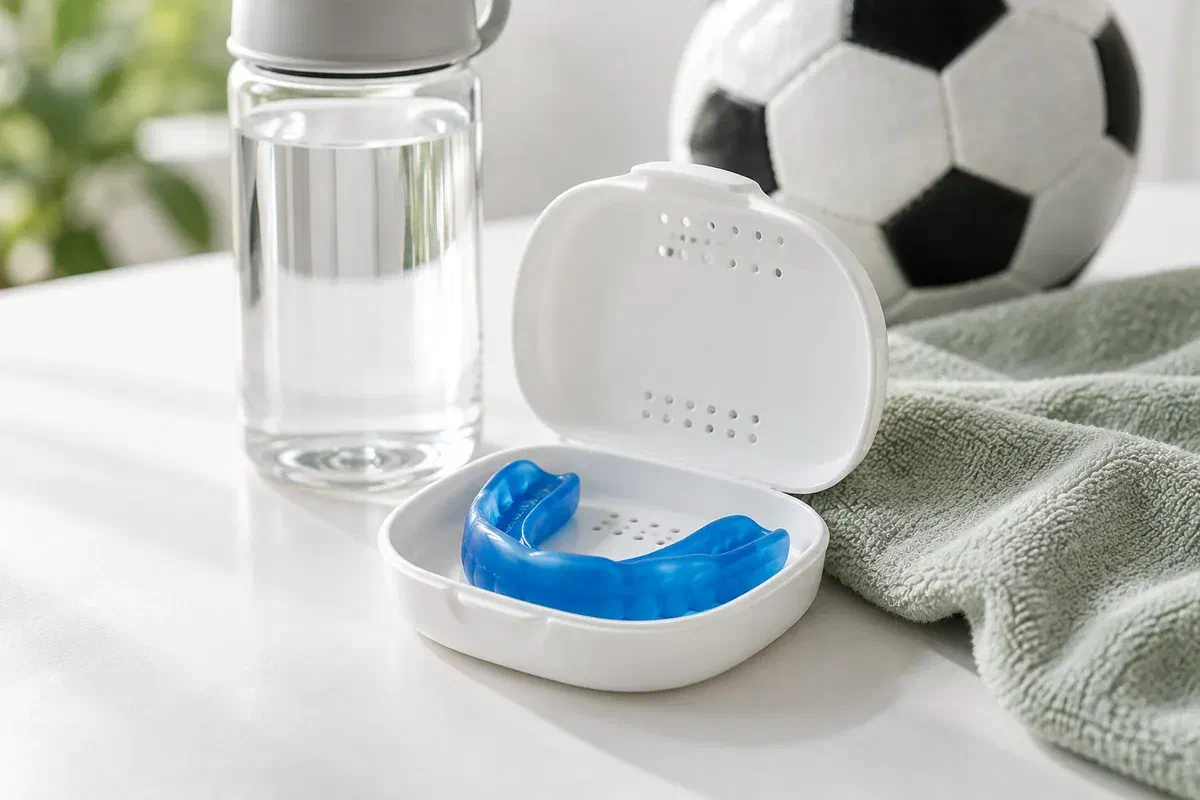
Illustrative blue sports mouthguard in a ventilated case beside sports equipment
During the mixed-teeth years

Why fit changes faster than you expect

A guard may fit in September and not in November. Plan a check before the season, and come back whenever teeth fall out or arrive.

The sport and the setting

Whatever your child plays, from house-league soccer to hockey to gymnastics, describe it to the dentist, along with less formal activities. Ask how a guard works alongside their helmet, face protection and the safety rules for that activity.

Pressure on a loose or new tooth

A guard that pushes on a wobbly tooth, rubs over a new one or no longer stays up needs reviewing. Resist the urge to trim it, and reassure your child that pointing it out is helpful.

The adult teeth still on their way

As permanent teeth erupt and baby teeth are lost, the shape the guard has to hold keeps shifting. If braces or another appliance are planned, mention it, and ask the clinician how often the guard should be checked during this stage.

If your child takes a blow to the mouth, an injury assessment may still be needed, especially with loose or newly erupted teeth. A guard reduces risk; it doesn’t rule out damage.

Protection that keeps up

Fit that follows the teeth, not the calendar

A well-fitted sports mouthguard helps reduce the risk of injury to teeth and the surrounding soft tissue. Custom-fitted guards are among the options the Canadian Dental Association suggests considering. During the mixed-teeth years, a guard that stays in position is especially dependent on regular fit checks.

Even the best-fitting guard has limits. It works with, not instead of, a helmet, face protection, rules of play and medical assessment after a suspected head injury. Treat any suggestion that it prevents concussion or every dental injury with caution.

Patient information: Canadian Dental Association — preventing sports-related oral injuries

Fit decided by what is in the mouth today

The clinician looks at which teeth are present, how they meet and any appliance, rather than going by age. Ask how the fit will be checked around gaps and new teeth, and invite your child to describe how it feels.

Practice with the new shape

When a guard is new or refitted, practising at the clinic lets your child get used to inserting, removing and storing it. Ask your questions there. If something presses or rubs, report it rather than waiting for it to settle.

A schedule of rechecks

With teeth changing often, ask which signs should prompt a visit and bring the guard to every dental appointment. The aim is protection that suits each phase of tooth development, not making one guard last regardless of fit.

Our process

Check the teeth, choose the guard, recheck as they change.

Start before the season if you can. How long it takes depends on the guard selected, and an assessment visit does not mean the guard is ready that day.

  1. Share the season and the tooth story

    Tell us the sport, age group, gear, past injuries and any orthodontic plans, plus which teeth have recently come out or come in. Bring the current guard. Mention any difficulty your child has with things in the mouth.

  2. Assess the mix of teeth

    The clinician checks primary and permanent teeth, the bite, eruption and any appliances, then explains how custom and retail guards compare at this stage. Ask about visits, cost and how often replacement may be needed while teeth are changing.

  3. Records, if going custom

    Custom guards are built from records of the teeth, taken in the way the clinician arranges. Let us know beforehand about gagging or sensory concerns. Ask when the guard will be ready and whether a fitting visit is included.

  4. Fit, practise, and plan the next look

    At delivery we check how well it stays in place and how your child breathes and speaks with it. They practise handling it, and we go over cleaning and storage. Agree on a recheck date and on which changes, such as a lost tooth or a torn edge, mean calling sooner.

Everyday care

Keep it clean, keep it cool, keep an eye on it.

Follow the instructions for the material and design of your child’s guard. Younger children generally need a parent’s help with the routine.

Clean and store it properly

Rinse and clean the guard as directed, using products suited to its material. Let it dry, then keep it in a vented protective case. Avoid heat; leaving it in a warm car can change its shape.

Watch for wear and chewing

Check for tears, worn patches, warping and rough edges. Children in this age group often chew their guards, so encourage proper wear instead. Keep it to one child, and replace a damaged guard rather than gluing it.

Recheck when a tooth changes

Bring the guard to dental visits, and call sooner when a tooth falls out or a new one arrives and the guard no longer seats comfortably. Fillings and braces matter too. A guard’s age says less than its current fit.

Patient information: Fraser Health — choosing and caring for sports mouthguards

Choosing a type

Options for a mouth that won’t stay the same

Consider cost and how often a guard may need replacing as well as the teeth. Ask which options your child can wear properly right now.

When an individual fit is the goal

A custom guard

Made from records of your child’s teeth, it is planned for the mouth at the time of assessment. With teeth changing, it will still need fitting, care and regular review. Ask how this stage of development may affect how long it fits.

When comparing store options

A retail guard, checked by the dentist

Stock and mouldable guards vary in fit and in the steps needed to prepare them. Have the dentist look at whether one suits your child’s mix of teeth or braces. Follow the package directions, and don’t take a children’s size as proof of a good fit.

When an appliance is in use or on the way

A guard planned around orthodontics

Talk to your child’s orthodontic clinician about a guard that allows for the appliance and planned tooth movement. Retainers, aligners and night guards are not built for sport. Confirm a plan before your child wears them together.

Questions about growing teeth

Mouthguards and the in-between years

Parents ask about loose teeth, new teeth, cleaning and lost guards. Many answers come down to a quick fit check.

(905) 876-4488
Is it worth buying a custom guard while my child still has baby teeth?
It depends on your child’s teeth, sport and how soon changes are expected. Ask the dentist to explain the trade-offs, including how often the guard may need review or replacement during this stage.
A new adult tooth is coming in. Should my child keep wearing the same guard?
Have the fit checked. A guard that seated well before may now press on or miss the new tooth. Bring it in, describe what your child notices, and ask what protection to use for upcoming games.
What should we do if my child’s loose tooth comes out during a game?
Stop play, keep your child calm and check for bleeding or other injury. Contact the dentist for advice, especially if you are unsure whether the tooth was a baby tooth or a permanent one. Seek urgent care for serious injury.
Will a guard keep my child from getting a concussion?
No. A guard protects oral structures but is not a concussion safeguard. Helmets, safe play and assessment after a hit remain important. Follow the sport’s concussion protocol and get medical advice if you suspect a head injury.
How often should a guard be checked during the mixed-teeth years?
There is no fixed rule. Bring the guard to routine dental visits and call sooner when teeth are lost or come in and the guard feels different. The dentist can suggest a review schedule for your child.
My child chews the guard during breaks. Does that matter?
It can. Chewing may thin or distort the guard and affect fit. Encourage your child to wear it properly, check it for damage, and bring it in if it looks worn or no longer seats well.
Children’s sports mouthguards for Georgetown

New tooth, new check.

Call our Bronte Street practice to arrange a mouthguard visit. Bring the guard your child uses now, a list of their sports, and details about recent tooth changes or any orthodontic plans.

Guard type, fit, timing and replacement are discussed for each child individually. Any injury still needs assessment, even with a guard in.

Visit Milton Dental Clinic
Unit 1, 342 Bronte St. S, Milton, ON L9T 5B7
Get directions Clinic hours
Monday–Thursday
11am–7pm
Friday–Sunday
By appointment only

Areas we serve

  • Milton
  • Oakville
  • Mississauga
  • Georgetown
  • Halton Hills
  • Acton
  • Campbellville
  • Brampton
  • Burlington
  • Puslinch
  • Rockwood
  • Erin
  • Caledon
  • Etobicoke
  • Old Milton
  • Bronte Meadows
  • Timberlea
  • Dorset Park
  • Dempsey
  • Clarke
  • Beaty
  • Coates
  • Harrison
  • Scott
  • Willmott
  • Ford
  • Bowes
  • Cobden
  • Walker
  • Mountain View
  • Milton Heights
  • Hawthorne Village
  • Valley View
  • Fallingbrook
  • Nassagaweya
  • Trafalgar
  • Esquesing
  • Nelson
  • Brookville
  • Moffat
  • Glen Williams
  • Norval
  • Limehouse
  • Stewarttown
  • Ashgrove
  • Hornby
  • Silver Creek
  • Speyside
  • Scotch Block
  • North Oakville
  • River Oaks
  • Glen Abbey
  • West Oak Trails
  • Palermo
  • Bronte Creek
  • College Park
  • Joshua Creek
  • Uptown Core
  • Preserve
  • Iroquois Ridge
  • Lisgar
  • Meadowvale
  • Meadowvale Village
  • Churchill Meadows
  • Erin Mills
  • Central Erin Mills
  • Streetsville
  • East Credit
  • Creditview
  • Heartland
  • Sheridan
  • Mount Pleasant
  • Credit Valley
  • Huttonville
  • Churchville
  • Springbrook
  • Northwest Brampton
  • Bram West
  • Fletcher's Meadow
  • Fletcher's Creek South
  • Alton Village
  • Orchard
  • Millcroft
  • Headon Forest
  • Tansley
  • Brant Hills
  • Tyandaga
  • Kilbride
  • Lowville
  • Aberfoyle
  • Morriston
  • Arkell
  • Hillsburgh
  • Freelton
  • Carlisle
  • Waterdown
  • Flamborough
  • Mountsberg

How can we help?

Milton Dental Clinic

Have a question about your smile? Choose the option that works best for you.

For urgent dental concerns, please call.
Messages are reviewed during clinic hours.