

Illustrative child and parent watching a brushing demonstration on a dental model
Children’s Dentistry

Teeth Cleaning for Children in Campbellville

Brown flecks near the gumline, a chalky line on a front tooth, a yellow edge that will not brush off: parents spot all sorts of things. From Campbellville, a children’s cleaning visit gives those marks professional attention and turns your questions into a clear home routine.

What you notice at the sink

Is that a stain, or something more?

Parents often notice changes on their child’s teeth before anyone else does. A dark speck on a molar, a creamy film that returns by evening, a white patch near the gum. Some of these are surface deposits that a cleaning can lift; others need the dentist to examine them. Telling the difference is part of what a visit is for.

When you arrive, mention exactly what you saw and when. Did the mark appear suddenly, or has it been there for months? Is it on one tooth or several? Tell the team who brushes, how often brushing is rushed, and whether your child protests at one spot. These observations are far more useful than trying to describe a textbook routine.

The clinician removes the deposits found during the appointment, which gives the dentist a clearer view. A demonstration afterwards helps you reach the areas where build-up keeps forming. Bear in mind that a mark disappearing under polishing is not the same as confirming there are no cavities or gum concerns.

Arrange a cleaning to check those marks
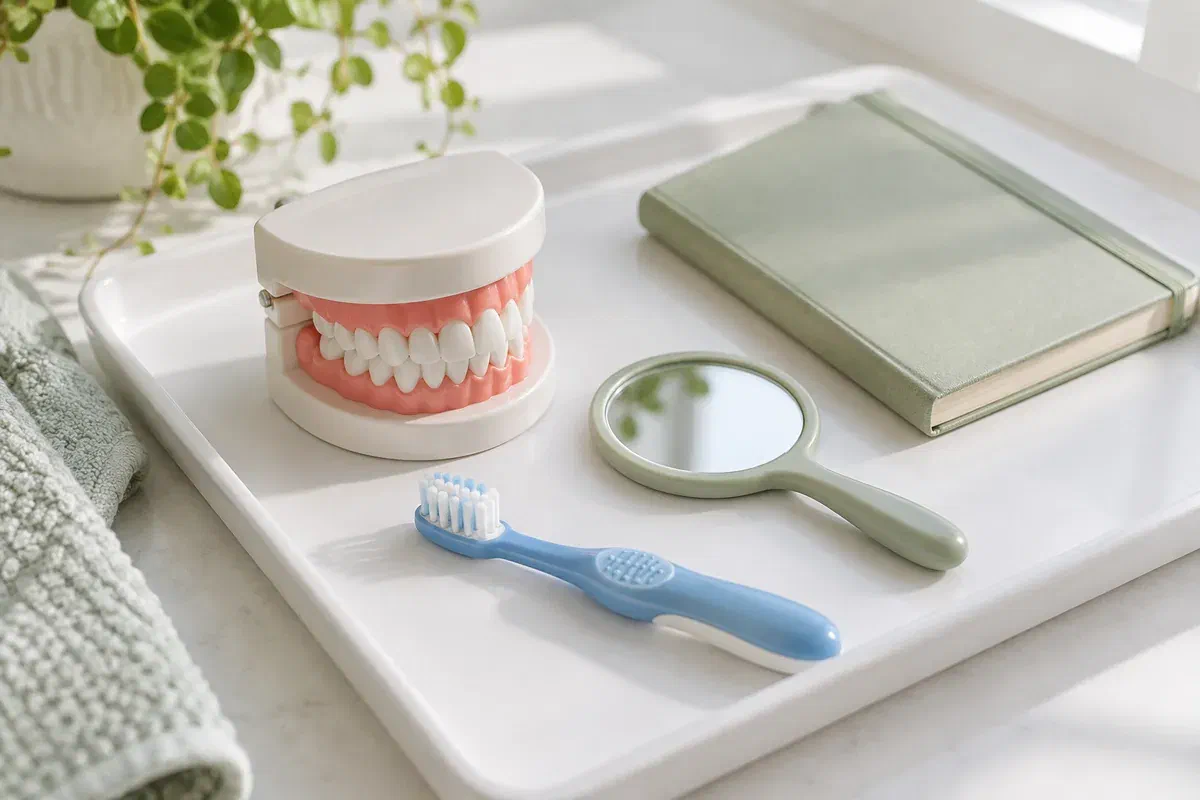
Illustrative child-sized toothbrush and dental teaching model for home-care instruction
Bring your observations

Marks, film, and tender spots are all worth raising.

There is no need to have a perfect routine before booking. A plain description of what you have seen helps the team decide whether it is a cleaning matter or one for the dentist.

Build-up where the brush seldom reaches

Deposits often gather on molars that are just coming in, in crowded areas, and along the gumline on the tongue side. Have the clinician show where it is collecting. Those same areas may be where the routine needs the most help.

Avoidance that hints at discomfort

If your child dodges the brush in one area, objects to the toothpaste, or dislikes adult help, describe it. Different causes call for different answers. A tooth with a mark that your child also avoids should be looked at, not just brushed harder.

Stains, bleeding, or food that catches

Point out discolouration that keeps returning, gums that bleed with gentle brushing, or spaces that collect food. Some marks are surface stains; others are not. The team needs to work out which before recommending care.

A mark accompanied by pain, swelling, or a broken edge deserves its own call. Your child may need an examination rather than starting with a cleaning.

Why a professional look helps

Sorting surface build-up from things that need a dentist

The clinician adapts the cleaning to the deposits present, the surfaces involved, and your child’s comfort. Professional tools can lift plaque, surface discolouration, and tartar that brushing cannot shift, and that makes the dentist’s examination clearer. It is also when you can see where the build-up keeps forming.

Even a thorough cleaning cannot replace the daily brush, and it will not treat a problem that is diagnosed separately. Ask what came off with cleaning and what remains to be assessed. Leaving with an answer about those marks, and a plan, is the useful outcome.

Patient information: AAPD — the role of professional cleaning in pediatric dentistry

Seeing where deposits form

Request that the team show you the surfaces where build-up gathers on your child’s teeth. Then practise angling the brush toward them. Doing it at the chair means questions can be answered on the spot.

Sharing the work sensibly

Children grow into brushing skills at their own pace. Agree which areas your child can tackle and which still need an adult to finish. A confident grip on the brush does not mean every surface is reached.

Watching for the marks to return

After the visit, check whether build-up or stains come back in the same places. Make a note, or take a photo if your child is happy to let you. Share what you notice at the next appointment.

Moving through the appointment

Observe, assess, clean, teach

When you book, it is reasonable to ask whether the dentist will examine the teeth and whether any preventive treatment is planned. You should understand the point of every step.

  1. Describe the marks, the routine, and health

    Explain what you have noticed, who brushes, and which products you use. Mention medicines, supplements, or health changes, since some can affect the teeth. A photo of the toothpaste label can help.

  2. Assess deposits and discolouration

    The clinician checks what can be cleaned and records findings for the dentist. Mention tender teeth in advance. Not every mark is a stain, and some need to be explained rather than polished away.

  3. Clean in the way your child needs

    Instruments and methods are chosen to match the findings and your child’s cooperation. Pauses and explanations are fine. Different teeth may need different approaches.

  4. Show how to keep build-up from returning

    The team reviews brushing and between-teeth cleaning, focusing on areas where deposits gather. Ask about the right toothpaste amount at your child’s stage and how much help is still needed. Find out when to return and whether any marks need further assessment.

In the weeks that follow

Keep an eye on the same spots.

If fluoride or another product was used, follow its instructions. Otherwise, continue with the home routine agreed at the visit.

Keep a soft, well-sized brush

Choose a soft brush with a head that fits your child’s mouth and a handle that suits whoever helps. Replace it when the bristles flatten. Scrubbing harder with an old brush will not remove stubborn deposits.

Finish the surfaces your child misses

Let your child brush first, then go over the areas where build-up tends to form. Match your help to what they can do. If the position you were shown does not let you see the back teeth, ask for another option.

Get in touch if marks change

If a mark grows, darkens, or comes with soreness or bleeding, contact the clinic. Describe what you have noticed and tried. Do not scrape at stains with sharp tools or abrasive products.

Patient information: Canadian Dental Association — cleaning children’s teeth

What kind of visit to request

Pick the service that fits what you have seen.

Cleaning, prevention, and diagnosis can happen in one visit, but they have different aims. Ask what the team suggests and why.

For surface build-up and everyday technique

Cleaning with targeted coaching

This appointment removes the deposits found and helps you practise reaching the areas where they gather. Describe the marks you want checked. Before you go, ask what was completed and how to monitor at home.

If a spot, soreness, or damage needs a diagnosis

An examination of a mark or symptom

Some marks cannot be explained or removed by cleaning. The dentist may examine the tooth closely and talk about further assessment. Mention the mark when booking so the visit is planned for it.

If your child’s risk or access needs suggest more

Additional prevention

Fluoride, sealants, changes in home care, or an adapted visit may be considered individually. Ask how each recommendation relates to your child’s risk. More treatment is not automatically better.

Questions about marks and build-up

Getting clear answers about what you have seen

A question about a single spot is a fine starting point. Plain words are enough.

(905) 876-4488
Can a cleaning remove dark stains on my child’s teeth?
Some surface stains can be removed during a professional cleaning. Others may not be stains at all, which is why the team will look carefully before polishing. Point out any marks you have noticed and when they first appeared, so the dentist can decide whether further assessment is needed.
What is the hard yellow build-up near my child’s gums?
It may be hardened plaque, sometimes called tartar, which brushing alone cannot remove. The clinician can assess and clean it where appropriate and show you how to reach that area better at home. Mention whether the gums there bleed or feel sore.
Could a white patch on a tooth be a problem?
White patches can have several causes, and some need the dentist’s attention. Mention any you see so they can be examined. Avoid trying to scrub or polish them away at home, and let the team know if the patch has changed in size or colour.
Do certain foods or drinks cause stains on children’s teeth?
Some foods, drinks, and other factors can contribute to surface staining. Tell the team about your child’s usual diet and any supplements or medicines. They can suggest whether anything in the routine might help reduce staining and what is worth keeping an eye on.
We live in Campbellville and would like to book siblings together. Is that possible?
Ask the clinic about scheduling when you call. Grouping appointments can make sense for rural households, but availability varies and each child’s visit depends on their needs. Share any concerns for each child in advance so the time can be planned properly.
Should I take photos of marks to show at the visit?
Photos can help show how a mark has changed over time, especially if it seems to come and go. Bring them along if you have them. The team will still need to examine the tooth directly to understand what the mark is.
Children’s cleanings for Campbellville households

Bring the questions those marks have raised.

Call our Bronte Street practice to book a cleaning for your child. Coming from Campbellville, let us know about any stains, build-up, or symptoms you have noticed, so the visit combines professional care with a clearer routine at home.

The cleaning method and any additional care depend on assessment. Let us know about marks, pain, or gum symptoms when booking.

Visit Milton Dental Clinic
Unit 1, 342 Bronte St. S, Milton, ON L9T 5B7
Get directions Clinic hours
Monday–Thursday
11am–7pm
Friday–Sunday
By appointment only

Areas we serve

  • Milton
  • Oakville
  • Mississauga
  • Georgetown
  • Halton Hills
  • Acton
  • Campbellville
  • Brampton
  • Burlington
  • Puslinch
  • Rockwood
  • Erin
  • Caledon
  • Etobicoke
  • Old Milton
  • Bronte Meadows
  • Timberlea
  • Dorset Park
  • Dempsey
  • Clarke
  • Beaty
  • Coates
  • Harrison
  • Scott
  • Willmott
  • Ford
  • Bowes
  • Cobden
  • Walker
  • Mountain View
  • Milton Heights
  • Hawthorne Village
  • Valley View
  • Fallingbrook
  • Nassagaweya
  • Trafalgar
  • Esquesing
  • Nelson
  • Brookville
  • Moffat
  • Glen Williams
  • Norval
  • Limehouse
  • Stewarttown
  • Ashgrove
  • Hornby
  • Silver Creek
  • Speyside
  • Scotch Block
  • North Oakville
  • River Oaks
  • Glen Abbey
  • West Oak Trails
  • Palermo
  • Bronte Creek
  • College Park
  • Joshua Creek
  • Uptown Core
  • Preserve
  • Iroquois Ridge
  • Lisgar
  • Meadowvale
  • Meadowvale Village
  • Churchill Meadows
  • Erin Mills
  • Central Erin Mills
  • Streetsville
  • East Credit
  • Creditview
  • Heartland
  • Sheridan
  • Mount Pleasant
  • Credit Valley
  • Huttonville
  • Churchville
  • Springbrook
  • Northwest Brampton
  • Bram West
  • Fletcher's Meadow
  • Fletcher's Creek South
  • Alton Village
  • Orchard
  • Millcroft
  • Headon Forest
  • Tansley
  • Brant Hills
  • Tyandaga
  • Kilbride
  • Lowville
  • Aberfoyle
  • Morriston
  • Arkell
  • Hillsburgh
  • Freelton
  • Carlisle
  • Waterdown
  • Flamborough
  • Mountsberg

How can we help?

Milton Dental Clinic

Have a question about your smile? Choose the option that works best for you.

For urgent dental concerns, please call.
Messages are reviewed during clinic hours.