

Illustrative child and parent watching a brushing demonstration on a dental model
Children’s Dentistry

Teeth Cleaning for Children in Erin

Some children walk into a cleaning curious; others cling to a parent’s sleeve. If your child is coming from Erin or Hillsburgh and feels uneasy, the visit can move at a steadier pace, pairing gentle professional care with brushing tips that carry over to home.

For the child who is not so sure

Butterflies before the chair

A bright light, an unfamiliar chair, and someone new peering into their mouth: it is understandable that a child might hesitate. Nervousness does not mean the visit will go badly. It simply means your child benefits from knowing what is coming and having some sense of control over the pace.

Let the team know ahead of time how your child tends to react to new situations. Do they like to watch first, ask lots of questions, or hold something familiar? It is equally helpful to describe home brushing: who helps, which areas are a battle, and whether a flavour or bristle texture causes complaints. Both pictures shape how the appointment unfolds.

During the cleaning, the clinician removes the build-up found and gives the dentist a good view, at a pace your child can manage. Afterwards, the team shows you how to reach difficult areas at home. A comfortable visit and shiny teeth do not by themselves confirm that no cavity or gum issue exists, so ask what was checked.

Book a calm, explained cleaning visit
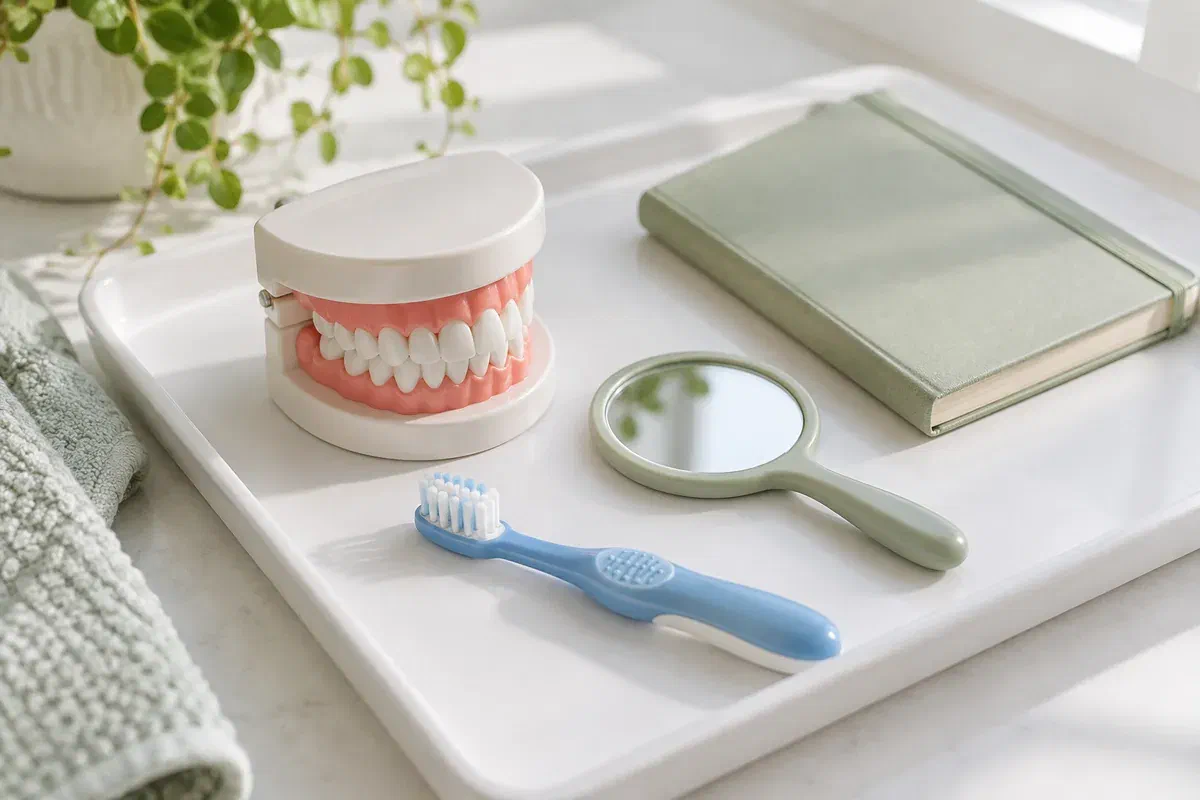
Illustrative child-sized toothbrush and dental teaching model for home-care instruction
Things to mention when you call

Nerves, trouble spots, and anything that hurts

You do not need to prepare a perfect report. Sharing worries and difficulties lets the team plan the visit and decide whether a technique change or an examination makes more sense.

Teeth your child will not let you reach

Nervous children often clamp down when the brush heads toward the back. Erupting molars and crowded teeth then get missed. Have the clinician show you those surfaces, and ask for tips on approaching them calmly.

Fear, dislike, or genuine discomfort

Your child may resist because they feel anxious, dislike the toothpaste or bristles, or because something actually hurts. Try to note which. A sore tooth can make a child more fearful of anyone touching their mouth, so do not assume it is nerves alone.

Build-up or bleeding you have noticed

Mention any visible deposits, gums that bleed with gentle brushing, or a spot that traps food. Brushing harder at home is not the solution. The team will want to understand the cause first.

If your child has sudden pain or swelling, phone about it before the cleaning. An assessment of that symptom may need to come first.

Why a gentle first experience matters

Building trust alongside clean teeth

The clinician fits the cleaning to what is found, the surfaces involved, and how settled your child feels. Professional care can remove plaque, stains, and hardened deposits, which helps the dentist examine the teeth clearly. Just as valuable, a calm visit can help your child feel more at ease next time.

No single visit replaces daily brushing, and a cleaning does not treat a diagnosed problem. Ask what the clinician was able to do and what might need another appointment. Leaving with a clear next step, and a child who feels okay about coming back, is a good result.

Patient information: AAPD — the role of professional cleaning in pediatric dentistry

A demonstration your child can join in

Ask the team to show the brushing technique in a way that lets your child take part, perhaps holding the brush or a mirror. Guidance should relate to your child’s mouth. Practise together before leaving.

Letting your child have some control

Agree on the parts your child can do and where an adult still needs to help. Giving them a role, such as starting the brushing, can reduce resistance while making sure the job is finished.

A gentle goal for home

Pick something small and achievable, such as letting you brush one back tooth each night without fuss. Celebrate progress quietly and share it at the next visit so the team can build on it.

What your child can expect

Explain first, then do, and pause whenever needed.

Ask when booking what the visit includes, such as an examination or fluoride, so you can describe it to your child. Every step should have a reason.

  1. Settling in and sharing information

    You tell the team how brushing goes, what products you use, and how your child is feeling. Mention medicines, health changes, or symptoms. Bring any product you have questions about.

  2. A gentle look at the teeth

    The clinician explains what they are doing and checks for deposits or anything the dentist should see. Tell them about sore spots first. Stains, swelling, or damage should be understood rather than polished over.

  3. Cleaning at your child’s pace

    Tools and techniques are chosen for the findings and how comfortable your child feels. Your child can raise a hand to pause. Not every tooth or every child needs the same approach.

  4. Practising for home together

    The team reviews brushing and appropriate between-teeth cleaning, focusing on the areas you raised. Confirm how much toothpaste suits your child’s stage and how much help to give. Ask when to return and whether anything else needs looking at.

Keeping the calm going at home

Make brushing feel safe and predictable.

Follow any product-specific instructions if a treatment was applied at the visit. Otherwise, carry on with the routine you discussed.

Use a brush your child is comfortable with

A soft brush with a head and handle that suit your child and the helper can make brushing feel less invasive. Replace it when the bristles wear. Letting your child pick the colour may help them feel involved.

Help without a struggle

Let your child start, then gently finish the surfaces they cannot reach. Keep a predictable order and a calm tone. If a position feels like a tussle, ask the team for alternatives.

Reach out if symptoms stick around

Bleeding, soreness, or food that keeps getting trapped is worth a call. Describe what you have tried. Avoid sharp objects, and do not push floss into an area that hurts.

Patient information: Canadian Dental Association — cleaning children’s teeth

Finding the right kind of visit

Not every appointment needs to do everything.

Cleaning, prevention, and diagnosis may be combined, but for a nervous child it can help to know what each one involves. Ask what is recommended and why.

When build-up and a calmer routine are the goals

A cleaning with gentle coaching

This visit deals with the cleaning needs found and helps your family practise brushing at home. Mention your child’s worries and the specific difficulty. Check what was completed and how to follow up.

When soreness, gum changes, or damage needs diagnosis

A dentist’s examination

Cleaning cannot explain or resolve every symptom. The dentist may examine the area and discuss next steps. Mention any symptom when booking so the visit is planned around it.

When risk, anxiety, or access calls for a different plan

Additional prevention or an adapted visit

Fluoride or sealants, a change in the home routine, or a shorter or differently paced appointment may be considered. Ask how the suggestion fits your child’s risk and comfort. More is not always better.

Questions from parents of anxious children

Helping a hesitant child through a cleaning

Ask anything about the visit or the routine. You do not need special vocabulary.

(905) 876-4488
How can I prepare my child for their first cleaning?
Use simple, positive language about what will happen, such as counting teeth and making them shiny. Avoid words that might sound frightening. Reading a children’s book about the dentist or practising at home with a mirror can help some children.
What happens if my child refuses to open their mouth?
The team aims to work with your child rather than push past their limits. They may try a slower pace, simple explanations, a count to three before each step, or letting your child watch on a parent’s teeth first. If the visit cannot be completed, they can talk with you about other options for next time, which might include a shorter, practice-style appointment.
Should I tell my child it will not hurt?
It is better to keep the description neutral and honest, focusing on what will happen. Most children manage a cleaning well, but a tender spot can be uncomfortable. Encourage your child to tell the team if anything bothers them.
Can my child bring a comfort toy or blanket?
Yes, a familiar item can help some children feel secure. Bring it along and let the team know if your child has a particular way of coping. Every small comfort can help the visit go more smoothly.
We live in Erin. Is a short first visit worth the trip?
A gentle first visit can help build trust, and it often includes useful advice even if not everything is done. Ask when booking what the appointment will cover so you can decide what works for your family.
My child had a bad experience before. Should I mention it?
Yes. Telling the team what happened, whether at a dental office, a doctor’s visit, or a hospital, helps them understand your child’s worries and adjust their approach. Share what helped or made things worse before, and whether your child prefers to be told everything in advance or to take things one step at a time.
Children’s cleanings for families coming from Erin

A calmer visit, and a routine to take home

Get in touch with our Bronte Street practice whenever your child is ready for a cleaning. Coming from Erin, mention your child’s worries, difficult areas, and any symptoms, so the visit can move at a comfortable pace and support your routine at home.

What the clinician does, and whether more care follows, depends on what the assessment shows. Tell us about pain, gum symptoms, or anxiety when you call.

Visit Milton Dental Clinic
Unit 1, 342 Bronte St. S, Milton, ON L9T 5B7
Get directions Clinic hours
Monday–Thursday
11am–7pm
Friday–Sunday
By appointment only

Areas we serve

  • Milton
  • Oakville
  • Mississauga
  • Georgetown
  • Halton Hills
  • Acton
  • Campbellville
  • Brampton
  • Burlington
  • Puslinch
  • Rockwood
  • Erin
  • Caledon
  • Etobicoke
  • Old Milton
  • Bronte Meadows
  • Timberlea
  • Dorset Park
  • Dempsey
  • Clarke
  • Beaty
  • Coates
  • Harrison
  • Scott
  • Willmott
  • Ford
  • Bowes
  • Cobden
  • Walker
  • Mountain View
  • Milton Heights
  • Hawthorne Village
  • Valley View
  • Fallingbrook
  • Nassagaweya
  • Trafalgar
  • Esquesing
  • Nelson
  • Brookville
  • Moffat
  • Glen Williams
  • Norval
  • Limehouse
  • Stewarttown
  • Ashgrove
  • Hornby
  • Silver Creek
  • Speyside
  • Scotch Block
  • North Oakville
  • River Oaks
  • Glen Abbey
  • West Oak Trails
  • Palermo
  • Bronte Creek
  • College Park
  • Joshua Creek
  • Uptown Core
  • Preserve
  • Iroquois Ridge
  • Lisgar
  • Meadowvale
  • Meadowvale Village
  • Churchill Meadows
  • Erin Mills
  • Central Erin Mills
  • Streetsville
  • East Credit
  • Creditview
  • Heartland
  • Sheridan
  • Mount Pleasant
  • Credit Valley
  • Huttonville
  • Churchville
  • Springbrook
  • Northwest Brampton
  • Bram West
  • Fletcher's Meadow
  • Fletcher's Creek South
  • Alton Village
  • Orchard
  • Millcroft
  • Headon Forest
  • Tansley
  • Brant Hills
  • Tyandaga
  • Kilbride
  • Lowville
  • Aberfoyle
  • Morriston
  • Arkell
  • Hillsburgh
  • Freelton
  • Carlisle
  • Waterdown
  • Flamborough
  • Mountsberg

How can we help?

Milton Dental Clinic

Have a question about your smile? Choose the option that works best for you.

For urgent dental concerns, please call.
Messages are reviewed during clinic hours.