

Illustrative child and parent watching a brushing demonstration on a dental model
Children’s Dentistry

Teeth Cleaning for Children in Etobicoke

When the trip from Etobicoke takes a chunk of the day, each children’s cleaning visit should earn its place. Come prepared with questions, the toothbrush, and notes on trouble spots, so professional care and home coaching happen together in one well-planned appointment.

Planning a longer trip

Pack the questions along with the snacks.

Travelling in from the west end of Toronto means you probably want fewer visits that each cover more ground. The easiest way to achieve that is to arrive with a short list: the surfaces your child keeps missing, the products in your bathroom, and anything that has changed since the last appointment.

Think about the week before you come. On which nights did brushing go badly, and why? Did your child complain about a particular tooth, or did you notice bleeding in one spot? Jotting these down on your phone gives the team a picture of real life at home, which shapes advice far better than a general reminder.

During the appointment, the clinician cleans away the deposits found and gives the dentist a clear view for any examination. You also get to practise the technique at the chair. Keep in mind that a polished, bright surface is not confirmation that cavities or gum problems have been ruled out.

Plan a well-organised cleaning visit
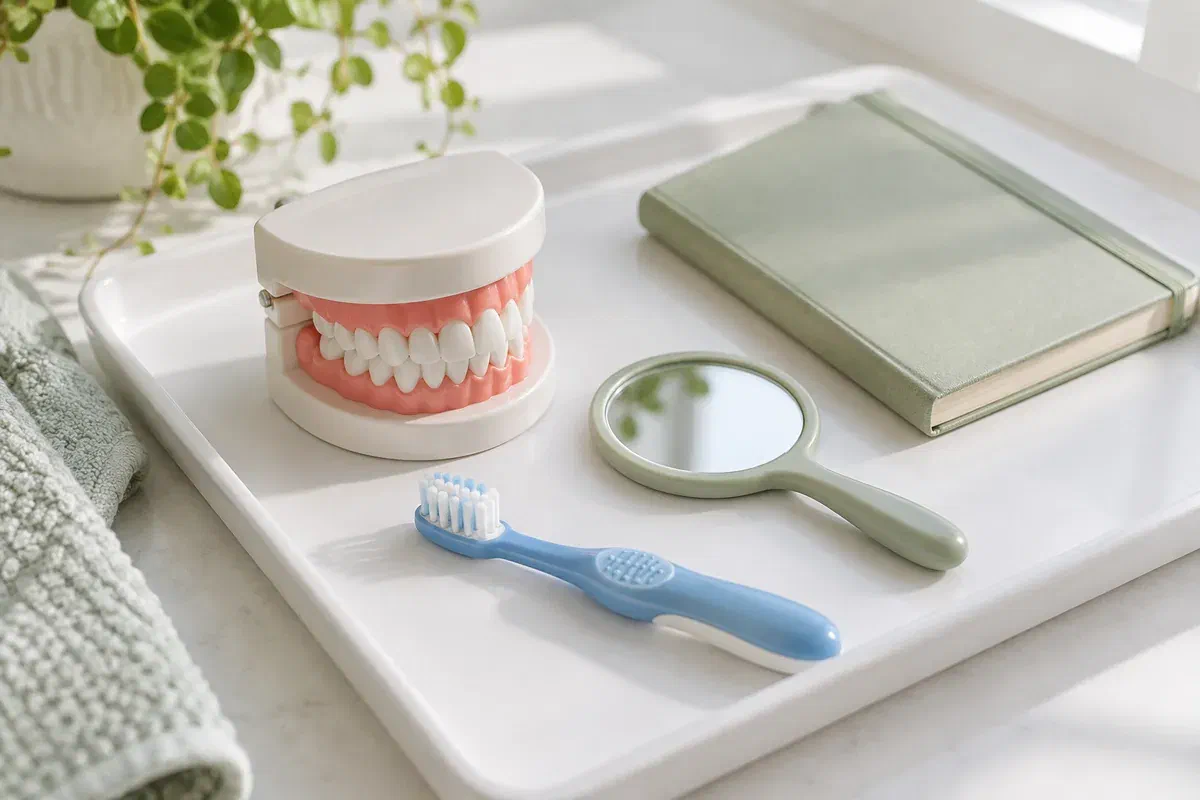
Illustrative child-sized toothbrush and dental teaching model for home-care instruction
What to note before you set out

Three things to jot down

Bringing a candid description of the difficulties is more useful than presenting an ideal routine. The team can then tell you whether a technique change will help or whether the dentist needs to examine something.

Teeth that never seem fully clean

Erupting back molars, overlapping teeth, and areas you cannot easily see are common culprits. Ask the clinician to point these out on your child, not just on a model. A brush can be busy without its bristles reaching the surface that matters.

Reluctance that might mean discomfort

Note whether your child resists your help, the toothpaste flavour, the bristle feel, or seems to be protecting a sore spot. These call for different responses. Reluctance should not automatically be read as defiance when an area has not been checked.

A recurring deposit, bleed, or food trap

Record where build-up keeps appearing, where gums bleed despite gentle brushing, or where food lodges repeatedly. Scrubbing harder will not identify the reason. The team needs to understand it before choosing appropriate care.

Before making the drive, phone about any sudden brushing pain or swelling. Your child may need a different kind of appointment first, or care closer to home if it is urgent.

Making one appointment go further

Clean teeth and a clear plan, in a single trip

What happens in the chair should be chosen for the deposits, surfaces, and your child’s comfort. Appropriate professional care can remove plaque, surface stains, or hardened deposits and helps the dentist see clearly. Because you have made the journey, ask for a hands-on demonstration rather than a quick verbal tip.

The visit is not a replacement for daily brushing, and it does not treat a diagnosed problem. Before leaving, ask what was completed and what still needs attention, and whether that can be combined with a future visit. You should head home knowing exactly what to do next.

Patient information: AAPD — the role of professional cleaning in pediatric dentistry

A demonstration you can remember later

Have the team show where to place the brush and how to move it gently on your child’s own teeth. Consider taking a note or asking permission to photograph the model. Practise the movement before leaving, since a follow-up question is harder once you are home.

Settling who does which part

Children gain independence and coordination at different rates. Agree which parts your child can handle and where an adult still needs to help. A child gripping the brush confidently does not mean every surface is covered.

A goal that bridges the gap between visits

Pick one specific thing to work on until your next trip, such as reaching the inner surfaces of the lower molars. Report back on what helped. Feedback makes the next appointment more efficient and more relevant.

From arrival to departure

An appointment built around your list

When you book, ask what the visit will include, such as an exam or fluoride, so you can plan your day. Each part should have a purpose you understand.

  1. Go through your notes and health updates

    Share the routine, products, and trouble spots you wrote down, along with medicines or health changes. If you are unsure about a toothpaste or rinse, bring it or a photo of the label so the team can comment on the real thing.

  2. Find deposits and anything for the dentist

    The clinician checks cleaning needs and notes findings that may need review. Tell them about tender spots first. Stains, swelling, or damage should be explained rather than treated as something to polish away.

  3. Clean using fitting techniques

    Instruments and methods are chosen based on findings and your child’s ability to cooperate. Ask for pauses or explanations as needed. Not every appointment needs the same tools or the same amount of cleaning on every tooth.

  4. Practise and plan the next visit

    Brushing and suitable cleaning between teeth are reviewed, focusing on your list. Confirm toothpaste advice for your child’s age and the right level of adult help. Book the next visit before leaving and ask whether any separate care can be grouped with it.

Between trips

Steady habits until the next appointment

Follow any instructions specific to fluoride or another product applied during the visit. Otherwise, carry on with the daily routine you agreed.

Keep a suitable brush on hand

A soft brush with a size and handle suited to your child and the helper makes reaching tricky areas easier. Replace it when bristles splay instead of pressing harder. Familiar tools used well generally do more than frequently changing products.

Fill in where your child needs help

Match your support to what your child can actually manage. Let them practise, then complete the cleaning gently. If the suggested position is uncomfortable, call the clinic or note it for your next visit.

Phone first about lingering symptoms

If bleeding, soreness, or food trapping continues, call for advice before making the trip. Explain what you have tried. Avoid sharp tools or forcing floss into a painful area.

Patient information: Canadian Dental Association — cleaning children’s teeth

Booking the right type of visit

Avoid a wasted trip by naming the concern.

Cleaning, prevention, and diagnosis can be combined but serve different purposes. Ask which are recommended so you can plan the day.

Best when deposits and brushing technique are the focus

Cleaning with home-care coaching

This visit addresses identified cleaning needs and helps your family practise a routine. Share the specific challenge you want to solve. Confirm what was done and how to review progress before your next trip.

Needed when soreness, gum changes, or a broken tooth requires diagnosis

An exam for a problem that lingers

Some symptoms are beyond what cleaning can explain or treat. The dentist may need to examine the area and discuss further assessment. Describe the problem when booking so the trip is planned for it.

Worth discussing when risk or access is a factor

Extra prevention or an adapted approach

Fluoride, sealants, home-care changes, or a different appointment format might be considered individually. Ask how each relates to your child’s risk. More products or longer visits are not automatically more useful.

Planning-ahead questions

Answers that help you prepare for the trip

Bring up any tooth, product, or routine detail. You do not need technical terms.

(905) 876-4488
What should I bring to make a cleaning visit from Etobicoke worthwhile?
Bring your child’s toothbrush, the toothpaste you use, a short list of questions, and notes on any symptoms. Having health information and a list of medicines ready also helps. These details let the team give specific advice in a single visit.
Can several preventive services be done during one cleaning appointment?
Sometimes, depending on your child’s needs and what the team finds. Ask when booking what can be included, such as an examination or fluoride. The team will explain what is appropriate and whether anything needs a separate visit.
How often should my child come in for a cleaning?
The interval depends on your child’s individual needs and risk. Ask the team for a recommendation at the end of the visit. If travel is a factor, mention it so the plan can be realistic while still suiting your child’s care.
If my child has a toothache, should we drive in or go somewhere closer?
Call the clinic first to describe the symptoms. For severe swelling, difficulty breathing or swallowing, or a child who seems very unwell, go to the nearest emergency department. The team can advise on what to do for other concerns.
Is it worth booking an early appointment to avoid a tired child?
Many children cooperate better when they are rested and fed. Consider your child’s routine and how the trip affects them. Mention any preferences when booking so the team can suggest a time that works.
Can we get written instructions to take home?
Ask the team whether written notes are available or take your own during the demonstration. Writing down which areas to focus on and how much help to give can be useful, especially when visits are spaced further apart.
Children’s cleanings for Etobicoke families

One well-planned visit, plenty to take home

Call our Bronte Street practice to arrange your child’s cleaning. If you are travelling from Etobicoke, mention trouble spots and any symptoms when booking, so the appointment can cover professional care and practical home coaching together.

The cleaning approach and any further care depend on assessment. Tell us about pain or persistent gum concerns when you call.

Visit Milton Dental Clinic
Unit 1, 342 Bronte St. S, Milton, ON L9T 5B7
Get directions Clinic hours
Monday–Thursday
11am–7pm
Friday–Sunday
By appointment only

Areas we serve

  • Milton
  • Oakville
  • Mississauga
  • Georgetown
  • Halton Hills
  • Acton
  • Campbellville
  • Brampton
  • Burlington
  • Puslinch
  • Rockwood
  • Erin
  • Caledon
  • Etobicoke
  • Old Milton
  • Bronte Meadows
  • Timberlea
  • Dorset Park
  • Dempsey
  • Clarke
  • Beaty
  • Coates
  • Harrison
  • Scott
  • Willmott
  • Ford
  • Bowes
  • Cobden
  • Walker
  • Mountain View
  • Milton Heights
  • Hawthorne Village
  • Valley View
  • Fallingbrook
  • Nassagaweya
  • Trafalgar
  • Esquesing
  • Nelson
  • Brookville
  • Moffat
  • Glen Williams
  • Norval
  • Limehouse
  • Stewarttown
  • Ashgrove
  • Hornby
  • Silver Creek
  • Speyside
  • Scotch Block
  • North Oakville
  • River Oaks
  • Glen Abbey
  • West Oak Trails
  • Palermo
  • Bronte Creek
  • College Park
  • Joshua Creek
  • Uptown Core
  • Preserve
  • Iroquois Ridge
  • Lisgar
  • Meadowvale
  • Meadowvale Village
  • Churchill Meadows
  • Erin Mills
  • Central Erin Mills
  • Streetsville
  • East Credit
  • Creditview
  • Heartland
  • Sheridan
  • Mount Pleasant
  • Credit Valley
  • Huttonville
  • Churchville
  • Springbrook
  • Northwest Brampton
  • Bram West
  • Fletcher's Meadow
  • Fletcher's Creek South
  • Alton Village
  • Orchard
  • Millcroft
  • Headon Forest
  • Tansley
  • Brant Hills
  • Tyandaga
  • Kilbride
  • Lowville
  • Aberfoyle
  • Morriston
  • Arkell
  • Hillsburgh
  • Freelton
  • Carlisle
  • Waterdown
  • Flamborough
  • Mountsberg

How can we help?

Milton Dental Clinic

Have a question about your smile? Choose the option that works best for you.

For urgent dental concerns, please call.
Messages are reviewed during clinic hours.