

Illustrative child and parent watching a brushing demonstration on a dental model
Children’s Dentistry

Teeth Cleaning for Children in Mississauga

Some children wince at mint, hate foamy toothpaste, or cannot stand bristles near their gums. For Mississauga households, a children’s cleaning visit is a chance to explore those sensory hurdles alongside professional care, so brushing at home feels more manageable.

Taste, texture, and touch

When the toothpaste is the problem

For certain children, brushing is less about willpower and more about how it feels. A strong flavour can sting, foam can trigger gagging, and the scratch of bristles along the gumline can feel unbearable. Parents end up negotiating every evening, trying one product after another, and the hardest-to-reach teeth quietly get skipped because everyone is worn out by the time the brush reaches the back of the mouth.

During the cleaning visit, describe those reactions in as much detail as you can. Which products have you tried? Is it worse in the morning or at night? Does your child tolerate their own hands on the brush but not yours? With that information, the team can suggest adjustments instead of repeating a standard routine.

A professional cleaning removes the build-up identified at the appointment and helps the dentist examine the teeth. A demonstration shows you a gentler way to reach difficult surfaces. Even so, smooth, polished enamel does not on its own rule out decay or gum problems that may need attention.

Request a gentle cleaning and routine review
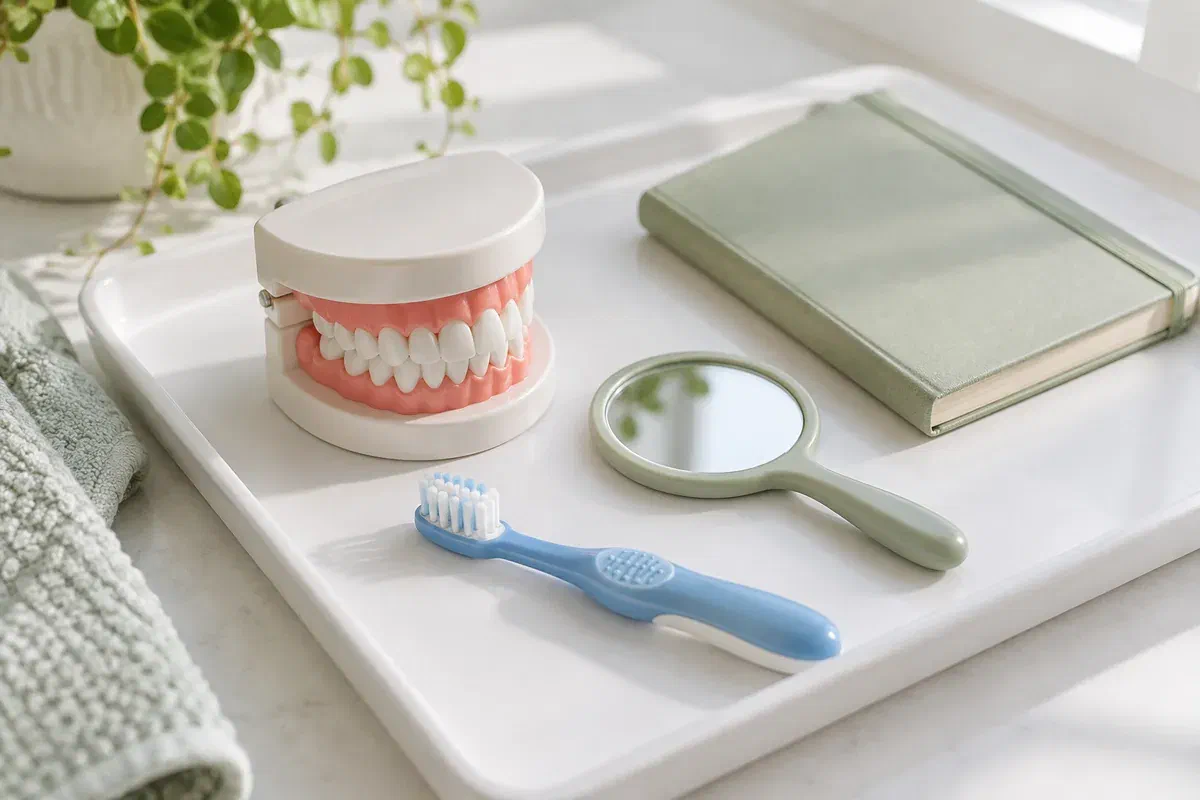
Illustrative child-sized toothbrush and dental teaching model for home-care instruction
Sensory and practical hurdles

Small details shape better advice.

There is no need to hide the struggle. Name exactly what is hard, and the team can help work out whether a change in product or technique might help, or whether an examination is warranted.

Areas your child will not let you reach

Back molars, crowded spots, and teeth near the tongue are often where sensitive children pull away. Have the team show you those surfaces on your child’s teeth. A hurried brush around the front can leave these areas almost untouched.

Reactions to flavour, foam, or bristles

Tell the team what your child objects to: the taste, the texture, the sound, or an adult’s hand. Each needs a different approach. If your child seems to be in pain rather than simply uncomfortable, mention it so a sore area can be checked.

Build-up or bleeding in the skipped areas

Where brushing is avoided, deposits or bleeding may collect. Point out any you have seen. The answer is not more force but understanding what is happening and choosing appropriate care.

Sudden pain or swelling deserves its own phone call. Your child may need an assessment before a routine cleaning.

What you can take away

Care in the chair, and a gentler plan for home

Cleaning techniques should be chosen to suit the deposits, the surfaces, and your child’s comfort. Appropriate care can remove plaque, surface stains, or hardened build-up and makes the examination clearer. It is also an opportunity to see a technique adapted to a sensitive child, rather than hearing generic tips.

A cleaning does not substitute for daily plaque removal, and it is not a treatment for a diagnosed condition. Find out what the cleaning accomplished and what still needs separate attention. A good result is knowing what to try next at home.

Patient information: AAPD — the role of professional cleaning in pediatric dentistry

A demonstration that respects sensitivities

Request a demonstration that considers how your child reacts to touch and taste. Advice tied to your child’s mouth is more useful than a model alone. Practise the movement before leaving so any questions come up while the team is there.

Sharing tasks in a comfortable way

Some children accept help more easily when they lead part of the routine. Agree on which areas your child can manage and which need an adult. Gradual independence is fine as long as the necessary cleaning still happens.

Tracking what helps

Pick one change to try, such as a milder toothpaste flavour or a softer brush. At the next visit, report what worked and what did not. Honest feedback helps the team suggest the next adjustment.

What happens at the visit

Listen first, then clean, then practise together.

Ask what the appointment includes and whether an examination or other preventive care is planned. Knowing the purpose of each step can help a sensitive child feel prepared.

  1. Share sensory notes and health updates

    Explain what bothers your child, who helps with brushing, and which products you use. Mention medicines, health changes, or new symptoms. Bring any product you are unsure about so the team can see the actual label.

  2. Assess deposits and areas needing review

    The team checks cleaning needs and records anything the dentist should look at. Let them know about sensitive areas before they are touched. Stains, swelling, or damage should be explained rather than automatically polished.

  3. Clean with care suited to your child

    Instruments and techniques are chosen based on findings and your child’s comfort. You or your child can ask for pauses or explanations. Each child may need a different approach on different teeth.

  4. Try out the home routine together

    The team reviews brushing and appropriate cleaning between teeth, adapting to your child’s preferences where possible. Confirm age-appropriate toothpaste advice and how much help to give. Find out when to return and whether further assessment is needed.

At home, one small change at a time

Comfort first, consistency close behind

If fluoride or another product was applied, follow the specific instructions for it. Otherwise, carry on with the routine agreed during the visit.

Find a brush your child will tolerate

A soft brush with a comfortable head size and handle can make a difference for sensitive children. Replace it when the bristles become worn. Ask the team before switching to unusual products, since technique still matters most.

Help without overwhelming

Offer support in a way your child can accept, perhaps letting them start before you finish. Make sure the remaining surfaces are cleaned gently. If a position feels uncomfortable for either of you, ask the team for another idea.

Check in about symptoms that persist

Bleeding, soreness, or food trapping that continues should prompt a call to the clinic. Share what you have tried. Avoid sharp tools or forcing floss into a tender area to solve it at home.

Patient information: Canadian Dental Association — cleaning children’s teeth

Choosing what comes next

Pick the care that fits the concern

Cleaning, prevention, and diagnosis may be combined but serve different purposes. Ask which are recommended and why.

When build-up and a tolerable routine are the priority

Cleaning with sensory-aware coaching

The visit handles identified cleaning needs and helps your family find a routine your child can accept. Bring the specific difficulty you want to solve. Confirm what was completed and how to review progress.

When discomfort, gum changes, or a damaged tooth needs a diagnosis

An examination for an unexplained symptom

Some symptoms cannot be explained or treated by cleaning. The dentist may need to examine the area and discuss next steps. Mention the concern when booking so the visit can be planned around it.

When your child’s risk or comfort calls for something more

Additional prevention or adapted visits

Fluoride, sealants, home-care changes, or a different appointment style may be considered individually. Ask how the suggestion relates to your child’s risk and needs. More products or longer visits are not automatically more helpful.

Sensory-related questions

What to ask when brushing feels hard for your child

You can raise one tooth, one product, or one moment that goes wrong. Everyday language is fine.

(905) 876-4488
Are there milder toothpaste flavours for children who dislike mint?
Many children’s toothpastes come in milder flavours. Ask the team which options are suitable for your child’s age and needs, since flavour is only one part of the choice. Bring the tube you currently use so the discussion can be specific, and mention any brands your child has already rejected.
My child gags on foam. Is there anything that can help?
Using an appropriate small amount of toothpaste and allowing your child to spit often can help some children. Ask the team for suggestions that fit your child, and mention if gagging happens even without toothpaste.
Can the team adjust the cleaning visit for a child with sensory sensitivities?
Let the clinic know about your child’s sensitivities when booking. The team can explain what will happen and may adapt the pace or approach where appropriate. Share what has helped in other settings.
Is it okay if my child brushes without toothpaste sometimes?
Ask the team about this, since toothpaste advice depends on your child’s age and needs. Brushing without it may still remove some plaque, but the team can suggest a way to make toothpaste more acceptable.
We are travelling from Mississauga. How can we prepare a sensitive child for the visit?
Talk through what will happen in simple terms a day or two beforehand, and bring a comfort item if it helps. Mention your child’s needs when booking so the team can plan the pace. Leaving a little extra time means nobody arrives rushed, and your child can settle before the cleaning begins.
Would a softer or different-shaped brush make brushing more comfortable?
A softer brush or a different head size may be more comfortable for some children. Bring the current brush so the team can compare. The right tool still needs gentle technique and adult help where required.
Children’s cleanings for Mississauga families

A routine your child can actually accept

Contact our Bronte Street practice to book your child’s cleaning. If you are coming from Mississauga, tell us about sensitivities, difficult areas, or symptoms so the appointment supports both professional care and the routine at home.

The cleaning approach and additional care depend on assessment. Please mention pain or ongoing gum symptoms when booking.

Visit Milton Dental Clinic
Unit 1, 342 Bronte St. S, Milton, ON L9T 5B7
Get directions Clinic hours
Monday–Thursday
11am–7pm
Friday–Sunday
By appointment only

Areas we serve

  • Milton
  • Oakville
  • Mississauga
  • Georgetown
  • Halton Hills
  • Acton
  • Campbellville
  • Brampton
  • Burlington
  • Puslinch
  • Rockwood
  • Erin
  • Caledon
  • Etobicoke
  • Old Milton
  • Bronte Meadows
  • Timberlea
  • Dorset Park
  • Dempsey
  • Clarke
  • Beaty
  • Coates
  • Harrison
  • Scott
  • Willmott
  • Ford
  • Bowes
  • Cobden
  • Walker
  • Mountain View
  • Milton Heights
  • Hawthorne Village
  • Valley View
  • Fallingbrook
  • Nassagaweya
  • Trafalgar
  • Esquesing
  • Nelson
  • Brookville
  • Moffat
  • Glen Williams
  • Norval
  • Limehouse
  • Stewarttown
  • Ashgrove
  • Hornby
  • Silver Creek
  • Speyside
  • Scotch Block
  • North Oakville
  • River Oaks
  • Glen Abbey
  • West Oak Trails
  • Palermo
  • Bronte Creek
  • College Park
  • Joshua Creek
  • Uptown Core
  • Preserve
  • Iroquois Ridge
  • Lisgar
  • Meadowvale
  • Meadowvale Village
  • Churchill Meadows
  • Erin Mills
  • Central Erin Mills
  • Streetsville
  • East Credit
  • Creditview
  • Heartland
  • Sheridan
  • Mount Pleasant
  • Credit Valley
  • Huttonville
  • Churchville
  • Springbrook
  • Northwest Brampton
  • Bram West
  • Fletcher's Meadow
  • Fletcher's Creek South
  • Alton Village
  • Orchard
  • Millcroft
  • Headon Forest
  • Tansley
  • Brant Hills
  • Tyandaga
  • Kilbride
  • Lowville
  • Aberfoyle
  • Morriston
  • Arkell
  • Hillsburgh
  • Freelton
  • Carlisle
  • Waterdown
  • Flamborough
  • Mountsberg

How can we help?

Milton Dental Clinic

Have a question about your smile? Choose the option that works best for you.

For urgent dental concerns, please call.
Messages are reviewed during clinic hours.