

Illustrative child and parent watching a brushing demonstration on a dental model
Children’s Dentistry

Teeth Cleaning for Children in Oakville

A new molar can appear behind the baby teeth without anyone noticing, and it is easy to miss with a brush. For families travelling from Oakville, a children’s cleaning visit adds professional care to practical guidance on reaching those back surfaces at home.

The tooth nobody mentioned

A molar quietly arriving at the back of the row

Somewhere around the early school years, larger teeth begin to come in behind the baby molars. They often arrive with little fuss, partly covered by gum, sitting lower than their neighbours. A brush sweeping along the row can glide right over them, which is why they deserve attention during a cleaning visit.

Before the appointment, take a look with a flashlight if your child will let you. Note whether a tooth seems to be coming in, whether the gum around it looks puffy, and whether your child complains when you brush there. Those observations, together with who helps and what gets in the way at home, make the advice much more specific.

Professional cleaning clears the deposits that are found and lets the team see the teeth clearly. The demonstration gives you a way to reach the new surface every day. Neither step proves on its own that a cavity, a gum problem, or another concern is absent, so ask what was checked.

Book a cleaning focused on back teeth
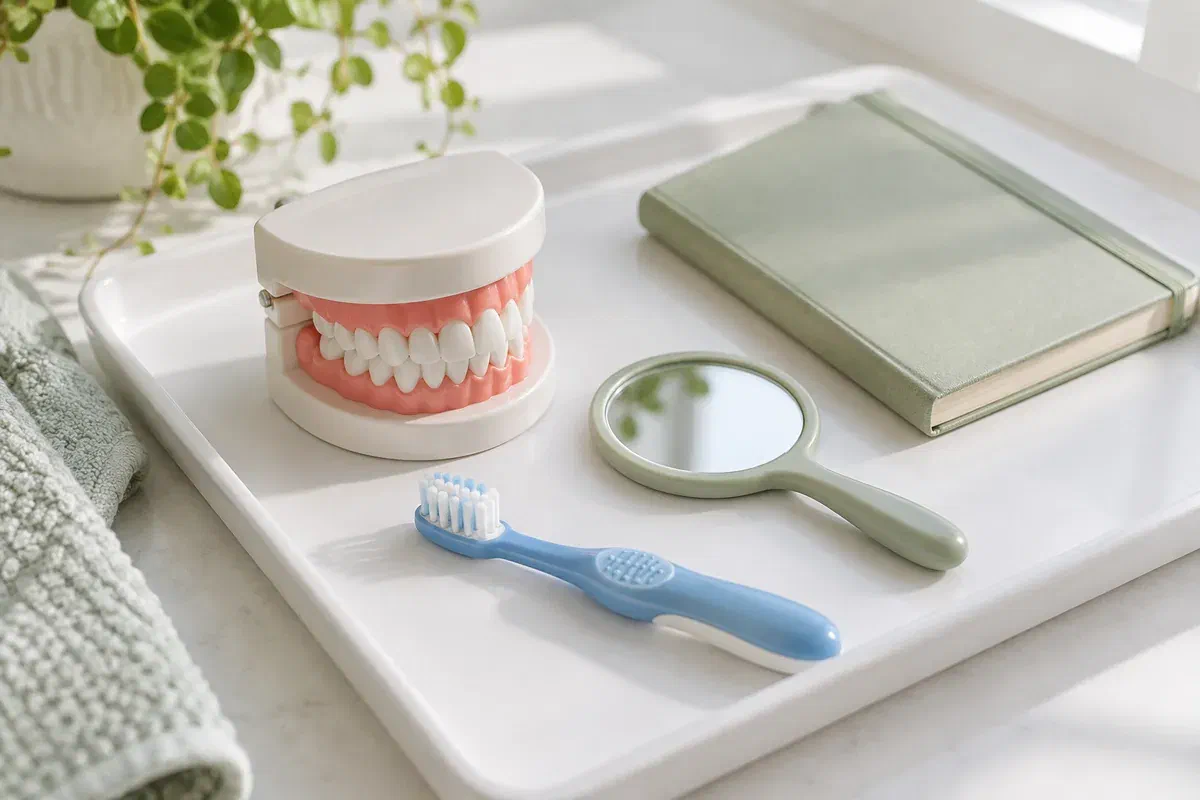
Illustrative child-sized toothbrush and dental teaching model for home-care instruction
Point these out during the visit

Where brushing tends to fall short

You do not need a tidy routine to bring your child in. Name the problem areas and the team can help work out whether it is a technique issue or something the dentist should examine.

Surfaces at the end of the row

Erupting molars, teeth that crowd together, and a narrow view can leave whole surfaces untouched. Request that the clinician show you exactly where they are. Plenty of energetic brushing can still miss the grooves of a tooth that sits lower than the others.

Complaints about taste, feel, or pain

Say whether your child objects to your help, the toothpaste, the bristles, or a spot that seems to hurt. These are separate problems and may need separate answers. A child pulling away from the back of the mouth might be reacting to tender gum around a new tooth.

Recurring build-up, bleeding, or trapped food

Show the team any deposit that keeps coming back, gum that bleeds despite gentle brushing, or a gap that collects food. Brushing harder is not the fix. The cause needs to be understood before anyone decides what care is appropriate.

Swelling, or brushing that has suddenly become painful, is a reason to call about that symptom. A routine cleaning may not be the first appointment your child needs.

Getting value from the appointment

Clean teeth today, a better reach tomorrow.

What happens in the chair should depend on the deposits, the surfaces involved, and your child’s comfort and ability to take part. Suitable professional cleaning can remove plaque, surface stains, or hardened deposits and helps the dentist see the teeth clearly. It also allows the team to show you a technique instead of describing it.

The cleaning is not a stand-in for daily plaque removal or a treatment for something that has been diagnosed. Ask what was accomplished and what needs to be looked at separately. Leave knowing your next step, along with the reassurance that the teeth were cared for.

Patient information: AAPD — the role of professional cleaning in pediatric dentistry

Watching the angle that reaches the new tooth

Have the team show how to tilt the brush and where to place it for the erupting molar. A model can explain the idea, but the guidance should be tied to your child’s mouth. Try it yourself before leaving so any uncertainty comes out while help is close.

Sharing the job sensibly

Some children manage the front teeth confidently long before the back ones. Decide together which areas your child can practise and which an adult should handle. Holding the brush is a good start, but it does not mean every surface is covered.

Checking progress in a concrete way

Choose one goal, such as cleaning the top of that new molar each evening. At the next appointment, describe how it went and what made it difficult. Specific feedback lets the team adjust its suggestions for your child.

Step by step

What to expect from chair to sink

Ask what the appointment includes and whether an examination or other preventive care is planned as well. You should understand the purpose of each part.

  1. Tell the team about home care and health

    Explain who helps with brushing, the products you use, and any areas that are difficult. Mention new symptoms, medicines, or health changes. Bring the packaging of any product you are unsure about so the team can comment on the actual item.

  2. Check deposits and note what needs review

    The clinician looks at the cleaning needs and records findings for the dentist to assess. Let them know about sensitive spots before an instrument gets close. Staining, swelling, or a damaged surface should be explained rather than simply polished.

  3. Clean in a way that suits your child

    Instruments and techniques are chosen according to what was found and how comfortably your child can participate. Your child can ask for a break, and you can ask for an explanation. Each visit and each tooth may need a different approach.

  4. Practise reaching the hard places

    The team reviews brushing and appropriate cleaning between teeth, especially in the areas you raised. Confirm the toothpaste advice for your child’s age and how much an adult should help. Ask when to return and whether any other assessment or treatment is outstanding.

In the weeks after the visit

Small, steady adjustments at home

If fluoride or another product was applied, follow the instructions that came with it. Otherwise, continue with the daily plan you discussed with the team.

Pick a brush that fits the back of the mouth

A soft brush with a small head can make it easier to reach the last tooth in the row. Choose a handle that both your child and the helping adult can hold comfortably. Replace frayed brushes rather than compensating with pressure.

Take a turn on the hardest teeth

Keep your help in step with what your child can do. Let them practise, then gently finish the surfaces they cannot yet reach. If the suggested position does not let you see the new molar, ask for another demonstration.

Phone about symptoms that keep going

If bleeding, soreness, or food trapping continues around the back teeth, call the clinic for advice. Describe what you have tried and what happened. Do not use sharp tools or force floss into a sore area to fix it yourself.

Patient information: Canadian Dental Association — cleaning children’s teeth

Finding the right next step

Cleaning, examination, or extra prevention?

These services can be combined but are not interchangeable. Ask which ones are recommended for your child and the reason behind each.

When deposits and daily technique are the main concern

Cleaning with brushing coaching

This visit addresses the cleaning needs found and helps you practise reaching the difficult areas. Name the specific challenge you want help with. Confirm what was done and how to review progress before the next appointment.

When pain, gum changes, or damage needs a diagnosis

Examination of a persistent problem

A cleaning cannot explain or treat every symptom. The dentist may need to examine the area and discuss further assessment. Mention the concern when booking so the appointment can be organised for it.

When risk or access needs point to another step

Additional prevention, considered individually

Fluoride, sealants, changes to home care, or an adapted appointment may be discussed for your child. Ask how any recommendation relates to their risk and needs. More products or more time in the chair are not automatically better.

Back-tooth questions

Bring the worries you have noticed at bedtime.

A question about one tooth or one stubborn corner is a perfectly good reason to ask. No technical terms are required.

(905) 876-4488
How can I tell if a new adult molar is coming in behind the baby teeth?
You may see a tooth partly covered by gum or notice your child chewing differently on one side. The team can confirm during the visit and show you how to clean it. Mention any swelling or pain around the area.
The gum over my child’s new molar looks puffy. Should we keep brushing there?
Gentle brushing is usually still important, but raise the swelling with the team so it can be checked. If the area becomes very painful, swollen, or your child seems unwell, call the clinic rather than waiting for a routine cleaning.
Are sealants something we should ask about for new back teeth?
Sealants may be considered for some children’s back teeth depending on their risk and the tooth’s condition. Ask the dentist whether they are appropriate for your child and how they would fit alongside daily brushing.
Is a smaller brush head better for reaching the last molar?
A smaller, soft head can make reaching the back easier for some children. Bring your child’s current brush so the team can compare. Technique and adult help still matter as much as the brush itself.
We are coming from Oakville. Can the cleaning and an examination happen on the same day?
Ask when booking whether both can be scheduled together. Grouping services can reduce trips, but the plan depends on your child’s needs and what the team finds. Let the clinic know about any symptoms in advance.
My child chews mostly on one side. Is that worth mentioning?
Yes. Favouring one side can have many explanations, including a sore tooth or an erupting molar. The team can look at both sides during the visit and recommend whether further assessment is needed.
Children’s cleanings for Oakville families

Reach the back of the row with confidence.

Contact our Bronte Street practice to book a cleaning for your child. If you are coming from Oakville, mention any erupting teeth, hard-to-reach areas, or symptoms so the appointment can cover professional care and home routines together.

The cleaning approach and any additional care depend on assessment. Please mention pain or persistent gum symptoms when booking.

Visit Milton Dental Clinic
Unit 1, 342 Bronte St. S, Milton, ON L9T 5B7
Get directions Clinic hours
Monday–Thursday
11am–7pm
Friday–Sunday
By appointment only

Areas we serve

  • Milton
  • Oakville
  • Mississauga
  • Georgetown
  • Halton Hills
  • Acton
  • Campbellville
  • Brampton
  • Burlington
  • Puslinch
  • Rockwood
  • Erin
  • Caledon
  • Etobicoke
  • Old Milton
  • Bronte Meadows
  • Timberlea
  • Dorset Park
  • Dempsey
  • Clarke
  • Beaty
  • Coates
  • Harrison
  • Scott
  • Willmott
  • Ford
  • Bowes
  • Cobden
  • Walker
  • Mountain View
  • Milton Heights
  • Hawthorne Village
  • Valley View
  • Fallingbrook
  • Nassagaweya
  • Trafalgar
  • Esquesing
  • Nelson
  • Brookville
  • Moffat
  • Glen Williams
  • Norval
  • Limehouse
  • Stewarttown
  • Ashgrove
  • Hornby
  • Silver Creek
  • Speyside
  • Scotch Block
  • North Oakville
  • River Oaks
  • Glen Abbey
  • West Oak Trails
  • Palermo
  • Bronte Creek
  • College Park
  • Joshua Creek
  • Uptown Core
  • Preserve
  • Iroquois Ridge
  • Lisgar
  • Meadowvale
  • Meadowvale Village
  • Churchill Meadows
  • Erin Mills
  • Central Erin Mills
  • Streetsville
  • East Credit
  • Creditview
  • Heartland
  • Sheridan
  • Mount Pleasant
  • Credit Valley
  • Huttonville
  • Churchville
  • Springbrook
  • Northwest Brampton
  • Bram West
  • Fletcher's Meadow
  • Fletcher's Creek South
  • Alton Village
  • Orchard
  • Millcroft
  • Headon Forest
  • Tansley
  • Brant Hills
  • Tyandaga
  • Kilbride
  • Lowville
  • Aberfoyle
  • Morriston
  • Arkell
  • Hillsburgh
  • Freelton
  • Carlisle
  • Waterdown
  • Flamborough
  • Mountsberg

How can we help?

Milton Dental Clinic

Have a question about your smile? Choose the option that works best for you.

For urgent dental concerns, please call.
Messages are reviewed during clinic hours.