

Illustrative child and parent watching a brushing demonstration on a dental model
Children’s Dentistry

Teeth Cleaning for Children in Old Milton

In many Old Milton homes, more than one adult helps at the bathroom sink: a parent in the morning, a grandparent after school, a sitter at bedtime. A children’s cleaning visit combines professional care with clear brushing steps everyone can follow the same way.

Old Milton homes: one routine, several pairs of hands

Who is holding the brush tonight?

Children rarely brush with only one helper. A grandmother might be careful with the front teeth while a busy parent focuses on speed, and each adult may skip a different corner. Bringing those differences into the cleaning appointment lets the team see where the gaps are and agree on one approach.

It helps to describe the real arrangement. Who usually supervises, and on which days? Which teeth does your child guard or refuse to open for? Does a strong mint taste or a stiff brush cause complaints? The team can only tailor its suggestions once it knows how brushing works across your household.

Keep in mind that the cleaning and the daily routine are partners, not substitutes. Removing the deposits found at the visit lets the team examine the teeth properly, and the demonstration gives every caregiver something concrete to copy. Shiny teeth after polishing do not, by themselves, show that decay or gum concerns are absent.

Arrange a cleaning that includes caregivers
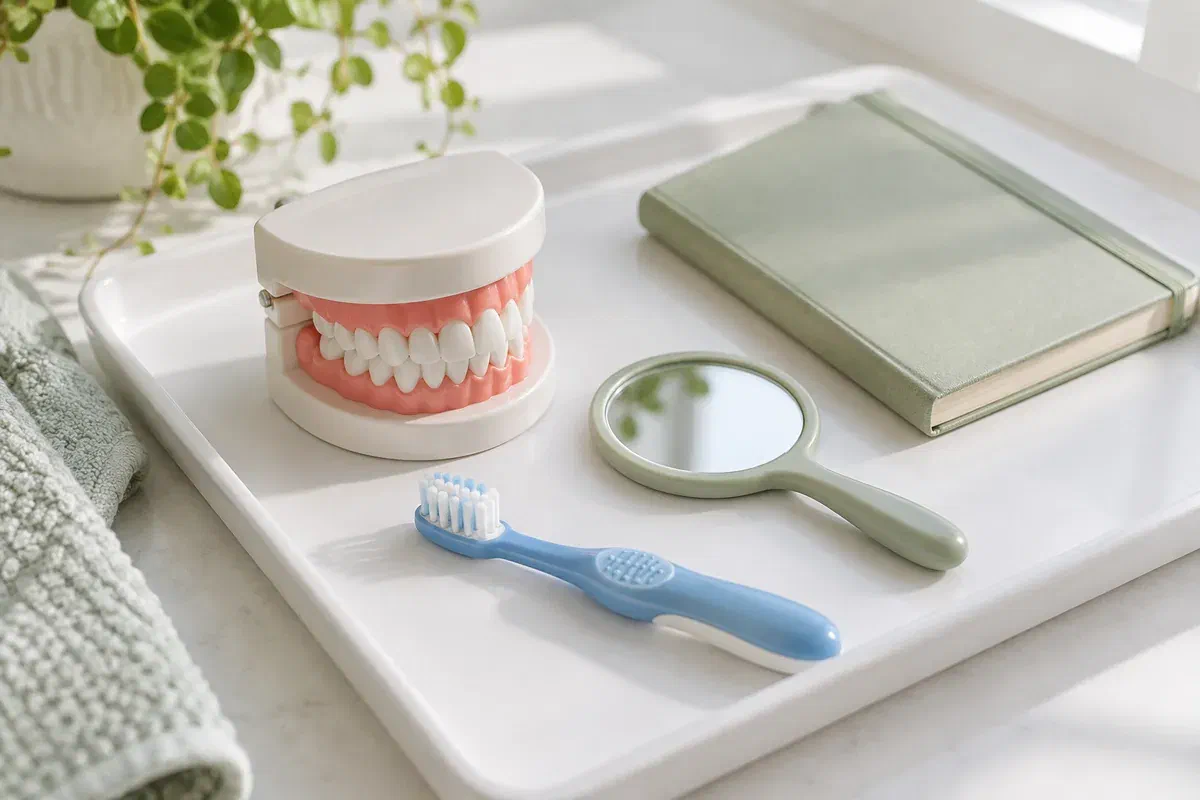
Illustrative child-sized toothbrush and dental teaching model for home-care instruction
Notes worth passing between caregivers

Describe the trouble spots, not a perfect routine

Every household has a few areas that never seem to get cleaned well. Share them openly, and the team can tell you whether a change in technique will help or whether the dentist should look more closely.

The far corners of the mouth

Molars that are still erupting, teeth that sit close together, and simply not being able to see can all lead to missed surfaces. Ask the clinician to point them out on your child’s own teeth. A brush can be moving quickly and still never land where it needs to.

A child who resists one helper but not another

Notice whether your child pushes away a particular adult, dislikes the flavour, reacts to the bristles, or flinches as though something is sore. Mention which it seems to be. Treating every refusal as misbehaviour can mean a tender tooth goes unchecked.

Deposits, bleeding, or food that lodges

If one caregiver keeps noticing a yellowish build-up, a bleeding spot, or food stuck in the same gap, say so. Pressing harder with the brush rarely solves it. The team needs to understand the cause before deciding what kind of care makes sense.

When brushing has suddenly started to hurt, or there is swelling, phone about that symptom. A standard cleaning might not be the best first visit.

What everyone can take home

Shared instructions make a steadier routine.

The way teeth are cleaned in the chair depends on what is found, the surfaces involved, and how comfortable your child is. Appropriate professional care can remove plaque, surface stains, or hardened build-up and gives the dentist a clearer view. It is also the moment to watch a technique being shown rather than simply described.

A cleaning does not replace the brushing that happens every day, and it is not a treatment for a diagnosed condition. Ask what the cleaning dealt with and what, if anything, still needs its own appointment. The best result is a clear next step that every adult in the house understands.

Patient information: AAPD — the role of professional cleaning in pediatric dentistry

A demonstration the whole family can copy

Ask the team to show the brush angle and gentle movement for the difficult area. If a grandparent or sitter does bedtime, consider bringing them or taking notes they can follow. Guidance should match your child’s teeth, not a model alone.

Clear roles for child and adults

Every child gains coordination at their own pace. Agree which parts your child can practise and which an adult should always finish. Writing that down can stop the routine changing each time a different person helps.

A simple goal to report back on

Choose one specific thing to watch, such as whether the upper back teeth are being reached. At the following appointment, share what changed. That information helps the team refine advice rather than starting from the beginning.

Inside the appointment

From conversation to cleaning to a hands-on rehearsal

Feel free to ask what the visit covers and whether an exam or another preventive service is booked alongside it. Each part should make sense to you.

  1. Explain how brushing happens at home

    Describe who helps, what products are used, and the areas that cause difficulty. Share any medicines or recent health changes. If you are unsure whether a toothpaste or rinse suits your child, bring it along so the conversation is about the real product.

  2. Look for build-up and areas to review

    The team checks the teeth for cleaning needs and notes anything the dentist should examine. Warn them about tender spots before instruments reach them. Discolouration, swelling, or a chipped surface deserves an explanation rather than an automatic polish.

  3. Clean with the right tools for your child

    The clinician chooses instruments and techniques that suit the findings and how much your child can cooperate. Pauses and explanations are available whenever they help. Not every child or every tooth needs the same equipment or the same time.

  4. Practise what each caregiver will do next

    The team reviews brushing and suitable ways to clean between teeth, focusing on the areas discussed. Confirm age-appropriate toothpaste advice and how much help an adult should give. Ask when to return and whether any other assessment or treatment is still needed.

Keeping caregivers on the same page

Same method, whoever is helping.

Follow any instructions specific to fluoride or other products applied at the visit. Otherwise, keep up the daily plan you agreed on with the team.

Keep a suitable brush in every home your child uses

A soft brush with a head and handle sized for your child and the helper is worth having at each house. Replace it once the bristles spread instead of pressing harder. Consistent tools and technique tend to matter more than frequent new purchases.

Let your child try, then finish together

Adjust adult support to your child’s actual ability. Give them a turn and make sure the remaining surfaces are cleaned gently. If the recommended position strains your back or hides the tricky tooth, ask the team to show another option.

Report ongoing symptoms instead of brushing harder

Bleeding, soreness, or food that keeps trapping deserves a call for advice. Let the team know what each caregiver has tried and what happened. Avoid scraping with sharp objects or forcing floss into an area that already hurts.

Patient information: Canadian Dental Association — cleaning children’s teeth

Deciding on the right type of visit

Different questions call for different appointments.

Cleaning, preventive care, and diagnosis can be combined, yet each serves its own purpose. Ask what is being recommended for your child and why.

When build-up and brushing technique are the main focus

A cleaning with home-care coaching

This appointment handles the cleaning needs found and helps caregivers practise a routine that can be shared. Bring the specific problem you want help with. Confirm what was finished and how you will check progress before the next visit.

When pain, gum changes, or a damaged tooth needs a diagnosis

An examination for a concern that persists

Cleaning alone cannot explain or treat some symptoms. The dentist may need to look closely and discuss further assessment. Describe the concern when booking so the visit can be organised around it.

When your child’s risk or needs suggest something more

Further prevention or adapted care

Fluoride, sealants, adjusted home care, or a different appointment style may be considered for your child individually. Ask how each suggestion relates to their particular risk. Adding products or time is not always the most helpful choice.

Caregiver questions

Ask about the details that differ from house to house.

A question about one tooth or one awkward part of the routine is a perfectly good place to begin. Plain language works fine.

(905) 876-4488
Can a grandparent bring my child to the cleaning appointment?
Please contact the clinic ahead of time to confirm what consent and information are needed when someone other than a parent or guardian attends. Make sure the adult knows about any health conditions, medicines, or concerns so they can share them with the team.
How do we keep brushing consistent when different adults help on different days?
Request one clear method and the specific areas to focus on. Sharing a short written note between caregivers can help. Mention at the next visit if one helper finds the method hard, so it can be adjusted.
My child brushes well with one adult and refuses with another. Should we mention this?
Yes. The difference may relate to approach, timing, or simply familiarity, but it is useful context. The team can suggest ways to make the routine more predictable and check that no sore area is behind the refusal.
Should we bring the toothbrush my child uses at their grandparents’ home?
If it differs from the one at home, bringing it can help. The team can check whether its size and bristles suit your child. Matching brushes across homes can make the routine feel the same wherever your child is.
We live near Old Milton and book after school. Is there anything to plan for?
Consider whether your child will be tired or hungry at that time and plan a small snack beforehand if appropriate. Bring any notes from other caregivers. Let the clinic know about any concerns when booking so the appointment time is used well.
Is it normal for a child to gag when the back teeth are brushed?
Some children are sensitive at the back of the mouth. Mention it to the team, who can suggest a different brush size, angle, or pace. If gagging is new or comes with pain, ask whether the area should be examined.
Children’s cleanings for Old Milton households

One method, shared by everyone who helps.

Our Bronte Street practice is a short way from Milton’s historic downtown. Call to book your child’s cleaning, and mention the areas that are hard to reach and any symptoms, so the visit supports both professional care and every caregiver at home.

The cleaning method and any additional care depend on assessment. Please let us know about pain or ongoing gum symptoms when booking.

Visit Milton Dental Clinic
Unit 1, 342 Bronte St. S, Milton, ON L9T 5B7
Get directions Clinic hours
Monday–Thursday
11am–7pm
Friday–Sunday
By appointment only

Areas we serve

  • Milton
  • Oakville
  • Mississauga
  • Georgetown
  • Halton Hills
  • Acton
  • Campbellville
  • Brampton
  • Burlington
  • Puslinch
  • Rockwood
  • Erin
  • Caledon
  • Etobicoke
  • Old Milton
  • Bronte Meadows
  • Timberlea
  • Dorset Park
  • Dempsey
  • Clarke
  • Beaty
  • Coates
  • Harrison
  • Scott
  • Willmott
  • Ford
  • Bowes
  • Cobden
  • Walker
  • Mountain View
  • Milton Heights
  • Hawthorne Village
  • Valley View
  • Fallingbrook
  • Nassagaweya
  • Trafalgar
  • Esquesing
  • Nelson
  • Brookville
  • Moffat
  • Glen Williams
  • Norval
  • Limehouse
  • Stewarttown
  • Ashgrove
  • Hornby
  • Silver Creek
  • Speyside
  • Scotch Block
  • North Oakville
  • River Oaks
  • Glen Abbey
  • West Oak Trails
  • Palermo
  • Bronte Creek
  • College Park
  • Joshua Creek
  • Uptown Core
  • Preserve
  • Iroquois Ridge
  • Lisgar
  • Meadowvale
  • Meadowvale Village
  • Churchill Meadows
  • Erin Mills
  • Central Erin Mills
  • Streetsville
  • East Credit
  • Creditview
  • Heartland
  • Sheridan
  • Mount Pleasant
  • Credit Valley
  • Huttonville
  • Churchville
  • Springbrook
  • Northwest Brampton
  • Bram West
  • Fletcher's Meadow
  • Fletcher's Creek South
  • Alton Village
  • Orchard
  • Millcroft
  • Headon Forest
  • Tansley
  • Brant Hills
  • Tyandaga
  • Kilbride
  • Lowville
  • Aberfoyle
  • Morriston
  • Arkell
  • Hillsburgh
  • Freelton
  • Carlisle
  • Waterdown
  • Flamborough
  • Mountsberg

How can we help?

Milton Dental Clinic

Have a question about your smile? Choose the option that works best for you.

For urgent dental concerns, please call.
Messages are reviewed during clinic hours.