
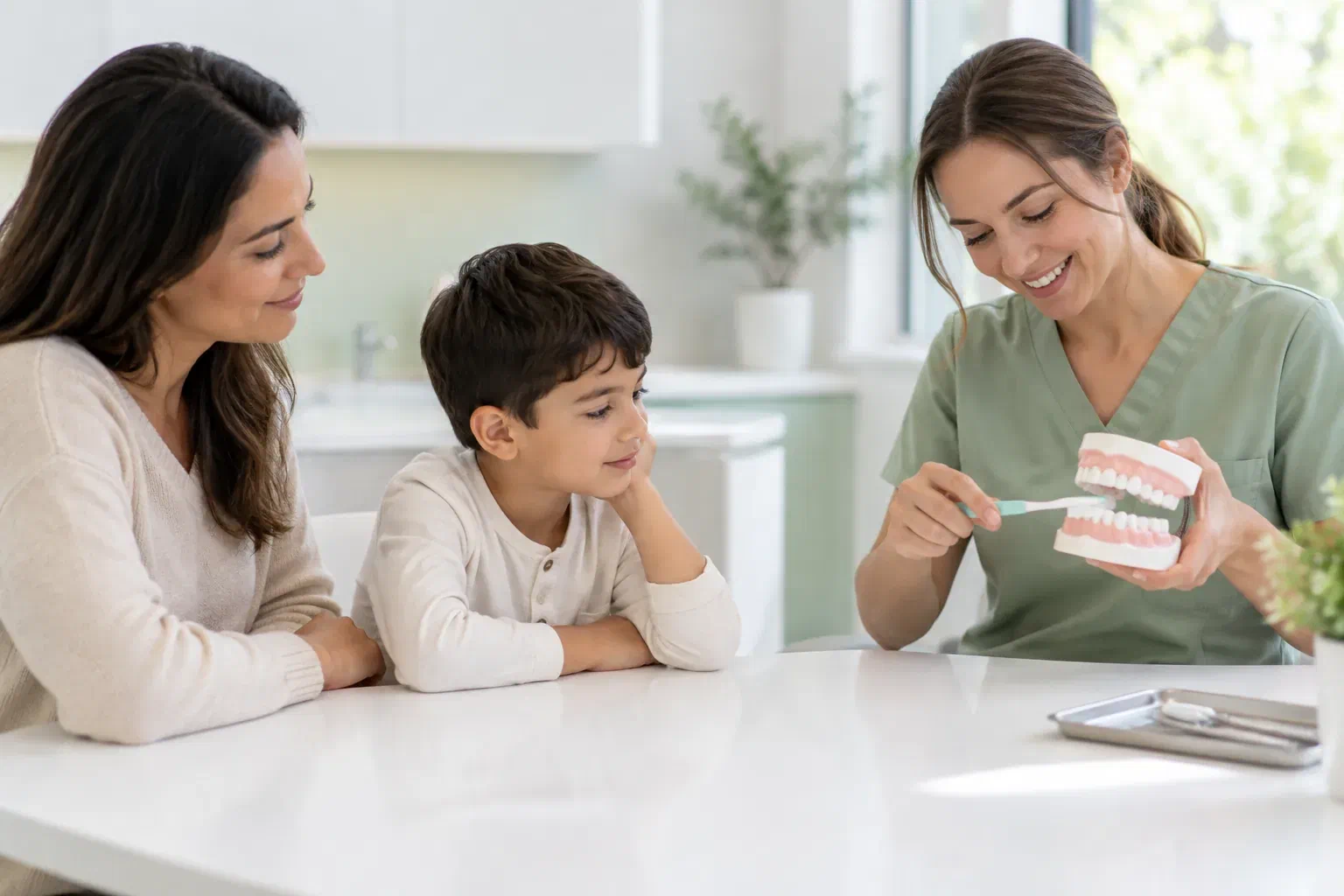
Illustrative child and parent watching a brushing demonstration on a dental model
Children’s Dentistry

Teeth Cleaning for Children in Puslinch

“What exactly happens at a kids’ cleaning?” is a fair question before you plan a trip from Puslinch. The answer: a professional clean of the deposits found, a check of what needs the dentist, and practical coaching your child can take home to the bathroom sink.

Knowing what you are booking

Three jobs packed into one children’s appointment

Parents are sometimes unsure what a cleaning visit for a child involves, and that uncertainty makes it harder to prepare. In short, there are three strands: removing the plaque or hardened deposits the clinician finds, noticing anything that needs the dentist’s opinion, and helping your family with brushing at home.

Each strand works better with your input. Tell the team who brushes your child’s teeth, what time of day it happens, and which areas cause trouble. Mention flavours your child refuses or brushes they dislike. Note any spot that seems sore. Real details from your household make the coaching part of the visit far more useful.

It also helps to understand the limits. Cleaning makes the teeth easier to examine and gives you a fresh starting point, while practice at home keeps plaque under control between visits. Neither one shows on its own that every cavity or gum issue has been found, so ask what was assessed.

Book a children’s cleaning appointment
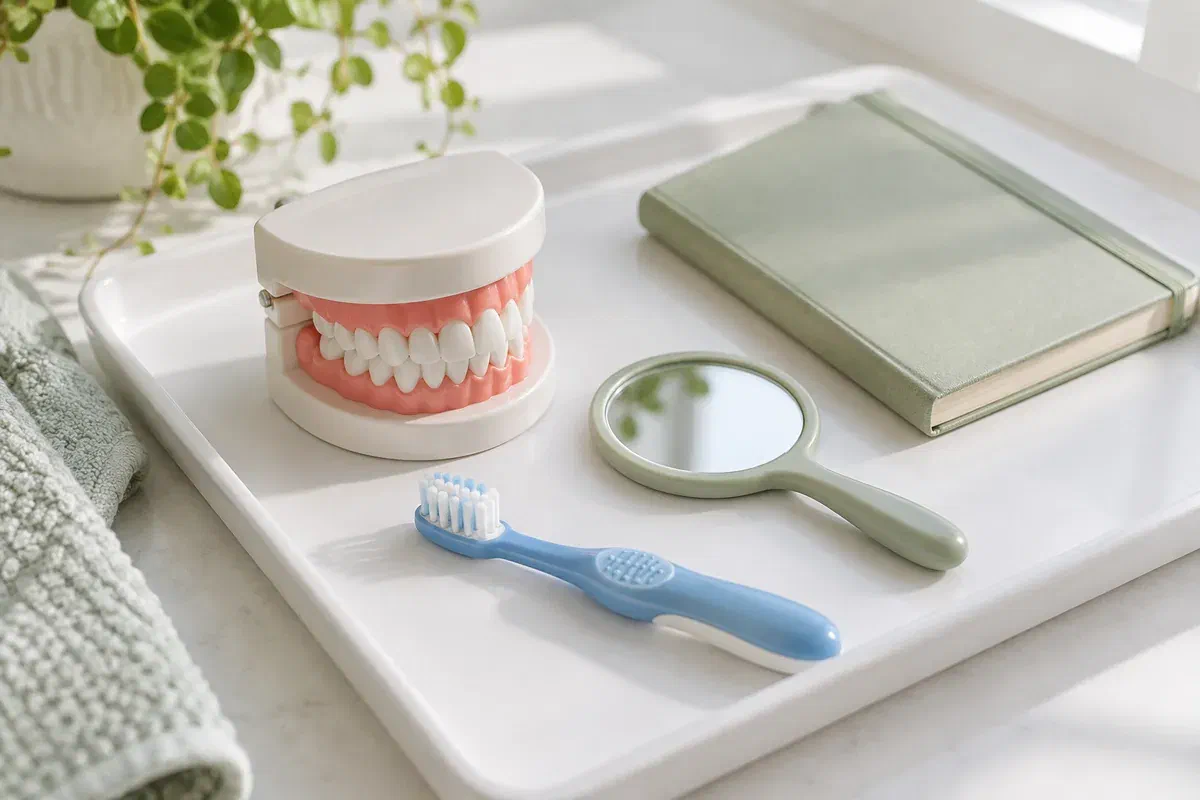
Illustrative child-sized toothbrush and dental teaching model for home-care instruction
Details that shape the visit

The more specific you are, the more useful the advice.

A tidy routine is not required. Tell the team what is genuinely difficult, and they can help decide whether it calls for a new technique or a dentist’s examination.

Teeth at the back and in tight spaces

Newly erupting molars and crowded teeth are frequently missed. Request that the clinician show you the specific surfaces on your child. The brush may be moving vigorously while the bristles sit on the wrong part of the tooth.

Discomfort, dislikes, or wanting independence

Explain whether your child refuses help, dislikes the toothpaste or bristle feel, or reacts as though a tooth hurts. These are separate issues. If pain seems possible, raise it so the area can be checked rather than assuming it is behaviour.

Ongoing build-up, bleeding, or food traps

Show the team any recurring deposits, bleeding with gentle brushing, or gaps where food collects. Brushing harder is not the cure. Understanding the cause is the first step toward the right care.

Phone the clinic about sudden pain with brushing or any swelling before booking a cleaning. Your child may need to be seen for that symptom first.

What each part of the visit achieves

A clean start and a clearer routine

The professional cleaning is shaped by what is found, which surfaces need it, and how your child copes. Suitable care can take away plaque, staining, and tartar, which helps the dentist see the teeth properly. The visit is also the time to see a technique demonstrated instead of reading general advice.

A cleaning does not replace daily brushing, and it does not treat a diagnosed problem. When it is finished, ask what was accomplished and what may need separate attention. Understanding the next step matters as much as knowing the teeth were cleaned.

Patient information: AAPD — the role of professional cleaning in pediatric dentistry

A demonstration on your child’s own teeth

Ask to be shown where and how to brush the difficult areas, using your child’s mouth as the guide rather than a plastic model alone. Try the movement yourself before you leave so the clinician can help correct the angle or pressure while you are still in the room.

Clear roles for child and caregiver

Children’s coordination develops at different rates. Agree which parts your child can practise and where you still need to help. Holding the brush is a starting point, not the finish line.

A focused goal before the next visit

Choose one target, such as brushing the inner surfaces of the lower teeth each night. Report how it went next time, including what made it hard on busy days. Specific feedback lets the team adjust its guidance instead of repeating the same general reminders.

A walk through the appointment

What happens, in the order it happens

It is fine to ask before the visit whether an exam, fluoride, or another service is planned alongside the cleaning. Each part should have a purpose you understand.

  1. Talking through routine and health

    Share how brushing goes, who helps, and which products you use. Mention any medicines, health changes, or new symptoms. If you are unsure about a product, bring it along so the team sees exactly what it is.

  2. Checking deposits and noting concerns

    The clinician looks at the cleaning needs and records anything for the dentist to review. Let them know about sensitive spots first. Stains, swelling, or damage should be understood, not simply polished.

  3. Cleaning with appropriate techniques

    The clinician chooses instruments and methods to fit the findings and your child’s ability to participate. Breaks and explanations are always possible. The approach may vary from tooth to tooth.

  4. Coaching for home

    The team reviews brushing and appropriate between-teeth cleaning, with attention to the areas discussed. Check how much toothpaste suits your child at this age and how much help to give. Ask about the next visit and any further assessment.

After you get home

Simple, gentle, and repeatable.

If fluoride or another product was applied, follow its instructions. Otherwise, keep up the routine you discussed with the team.

A brush that fits

Use a soft brush with a head and handle suited to your child and the helping adult. Replace it when the bristles spread. A good brush used well is more helpful than frequently buying new products.

Adult help where it is still needed

Let your child take a turn, then finish the areas they cannot reach. Keep your involvement appropriate to their ability. If the suggested position is uncomfortable, ask for another demonstration.

A call when symptoms persist

Ongoing bleeding, soreness, or food that keeps getting stuck is worth a phone call before your next planned visit. Describe what you have tried and how long it has lasted. Please do not dig at the area with pointed objects or push floss into gum that already hurts.

Patient information: Canadian Dental Association — cleaning children’s teeth

Different visits for different needs

Cleaning is one service among several.

Cleaning, preventive care, and diagnosis may be combined but are not interchangeable. Ask what is recommended for your child and why.

For deposits and day-to-day technique

Routine cleaning with coaching

This appointment addresses the cleaning needs found and helps you practise a manageable home routine. Mention the specific difficulty you want help with. Before leaving, check what was completed and how to keep track of progress.

If there is pain, gum change, or a damaged tooth

An examination

Some concerns cannot be explained or treated by cleaning. A dentist’s examination, and possibly further assessment, may be the right next step. Describe the concern when booking.

If your child’s risk or access needs call for more

Further prevention or adapted support

The dentist might talk about fluoride, sealants, a tweak to the home routine, or a gentler appointment format, depending on your child. Ask how the suggestion relates to their risk. Extra products or time are not automatically better.

Questions about what the visit includes

Straight answers before you book

Ask about any part of the appointment or any part of the routine. No technical language is needed.

(905) 876-4488
Is a children’s cleaning the same as a check-up?
Not exactly. A cleaning focuses on removing deposits and coaching home care, while an examination by the dentist looks for problems such as cavities. They are often scheduled together. Ask when booking which services your child’s appointment will include.
Will my child have X-rays at a cleaning appointment?
X-rays are taken only when the dentist decides they are needed for your child, based on their individual situation, so they are not an automatic part of every cleaning. Ask the team whether any are planned and what they would help the dentist see. You can discuss any concerns before they are taken, and it is fine to ask how often they are usually recommended for a child like yours.
Is fluoride applied during every children’s cleaning?
Not necessarily. Whether fluoride or another preventive treatment is recommended depends on your child’s needs and risk, which the team considers at each visit. Ask what they suggest and why, and follow any instructions they give afterwards about eating, drinking, or brushing that evening.
What does polishing actually do?
Polishing can help remove some surface stains and plaque, and many children like the smooth feel afterwards. It does not treat cavities or gum problems, and not every child needs it on every tooth. The clinician will decide what is appropriate, and you can ask why a particular area was or was not polished.
We are coming from Puslinch. How long should we set aside for the visit?
The length depends on what the appointment includes and your child’s needs. Ask when booking so you can plan the rest of your day, including school pick-ups or other errands in town. Mention any concerns in advance so enough time is allowed for them, rather than discovering at the chair that a second visit is needed.
Can I stay with my child during the cleaning?
Ask the clinic about this when booking. Many parents find staying helps their child feel comfortable and lets them see the brushing demonstration first-hand. The team can explain what works best for your child.
Children’s teeth cleaning for Puslinch families

Know what to expect, and leave with a plan.

Contact our Bronte Street practice to arrange your child’s cleaning. If you are travelling from Puslinch, ask what the appointment will include and mention difficult areas or symptoms, so the visit covers professional care and home routines together.

What is included and any further care depend on assessment. Please tell us about pain or gum symptoms when you call.

Visit Milton Dental Clinic
Unit 1, 342 Bronte St. S, Milton, ON L9T 5B7
Get directions Clinic hours
Monday–Thursday
11am–7pm
Friday–Sunday
By appointment only

Areas we serve

  • Milton
  • Oakville
  • Mississauga
  • Georgetown
  • Halton Hills
  • Acton
  • Campbellville
  • Brampton
  • Burlington
  • Puslinch
  • Rockwood
  • Erin
  • Caledon
  • Etobicoke
  • Old Milton
  • Bronte Meadows
  • Timberlea
  • Dorset Park
  • Dempsey
  • Clarke
  • Beaty
  • Coates
  • Harrison
  • Scott
  • Willmott
  • Ford
  • Bowes
  • Cobden
  • Walker
  • Mountain View
  • Milton Heights
  • Hawthorne Village
  • Valley View
  • Fallingbrook
  • Nassagaweya
  • Trafalgar
  • Esquesing
  • Nelson
  • Brookville
  • Moffat
  • Glen Williams
  • Norval
  • Limehouse
  • Stewarttown
  • Ashgrove
  • Hornby
  • Silver Creek
  • Speyside
  • Scotch Block
  • North Oakville
  • River Oaks
  • Glen Abbey
  • West Oak Trails
  • Palermo
  • Bronte Creek
  • College Park
  • Joshua Creek
  • Uptown Core
  • Preserve
  • Iroquois Ridge
  • Lisgar
  • Meadowvale
  • Meadowvale Village
  • Churchill Meadows
  • Erin Mills
  • Central Erin Mills
  • Streetsville
  • East Credit
  • Creditview
  • Heartland
  • Sheridan
  • Mount Pleasant
  • Credit Valley
  • Huttonville
  • Churchville
  • Springbrook
  • Northwest Brampton
  • Bram West
  • Fletcher's Meadow
  • Fletcher's Creek South
  • Alton Village
  • Orchard
  • Millcroft
  • Headon Forest
  • Tansley
  • Brant Hills
  • Tyandaga
  • Kilbride
  • Lowville
  • Aberfoyle
  • Morriston
  • Arkell
  • Hillsburgh
  • Freelton
  • Carlisle
  • Waterdown
  • Flamborough
  • Mountsberg

How can we help?

Milton Dental Clinic

Have a question about your smile? Choose the option that works best for you.

For urgent dental concerns, please call.
Messages are reviewed during clinic hours.