

Illustrative patient discussing spaces between front teeth with a dental clinician
Cosmetic Dentistry

Black Triangle Closure in Brampton

Closing a dark gap means adding width to the teeth beside it, and how much is too much is a real question. People travelling from Brampton can talk through that balance with us, along with gum health and how the area will stay cleanable.

The balancing act

Less shadow, but not wider teeth

Every millimetre of composite placed to fill a gap also changes the tooth it sits on. That is the heart of planning black triangle closure. The dark triangle itself is simply an opening between teeth near the gum, and it can stem from tooth shape, tooth position, receding gums or reduced bone support, often in some combination.

If the teeth taper sharply toward the gum, bonding can broaden that narrow part so the gap shrinks. Bonding works on enamel. It cannot grow back gum or replace bone, and it should leave a contact that floss or a small brush can still pass. Sometimes the most attractive result is a reduction rather than a full seal.

On a first visit from Brampton, we like to start with what you notice and what you would like to see. Perhaps the space has always been there, or it appeared after braces or alongside gum changes. Once we understand the health side, we can discuss proportions honestly, so you know what is achievable before deciding.

Discuss your smile's proportions
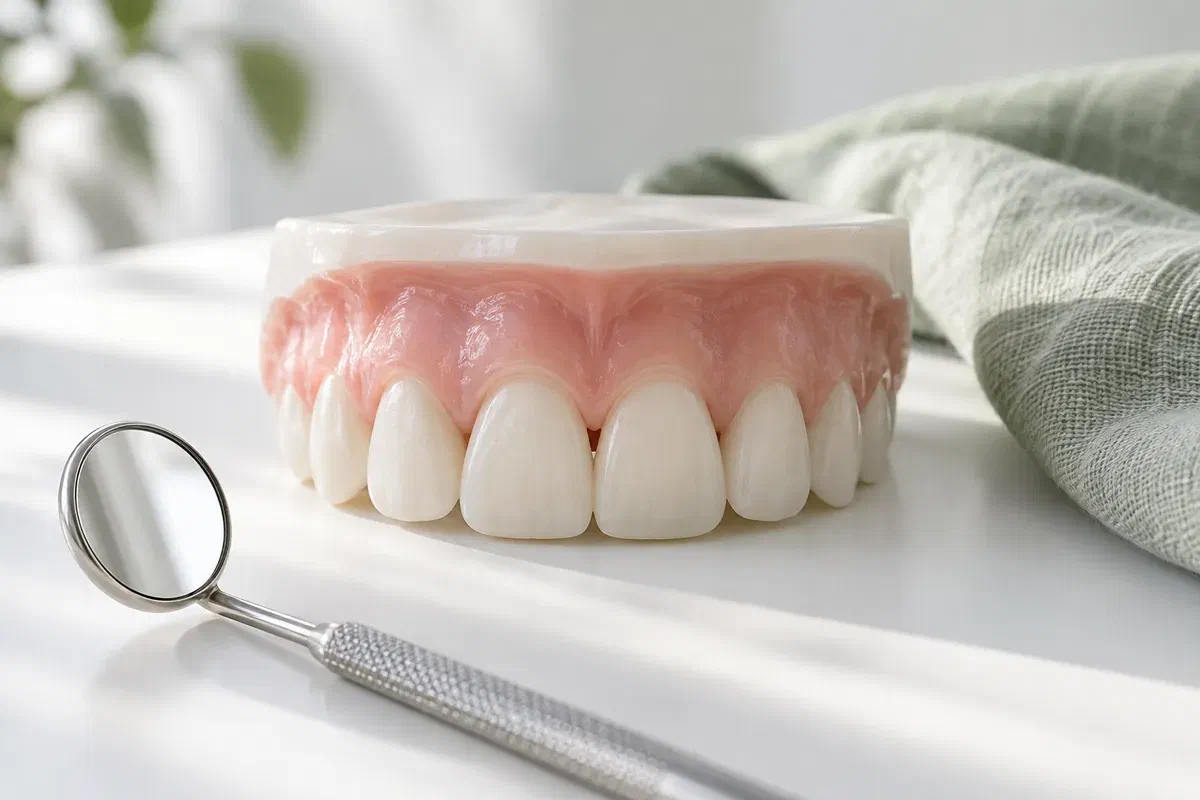
Illustrative dental model showing small triangular spaces near the gumline
What the dentist will want to know

Appearance, cleaning and gum health

The gap is easy to see; its reasons are not. Let us know when it appeared, if it seems to be getting larger and whether anything else has changed in your mouth.

How the gap affects your smile line

Describe which space concerns you and how you would like your smile to look. Ask how added composite would alter each tooth's width and outline, and whether neighbouring teeth would need attention to keep things symmetrical.

How easy it is to keep clean

Tell us whether food tends to catch and whether flossing feels difficult or tender. Any reshaping must consider the contact and side contours, not only the dark area. A new ledge or an unreachable nook is never a good trade.

What your gums are doing

Report bleeding, recession, soreness or a tooth that feels mobile. These findings may change the sequence of care. With gum disease present, treating it comes before any decision about cosmetic closure.

Some triangles are healthy and harmless; others point to something that needs attention. We will tell you which findings concern your oral health and which decisions are yours to make for appearance.

When proportion guides the plan

Why a partial reduction can look better

With suitable teeth, composite shaped along both sides of a gap can lessen it noticeably. The starting tooth form and the gum condition set the limit. Going all the way to full closure can create square, oversized teeth, so the right amount is a judgement made together.

Ask about the outline the teeth would have, the upkeep and the limits before you agree. It also helps to know whether the bonding is a single step or part of wider care for the gums, restorations or tooth position.

Patient information: Clinical trial — composite restoration of anterior black triangles · Research on tooth contact, bone level, and interdental gum tissue

A preview of the trade-offs

Ask the dentist to explain what the composite would change and what would remain. You might discuss how a smaller reduction compares with full closure. Being specific helps you choose the look that feels right.

Healthy enamel kept where possible

Find out what preparation, if any, each tooth would need. Not every cosmetic option asks the same of your enamel. Ask what repair or replacement could involve if the bonding chips or wears years from now.

Checks that go beyond treatment day

A great look on the day is only one measure. Ask how the contact, gum response and composite will be reviewed, and whom to contact if cleaning the area becomes awkward.

Planning your treatment

How we get from question to contour

There should be time at your appointment to talk about both looks and health. Ask which records we need and whether another clinician should weigh in.

  1. Hear the history, examine the teeth

    Mention previous orthodontics, gum care, fillings and when the gap became noticeable. The dentist looks at the teeth and gums, and may take X-rays or photos to understand bone levels and the contact between teeth.

  2. Talk proportions and options

    We discuss whether observation, gum care, bonding or an orthodontic opinion makes sense. If bonding fits, we talk through how much each tooth would widen and how much reduction looks natural. Confirm the estimate and maintenance plan before going ahead.

  3. Build the composite in layers

    For agreed treatment, the enamel is cleaned and conditioned so the bonding can grip, then thin layers of resin are sculpted and hardened under a curing light. The shape must balance with the neighbouring tooth and the gum edge. Let us know if you need a pause or an explanation.

  4. Polish, assess and practise cleaning

    The bonding is finished and checked from several angles. We review the proportions with you and show you how to clean through the new contact. Go over any remaining space and your follow-up appointment.

Protecting your new outline

Simple habits keep the result looking right

The gap may be smaller, but daily cleaning still matters. Keep using the technique you learned, and mention it if the aid you were given suddenly feels tight.

Clean the treated area every day

Ask which aid and size suit the bonded space. Use it gently rather than forcing it. If floss repeatedly snags or shreds, come in so we can check the contact and the finish.

Avoid biting hard things with bonded teeth

Keep pens, ice and packaging away from your front teeth. Tell us about a chip, rough edge or any shape change. Do not attempt repairs yourself; how we fix it depends on the bonded surface.

Stay with gum and recall appointments

Keep up the checkup and periodontal schedule suggested for you. Report ongoing bleeding, food trapping or a new space. Bonding does not replace monitoring of the gum and bone around your teeth.

Patient information: Cleveland Clinic — gum recession and its assessment

Comparing your options

The cause decides which route makes sense

Each choice has its own purpose. Narrowing a visible gap, treating gum disease and repositioning teeth are separate goals, and some may need to happen first.

When tooth shape allows a sensible change

Composite contouring

Bonding can make a triangle less visible by broadening the neighbouring teeth. Discuss proportions, cleaning and upkeep. A good plan explains what bonding cannot do rather than promising every space will close.

When tissue health is a concern

Gum treatment first

Bleeding, deepening pockets or a gumline that has crept up without explanation should be dealt with before anyone plans cosmetic work. Ask whether seeing a periodontist would help and how long to wait before looking at appearance again.

When tooth position or your preference leads

Watchful waiting or orthodontic advice

A stable, healthy space can simply be monitored. If tooth position is a factor, an orthodontist may suggest alternatives. Take time to weigh up the practical side of each choice.

Brampton questions

Questions about shape, shade and timing

Bring whatever matters to you about your smile and your daily routine. The answer should reflect your space, not a standard package.

(905) 876-4488
Can I see what my teeth might look like before bonding?
Ask about a preview. Depending on the case, the dentist may use photos, a model or a temporary trial of material to show the planned shape. It helps you judge proportions before anything permanent is placed.
How is the composite colour matched to my teeth?
The dentist compares shade samples against your teeth in good light, sometimes testing a small amount of material. Natural teeth vary in colour from edge to gumline, so layering may be used to blend the result.
How many appointments does black triangle bonding usually take?
It varies. Often there is an assessment visit and then a treatment visit, with a follow-up afterward. Gum treatment or orthodontic input, if needed, adds stages. Ask for a realistic timeline once the plan is clear.
Will I need freezing for the bonding?
Many bonding procedures need little or no preparation, so freezing is not always required, but that depends on your teeth and the plan. Ask the dentist what to expect and mention any sensitivity you usually feel.
What if my two front teeth are slightly different sizes?
That is common, and it affects planning. The dentist may suggest adding material unevenly to balance their appearance. Discuss whether you want symmetry or simply a smaller gap.
Does an open triangle always mean the gums have shrunk?
No. A space can come from tooth shape or position with healthy gums. An examination, and sometimes X-rays, helps show whether gum or bone changes are part of the picture.
Planning a trip from Brampton

Let's find the right amount of change

Book a consultation at our Bronte Street practice to talk about your gumline, any cleaning trouble and how much reshaping would look natural. We will explain the findings so you can decide without pressure.

Whether a gap can be reduced well rests on the teeth's shape and position and on healthy gums. Cosmetic bonding is not a treatment for active gum disease.

Visit Milton Dental Clinic
Unit 1, 342 Bronte St. S, Milton, ON L9T 5B7
Get directions Clinic hours
Monday–Thursday
11am–7pm
Friday–Sunday
By appointment only

Areas we serve

  • Milton
  • Oakville
  • Mississauga
  • Georgetown
  • Halton Hills
  • Acton
  • Campbellville
  • Brampton
  • Burlington
  • Puslinch
  • Rockwood
  • Erin
  • Caledon
  • Etobicoke
  • Old Milton
  • Bronte Meadows
  • Timberlea
  • Dorset Park
  • Dempsey
  • Clarke
  • Beaty
  • Coates
  • Harrison
  • Scott
  • Willmott
  • Ford
  • Bowes
  • Cobden
  • Walker
  • Mountain View
  • Milton Heights
  • Hawthorne Village
  • Valley View
  • Fallingbrook
  • Nassagaweya
  • Trafalgar
  • Esquesing
  • Nelson
  • Brookville
  • Moffat
  • Glen Williams
  • Norval
  • Limehouse
  • Stewarttown
  • Ashgrove
  • Hornby
  • Silver Creek
  • Speyside
  • Scotch Block
  • North Oakville
  • River Oaks
  • Glen Abbey
  • West Oak Trails
  • Palermo
  • Bronte Creek
  • College Park
  • Joshua Creek
  • Uptown Core
  • Preserve
  • Iroquois Ridge
  • Lisgar
  • Meadowvale
  • Meadowvale Village
  • Churchill Meadows
  • Erin Mills
  • Central Erin Mills
  • Streetsville
  • East Credit
  • Creditview
  • Heartland
  • Sheridan
  • Mount Pleasant
  • Credit Valley
  • Huttonville
  • Churchville
  • Springbrook
  • Northwest Brampton
  • Bram West
  • Fletcher's Meadow
  • Fletcher's Creek South
  • Alton Village
  • Orchard
  • Millcroft
  • Headon Forest
  • Tansley
  • Brant Hills
  • Tyandaga
  • Kilbride
  • Lowville
  • Aberfoyle
  • Morriston
  • Arkell
  • Hillsburgh
  • Freelton
  • Carlisle
  • Waterdown
  • Flamborough
  • Mountsberg

How can we help?

Milton Dental Clinic

Have a question about your smile? Choose the option that works best for you.

For urgent dental concerns, please call.
Messages are reviewed during clinic hours.