

Illustrative patient discussing spaces between front teeth with a dental clinician
Cosmetic Dentistry

Black Triangle Closure in Campbellville

Bonding a gap near the gums is not a one-day story; the composite, the contact and your gums all need looking after for years. For households in Campbellville, we plan black triangle care so it fits neatly into the checkups you already have.

Thinking beyond treatment day

A small change you will live with for years

It is easy to focus on how the gap will look the moment the bonding is polished. The longer view matters just as much. A black triangle is a shadowed space between two teeth close to the gumline, and its cause might be the natural outline of the teeth, their position, or changes in the gum and bone that support them.

Composite can be shaped onto the sides of suitable teeth to make the opening smaller. Over the years, that material will need checking and occasional attention, like any restoration. Bonding also has firm limits: it reshapes teeth without rebuilding gum or bone, and the new contact has to remain something you can clean every day.

In a rural community like Campbellville, many people prefer to group dental visits rather than make extra trips. We take that into account. After hearing how and when you noticed the space, we check your gums and teeth, then discuss whether treatment makes sense and how upkeep could fit into your usual recall schedule.

Plan your gap care around your checkups
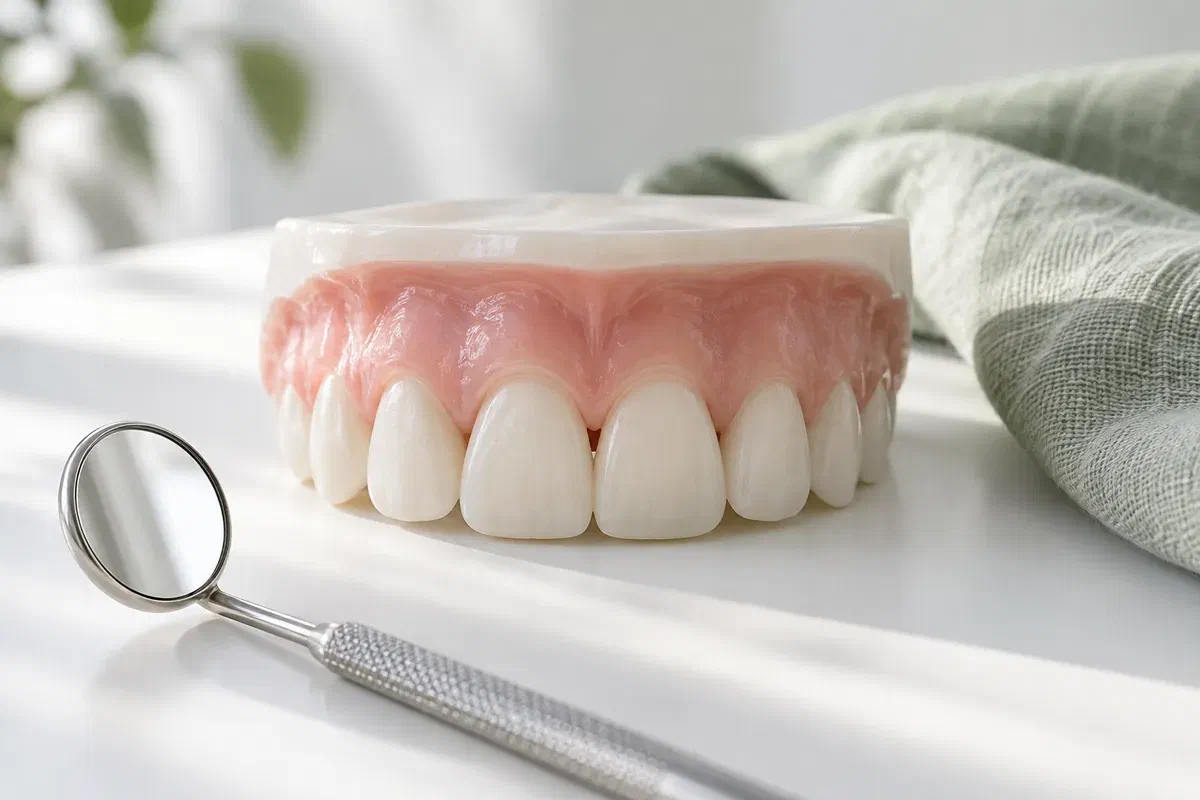
Illustrative dental model showing small triangular spaces near the gumline
Starting with the facts

What your first appointment covers

A smartphone picture can show the shadow; the reasons only come out in an examination. Mention when you first saw the gap, whether it seems larger now and anything you have felt in that area.

The appearance you would like to change

Show us which opening bothers you and describe the result you are hoping for. A lone gap is planned differently from a series of small ones. Ask what extra width the teeth would gain and how that could affect their proportions.

Spots where food or floss gets caught

Describe where debris collects and whether cleaning there is difficult or tender. We look at the contact point and the side contours of each tooth. A reshaped area must stay smooth and reachable, never a new nook for food.

Any change in your gums

Bleeding, recession, soreness or a tooth with some movement can change what we recommend first. If gum disease is present, getting it under control comes before any conversation about cosmetic closure.

Not every visible gap points to a problem, and a healthy one can be left as it is. We will separate the findings that affect your health from the decisions that are entirely about appearance.

Benefits that last

Planned well, bonding can age gracefully

On suitable teeth, carefully layered composite along the facing surfaces can reduce a gap and keep looking natural for a good while with sensible care. How much change is possible depends on tooth shape and gum condition. Full closure is not always realistic, and it is not always the best-looking choice.

Before treatment, ask about the planned outline, the likely upkeep over the years and any limits. Find out whether bonding is the entire plan or one part of broader gum, restorative or orthodontic care that might involve further visits.

Patient information: Clinical trial — composite restoration of anterior black triangles · Research on tooth contact, bone level, and interdental gum tissue

Clarity on what changes

Ask the dentist to spell out what the composite will alter and what it will leave untouched. A smaller shadow can be a worthwhile outcome even if closing the space entirely would make one tooth look too broad.

Gentle on natural tooth structure

Ask whether any enamel would be removed or whether resin would only be added. Cosmetic choices differ in what they ask of your teeth. It is wise to know, up front, what a repair or replacement could involve in future.

Reviews built into recall visits

Bonding is checked best a little at a time. Ask whether the contact, gums and composite can be reviewed during your regular checkups, and who to call if cleaning the area becomes difficult between them.

A schedule that works for you

From first look to long-term follow-up

There should be time to discuss both appearance and health. You are welcome to ask which X-rays or records we will want, whether a second clinician's view would help, and which visits can be combined.

  1. Combine the assessment with a checkup

    Where possible, the gap can be assessed during a routine visit. Tell us about past braces, gum care and fillings, and when the space appeared. X-rays may help show bone support and contact points that are not visible from the outside.

  2. Settle on the right approach

    We talk through watching it, gum treatment, bonding or an orthodontic referral. If bonding suits the findings, we sketch out the likely new tooth shapes and how far the gap could shrink. Confirm the estimate and what upkeep will look like over time.

  3. Place the composite

    The enamel is prepared so the resin can adhere, then composite is added and shaped, with a blue light hardening each layer. The outline has to work with the tooth next door and the gum edge. Let the team know any time you would like an explanation or a moment.

  4. Polish, test and plan the follow-up

    The bonding is finished, the contact is tested with floss, and you are shown the cleaning aid that suits it. We go over any remaining space and note when the area should next be reviewed.

Years of good results

Habits that help composite last

Less visible does not mean less cleaning. Keep using the technique you practised with us, and call if the aid you use no longer passes through comfortably.

Daily cleaning with the right aid

Ask which floss or interdental brush, and which size, fits the bonded space. Use it gently every day. If floss shreds at the same contact more than once, it is worth a quick look at your next visit or sooner.

Protect the bonding from wear and tear

Avoid chewing ice, hard candy or pens, and keep your front teeth away from packaging. If an edge feels rough or a corner seems chipped, tell us. Home repairs can make the problem harder to fix.

Expect occasional polishing or touch-ups

Composite can dull, stain or wear over time. Regular recall visits let us polish it and catch small issues early. Keep up gum appointments too, since cosmetic work does not replace monitoring of the tissues.

Patient information: Cleveland Clinic — gum recession and its assessment

Campbellville options

Each choice carries a different commitment

Ask what every option aims for and what it asks of you afterward. A smaller gap, healthier gums and better tooth position are separate goals, sometimes reached in stages.

When tooth shape can be adjusted

Composite reshaping

Bonding narrows a triangle by extending the neighbouring teeth's sides. Discuss the proportions, cleaning and long-term upkeep. A trustworthy plan explains limits and maintenance rather than promising a permanent seal.

When tissues need attention

Gum treatment before cosmetic work

Inflammation, pocketing or recession that is not yet explained needs addressing before cosmetic plans. Ask whether a gum specialist should be involved and when the space can be reviewed again.

When position or preference decides

Monitoring or an orthodontic opinion

If the space is stable and you are not troubled by it, we can just keep an eye on it at recall visits. If tooth position contributes, an orthodontist may suggest alternatives. Take time to weigh the practical demands of each.

Long-term questions

What happens to bonding over the years?

Ask whatever matters to your smile and your routine. Answers should be about your gap, not a generic package.

(905) 876-4488
Will black triangle bonding need replacing at some point?
Possibly. Composite can wear, chip or stain over time, and gum levels can change. Some bonding lasts many years with good care, while some needs repair sooner. Ask what maintenance to expect for your teeth.
Can the bonding be checked during my regular cleaning visits?
Yes, that is usually the easiest way. The hygienist and dentist can look at the contact, the composite surface and the gums at each recall. Mention any changes you have noticed between visits.
What can make composite between teeth wear out faster?
Grinding or clenching, biting hard objects and heavy staining habits can all shorten its life. If you grind at night, ask whether a night guard might help protect the bonding and your teeth.
How should I plan visits from Campbellville if I need several?
Ask us to group what we can, such as combining the assessment with a checkup and scheduling follow-ups alongside recall visits. We will tell you which steps need separate appointments.
Can a black triangle get larger after it has been bonded?
If the gums recede further, a space can reappear above the bonding. That is one reason regular gum checks matter. Ask how changes will be monitored and what options exist if the space returns.
Is a gap near my gums always a warning sign?
No. Many are related to tooth shape and are perfectly stable. An examination helps tell a harmless anatomical space from one linked to gum or bone changes that need care.
Booking from Campbellville

Fit gap care into the visits you already make

Choose a time at our Bronte Street practice and we can go over the space near your gumline, any cleaning trouble and the options that suit you. We will explain what we find and help you plan follow-up visits sensibly.

Suitability for bonding hinges on the shape and placement of your teeth and on gum health. It does not replace treatment of gum disease.

Visit Milton Dental Clinic
Unit 1, 342 Bronte St. S, Milton, ON L9T 5B7
Get directions Clinic hours
Monday–Thursday
11am–7pm
Friday–Sunday
By appointment only

Areas we serve

  • Milton
  • Oakville
  • Mississauga
  • Georgetown
  • Halton Hills
  • Acton
  • Campbellville
  • Brampton
  • Burlington
  • Puslinch
  • Rockwood
  • Erin
  • Caledon
  • Etobicoke
  • Old Milton
  • Bronte Meadows
  • Timberlea
  • Dorset Park
  • Dempsey
  • Clarke
  • Beaty
  • Coates
  • Harrison
  • Scott
  • Willmott
  • Ford
  • Bowes
  • Cobden
  • Walker
  • Mountain View
  • Milton Heights
  • Hawthorne Village
  • Valley View
  • Fallingbrook
  • Nassagaweya
  • Trafalgar
  • Esquesing
  • Nelson
  • Brookville
  • Moffat
  • Glen Williams
  • Norval
  • Limehouse
  • Stewarttown
  • Ashgrove
  • Hornby
  • Silver Creek
  • Speyside
  • Scotch Block
  • North Oakville
  • River Oaks
  • Glen Abbey
  • West Oak Trails
  • Palermo
  • Bronte Creek
  • College Park
  • Joshua Creek
  • Uptown Core
  • Preserve
  • Iroquois Ridge
  • Lisgar
  • Meadowvale
  • Meadowvale Village
  • Churchill Meadows
  • Erin Mills
  • Central Erin Mills
  • Streetsville
  • East Credit
  • Creditview
  • Heartland
  • Sheridan
  • Mount Pleasant
  • Credit Valley
  • Huttonville
  • Churchville
  • Springbrook
  • Northwest Brampton
  • Bram West
  • Fletcher's Meadow
  • Fletcher's Creek South
  • Alton Village
  • Orchard
  • Millcroft
  • Headon Forest
  • Tansley
  • Brant Hills
  • Tyandaga
  • Kilbride
  • Lowville
  • Aberfoyle
  • Morriston
  • Arkell
  • Hillsburgh
  • Freelton
  • Carlisle
  • Waterdown
  • Flamborough
  • Mountsberg

How can we help?

Milton Dental Clinic

Have a question about your smile? Choose the option that works best for you.

For urgent dental concerns, please call.
Messages are reviewed during clinic hours.