

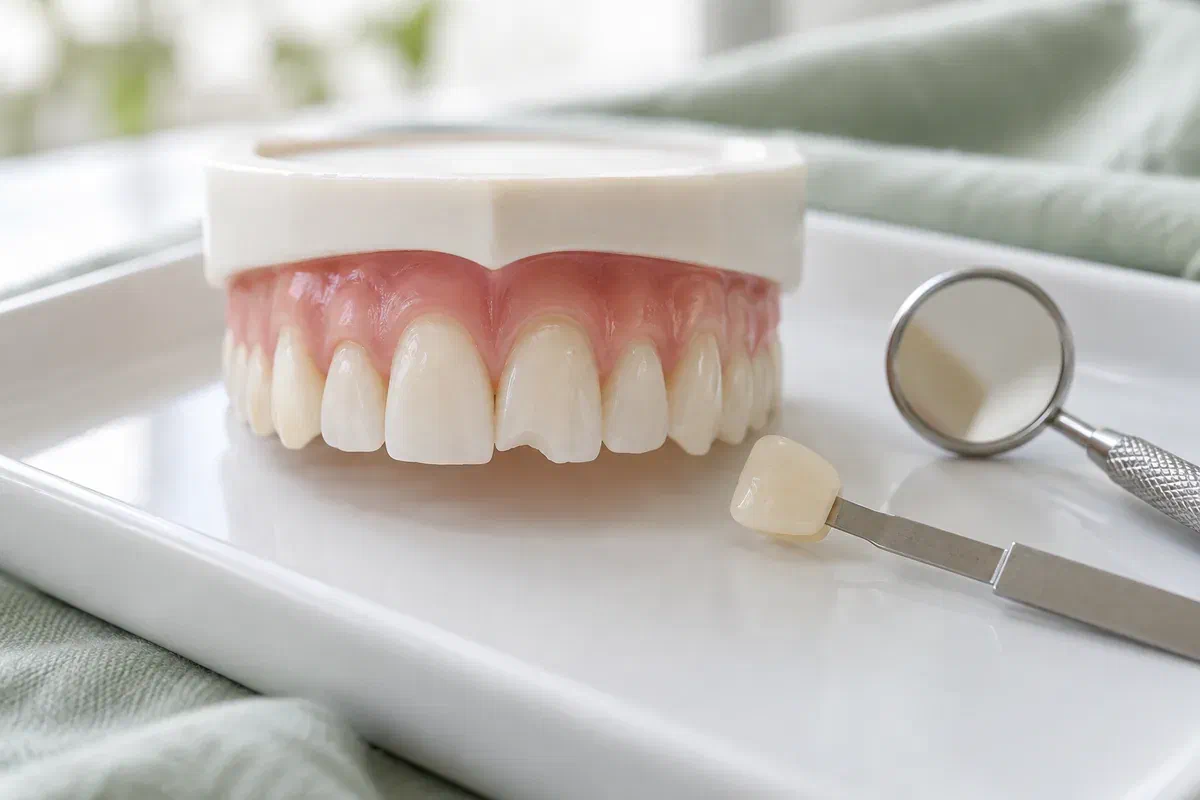
Illustrative patient and dental clinician discussing a chipped tooth using a model
Cosmetic Dentistry

Chipped Tooth Bonding in Brampton

Some chips are years old: a corner lost in high school that you've learned to smile around. If you're coming from Brampton, we check how that tooth has held up, how your bite has adapted and whether composite bonding can restore the edge you remember.

The chip you've had for years

It's never too late to ask about an old chip.

Lots of grown-ups carry a chip from childhood, a teenage hockey game or an old bike fall. Over time it becomes part of how you smile, until a wedding, a new job or a photo makes you think about it again. Bonding can often rebuild such a corner with tooth-coloured resin that is shaped by hand and polished to blend in.

An old chip still deserves a proper look. Years of biting can wear the edge, the tooth next to it may have shifted slightly, and an injury long ago can occasionally affect the tooth's inner tissue without obvious symptoms. Those details influence what kind of repair will work.

Bring what you remember about how and when it happened, and tell us whether the tooth has ever felt sensitive or looked darker. We examine it, explain what we see and discuss bonding alongside other choices. There's nothing to decide before the appointment.

Ask about repairing an old chip
Illustrative front tooth model with a chipped corner beside a shade sample and dental mirror
What history tells us

Old injury, recent break or slow wear?

The repair should suit the tooth as it is now, not just the gap. Share what you know about its past, even if it has never bothered you.

A knock you still remember

Tell us about the original accident, even if it was years ago, and whether the tooth was ever treated or checked. Old injuries sometimes have lasting effects on the tooth's health. A new chip after a fresh impact should also be assessed for injury first.

An edge you've grown used to

Point out whether it rubs your lip, catches food or just looks uneven. Many people stop noticing a rough edge until someone asks. Let us know if you have been avoiding biting with that tooth, since that can reveal how much it bothers you.

Wear that has made it worse

Mention clenching, grinding or chewing hard objects, and whether the chip seems larger than it once did. Rebuilding an edge without looking at the forces behind the wear may not last. Bring any night guard or retainer you currently use.

If a new piece breaks off, place it in a small container covered with milk or saliva and bring it to your appointment. A clinician will decide whether reattachment is possible. Do not try glue at home.

What a repair can bring back

An outline that finally matches its neighbour.

When the tooth is suitable, the resin is chosen to blend with your natural shade and sculpted to restore the shape you lost. That can even out a smile, remove a rough spot you've stopped noticing, or rebuild part of the biting edge.

Bonding isn't permanent in the way people sometimes expect. Composite can stain, wear and chip, and its lifespan depends on your bite and the tooth itself. It's better to discuss what's realistic for your particular tooth than to rely on an average figure.

Patient information: Canadian Dental Association — bonding and veneers · Cleveland Clinic — dental bonding and maintenance

Rebuilding without overdoing it

Ask how much of the tooth would be treated and why. An old, contained chip can often be repaired locally rather than covered completely. The decision depends on the remaining enamel, how the chip has worn and whether there are older fillings nearby.

Restoring the look you remember

Tell the clinician whether length, symmetry or roughness is your main concern, and ask how the new edge will relate to its neighbours. An old photo can help. You can make your preferences clear without being expected to change your whole smile.

Understanding the long-term commitment

Ask what might mean polishing, a repair or replacement in future and how check-ups will monitor it. That makes comparing bonding with other choices easier. Confirm the estimate and whether any testing is needed before you go ahead.

Getting the old chip fixed

A short path from exam to finished edge.

The details vary with the tooth and the repair you choose. If dental work makes you anxious, mention it beforehand and ask how we'll keep you comfortable.

  1. Checking the tooth's health

    We review the tooth's history and any sensitivity, aching or colour changes. The clinician examines it and may suggest an X-ray, especially if it was injured long ago. Ask whether anything found would need treatment before or instead of bonding.

  2. Planning the shape and shade

    You talk through what you want the tooth to look like and compare bonding with other options. If you plan to whiten your teeth, say so now. Whitening first can affect the order of treatment and which resin shade will match.

  3. Placing and sculpting the resin

    With the plan agreed, the tooth surface is prepared, and composite is built up in layers and shaped. A curing light hardens the material. Preparation and the need for freezing depend on the repair, so ask what applies to yours.

  4. Finishing and bite adjustment

    The new edge is polished, and the clinician checks how your teeth meet, since your bite may have adapted to the chip. Mention any feeling of the tooth being too long or hitting first. We finish with aftercare guidance.

After the repair

Getting used to a tooth that's whole again.

Follow the instructions you're given for your repair. If you were numbed, wait until feeling returns before chewing so you don't bite your lip or cheek.

Brush and floss as normal

Use fluoride toothpaste and a gentle brushing technique, and keep cleaning between teeth as advised. Plaque collects on resin just as it does on enamel. If the new contour feels unfamiliar when flossing, ask for a quick demonstration.

Watch the habits that caused wear

Avoid biting nails, pens or packaging with the repaired tooth. If you clench or grind, discuss whether an appliance is worth considering. Protection should match your habits rather than being assumed for everyone who has bonding.

Let us adjust anything that feels off

Call about a new rough spot, a bite that feels different or a chip in the resin. Avoid filing it yourself. If the tooth had an old injury, keep any recommended review, since a new surface doesn't reveal how the inner tooth is doing.

Patient information: NHS — assessment and treatment of chipped or broken teeth

Repair choices for an older chip

The tooth's condition today decides the approach.

Ask what each recommendation would fix and what it would leave. Restoring an edge and treating a tooth affected by an old injury are different jobs.

When the chip is small and the tooth is healthy

Bonding or careful reshaping

Resin can rebuild a lost corner, and a minor irregularity may only need smoothing. Ask how either affects the outline and enamel. The choice should be made after an exam rather than from a selfie.

When more of the tooth needs support

A larger restoration

If the tooth has worn significantly or has older fillings, a restoration giving more coverage may be suggested. Ask why that option is proposed and whether enough healthy structure remains to support it reliably.

When an old injury may have had lasting effects

Checking the inner tooth

A tooth that has darkened or reacts unusually to tests may need further assessment of the pulp. Treatment would depend on what is found. A cosmetic repair shouldn't hide a tooth that needs attention underneath.

Old chips, new questions

What people ask before fixing a long-standing chip.

Talk about appearance, comfort and upkeep together. The right plan treats the repaired edge as part of a tooth that still needs everyday care.

(905) 876-4488
Can a chip I've had since childhood still be bonded?
Often, yes. Age of the chip is less important than the current condition of the tooth and your bite. An exam will show whether bonding or another approach makes more sense.
My chipped tooth has turned slightly grey. Does that change things?
A colour change can be a sign that the tooth’s inner tissue was affected by an old injury. The dentist will want to assess it before planning a cosmetic repair. Further tests or treatment may be needed first.
Has my bite adjusted to the chip over the years?
It can. Teeth sometimes shift slightly or wear differently around a long-standing chip. The clinician checks how your teeth meet so the new edge fits comfortably with your current bite.
Can bonding make my chipped tooth look longer again?
Often some length can be restored, depending on your bite and the surrounding teeth. Bring an older photo if you have one. The final shape must still be practical and supportable for everyday chewing.
Is bonding a good option before a big event like a wedding?
It may be, but allow time for an exam and any follow-up adjustments. If whitening is also planned, let us know early, since the order of treatment can affect how well the shade matches.
How do I fit a chip repair from Brampton around a busy schedule?
Call ahead and ask how many visits your repair is likely to need. Our weekday hours run into the evening, and we can tell you what to expect so you can plan around work or school.
Old chip, Brampton to Bronte Street

Ready to stop smiling around it?

Contact our Bronte Street team to arrange an assessment of your chipped tooth. If you are travelling from Brampton, mention how long the chip has been there and whether you have noticed any sensitivity, colour change or looseness, so we can recommend a suitable next step.

Bonding is one possible repair. If you have a recent injury or urgent symptoms, please call us rather than waiting for a reply to an online form.

Visit Milton Dental Clinic
Unit 1, 342 Bronte St. S, Milton, ON L9T 5B7
Get directions Clinic hours
Monday–Thursday
11am–7pm
Friday–Sunday
By appointment only

Areas we serve

  • Milton
  • Oakville
  • Mississauga
  • Georgetown
  • Halton Hills
  • Acton
  • Campbellville
  • Brampton
  • Burlington
  • Puslinch
  • Rockwood
  • Erin
  • Caledon
  • Etobicoke
  • Old Milton
  • Bronte Meadows
  • Timberlea
  • Dorset Park
  • Dempsey
  • Clarke
  • Beaty
  • Coates
  • Harrison
  • Scott
  • Willmott
  • Ford
  • Bowes
  • Cobden
  • Walker
  • Mountain View
  • Milton Heights
  • Hawthorne Village
  • Valley View
  • Fallingbrook
  • Nassagaweya
  • Trafalgar
  • Esquesing
  • Nelson
  • Brookville
  • Moffat
  • Glen Williams
  • Norval
  • Limehouse
  • Stewarttown
  • Ashgrove
  • Hornby
  • Silver Creek
  • Speyside
  • Scotch Block
  • North Oakville
  • River Oaks
  • Glen Abbey
  • West Oak Trails
  • Palermo
  • Bronte Creek
  • College Park
  • Joshua Creek
  • Uptown Core
  • Preserve
  • Iroquois Ridge
  • Lisgar
  • Meadowvale
  • Meadowvale Village
  • Churchill Meadows
  • Erin Mills
  • Central Erin Mills
  • Streetsville
  • East Credit
  • Creditview
  • Heartland
  • Sheridan
  • Mount Pleasant
  • Credit Valley
  • Huttonville
  • Churchville
  • Springbrook
  • Northwest Brampton
  • Bram West
  • Fletcher's Meadow
  • Fletcher's Creek South
  • Alton Village
  • Orchard
  • Millcroft
  • Headon Forest
  • Tansley
  • Brant Hills
  • Tyandaga
  • Kilbride
  • Lowville
  • Aberfoyle
  • Morriston
  • Arkell
  • Hillsburgh
  • Freelton
  • Carlisle
  • Waterdown
  • Flamborough
  • Mountsberg

How can we help?

Milton Dental Clinic

Have a question about your smile? Choose the option that works best for you.

For urgent dental concerns, please call.
Messages are reviewed during clinic hours.