

Illustrative patient and dental clinician discussing a chipped tooth using a model
Cosmetic Dentistry

Chipped Tooth Bonding in Caledon

Nervous about dental work, so the chip has waited? For anyone travelling from Caledon, we take things at your pace: a careful look at the tooth, a clear explanation of what composite bonding would involve, and plenty of room for questions before anything begins.

If dental visits make you uneasy

Knowing what's coming makes it easier.

A chip can go unrepaired for years simply because the thought of the dental chair feels worse than the chip itself. It may help to know that bonding is often one of the gentler repairs: for a suitable tooth, tooth-coloured resin is added to the chipped area, sculpted by hand and polished, frequently with little or no drilling.

Even so, we need to understand the tooth before promising anything. A chip from a knock, a broken filling and an edge that keeps cracking under pressure each need a slightly different plan. Sometimes there's more going on beneath the surface than a mirror can show.

When you call from Caledon, tell us that you feel anxious; it changes how we pace the visit. Describe how the tooth chipped and how it feels. We examine it, explain the findings in plain terms, and talk through bonding and other choices. Nothing happens without your agreement.

Book a relaxed chipped tooth assessment
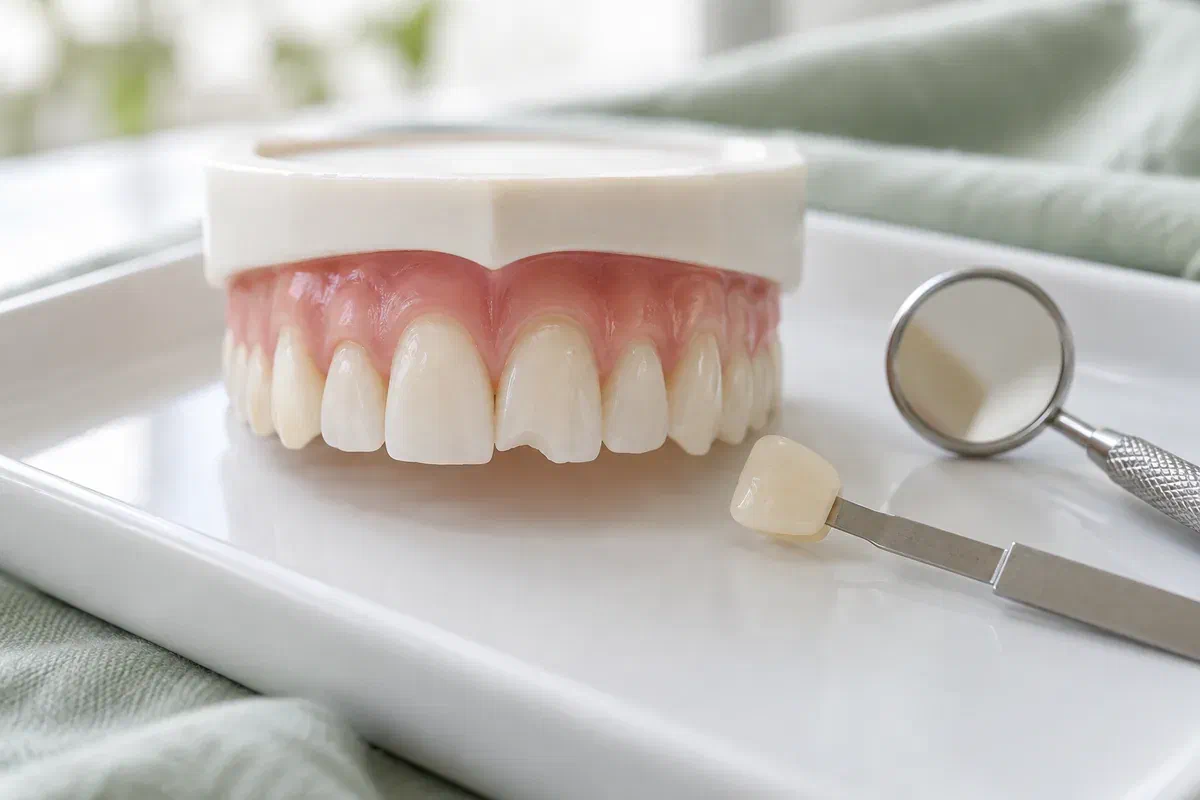
Illustrative front tooth model with a chipped corner beside a shade sample and dental mirror
Helpful things to share

Tell us about the tooth, and about you.

The repair should match the tooth's condition, and the visit should match your comfort level. Share both, even if the chip doesn't hurt.

How the chip happened

If it followed a fall or knock, say whether the tooth shifted, the gum bled, or it ached afterwards. The teeth on either side and the gum line may need checking too. A tooth chipped by a real impact needs its health looked at before any cosmetic repair.

What it feels like day to day

Describe where the edge catches your lip or tongue and whether chewing feels different. Avoid testing it with hard foods. Knowing this helps the clinician decide whether gentle smoothing or adding resin would be more suitable.

What has made past visits hard

Let us know about earlier repairs, grinding or clenching, and anything that has made dental care stressful, such as needles, sounds or long appointments. A plan can often be adjusted. Bring any guard or retainer you wear.

If you have the broken piece, drop it into a small container with milk or saliva and close the lid. Bring it along so the dentist can see whether reattachment is possible. Avoid gluing it.

Why bonding is often approachable

A modest repair, done directly on the tooth.

For a suitable chip, resin is shade-matched and shaped in the mouth, often in one visit. It can smooth an edge that bothers you, restore the outline, or rebuild part of the biting surface, usually with limited preparation of the tooth.

Bonding still has limits. Resin can discolour, wear down or break, and how long it serves you will vary with the tooth and the pressure you put on it. Ask what is realistic for your particular repair rather than relying on a general figure, and feel free to ask the same question twice.

Patient information: Canadian Dental Association — bonding and veneers · Cleveland Clinic — dental bonding and maintenance

No more treatment than needed

You're entitled to know which part of the tooth the work will touch, and why. A small chip can often be repaired locally. The decision depends on the remaining enamel, the shape of the break and any older filling, and you can ask to see what the clinician sees.

Your priorities, clearly heard

Explain whether length, an uneven look or a sharp spot bothers you most. Ask how the planned shape will relate to the tooth beside it. You're welcome to focus on one tooth without any pressure to consider more.

Clarity about what comes next

Ask what might mean polishing, repair or replacement later, and how check-ups will watch the repair. That makes it easier to compare bonding with alternatives. Take the estimate home to think about, and check whether more tests are needed first.

What to expect, in order

No surprises along the way.

Every repair is a little different, so treat this as a general outline. You can ask for a pause at any point, and we'll explain each stage before it starts.

  1. A gentle examination

    First we chat about how the chip happened and whether anything aches. The clinician then looks at the tooth, telling you what they're doing, and explains if an X-ray would help. Ask whether there's a deeper concern that bonding wouldn't solve; you'll get a straight answer.

  2. Talking it through

    You'll hear about bonding and other reasonable options, and agree on the outcome you'd like. Mention any whitening plans, since they affect timing and shade. You can take time to decide rather than starting the same day.

  3. Placing the resin

    If you go ahead, the surface is prepared and resin is added, shaped and hardened with a blue curing light. Some repairs need freezing and some don't, and you can ask which applies beforehand. We'll tell you what you'll feel and hear.

  4. Polishing and a comfortable bite

    The edge is smoothed and polished, and your bite is checked by gently tapping and sliding your teeth together. Let us know if anything feels high. We go over aftercare and any follow-up before you leave.

After you're home

Simple, low-stress care for the new edge.

You'll leave with written or spoken instructions for your particular repair. Where freezing was needed, hold off on food until your lip and cheek feel normal again, because numb tissue is easy to nip without noticing.

Clean around it normally

Your usual soft brush, a fluoride toothpaste and daily flossing are all the repair needs. Resin gathers plaque just like enamel. If you're unsure how to floss around the new shape, we're happy to show you slowly before you leave.

Avoid a few tough jobs

Don't use the tooth to open packages, bite tape or crack hard foods. People who clench or grind can ask about a protective appliance. It's a personal recommendation, not something added to every bonding.

Call with any concern, however small

Phone if a rough spot appears, your bite changes or a piece breaks off. Please don't try to adjust it yourself. If the chip came from an injury, keep any review visit, since a tidy surface doesn't confirm the tooth inside has recovered.

Patient information: NHS — assessment and treatment of chipped or broken teeth

Repair options, explained simply

Smaller chips usually mean simpler fixes.

It's fine to ask, for every option, what it fixes and what it doesn't. A quick edge repair and treatment for a badly damaged tooth involve different visits.

For a small chip on a healthy tooth

Bonding or gentle smoothing

Resin can rebuild a missing corner, and a very minor rough patch may only need polishing, which is often quick. Ask how each affects the shape and enamel. The choice should follow an exam, not a photo.

For bigger breaks

Reattachment or a larger restoration

A saved fragment can sometimes be bonded back. More extensive damage may need a restoration with more coverage, which can take more than one visit. The clinician should explain the reasoning and how much sound tooth is left to work with.

For chips with deeper symptoms

A look at the inner tooth

A deep break or lingering pain can raise questions about the pulp. Treatment would depend on the diagnosis. A neat layer of resin shouldn't paper over a tooth whose inner tissue may need attention.

Questions from nervous patients

Honest answers before you commit.

Ask about comfort, appearance and upkeep together. A good plan respects both the tooth and how you feel about treatment.

(905) 876-4488
Does bonding a chipped tooth usually involve drilling?
Many bonding repairs need only light preparation of the surface, and some need very little. The amount depends on the chip and any old filling. Ask your clinician to explain exactly what they plan to do.
Can I stop the appointment if I feel overwhelmed?
Yes. Agree on a signal, such as raising a hand, before treatment begins. The clinician can pause, explain what’s happening or make you more comfortable before continuing.
Is it possible to have the exam first and decide on treatment later?
Absolutely. An assessment doesn’t commit you to anything. You can take time to think about the options and book the repair when you feel ready.
Will I need an injection for chipped tooth bonding?
Not always. It depends on how much preparation is needed and how close the work is to sensitive areas. Ask beforehand, and let us know if needles worry you so we can talk it through.
How do I describe a chip over the phone if I'm not sure what happened?
Just tell us which tooth, when you noticed it, and whether there’s pain, sensitivity, swelling or looseness. That’s enough for us to advise on timing. The exam will fill in the rest.
Can family members from Caledon book on the same day as my visit?
Ask when you call. We can often arrange appointments close together so one trip works for more than one person. Some people also find it reassuring to have someone they know nearby.
Caledon chipped tooth care

Take the first step at your own pace.

Ring our Bronte Street practice whenever you feel ready, and we'll set up a relaxed assessment with time built in for questions. Let us know about any pain, sensitivity or looseness, and anything that makes dental visits harder for you, so the first visit is shaped around you.

Bonding is one possible way to repair a chip. A fresh injury or worrying symptoms should be discussed by phone so we can advise you promptly.

Visit Milton Dental Clinic
Unit 1, 342 Bronte St. S, Milton, ON L9T 5B7
Get directions Clinic hours
Monday–Thursday
11am–7pm
Friday–Sunday
By appointment only

Areas we serve

  • Milton
  • Oakville
  • Mississauga
  • Georgetown
  • Halton Hills
  • Acton
  • Campbellville
  • Brampton
  • Burlington
  • Puslinch
  • Rockwood
  • Erin
  • Caledon
  • Etobicoke
  • Old Milton
  • Bronte Meadows
  • Timberlea
  • Dorset Park
  • Dempsey
  • Clarke
  • Beaty
  • Coates
  • Harrison
  • Scott
  • Willmott
  • Ford
  • Bowes
  • Cobden
  • Walker
  • Mountain View
  • Milton Heights
  • Hawthorne Village
  • Valley View
  • Fallingbrook
  • Nassagaweya
  • Trafalgar
  • Esquesing
  • Nelson
  • Brookville
  • Moffat
  • Glen Williams
  • Norval
  • Limehouse
  • Stewarttown
  • Ashgrove
  • Hornby
  • Silver Creek
  • Speyside
  • Scotch Block
  • North Oakville
  • River Oaks
  • Glen Abbey
  • West Oak Trails
  • Palermo
  • Bronte Creek
  • College Park
  • Joshua Creek
  • Uptown Core
  • Preserve
  • Iroquois Ridge
  • Lisgar
  • Meadowvale
  • Meadowvale Village
  • Churchill Meadows
  • Erin Mills
  • Central Erin Mills
  • Streetsville
  • East Credit
  • Creditview
  • Heartland
  • Sheridan
  • Mount Pleasant
  • Credit Valley
  • Huttonville
  • Churchville
  • Springbrook
  • Northwest Brampton
  • Bram West
  • Fletcher's Meadow
  • Fletcher's Creek South
  • Alton Village
  • Orchard
  • Millcroft
  • Headon Forest
  • Tansley
  • Brant Hills
  • Tyandaga
  • Kilbride
  • Lowville
  • Aberfoyle
  • Morriston
  • Arkell
  • Hillsburgh
  • Freelton
  • Carlisle
  • Waterdown
  • Flamborough
  • Mountsberg

How can we help?

Milton Dental Clinic

Have a question about your smile? Choose the option that works best for you.

For urgent dental concerns, please call.
Messages are reviewed during clinic hours.