

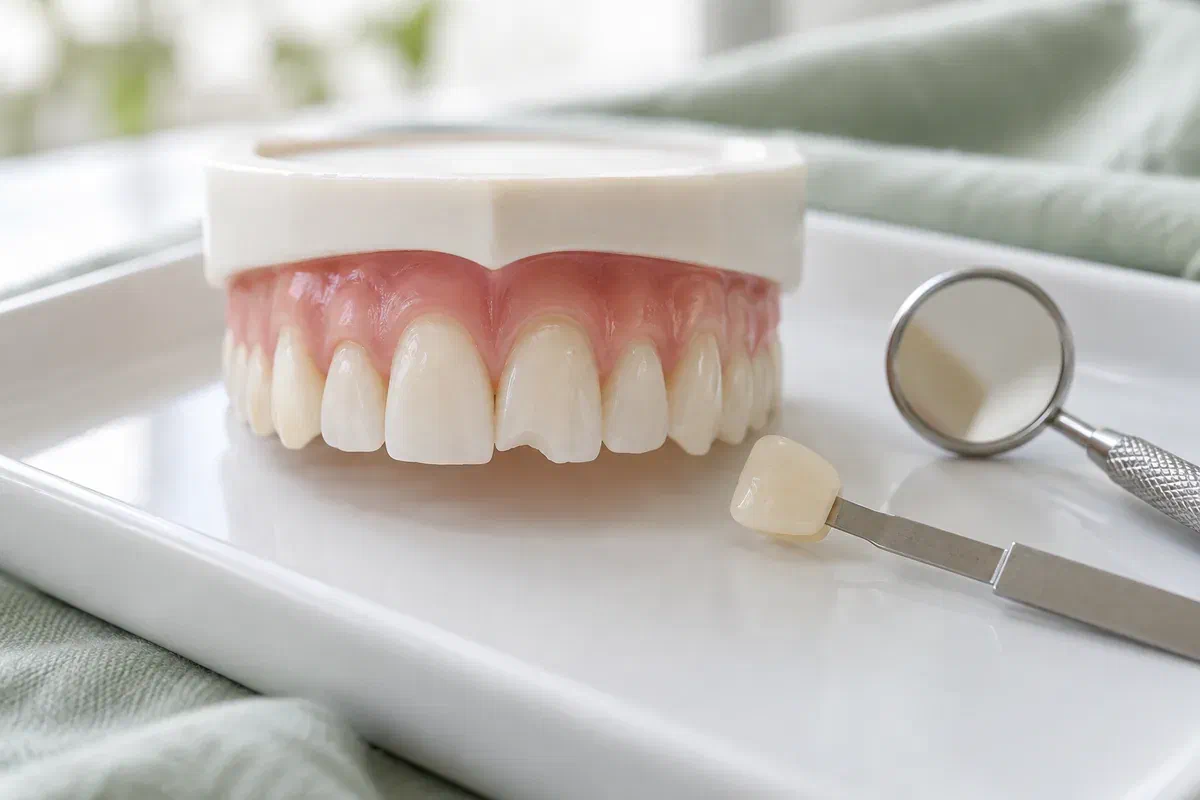
Illustrative patient and dental clinician discussing a chipped tooth using a model
Cosmetic Dentistry

Chipped Tooth Bonding in Campbellville

A gate latch, a ladder rung or a tool handle that slips can catch a front tooth while you work. For households in Campbellville, we check the injured tooth, plan any follow-up it needs and explain when composite bonding can rebuild the chipped edge.

Knocked while working

Fix the edge. Keep watching the tooth.

Chores around a rural property come with their share of bumps. A tooth that takes a hit can lose a corner and look fine otherwise. Bonding can often rebuild that corner with tooth-coloured composite, sculpted on the tooth and polished so it sits evenly beside its neighbours.

An injured tooth has a timeline, though. Some effects of a knock only appear weeks or months later, such as darkening, tenderness or a change in how the tooth responds to cold. That is why a repaired edge and a monitoring plan often go together.

Before you head in from Campbellville, tell us what struck the tooth, when, and how it has felt since. We examine the tooth and its neighbours, explain the findings and discuss bonding, other repairs and any follow-up. Choosing a treatment beforehand isn't your job.

Arrange a check for an injured tooth
Illustrative front tooth model with a chipped corner beside a shade sample and dental mirror
Signs to report after a knock

What did the tooth do right after?

Your observations help shape both the repair and the follow-up. Share them even if the tooth feels normal now.

Movement, bleeding or soreness

Tell us whether the tooth shifted, the gum bled or it hurt to bite in the hours after. Lips, gums and other teeth may also need a look. An impact strong enough to chip enamel can affect the support around the tooth as well.

A sharp edge you keep noticing

Show where the new edge scratches your tongue or lip. Avoid testing it with hard foods or a fingernail. We can talk about whether smoothing or rebuilding with resin suits it, and whether to wait before a final repair.

An earlier injury to the same tooth

Mention whether this tooth has been knocked or repaired before, and whether you clench or grind. A tooth with a history of injury may need more careful assessment, and earlier X-rays or records can help us compare. Bring a sports guard or night guard if you have one.

When a piece breaks off, rinse away any obvious grit gently and submerge it in milk or saliva in a closed container. Bring it with you so the dentist can see whether reattachment is an option. Never glue it.

What the repair can offer

A smoother edge while the tooth recovers.

When the tooth is suitable, composite can be colour-matched and shaped to restore the missing corner. That might mean an even outline, a comfortable surface for your lip and tongue, or a rebuilt biting edge.

Bonding doesn't change how the injured tooth heals inside. Resin can also stain, wear or chip, and its lifespan depends on the tooth and the forces on it. Ask what's realistic for your repair and whether follow-up checks are still needed.

Patient information: Canadian Dental Association — bonding and veneers · Cleveland Clinic — dental bonding and maintenance

A repair kept to the damaged area

Ask how much of the tooth would be treated and why. A small chip can often be rebuilt locally, leaving the rest of the tooth untouched. The decision depends on the remaining enamel, the fracture pattern and any existing filling.

The shape you want restored

Tell the clinician whether the corner's length, an uneven look or a sharp spot matters most. Ask how the planned shape will relate to the tooth next to it. You can share your preference without being nudged toward wider work.

A follow-up plan you understand

Ask how the tooth will be monitored after the injury and what changes would prompt a repair, polish or further treatment. That helps you weigh bonding against other choices. Confirm the estimate and any further tests needed.

From injury check to finished edge

Steps that respect how injured teeth recover.

The plan adjusts to the injury and the repair you agree on. If you feel uneasy about treatment, let us know and ask how comfort will be handled.

  1. Assessing the injury

    We go over how and when the tooth was struck, and any pain, tenderness or sensitivity since. The clinician examines it and nearby teeth and may take X-rays as a baseline. Ask whether anything suggests a problem beyond the chip.

  2. Deciding when to repair

    Sometimes bonding can be done straight away; other times it is better to smooth the edge and wait. You'll compare options and agree on the result you want. Mention whitening or other plans, as they can affect timing and shade.

  3. Placing the composite

    For agreed bonding, the tooth is prepared and resin is layered, shaped and cured with a light. Preparation and the need for freezing depend on the repair and how tender the tooth is, so ask what to expect.

  4. Finishing and setting review dates

    The edge is polished and your bite is checked. Tell us if the tooth feels high or sore when you close. We'll explain aftercare and when the tooth should be reviewed again to see how it is recovering.

In the weeks after

Keep an eye on colour, comfort and the bite.

Follow the instructions given for your repair. Where local anaesthetic was used, let feeling come back completely before you eat; a numb lip is surprisingly easy to chew.

Gentle, thorough cleaning

Brush with fluoride toothpaste and keep cleaning between your teeth as advised, even if the gum is a little tender. Plaque collects on resin like enamel. Ask how to clean comfortably around a recently injured area.

Protection during heavy or risky work

Consider whether a mouthguard makes sense for activities where a blow is possible. Avoid using the tooth to cut twine, open packaging or bite hard objects. If you grind, ask whether a night appliance is worth assessing.

Watch for delayed changes

Call if the tooth darkens, becomes painful, feels loose or the repair chips. Avoid adjusting the edge yourself. Keep the review visits recommended after the injury, because a repaired surface can look fine while the inner tooth still needs checking.

Patient information: NHS — assessment and treatment of chipped or broken teeth

Repair paths after an injury

The depth of the damage sets the course.

Every option has a job and a limit, so ask about both. Rebuilding a corner and treating an injured tooth are different goals.

For a small chip on an otherwise healthy tooth

Bonding or smoothing the edge

Resin can restore a missing corner, while slight roughness may simply be polished, sometimes as a first step before final bonding. Ask how each affects the outline and enamel. The choice comes after an exam.

For bigger breaks

Reattachment or a larger restoration

A fragment that was saved and kept moist can sometimes be reattached. More extensive damage may need a restoration with more coverage. Ask why it is recommended and whether enough healthy tooth remains to support it.

For injuries with deeper effects

Assessing the pulp

Deep breaks, ongoing pain or later darkening can point to changes in the tissue inside the tooth. Treatment would follow the diagnosis. A bonded edge isn't a substitute for checking a tooth that may have been injured more seriously.

Injured tooth questions

What people ask after a chip from a knock.

It helps to ask about safety, appearance and follow-up together. The repaired edge belongs to a tooth that may still be recovering.

(905) 876-4488
Why would the dentist suggest waiting before bonding an injured tooth?
Sometimes the tooth needs time to settle so its health can be assessed. Smoothing a sharp edge may help in the meantime. Your dentist will explain why waiting makes sense and what will be checked before the final repair.
What follow-up does a tooth need after it was knocked?
It depends on the injury. Some teeth are reviewed over weeks and months with checks of colour, comfort and response to testing. Ask when to return and which symptoms should bring you in sooner.
My chipped tooth is tender when I tap it. Is that normal?
Tenderness can follow an injury, but it should be assessed, especially if it persists or worsens. Avoid chewing on that tooth and call for advice. The dentist can check the tooth and the tissues around it.
Should I wear a mouthguard for outdoor work?
For activities with a real chance of a blow to the face, a mouthguard may reduce the risk of dental injury. It can’t remove every risk. Ask whether a guard makes sense for the work you do.
Can an X-ray show damage I can't see?
X-rays can help show the root and surrounding bone, and serve as a baseline for later comparison. They don’t show everything, so the exam and your symptoms matter too. The dentist will explain what’s needed.
How do we plan return visits from Campbellville around a busy season?
Let us know when you book. Reviews can often be timed around your schedule, but some checks after an injury shouldn’t be delayed too long. Ask which dates matter most, and whether other family members’ check-ups could be booked for the same trip.
Campbellville chipped tooth care

Took a knock? Book a proper check.

Phone the Bronte Street practice, explain what struck the tooth, and we'll find a time to examine it. Tell us when it happened and whether there is pain, swelling, tenderness or looseness so we can recommend the right next step.

Bonding is one possible repair for a chipped tooth. If the injury is fresh or symptoms are worrying, phone us directly; an online request is slower.

Visit Milton Dental Clinic
Unit 1, 342 Bronte St. S, Milton, ON L9T 5B7
Get directions Clinic hours
Monday–Thursday
11am–7pm
Friday–Sunday
By appointment only

Areas we serve

  • Milton
  • Oakville
  • Mississauga
  • Georgetown
  • Halton Hills
  • Acton
  • Campbellville
  • Brampton
  • Burlington
  • Puslinch
  • Rockwood
  • Erin
  • Caledon
  • Etobicoke
  • Old Milton
  • Bronte Meadows
  • Timberlea
  • Dorset Park
  • Dempsey
  • Clarke
  • Beaty
  • Coates
  • Harrison
  • Scott
  • Willmott
  • Ford
  • Bowes
  • Cobden
  • Walker
  • Mountain View
  • Milton Heights
  • Hawthorne Village
  • Valley View
  • Fallingbrook
  • Nassagaweya
  • Trafalgar
  • Esquesing
  • Nelson
  • Brookville
  • Moffat
  • Glen Williams
  • Norval
  • Limehouse
  • Stewarttown
  • Ashgrove
  • Hornby
  • Silver Creek
  • Speyside
  • Scotch Block
  • North Oakville
  • River Oaks
  • Glen Abbey
  • West Oak Trails
  • Palermo
  • Bronte Creek
  • College Park
  • Joshua Creek
  • Uptown Core
  • Preserve
  • Iroquois Ridge
  • Lisgar
  • Meadowvale
  • Meadowvale Village
  • Churchill Meadows
  • Erin Mills
  • Central Erin Mills
  • Streetsville
  • East Credit
  • Creditview
  • Heartland
  • Sheridan
  • Mount Pleasant
  • Credit Valley
  • Huttonville
  • Churchville
  • Springbrook
  • Northwest Brampton
  • Bram West
  • Fletcher's Meadow
  • Fletcher's Creek South
  • Alton Village
  • Orchard
  • Millcroft
  • Headon Forest
  • Tansley
  • Brant Hills
  • Tyandaga
  • Kilbride
  • Lowville
  • Aberfoyle
  • Morriston
  • Arkell
  • Hillsburgh
  • Freelton
  • Carlisle
  • Waterdown
  • Flamborough
  • Mountsberg

How can we help?

Milton Dental Clinic

Have a question about your smile? Choose the option that works best for you.

For urgent dental concerns, please call.
Messages are reviewed during clinic hours.