

Illustrative patient and dental clinician discussing a chipped tooth using a model
Cosmetic Dentistry

Chipped Tooth Bonding in Old Milton

An old filling that has cracked away can leave the same jagged edge as a fresh chip. For anyone in Old Milton, our nearby Bronte Street team checks what broke, what lies beneath it and whether new composite bonding is a sound way to rebuild the tooth.

Old repairs, new chips

Sometimes the chip is in the filling, not the tooth.

Many smiles in Old Milton, the town's historic downtown, carry dental work done years ago. When a piece of an older filling or bonded edge snaps off, it can look exactly like a broken tooth. Composite bonding may rebuild the area with tooth-coloured resin, shaped by hand and polished to suit the enamel beside it.

Knowing what actually failed helps. An aging restoration that has let go, natural enamel that cracked under a hard bite, and a corner damaged in a fall are separate problems with separate answers. The visible gap rarely reveals whether decay or a crack sits underneath.

Bring whatever history you can remember: roughly when the original work was done, whether it was ever repaired, and how the tooth feels now. After an exam, we explain the findings and talk about bonding along with other options. Nobody expects you to know the right treatment before you arrive.

Have an older repair checked
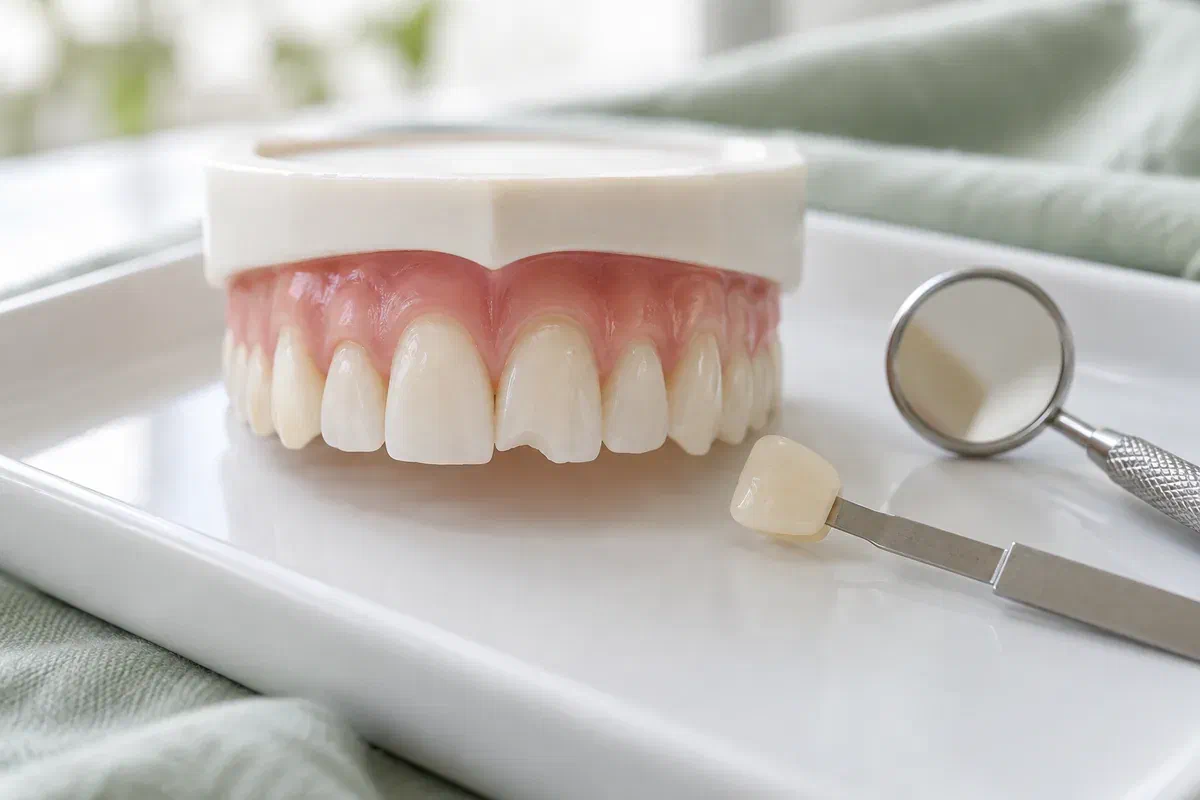
Illustrative front tooth model with a chipped corner beside a shade sample and dental mirror
Clues from the broken edge

Is it the restoration, the enamel, or both?

The best repair answers the condition of the whole tooth. Describe what you have noticed, even when the area feels comfortable at the moment.

Damage after a knock or slip

Tell us how it happened and whether the tooth felt loose, bled or became tender. Nearby teeth and gums sometimes need checking too. After a solid blow, even a tiny-looking break should be examined rather than written off as a cosmetic issue.

A corner that snags your lip

Point to where the rough patch rubs and mention any change in how food feels when you bite. Resist the urge to file it or test it on hard foods. We can discuss whether light smoothing or rebuilding with resin would suit that edge better.

A filling that has been replaced before

Let us know how many times that spot has been fixed, and whether you grind, clench or chew on pens and ice. Redoing it again without asking why it keeps failing may miss the real issue. If you wear a guard or retainer, please bring it.

If a fragment of natural tooth broke away, keep it moist in milk or saliva in a closed container and bring it along. The dentist can decide whether reattaching it is realistic. Never use superglue or household adhesive.

Why bonding may fit

Fresh resin can replace what time wore away.

When the tooth beneath is sound, a new composite can be matched to the surrounding shade and sculpted to restore the outline you had before. That might mean a smoother edge, a corner that lines up with its neighbour, or a sturdier biting surface.

Composite has honest limits. It can discolour, wear down or chip again, and how well it holds up depends on the remaining tooth and how hard you bite. Rather than leaning on an average lifespan, ask what to expect from the particular tooth being repaired.

Patient information: Canadian Dental Association — bonding and veneers · Cleveland Clinic — dental bonding and maintenance

Keeping healthy tooth where possible

Ask how much of the old material needs to come out and how much new resin will go in. A limited repair is sometimes possible when the damage is contained. That decision weighs the enamel left behind, how the break ran and the state of any surrounding filling.

A look that suits your smile now

An older repair may have darkened or no longer match. Mention whether colour, length or a rough edge bothers you most, and ask how the new shape will relate to the teeth beside it. You can state what you like without committing to a wider makeover.

Plain talk about future care

Ask what would prompt a polish, a small top-up or a full replacement down the road, and how check-ups will watch for it. Knowing this helps you compare bonding fairly with other restorations. Make sure you understand the estimate and any testing needed first.

What happens in the chair

Examine, decide, rebuild, then fine-tune.

The details change with each tooth and each type of break. If you feel anxious about treatment, tell us beforehand and ask how comfort will be handled.

  1. Looking beneath the broken area

    We talk through the history of the tooth and any aching, sensitivity or tenderness on chewing. The clinician checks for decay or cracks around the old work and may suggest an X-ray. Ask directly whether anything is going on that new resin would not solve.

  2. Choosing the approach together

    Bonding is weighed against other sensible repairs, and you agree on what the result should look like. If whitening is on your mind, raise it here. Lightening teeth first can change the timing of the repair and the resin shade that will match best.

  3. Removing old material and placing new

    Loose or failing material is taken away, the surface is prepared, and fresh composite is applied and contoured. A curing light hardens it in stages. Whether freezing is needed depends on how much work is involved, so ask what applies to you.

  4. Smoothing the edge and checking contact

    The repair is shaped and polished, then your bite is tested by closing and sliding your teeth together. Mention it if the tooth feels high or unfamiliar. You will also hear about aftercare and whether a follow-up visit is recommended.

After your repair

Treat the new edge like your own tooth, only a little more kindly.

Your clinician will give instructions for your particular repair. If you were numbed, hold off chewing until feeling returns to avoid biting your cheek or lip.

Brush and clean between as usual

Use a soft brush and fluoride toothpaste, and keep up with floss or interdental brushes. New resin collects plaque just as old fillings and enamel do. If the edge of the repair feels tricky to clean around, ask for a quick demonstration.

Protect it from rough jobs

Avoid biting fingernails, chewing ice or using your front teeth to open things. If you grind or clench, talk to us about whether a guard is worth considering. That advice depends on your own habits rather than being part of every repair.

Tell us early about changes

Phone if a rough spot returns, your bite shifts or part of the resin breaks off. Avoid smoothing the area at home. If the tooth was injured, keep any review appointment, since a neat-looking repair doesn't show how the inside of the tooth is doing.

Patient information: NHS — assessment and treatment of chipped or broken teeth

Other ways to repair it

Small chip, big break, or something deeper?

For every option, ask what it fixes and what it might leave unresolved. Tidying a worn corner and restoring a heavily broken tooth are not the same task.

When the damage is minor

New bonding or light smoothing

Fresh composite can rebuild a lost corner or replace a worn-out repair, and a very small irregularity may simply be polished. Ask how either affects the tooth's shape and enamel. The right call comes from an exam, not a picture sent ahead.

When more support is needed

Bonding the fragment back or a larger restoration

A natural tooth fragment that was kept may occasionally be reattached. Where much of the tooth is gone or weakened by old fillings, a restoration with more coverage may be recommended. Ask why and whether enough sound tooth remains to support it.

When symptoms point beyond the surface

Assessing the inner tooth

A deep break, lingering ache or old trauma may raise concerns about the pulp. Further treatment would follow from the diagnosis. Placing resin over the chip does not replace investigating a tooth that may be affected more deeply.

Questions from the neighbourhood

What people ask when older dental work gives way.

Talk through appearance, comfort and upkeep in one visit. A good plan treats the repair as part of a living tooth that will keep needing care.

(905) 876-4488
How can you tell whether my tooth chipped or my old filling did?
The dentist examines the area closely and may take an X-ray to see what is left beneath. Tooth structure and filling material look and behave differently up close. That distinction shapes whether bonding, a different restoration or more investigation fits best.
My old bonding has turned yellow. Can it be replaced at the same visit as a chip repair?
Often both can be discussed together, and sometimes treated in the same appointment. Your clinician will look at each area and explain the plan. Matching new resin to existing work is easier when everything is reviewed at once.
Is there decay hiding under a broken filling?
There may be, which is one reason a broken restoration needs an exam before it is rebuilt. If decay is found, it is treated as part of the plan. Covering it with fresh resin without checking would not be appropriate.
Why does the same front tooth keep losing its corner?
Bite pressure, grinding, chewing on hard objects and the amount of remaining tooth can all contribute. A third or fourth break is a reason to step back and look at the cause. Bring any guard you wear and describe what was happening when it broke.
Can the repair copy how my tooth looked years ago?
An older photo can help show the shape you remember. Your clinician will explain what is achievable given the neighbouring teeth and your bite. The final outline still has to be one the tooth can support day to day.
Should an injured tooth be rechecked even after the chip looks fixed?
Often, yes. Some injuries need monitoring over weeks or months, regardless of how the surface looks. Ask when to come back and which signs, such as darkening or new pain, should prompt an earlier visit.
Old Milton chip repair

Bring us the tooth that has changed.

Our Bronte Street practice is close by for anyone living in Old Milton. Call to describe the chip or broken filling and book an assessment. Let us know if the tooth hurts, feels sensitive or seems loose, so we can recommend the right next step.

Composite bonding is just one possible repair. If the damage is from a recent injury or you have urgent symptoms, please call rather than sending an online request.

Visit Milton Dental Clinic
Unit 1, 342 Bronte St. S, Milton, ON L9T 5B7
Get directions Clinic hours
Monday–Thursday
11am–7pm
Friday–Sunday
By appointment only

Areas we serve

  • Milton
  • Oakville
  • Mississauga
  • Georgetown
  • Halton Hills
  • Acton
  • Campbellville
  • Brampton
  • Burlington
  • Puslinch
  • Rockwood
  • Erin
  • Caledon
  • Etobicoke
  • Old Milton
  • Bronte Meadows
  • Timberlea
  • Dorset Park
  • Dempsey
  • Clarke
  • Beaty
  • Coates
  • Harrison
  • Scott
  • Willmott
  • Ford
  • Bowes
  • Cobden
  • Walker
  • Mountain View
  • Milton Heights
  • Hawthorne Village
  • Valley View
  • Fallingbrook
  • Nassagaweya
  • Trafalgar
  • Esquesing
  • Nelson
  • Brookville
  • Moffat
  • Glen Williams
  • Norval
  • Limehouse
  • Stewarttown
  • Ashgrove
  • Hornby
  • Silver Creek
  • Speyside
  • Scotch Block
  • North Oakville
  • River Oaks
  • Glen Abbey
  • West Oak Trails
  • Palermo
  • Bronte Creek
  • College Park
  • Joshua Creek
  • Uptown Core
  • Preserve
  • Iroquois Ridge
  • Lisgar
  • Meadowvale
  • Meadowvale Village
  • Churchill Meadows
  • Erin Mills
  • Central Erin Mills
  • Streetsville
  • East Credit
  • Creditview
  • Heartland
  • Sheridan
  • Mount Pleasant
  • Credit Valley
  • Huttonville
  • Churchville
  • Springbrook
  • Northwest Brampton
  • Bram West
  • Fletcher's Meadow
  • Fletcher's Creek South
  • Alton Village
  • Orchard
  • Millcroft
  • Headon Forest
  • Tansley
  • Brant Hills
  • Tyandaga
  • Kilbride
  • Lowville
  • Aberfoyle
  • Morriston
  • Arkell
  • Hillsburgh
  • Freelton
  • Carlisle
  • Waterdown
  • Flamborough
  • Mountsberg

How can we help?

Milton Dental Clinic

Have a question about your smile? Choose the option that works best for you.

For urgent dental concerns, please call.
Messages are reviewed during clinic hours.