

Illustrative adult patient discussing a clear aligner with a dental clinician
Cosmetic Dentistry

Clear Aligners

Thinking about straighter teeth without a fixed appliance? Explore clear aligners in Milton with a discussion of your bite, oral health, daily wear routine, and the care needed to guide and maintain a suitable orthodontic result.

A closer look at clear aligners

Plan the movement, not just the look of the trays.

Clear aligners are removable trays made to move teeth through a planned sequence. Each stage applies controlled pressure as part of an orthodontic treatment plan. Their appearance can be discreet, but the decision to use them still depends on the teeth, gums, supporting tissues, and bite.

You may be considering treatment because of crowding, spacing, or changes since earlier orthodontic care. It helps to explain the particular feature that concerns you and what you hope daily life with treatment would look like. A suitable plan needs to make sense clinically and practically.

At Milton Dental Clinic, start with an assessment and a conversation about your goals. Ask who would plan and supervise the treatment, what records are needed, and whether a specialist opinion is appropriate. Choosing a tray system comes after understanding the problem it is intended to address.

Discuss your alignment goals
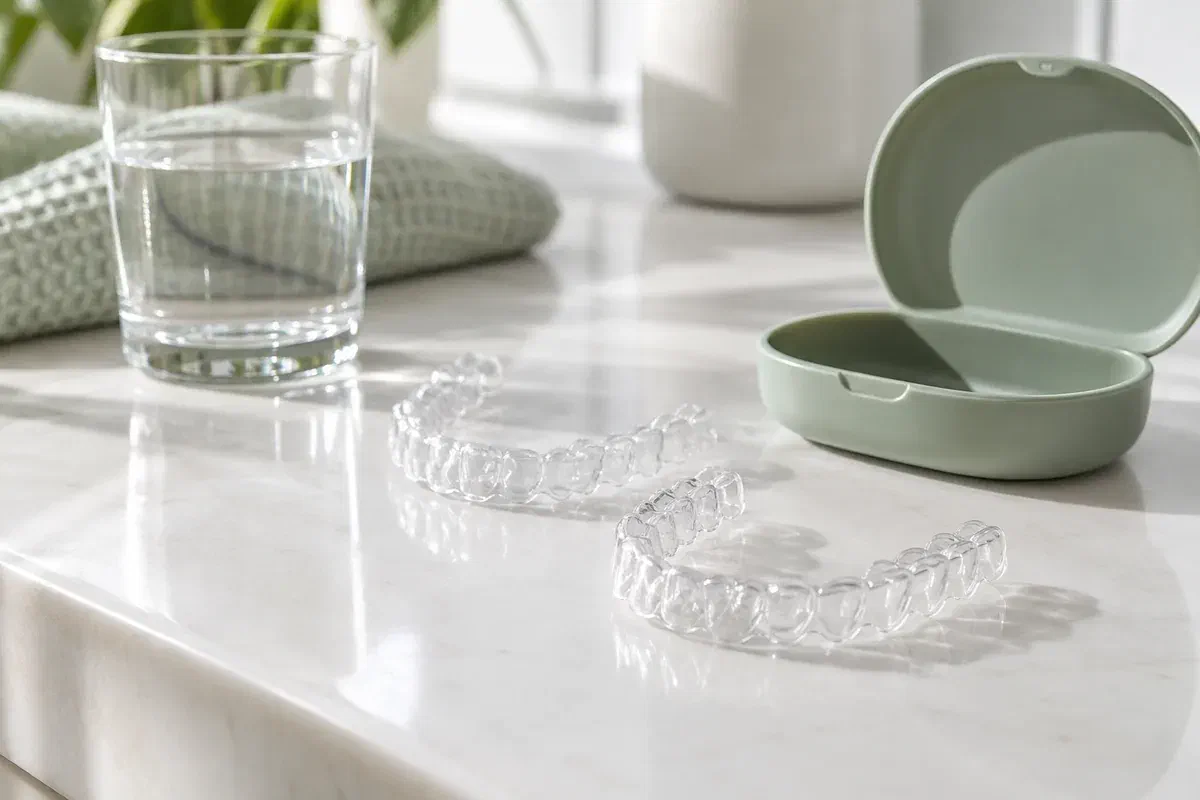
Illustrative transparent aligner trays beside a protective case and glass of water
Before deciding on aligners

Consider the bite, the starting health, and the routine.

A clear appliance is only one part of orthodontic care. The assessment should identify the desired movements and the factors that could affect whether those movements are appropriate.

Crowding, spacing, or a bite concern

Point out the teeth that trouble you, but ask how the upper and lower teeth work together. A front-tooth change can have implications beyond the visible smile. The plan should explain which concerns it addresses and any limits that will remain.

Dental work or gum issues that need attention

Share your history of restorations, injuries, and gum treatment. Active oral-health problems may need care before orthodontics begins. Ask how any planned fillings or other dental work will be coordinated with records and appliance fitting.

A schedule that must support consistent wear

Think about meals, work, travel, and the times you are likely to remove the trays. Be candid about what feels manageable. Understanding the wear commitment before starting is more useful than discovering halfway through that the routine is difficult to maintain.

Aligners are not suitable for every orthodontic problem. Ask why they are being recommended for your case and whether another appliance or a specialist assessment would offer a better approach.

What removable treatment can offer

A less visible option with an active role for you.

For an appropriate case, aligners offer a removable way to carry out planned tooth movements. They are taken out for meals and oral hygiene according to the instructions provided. That flexibility also makes consistent use an essential part of treatment.

Compare the benefits with the obligations: cleaning the trays, tracking the sequence, attending reviews, and reporting problems. Ask what the estimate includes, how additional treatment stages are handled, and what retention will involve when active movement finishes.

Patient information: American Association of Orthodontists — clear aligners · British Orthodontic Society — clear aligner treatment

A plan that can be explained step by step

Ask the clinician to describe the main goals in ordinary language. If a visual simulation is used, discuss what it illustrates and what it cannot guarantee. You should know how progress will be assessed against the agreed clinical aims.

Room to discuss comfort and visibility

Explain the situations that matter to you, whether that means public speaking, social events, or an upcoming work commitment. Ask about the trays and any attachments or other components that might be visible. A clear appliance does not mean every part is invisible.

Follow-up that responds to the actual movement

Progress reviews allow the treating clinician to assess the fit and response rather than relying only on the original schedule. Ask whom to contact between visits and how to handle a missed appointment. Changes to the plan should be explained before you proceed.

How an aligner plan develops

Assess, agree, fit, and review the sequence.

The details depend on the proposed movements and your oral health. Ask for the expected stages and responsibilities before committing, including what happens after the final active tray.

  1. Gather the information needed for a diagnosis

    Discuss your goals, health history, previous orthodontics, and existing dental work. The clinician assesses the mouth and recommends relevant records. Clarify whether any disease management, restoration, or specialist consultation is needed before an appliance plan can be confirmed.

  2. Review the proposed movements and consent

    Talk through the goals, alternatives, risks, expected duration, and financial details. Some plans include attachments or carefully planned reduction between teeth. Ask what is proposed, why it is needed, and whether any preparation permanently changes enamel.

  3. Fit the appliance and practise the routine

    At delivery, the treating team checks the fit and explains insertion, removal, cleaning, and the prescribed wear schedule. Confirm which trays you have and when changes should occur. Practise any unfamiliar step and make sure you can reach the team with questions.

  4. Monitor progress and plan retention

    Attend the recommended reviews so the response can be assessed. Additional stages or adjustments may be needed according to findings. Before active treatment ends, discuss retainers, their wear instructions, and future reviews to help maintain the achieved tooth positions.

Day-to-day aligner care

Build a routine around wear, cleaning, and communication.

Follow your own written instructions rather than another person's timetable. Keep the current stage and next review easy to check, especially when work or travel changes your routine.

Wear and change trays as directed

Use the schedule prescribed for your treatment and do not skip ahead to make up for missed wear. If a tray no longer seats properly or an attachment comes away, contact the treating team. Ask what to wear while waiting for specific advice.

Care for both the teeth and the appliance

Remove trays for meals and drinks as instructed and clean your teeth before reinserting them. Follow the cleaning method for the appliance material. Keep your usual dental check-ups and hygiene visits; orthodontic reviews do not replace general preventive care.

Store trays securely and report a loss promptly

Use the protective case when the trays are out and keep it away from pets and heat. If an aligner is lost or damaged, contact the team with its stage number. Do not choose a different stage without advice or attempt a home repair.

Comparing ways to address alignment

Choose an approach that fits the diagnosis and your priorities.

The most discreet appliance is not automatically the most suitable one. Ask how each option would address the movement, the bite, the daily commitment, and the ongoing retention plan.

When the planned movements and wear routine are suitable

A supervised clear aligner sequence

Aligners may suit selected alignment and bite concerns when the individual can follow the required routine. Discuss the proposed supervision and any additional components. The plan should explain the intended result and the possibility that refinements or another approach could be needed.

When another approach offers better control

Fixed appliances or specialist orthodontic care

Certain movements or more complex bite concerns may be better addressed with another appliance or specialist input. Ask what makes the case more involved and how referral would work. A different recommendation should come with a clear clinical explanation.

When movement is optional or not the main issue

Monitoring or a discussion of a different cosmetic concern

You may decide not to undertake elective orthodontics after understanding the findings. If your concern is primarily a tooth's shape or surface, discuss whether another approach addresses that specific issue. A cosmetic restoration changes appearance without necessarily correcting tooth position or bite.

Questions before clear aligner treatment

Make the commitment understandable before you begin.

Ask about your proposed plan rather than assuming every clear tray treatment works the same way. Practical questions about daily life are part of informed planning.

(905) 876-4488
Can I choose clear aligners before having my teeth and gums assessed?
You can express a preference, but suitability needs assessment. The clinician must consider the planned movements, oral health, and bite. Ask whether records, other dental treatment, or a specialist opinion are needed before the recommendation is final.
Will my clear aligner plan involve anything attached to my teeth?
Some plans use tooth-coloured attachments or other components to help deliver particular movements. Ask whether these are proposed, where they would be placed, and how visible they may be. The team should explain their purpose and eventual removal.
What does creating space between teeth mean in an aligner plan?
Some plans include interproximal reduction, a measured removal of enamel between selected teeth. It is not part of every case. Ask why it is recommended, how much is planned, and what alternatives exist, because removed enamel does not grow back.
If I miss aligner wear during a trip, should I change trays on the original date?
Contact the treating team for instructions rather than advancing automatically. The next step depends on the fit, stage, and interruption. Keep a record of what you wore and for how long so the clinician can give advice relevant to the situation.
Does a computer image of my proposed aligner result guarantee that exact outcome?
No. A visual plan illustrates intended movements, while actual progress depends on biological response and treatment factors. Ask how the clinician will assess progress and explain any revised stages. Understand the agreed goals and limitations before starting.
What should be included in the discussion about costs after the last active aligner?
Ask about retainers, fitting visits, follow-up, replacement appliances, and any additional treatment stages. Confirm what is included in the estimate and what may involve a separate fee. Retention is an ongoing part of planning, not simply an afterthought at the final visit.
Clear aligners in Milton

Start with the change you want to understand.

Arrange a consultation at our Bronte Street practice to discuss crowding, spacing, or a bite concern. Bring your questions about removable treatment, the daily routine, and the assessment needed to decide on an appropriate approach.

An assessment determines suitability and whether referral is appropriate. Treatment duration, appliance choice, and results vary with individual needs.

Visit Milton Dental Clinic
Unit 1, 342 Bronte St. S, Milton, ON L9T 5B7
Get directions Clinic hours
Monday–Thursday
11am–7pm
Friday–Sunday
By appointment only

How can we help?

Milton Dental Clinic

Have a question about your smile? Choose the option that works best for you.

For urgent dental concerns, please call.
Messages are reviewed during clinic hours.