

Illustrative adult patient discussing a clear aligner with a dental clinician
Cosmetic Dentistry

Clear Aligners in Acton

The last aligner is not the finish line. For adults in Acton weighing clear aligners, this page looks ahead: the assessment that comes first, the months of daily wear, and the retainers and check-ups that help keep teeth where treatment leaves them.

Thinking several years ahead

Straight is one goal. Staying straight is another.

Teeth keep a kind of memory. After they have been moved, the fibres and bone around them take time to settle, and without support they tend to drift. That is why every clear aligner plan, a sequence of removable trays that move teeth step by step, needs a retention plan built in from the start.

Looking that far ahead also sharpens the earlier questions. Are your gums and supporting bone healthy enough for movement? How do existing fillings or crowns affect fit? How do your upper and lower teeth come together? A result is only worth holding if it was sensible to aim for in the first place.

From Acton, a smaller community in Halton Hills northwest of Milton, a first appointment at our Bronte Street practice can cover the whole arc, from assessment to long-term retainers. Ask who would plan and supervise the work, what records are needed and whether an orthodontist’s opinion would add value.

Talk about the full treatment arc
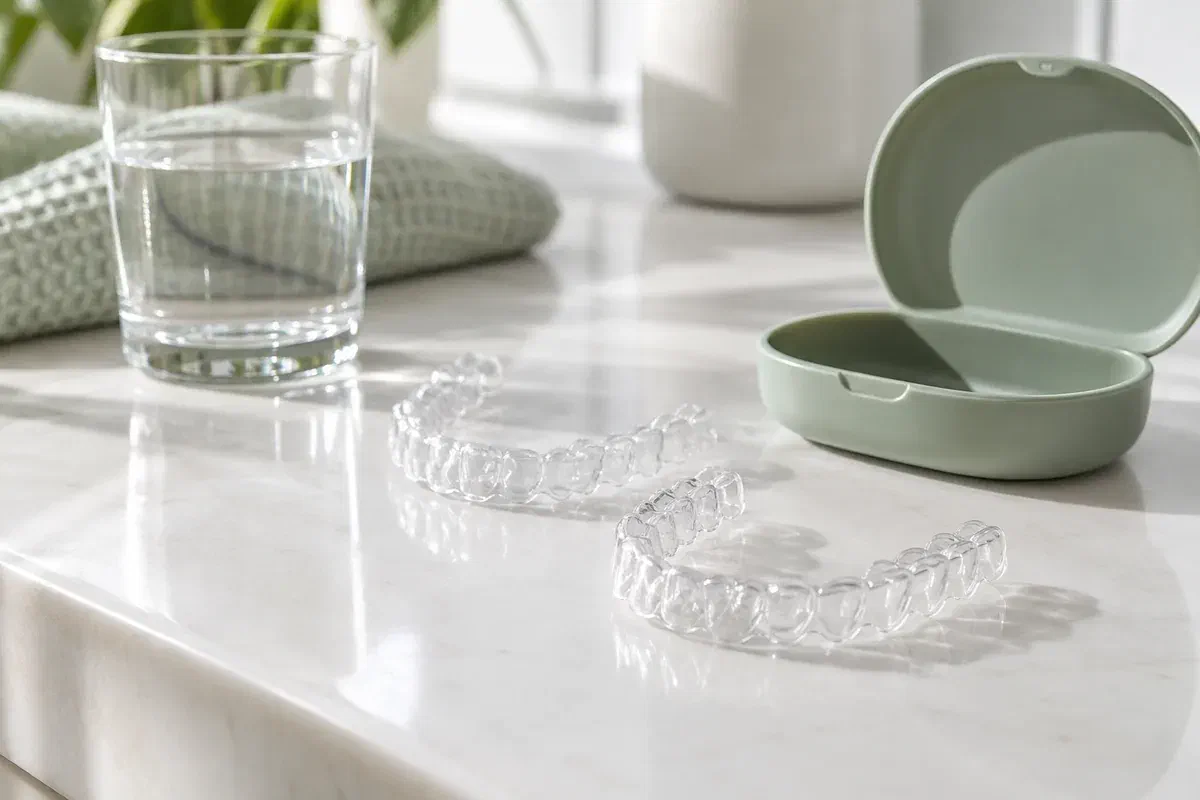
Illustrative transparent aligner trays beside a protective case and glass of water
Early questions with long consequences

What would it take to begin, and to keep the result?

Trays are one stage of orthodontic care. The assessment should name the movements you need and the factors that could make them, or their stability afterward, harder to achieve.

The kind of crowding or spacing involved

Some corrections hold more readily than others. Show the clinician what bothers you and ask how your bite works as a whole. Your plan should explain what it changes, what it leaves alone and which movements may need especially careful retention.

The health of teeth and gums underneath

Share any history of fillings, crowns, injury or gum treatment. Active decay or gum disease generally needs treatment before teeth are moved, and gum health continues to matter for stability. Ask how any repairs would be timed with scans and fitting.

Two routines, not one

During treatment you wear trays for long hours each day. Afterward, a retainer routine continues, often for years. Consider honestly whether you can keep both going, and ask what the retainer schedule is likely to involve before you start.

Aligners are not suitable for every orthodontic problem. Ask why they are recommended for you, and whether another appliance or a specialist assessment would give a more stable outcome.

What a removable approach can offer

Planned movement you can live with, then maintain

In the right case, aligners allow planned tooth movement with an appliance you take out for meals and cleaning, following the instructions you are given. Many people find the habit of handling removable trays carries over naturally into wearing removable retainers later on.

Still, weigh the benefits against everything you are signing up for: cleaning trays, keeping the stage order, attending reviews, reporting problems and then caring for retainers. Ask what the estimate includes, how extra stages are handled and what retention, including replacements, is expected to cost and involve.

Patient information: American Association of Orthodontists — clear aligners · British Orthodontic Society — clear aligner treatment

A plan that names its goals

Ask for the aims of treatment in everyday language and how they will be measured. If a digital simulation is shown, discuss what it represents and what it can’t guarantee. Knowing the target makes it easier to know what you are protecting afterward.

A conversation about how treatment looks

Mention occasions when appearance matters to you, at work or in your personal life. Ask whether attachments or other components would be used and where. Clear trays are discreet, though some parts may be visible close up.

Reviews that follow the teeth

Follow-up visits check how trays fit and how teeth are responding rather than relying only on the original schedule. Ask whom to contact between visits and what to do about a missed appointment. Changes should be explained before you continue.

The whole timeline

Four phases, the last one open-ended

Your timeline depends on the movements needed and on your oral health. Ask to see each phase and your part in it, including the retention phase that follows the final active tray.

  1. Diagnose before deciding

    Begin with your goals, health history, any earlier orthodontics and current restorations. After examining your mouth, the clinician recommends suitable records. Ask whether gum care, a restoration or a specialist referral should come before an appliance plan is agreed.

  2. Consent with the end in view

    Discuss goals, alternatives, risks, duration and fees, including retention. Some plans add attachments or take a measured amount of enamel from between selected teeth. Ask why those steps are proposed and which of them cannot be reversed.

  3. Start wearing, and learn the routine well

    At the fitting appointment the team checks your trays and shows you how to insert, remove and clean them, and how long each stage is worn. Confirm your stages and change dates. Good habits formed now carry into retainer wear later.

  4. Review, finish and move into retention

    Attend reviews so progress can be assessed and refinements added if needed. As active treatment closes, retainers are fitted or prescribed. Ask how often to wear them, how to clean them, how often they should be checked and what to do if one breaks.

Daily care, during and after

Today’s habits become tomorrow’s retainer routine.

Follow the instructions written for you. Keep your stage and next review easy to check now, and later keep your retainer schedule just as visible.

Wear and change trays as directed

Follow the prescribed wear for every stage and don’t skip forward after a gap. If a tray stops seating or an attachment comes away, contact the team. Ask which tray to wear until you hear back.

Keep teeth, trays and retainers clean

Remove trays to eat and drink as instructed, brush before reinserting and clean the appliance in the recommended way. The same care applies to retainers. Keep your usual check-ups and hygiene visits throughout.

Treat lost appliances as urgent admin

Use the case every time, away from pets and heat. If a tray or retainer is lost or damaged, call with the details. Don’t move to another stage on your own, and don’t leave a missing retainer unreplaced for long.

Choosing with the long term in mind

Which approach will you still be glad of in ten years?

Discretion during treatment matters, but so does what happens after. For each option, ask how it handles the movement, your bite, the daily effort and long-term retention.

When trays suit the movement and you suit the routine

Clear aligners followed by retainers

For some alignment and bite problems, trays worn faithfully can achieve the planned change, and a retainer plan then helps hold it. Ask about supervision and any extra parts. Expect the plan to allow for refinement stages or a different method if needed.

When more control or experience is needed

Braces or specialist orthodontics

More complex bites, or particular movements, may be better handled with fixed braces or by an orthodontist. Ask what makes the case complex and how a referral would be arranged. A different recommendation should always come with reasons you can follow.

When movement is optional or not the real concern

Accepting your current alignment, or a cosmetic change

Some people decide not to take on orthodontics and its long retention commitment. If your concern is mostly shape or surface, ask whether a different treatment addresses that. A cosmetic restoration changes appearance without moving teeth or improving the bite.

Questions from Acton about retention

After the last tray

Ask about your own plan instead of assuming every tray system ends the same way. Retention questions deserve as much attention as treatment questions.

(905) 876-4488
How long will I need to wear a retainer after aligners?
Retention is often long-term, and wear may reduce over time to nights only, but your instructions depend on your case. Ask the clinician for a clear retainer schedule and how it might change over the years.
What is the difference between fixed and removable retainers?
A fixed retainer is a thin wire bonded behind certain teeth, while a removable retainer is taken in and out like a tray. Each has advantages and care needs. Ask which is recommended for you and why.
What should I do if my retainer stops fitting?
Don’t force it. A retainer that feels tight or won’t seat may mean teeth have shifted or the appliance is distorted. Contact the team promptly so they can check your teeth and advise on a replacement.
How often should retainers be checked or replaced?
Retainers wear out and can crack or warp. Ask how often yours should be checked, how to recognise signs of wear and what replacement would involve so you can plan for it.
Are retainer costs part of the aligner estimate?
This varies. Ask exactly what is included, such as the first retainers, fitting visits and follow-up, and which items, like replacements, may involve a separate fee.
Can Acton households combine retainer checks with regular cleanings?
Sometimes it’s possible to check retainers during routine visits. Ask at your consultation how retention follow-up would be scheduled so it fits around your usual dental care and reduces extra trips.
Clear aligners for Acton

Plan the result, and plan to keep it.

Arrange an appointment at our Bronte Street practice to talk about crowding, spacing or a bite concern. We will explain the assessment, the daily commitment of wearing trays and the retainer routine that follows, so you can decide with the full picture in front of you.

Assessment determines suitability and whether a referral is appropriate. Treatment duration, appliance choice, retention needs and results vary between individuals.

Visit Milton Dental Clinic
Unit 1, 342 Bronte St. S, Milton, ON L9T 5B7
Get directions Clinic hours
Monday–Thursday
11am–7pm
Friday–Sunday
By appointment only

Areas we serve

  • Milton
  • Oakville
  • Mississauga
  • Georgetown
  • Halton Hills
  • Acton
  • Campbellville
  • Brampton
  • Burlington
  • Puslinch
  • Rockwood
  • Erin
  • Caledon
  • Etobicoke
  • Old Milton
  • Bronte Meadows
  • Timberlea
  • Dorset Park
  • Dempsey
  • Clarke
  • Beaty
  • Coates
  • Harrison
  • Scott
  • Willmott
  • Ford
  • Bowes
  • Cobden
  • Walker
  • Mountain View
  • Milton Heights
  • Hawthorne Village
  • Valley View
  • Fallingbrook
  • Nassagaweya
  • Trafalgar
  • Esquesing
  • Nelson
  • Brookville
  • Moffat
  • Glen Williams
  • Norval
  • Limehouse
  • Stewarttown
  • Ashgrove
  • Hornby
  • Silver Creek
  • Speyside
  • Scotch Block
  • North Oakville
  • River Oaks
  • Glen Abbey
  • West Oak Trails
  • Palermo
  • Bronte Creek
  • College Park
  • Joshua Creek
  • Uptown Core
  • Preserve
  • Iroquois Ridge
  • Lisgar
  • Meadowvale
  • Meadowvale Village
  • Churchill Meadows
  • Erin Mills
  • Central Erin Mills
  • Streetsville
  • East Credit
  • Creditview
  • Heartland
  • Sheridan
  • Mount Pleasant
  • Credit Valley
  • Huttonville
  • Churchville
  • Springbrook
  • Northwest Brampton
  • Bram West
  • Fletcher's Meadow
  • Fletcher's Creek South
  • Alton Village
  • Orchard
  • Millcroft
  • Headon Forest
  • Tansley
  • Brant Hills
  • Tyandaga
  • Kilbride
  • Lowville
  • Aberfoyle
  • Morriston
  • Arkell
  • Hillsburgh
  • Freelton
  • Carlisle
  • Waterdown
  • Flamborough
  • Mountsberg

How can we help?

Milton Dental Clinic

Have a question about your smile? Choose the option that works best for you.

For urgent dental concerns, please call.
Messages are reviewed during clinic hours.