

Illustrative adult patient discussing a clear aligner with a dental clinician
Cosmetic Dentistry

Clear Aligners in Georgetown

How noticeable would clear aligners really be at work, in photos or on a video call? From Georgetown, get a straight answer about trays, attachments and speech, alongside the bite and gum assessment that decides whether this approach suits you at all.

Discreet, with a few caveats

Will anyone notice?

For many adults, that is the first question. Clear aligners are thin, transparent trays that fit snugly over the teeth and are swapped in sequence, each shifting the teeth by a planned increment. In conversation they are usually hard to spot, though not always invisible.

Some plans add small tooth-coloured bumps, called attachments, that give the trays something to grip for particular movements. A slight change in speech can happen in the first days too. And beneath the cosmetic questions sit the clinical ones: your gums, bone, existing dental work and bite.

Coming in from Georgetown, the largest community in Halton Hills, you can raise all of this at a first visit to our Bronte Street practice. Explain what you want to change and where appearance matters most. Ask who would plan and supervise treatment, what records are needed and whether an orthodontist should advise.

Ask about visibility in person
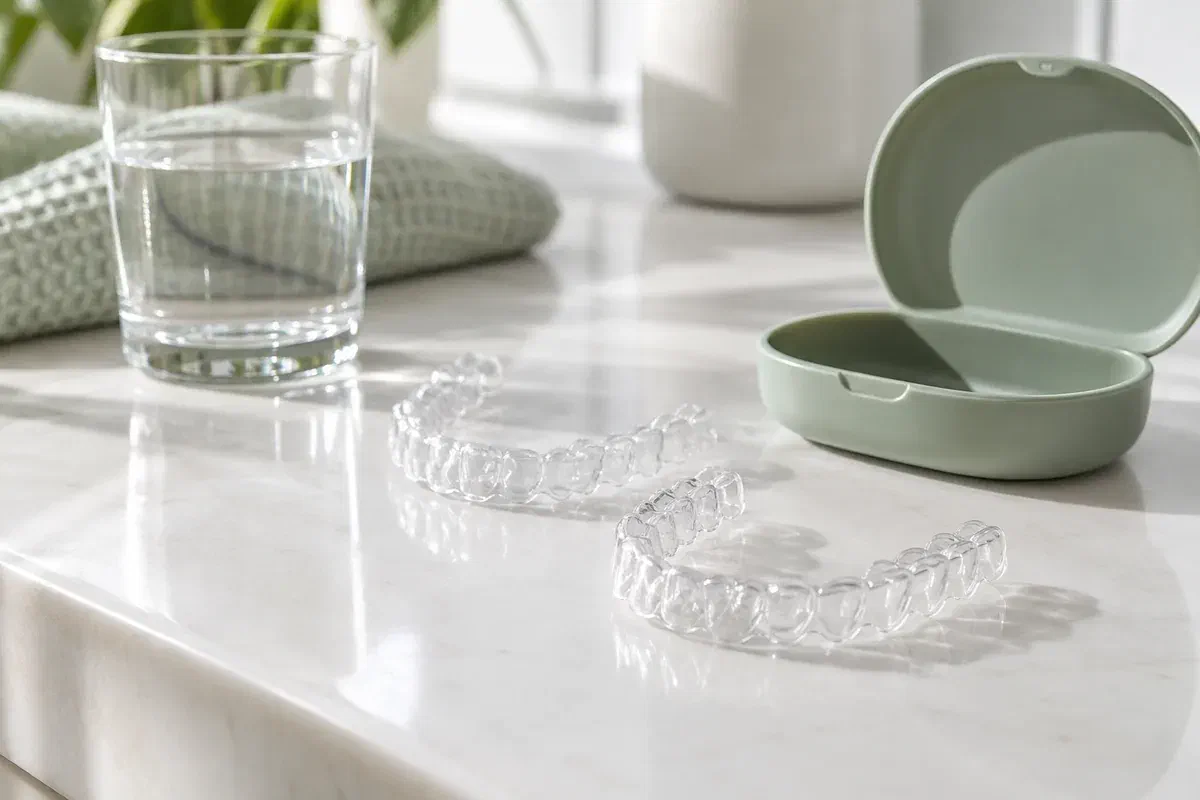
Illustrative transparent aligner trays beside a protective case and glass of water
Beyond the look of the trays

A discreet appliance still has clinical homework.

The appliance follows the diagnosis. Your assessment should state which movements are needed and what might make them less suitable or less predictable.

Crowding, gaps and the bite behind them

Show the clinician the teeth that bother you on camera or in the mirror. Ask how your upper and lower teeth meet, because front-tooth changes can affect your bite. Your plan should say clearly what it will change, and be just as clear about what will look much the same at the end.

Existing dental work and gum health

Fillings, crowns, veneers, old injuries and gum treatment all matter, partly because attachments bond to tooth surfaces. Active problems usually need care first. Ask how any work would be scheduled around scans and fitting.

Wear during the hours people see you

Trays work only while worn, including during meetings and social plans. If you expect to remove them often for appearance, say so. Understanding the wear commitment early is better than compromising it later.

Aligners don’t suit every orthodontic problem. If they are recommended, ask why, and whether a different appliance or specialist assessment would give a better result even if it is more visible.

What a low-profile option offers

Subtle in public, demanding in private

For a suitable case, aligners let planned movement happen with an appliance most people won’t notice. You take the trays out for meals and cleaning according to your instructions. Being removable is the appeal, and it is also why disciplined wear matters.

Set the discretion against the daily tasks: cleaning trays, following stages, attending reviews and reporting problems. Ask what the estimate includes, how additional stages are handled and what retainers will look like when active treatment ends.

Patient information: American Association of Orthodontists — clear aligners · British Orthodontic Society — clear aligner treatment

Goals laid out plainly

Ask for the main aims of the plan in simple terms. If a digital preview is shown, discuss what it shows and what it can’t promise. Make sure you know how progress will be judged.

Attachments, speech and photographs

Mention presentations, video calls, weddings or other events. Ask whether attachments are planned, how many and on which teeth, and how they may look in photos. Ask also about speech changes and how long they tend to last.

Reviews that look at real fit

Each review checks how the trays seat and how teeth are moving, rather than simply following the original timeline. Ask whom to call between appointments and what to do if one is missed. Plan changes should be explained first.

Where attachments fit in the process

From records to retention, step by step

Your path depends on the movements involved and your oral health. Ask for the stages and responsibilities before agreeing, including what follows the last active tray.

  1. Assessment and records

    You share goals, health history, past orthodontic care and current restorations. The clinician examines your mouth and recommends records. Ask whether gum treatment, a filling or a specialist consultation is needed before an appliance plan is set.

  2. Plan discussion and consent

    You’ll go over aims, alternatives, risks, likely length and fees. If attachments are planned, ask where they would go and how they’re removed later. If enamel would be reduced between some teeth, ask how much, why, and what alternatives exist, since enamel doesn’t regrow.

  3. Attachment placement and fitting

    When trays are ready, any attachments are bonded and the first trays are checked for fit. The team explains insertion, removal, cleaning and wear time. Note your stages and change dates, and practise before you leave.

  4. Progress checks and retainers

    Come to reviews so the clinician can compare movement with the plan. Refinements may be added. Toward the end, attachments are typically removed and retainers are discussed, including how to wear them and how future visits help maintain the result.

Looking after trays and attachments

Keep them clear, keep them in.

Your written instructions come first. Keep your stage and next review easy to check, especially around events when you may be tempted to leave trays out.

Wear time over appearances

Wear each tray as prescribed, even on days with photos or presentations, and don’t skip ahead after lapses. If a tray doesn’t seat or an attachment chips off, call. Ask which tray to wear meanwhile.

Clean trays stay clear

Remove trays for meals and coloured or sugary drinks as instructed, and brush before reinserting. Clean the trays using the method recommended for their material so they stay transparent. Keep your regular check-ups and cleanings.

A case in every bag

Store trays in the case when they’re out, away from pets and heat. If one is lost or damaged, contact the team with the stage number. Don’t pick another stage yourself or try a home repair.

Visibility versus suitability

Sometimes the less discreet option is the better one.

An appliance that’s hard to see isn’t automatically right. For each option, ask how it handles the movement, your bite, the daily effort and retention.

When trays can achieve the movement

Aligners, supervised throughout

For some alignment and bite concerns, trays work well if you wear them consistently. Ask about supervision and whether attachments or other parts are part of the plan. A good plan explains its aim and admits that refinements or a switch could be needed.

When more control is required

Braces, including less visible styles, or a specialist

Certain movements or more complex bites may be better managed with fixed appliances or an orthodontist. Ask what makes your case more involved and whether less noticeable bracket options exist. Any alternative should come with clear clinical reasons.

When the concern is shape rather than position

No orthodontics, or a cosmetic restoration

After the findings, you might decide against elective straightening. If what bothers you is mainly a tooth’s outline or surface, ask whether another treatment addresses that. Restorations change appearance without moving teeth or correcting the bite.

Visibility questions from Georgetown

How trays look, sound and feel

Ask about your own plan instead of assuming all tray systems look the same. Questions about appearance are perfectly reasonable, and they sit comfortably alongside the clinical ones.

(905) 876-4488
Can people see aligners on a video call?
Trays are usually difficult to notice on screen, though light can catch the edges and attachments may show up close. A clean, well-fitting tray tends to be least noticeable. Ask the clinician how your particular plan is likely to look, and whether attachments would sit on the teeth that show most when you talk.
How long does any lisp from aligners usually last?
Many people find speech adjusts within days as the tongue gets used to the trays. Practising reading aloud can help. If a speech change lasts or a tray rubs, mention it at your review.
Do attachments change colour over time?
Attachments are tooth-coloured, but like other bonded materials they can pick up stains from coffee, tea or similar drinks. Ask how to reduce staining and how attachments are polished away at the end.
Can trays become cloudy or yellow?
Trays can lose clarity if not cleaned properly or if worn while drinking coloured beverages. Each tray is usually replaced at the next stage, but a dull one can still be more visible in the meantime. Follow the cleaning method recommended and remove trays for drinks as instructed.
Can I take my aligners out for an important event?
Occasional short removals may happen, but missed wear can slow progress. Ask the team how to handle a special occasion and how to make up for it safely without skipping ahead.
Can my Georgetown work schedule fit aligner reviews?
Ask about the expected review spacing at your consultation. The clinic is open Monday to Thursday from 11am to 7pm, with Friday to Sunday by appointment only. Planning visits in advance makes it easier to arrange time away from work.
Aligners for Georgetown adults

Ask the visibility question first. We’ll answer it honestly.

Bring the teeth you’d like to change, and the moments when you most want to look like yourself, to our Bronte Street practice. We’ll talk through how trays and attachments would look day to day, how speech tends to adjust and the assessment that decides whether this approach is right for you.

Suitability and referral needs are determined at assessment. Treatment time, appliance choice and outcomes vary by person.

Visit Milton Dental Clinic
Unit 1, 342 Bronte St. S, Milton, ON L9T 5B7
Get directions Clinic hours
Monday–Thursday
11am–7pm
Friday–Sunday
By appointment only

Areas we serve

  • Milton
  • Oakville
  • Mississauga
  • Georgetown
  • Halton Hills
  • Acton
  • Campbellville
  • Brampton
  • Burlington
  • Puslinch
  • Rockwood
  • Erin
  • Caledon
  • Etobicoke
  • Old Milton
  • Bronte Meadows
  • Timberlea
  • Dorset Park
  • Dempsey
  • Clarke
  • Beaty
  • Coates
  • Harrison
  • Scott
  • Willmott
  • Ford
  • Bowes
  • Cobden
  • Walker
  • Mountain View
  • Milton Heights
  • Hawthorne Village
  • Valley View
  • Fallingbrook
  • Nassagaweya
  • Trafalgar
  • Esquesing
  • Nelson
  • Brookville
  • Moffat
  • Glen Williams
  • Norval
  • Limehouse
  • Stewarttown
  • Ashgrove
  • Hornby
  • Silver Creek
  • Speyside
  • Scotch Block
  • North Oakville
  • River Oaks
  • Glen Abbey
  • West Oak Trails
  • Palermo
  • Bronte Creek
  • College Park
  • Joshua Creek
  • Uptown Core
  • Preserve
  • Iroquois Ridge
  • Lisgar
  • Meadowvale
  • Meadowvale Village
  • Churchill Meadows
  • Erin Mills
  • Central Erin Mills
  • Streetsville
  • East Credit
  • Creditview
  • Heartland
  • Sheridan
  • Mount Pleasant
  • Credit Valley
  • Huttonville
  • Churchville
  • Springbrook
  • Northwest Brampton
  • Bram West
  • Fletcher's Meadow
  • Fletcher's Creek South
  • Alton Village
  • Orchard
  • Millcroft
  • Headon Forest
  • Tansley
  • Brant Hills
  • Tyandaga
  • Kilbride
  • Lowville
  • Aberfoyle
  • Morriston
  • Arkell
  • Hillsburgh
  • Freelton
  • Carlisle
  • Waterdown
  • Flamborough
  • Mountsberg

How can we help?

Milton Dental Clinic

Have a question about your smile? Choose the option that works best for you.

For urgent dental concerns, please call.
Messages are reviewed during clinic hours.