Your bite as a working system
The tooth you notice may be only part of the story. Ask how your upper and lower teeth meet and whether a change at the front affects chewing. The plan should be explicit about what it will and won’t address.


Before any tray is made, your gums, bone support and existing dental work need a careful look. Adults from Halton Hills can learn how that foundation shapes a clear aligner plan, along with the daily wear, reviews and retention it involves.
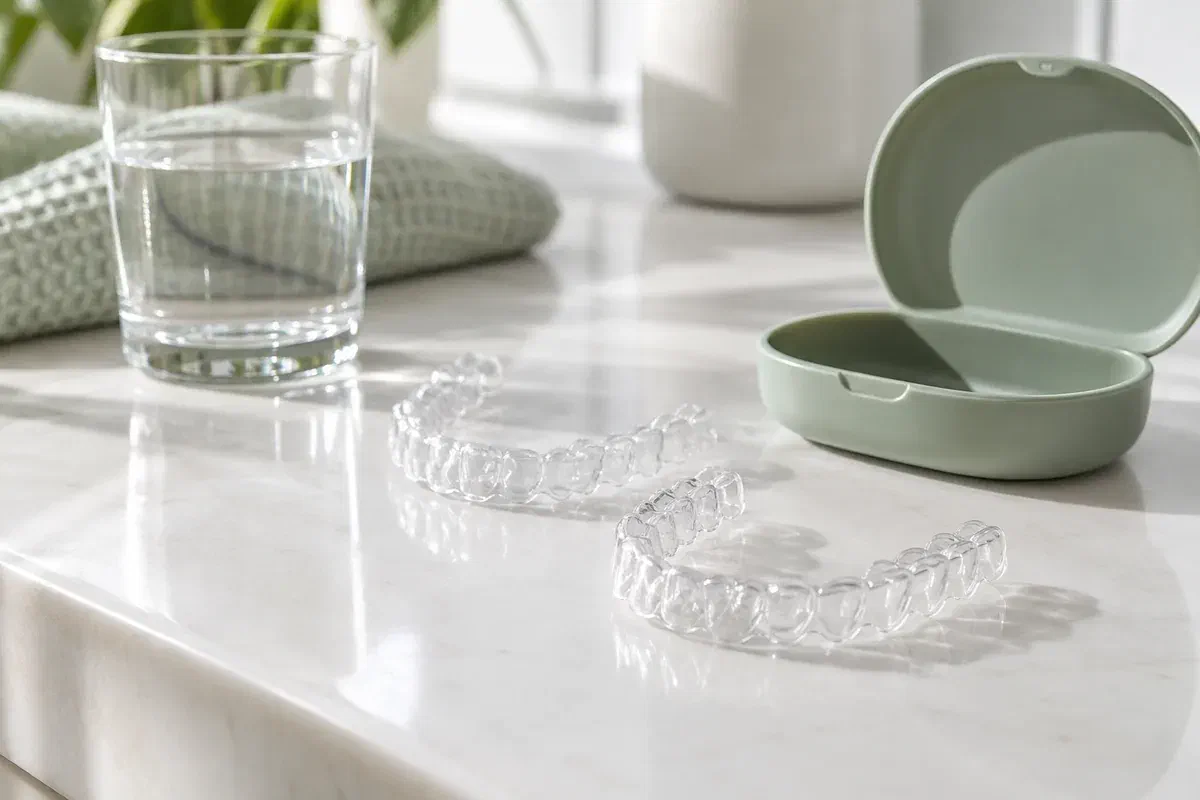
A tooth moves because the bone and gum around it gradually remodel in response to steady pressure. That is the quiet biology behind clear aligners, which are removable trays changed in sequence, each set to guide teeth a little further along a plan.
It follows that the supporting tissues must be healthy enough to cope. Bleeding gums, untreated decay, a cracked filling or a loose crown can all change what is advisable. So can the way your teeth meet. The visible goal comes second to these checks.
From Georgetown, Acton, Glen Williams or the smaller hamlets of Halton Hills, a first visit to our Bronte Street practice starts with that groundwork. Describe what you’d like to improve. Ask who would plan and oversee treatment, which records are needed and whether a specialist should be involved.
The appliance is the last decision, not the first. Your assessment should identify the movements needed and any condition that would make them unwise until treated.
The tooth you notice may be only part of the story. Ask how your upper and lower teeth meet and whether a change at the front affects chewing. The plan should be explicit about what it will and won’t address.
Gum inflammation, bone loss, decay or failing fillings usually need attention before teeth are moved. Share your history of crowns, root canals, injuries and gum treatment. Ask how any repairs would be timed with scans and fitting.
Even with healthy foundations, trays only work while they are in. Think honestly about meals, work and time away. A routine you can keep is part of what makes a plan sound.
Aligners aren’t appropriate for every case. If your gums or bite raise concerns, ask whether another appliance, a periodontal opinion or an orthodontic referral would be a safer route.
If the assessment supports it, aligners provide a removable way to carry out planned movement. They come out for meals and for cleaning, which can make it easier to keep gums healthy during treatment. The trade-off is that wear depends entirely on you.
Compare the advantages with the duties involved: tray cleaning, stage tracking, reviews and early reporting of problems. Ask what the estimate covers, how extra stages are handled and how retainers will work after active movement, especially if your gums need ongoing monitoring.
Patient information: American Association of Orthodontists — clear aligners · British Orthodontic Society — clear aligner treatment
Ask the clinician to summarise the main goals simply. If a digital preview is used, discuss what it shows and its limits. Know how progress will be measured against the agreed aims.
Mention when appearance matters most to you. Ask whether small tooth-coloured attachments or other parts would be added and how noticeable they are. Trays are subtle, but not every component vanishes.
Follow-up visits look at fit, tooth response and the condition of your gums rather than relying on a fixed schedule. Ask whom to call between visits and how to rebook a missed one. Plan changes should be explained first.
The order and timing depend on your movements and your oral health. Ask for each stage and your responsibilities beforehand, including what happens after the final tray.
Your goals and health history come first, then a full examination. If gum care, a filling or other repair is needed, that is usually completed before records for the appliance. Ask whether a specialist consultation would help and how long this phase may take.
Review goals, alternatives, risks, expected duration and fees. Some plans use attachments or a careful reduction of enamel between teeth. Ask what is proposed and why, and which steps, if any, are permanent.
The team checks the fit at delivery and explains how to insert, remove and clean the trays and how long to wear each one. Confirm the stages you’ve received and when to change. Try any tricky step before leaving.
Attend reviews so movement and gum health can be checked. Adjustments or extra stages may be needed. Before active treatment ends, agree on retainers, how to wear them and the ongoing check-ups that help maintain both alignment and oral health.
Go by your own written instructions. Keep your stage and next review where you can see them, and pay extra attention to gum health while trays cover your teeth for long hours.
Follow the prescribed wear and avoid jumping ahead after missed hours. If a tray won’t settle onto your teeth or an attachment comes off, contact the team. Ask what to wear while you wait for direction.
Food or sugary drinks trapped under a tray sit against teeth and gums. Remove trays as instructed, clean thoroughly and then reinsert. Keep your hygiene appointments; they matter even more during orthodontics.
Keep trays in their case when out, away from pets and heat. If one is lost or damaged, call with its stage number. Don’t switch to another stage without advice or try to repair a tray yourself.
Ask about your own plan rather than assuming every tray system is identical. Health questions belong at the centre of that conversation.
Schedule an assessment with Dr. Zoha Anjum at our Bronte Street practice. We’ll look at your gums, existing dental work and bite, then discuss whether removable trays suit the crowding, spacing or concern you’d like to change.
Suitability, and any need for referral, is determined at assessment. Results, duration and appliance choice vary from person to person.
