

Illustrative adult patient discussing a clear aligner with a dental clinician
Cosmetic Dentistry

Clear Aligners in Oakville

Torn between clear trays and traditional braces? If you are coming from Oakville, start with an assessment that compares the movements you need, your gum and bite health, and the daily commitment each option asks for before you choose an appliance.

Trays or brackets?

Choosing an appliance starts with the diagnosis.

Most adults who ask about straightening have already formed a preference. Clear trays sound easier to live with, and they often are less noticeable. The more useful question, though, is which tooth movements you need, because that is what any appliance has to accomplish.

Aligners work as a sequence of removable plastic trays, each pressing teeth a little further along a planned route. Braces do the same job through brackets and wires that stay in place. Each has strengths, and your bite, gums, bone support and existing dental work affect which one fits.

From Oakville, especially the northern neighbourhoods, a consultation at our Bronte Street practice is a chance to have that comparison laid out plainly. Ask who would plan and supervise treatment, which records are needed and when an orthodontist should be involved before you decide.

Compare your options in person
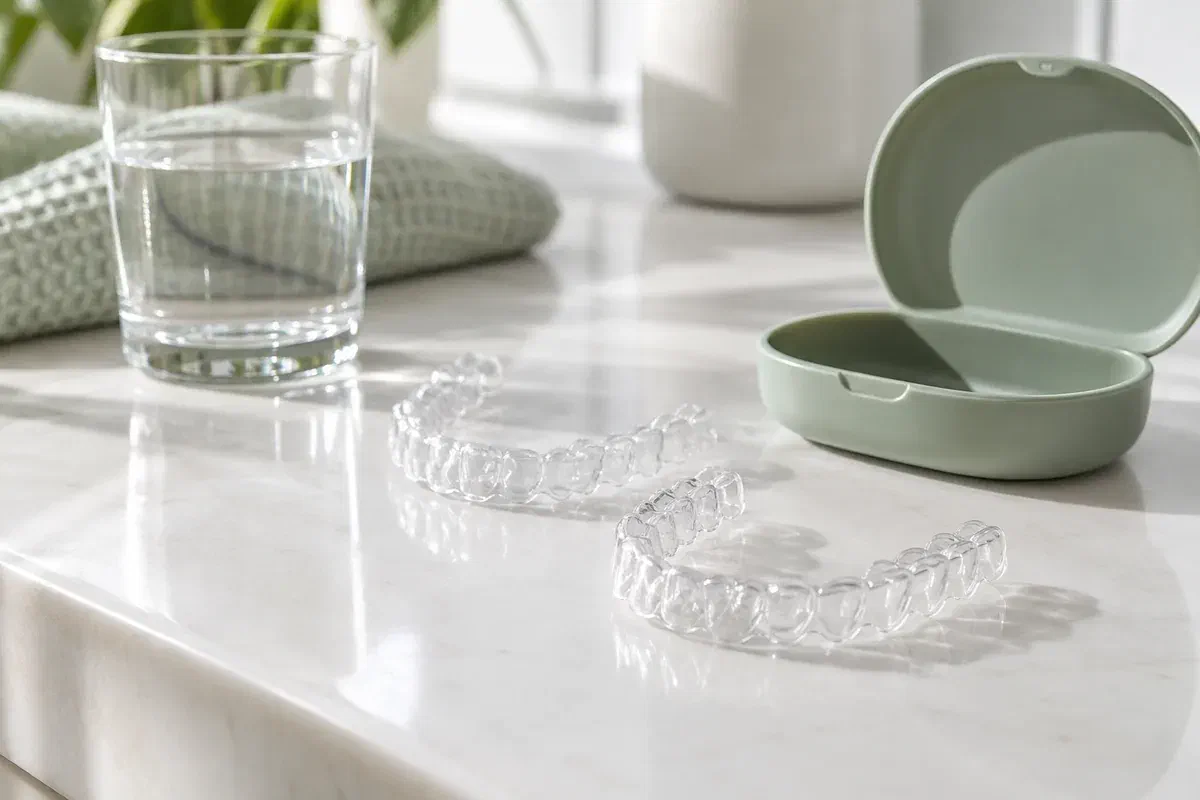
Illustrative transparent aligner trays beside a protective case and glass of water
What tips the decision

Movement, health and habits each get a vote.

No appliance is a diagnosis on its own. The assessment should spell out what needs to move and what could make one method more appropriate than another.

The kind of correction involved

Show which teeth concern you and ask how your upper and lower arches meet. Some corrections are well suited to trays, while others ask for more control. Your plan should describe what it will address and what it will not.

Teeth and gums ready for movement

Bring up previous fillings, crowns, injuries or gum treatment. Active decay or inflammation is usually treated before orthodontics starts. Ask how restorative work would be scheduled around scans and appliance fitting, whichever method you choose.

How much you want to be in charge

Fixed braces work without you remembering to put them in. Trays depend on you wearing them for the prescribed hours, every day. Think about your meals, work and time away, and be honest about which arrangement suits your temperament.

Aligners are not suitable for every orthodontic problem. If they are recommended, ask what makes your case a good match and whether braces or a specialist assessment were weighed as well.

The case for trays, when it fits

Removable by design

Where the movements suit them, aligners offer a way to straighten with an appliance you can lift out for meals, brushing and flossing. There are no brackets to clean around. The flip side is simple: progress depends on putting them back in, consistently.

Balance that freedom against the upkeep. You would clean the trays, follow the stage order, attend reviews and raise concerns quickly. Ask what the estimate includes, how refinement stages are managed and what retainers will involve, since every option ends with retention.

Patient information: American Association of Orthodontists — clear aligners · British Orthodontic Society — clear aligner treatment

A clear explanation of each goal

Ask for the plan’s aims in everyday terms. If you see a digital preview, discuss what it shows and what it cannot assure. Find out how the clinician will measure progress against the goals you agreed on.

Room to discuss appearance at work and socially

Mention client meetings, events or anything else where appearance matters to you. Ask whether attachments, small tooth-coloured shapes bonded to teeth, would be used and where. Trays are discreet, but some components can still be seen up close.

Check-ins that follow the teeth

Reviews let the clinician confirm the fit and see how your teeth are responding rather than leaning on the original timeline. Ask who to contact between appointments and what to do if one is missed. Plan changes should be explained first.

If trays are the answer

How a plan moves from records to retainers

Timing and details depend on your movements and oral health. Before you commit, ask to see the stages, your role in each and the arrangements once active treatment stops.

  1. Start with an examination and records

    Explain what you hope to change, along with your health history, earlier orthodontics and current dental work. After an examination, the clinician advises which records are useful. Confirm whether gum care, fillings or a specialist opinion should come first.

  2. Agree on the plan with full information

    Cover the aims, alternatives including braces, the risks, an expected timeframe and fees. Some plans use attachments or remove a small amount of enamel between selected teeth. Ask what is involved, why, and whether any of it is irreversible.

  3. Fit the first trays and practise

    When your trays arrive, the team checks the fit and shows you how to insert, remove and clean them and how long to wear each one. Make a note of your stages and change dates. Rehearse anything awkward while you are still in the chair.

  4. Review, refine and move to retention

    Attend reviews so the clinician can compare progress with the plan. Refinements may be suggested based on what is seen. As the final trays approach, discuss retainer type, wearing instructions and the follow-up visits that help keep teeth in their new positions.

Daily life with trays

Consistency matters more than perfection on any one day.

Follow the instructions written for your treatment, even if a friend’s plan was different. Keep your stage number and next review date where you can check them quickly.

Stick with the schedule

Wear each tray as prescribed and don’t leap ahead to recover lost time. A tray that no longer clicks into place, or a missing attachment, is a reason to call. Ask which tray to wear until you get specific advice.

Keep teeth and trays clean

Take the trays out for meals and drinks according to your instructions, and brush before you put them back. Clean them in the way recommended for their material. Your regular check-ups and cleanings still need to happen.

Protect the trays when they’re out

Use the case every time, and keep it clear of pets, heat and napkins on a restaurant table. If a tray is lost or broken, call with its stage number. Don’t pick a different stage yourself or attempt a repair at home.

Side by side

Three directions your consultation might take

Being the least visible doesn’t make an appliance the best choice. For each option, ask how it addresses the movement, your bite, daily effort and long-term retention.

When the movements and routine suit trays

Supervised clear aligners

Aligners may suit selected alignment and bite concerns for someone who can follow the wear schedule. Ask about supervision and any extra components. The plan should describe the goal and acknowledge that refinements or a switch of approach may be needed.

When greater control is useful

Fixed braces or orthodontic referral

Some movements or more complex bite problems may be better handled with braces or by a specialist. Ask what makes your situation more involved and how referral would be arranged. A recommendation for another approach should come with clear clinical reasons.

When orthodontics is optional or off-target

No movement, or a different cosmetic approach

You might decide elective orthodontics isn’t for you once you understand the findings. If your concern is really a tooth’s shape or surface, ask whether another treatment addresses that. Cosmetic restorations change appearance without moving teeth or correcting the bite.

Asked by people comparing appliances

Aligners versus braces, in plain terms

Every plan is individual, so ask about yours rather than relying on general claims. Day-to-day questions are as important as clinical ones.

(905) 876-4488
Are aligners slower or faster than braces?
There is no single answer, because duration depends on the movements involved, your biology and, with trays, how consistently they are worn. Ask for an estimated timeframe for each option in your case and what could lengthen it.
Do braces handle some bite problems better than trays?
Certain movements and more complex bite concerns may be more predictable with fixed appliances or specialist care. Ask which movements your plan relies on and why the recommended appliance was chosen for them.
Is it harder to keep teeth clean with braces or with aligners?
Trays come out for brushing and flossing, which many people find simpler. However, food and drink trapped under a tray can sit against the teeth, so brushing before reinserting matters. Ask for hygiene advice specific to whichever option you choose.
Could I start with aligners and switch to braces if needed?
Plans can change if progress isn’t as expected, and sometimes a different appliance is recommended. Ask how that possibility would be handled, including any effect on cost and timing, before you begin.
Will a preview of my new smile show exactly how I’ll look?
No. A digital preview illustrates the intended movements, but real teeth respond individually. Ask how the clinician will track progress and what happens if refinements are needed. Make sure you understand the agreed goals and their limits.
How many appointments should I plan for when coming from Oakville?
That depends on your plan and how often reviews are needed. Ask for the expected spacing of visits at your consultation so you can arrange them around work and family commitments, and find out how to reach the team between visits.
Oakville aligner consultations

Get both options explained before you choose.

Book a consultation at our Bronte Street practice to discuss crowding, spacing or a bite concern. We will compare removable trays with other approaches, talk through the daily routine and explain the assessment needed to choose well.

An assessment determines whether aligners are suitable or a referral is advised. Duration, appliance type and results vary by individual.

Visit Milton Dental Clinic
Unit 1, 342 Bronte St. S, Milton, ON L9T 5B7
Get directions Clinic hours
Monday–Thursday
11am–7pm
Friday–Sunday
By appointment only

Areas we serve

  • Milton
  • Oakville
  • Mississauga
  • Georgetown
  • Halton Hills
  • Acton
  • Campbellville
  • Brampton
  • Burlington
  • Puslinch
  • Rockwood
  • Erin
  • Caledon
  • Etobicoke
  • Old Milton
  • Bronte Meadows
  • Timberlea
  • Dorset Park
  • Dempsey
  • Clarke
  • Beaty
  • Coates
  • Harrison
  • Scott
  • Willmott
  • Ford
  • Bowes
  • Cobden
  • Walker
  • Mountain View
  • Milton Heights
  • Hawthorne Village
  • Valley View
  • Fallingbrook
  • Nassagaweya
  • Trafalgar
  • Esquesing
  • Nelson
  • Brookville
  • Moffat
  • Glen Williams
  • Norval
  • Limehouse
  • Stewarttown
  • Ashgrove
  • Hornby
  • Silver Creek
  • Speyside
  • Scotch Block
  • North Oakville
  • River Oaks
  • Glen Abbey
  • West Oak Trails
  • Palermo
  • Bronte Creek
  • College Park
  • Joshua Creek
  • Uptown Core
  • Preserve
  • Iroquois Ridge
  • Lisgar
  • Meadowvale
  • Meadowvale Village
  • Churchill Meadows
  • Erin Mills
  • Central Erin Mills
  • Streetsville
  • East Credit
  • Creditview
  • Heartland
  • Sheridan
  • Mount Pleasant
  • Credit Valley
  • Huttonville
  • Churchville
  • Springbrook
  • Northwest Brampton
  • Bram West
  • Fletcher's Meadow
  • Fletcher's Creek South
  • Alton Village
  • Orchard
  • Millcroft
  • Headon Forest
  • Tansley
  • Brant Hills
  • Tyandaga
  • Kilbride
  • Lowville
  • Aberfoyle
  • Morriston
  • Arkell
  • Hillsburgh
  • Freelton
  • Carlisle
  • Waterdown
  • Flamborough
  • Mountsberg

How can we help?

Milton Dental Clinic

Have a question about your smile? Choose the option that works best for you.

For urgent dental concerns, please call.
Messages are reviewed during clinic hours.