The movements you want, and the bite you have
Show which teeth bother you and ask how your upper and lower teeth meet. A front-tooth correction can affect chewing contacts too. The plan should list what it addresses and what limits remain.


Frequent work trips, a cottage weekend or a long holiday can all collide with a tray schedule. Adults in Puslinch can learn how clear aligners are assessed and planned, and how to handle travel, missed wear and tray problems while away from home.
Removable appliances have an obvious advantage for people who are often on the move: no brackets to repair at a distance and nothing to adjust between visits. Clear aligners are a series of transparent trays, each worn for a set stage, that move teeth gradually toward a planned arrangement.
That portability comes with conditions. Trays must still be worn for the prescribed hours in airports, hotel rooms and at other people’s tables, and they need to be cleaned and stored carefully. Before any of that, your gums, supporting bone, existing dental work and bite decide whether the movement is advisable.
Puslinch lies west of Milton in Wellington County, and many people there travel regularly for work or family. A first visit to our Bronte Street practice can map treatment against that pattern. Ask who would plan and supervise the work, what records are needed and whether specialist advice would be useful.
Aligners are one element of orthodontic treatment. The assessment should clarify which movements you need and anything that would make them less suitable or less predictable.
Show which teeth bother you and ask how your upper and lower teeth meet. A front-tooth correction can affect chewing contacts too. The plan should list what it addresses and what limits remain.
Fillings, crowns, injuries and gum care all matter. Active problems usually need treatment before orthodontics, and you won’t want a loose filling to surface mid-trip. Ask how any work would be scheduled around scans and fitting.
Long flights, time zones, business dinners and limited access to a sink all test the routine. Picture a real travel day and be candid about it. Planning for disruption is far easier at the start than halfway through.
Aligners are not right for every orthodontic problem. Ask why they are recommended for you, and whether an appliance needing fewer decisions on your part, or a specialist assessment, would suit you better.
In a suitable case, aligners allow planned movement with an appliance you can take out for meals and cleaning, as your instructions describe. Fewer emergencies involving broken brackets can be reassuring when you are far from home. The catch is that unsupervised days still demand consistent wear.
Weigh that freedom against your responsibilities: cleaning trays, keeping the stage order, attending reviews and reporting problems promptly. Ask what the estimate covers, how additional stages are handled, whether spare trays can be provided for trips and what retainers will involve later.
Patient information: American Association of Orthodontists — clear aligners · British Orthodontic Society — clear aligner treatment
Ask for the treatment goals in plain words. If a simulation is shown, discuss what it illustrates and what it cannot promise. Know how progress will be judged, since you may go some weeks without being seen.
Mention presentations, client dinners or holiday photographs. Ask whether attachments or other parts will be added and how they may look. Transparent trays are subtle, though some elements can be noticed close up.
Follow-up visits check fit and response rather than trusting the schedule. Ask whom to contact while away, how to send information if something goes wrong and how a missed appointment is handled. Plan changes should be explained first.
Exactly how it unfolds will depend on your teeth, gums and the movements involved. Request a timeline before agreeing, mark your travel on it and ask what follows the final active tray.
Tell the clinician your goals, health history, previous orthodontics and dental work. After an examination, suitable records are recommended. Ask whether gum care, a restoration or a specialist opinion is needed before anything is ordered.
Review aims, alternatives, risks, likely duration and fees. Some plans involve attachments or a small, measured reduction of enamel between selected teeth. Ask what each step involves and whether it is reversible, then flag upcoming trips.
At the fitting, the team checks the trays and explains insertion, removal, cleaning and wear. Confirm the stages you have, change dates and what to do if a tray is lost on the road. Practise before you leave.
Attend reviews so the clinician can assess progress, and plan them around trips. Refinements may be added. Before active treatment ends, discuss retainers, how to wear them while travelling and how future reviews will be arranged.
Your written instructions take priority over anything you read online. Carry a note of your current stage, next review and the clinic number, (905) 876-4488, especially when you cross time zones.
Keep to the prescribed wear even when routines change, and don’t skip forward after a lapse. If a tray stops fitting or an attachment comes off while you’re away, contact the team for advice on what to wear.
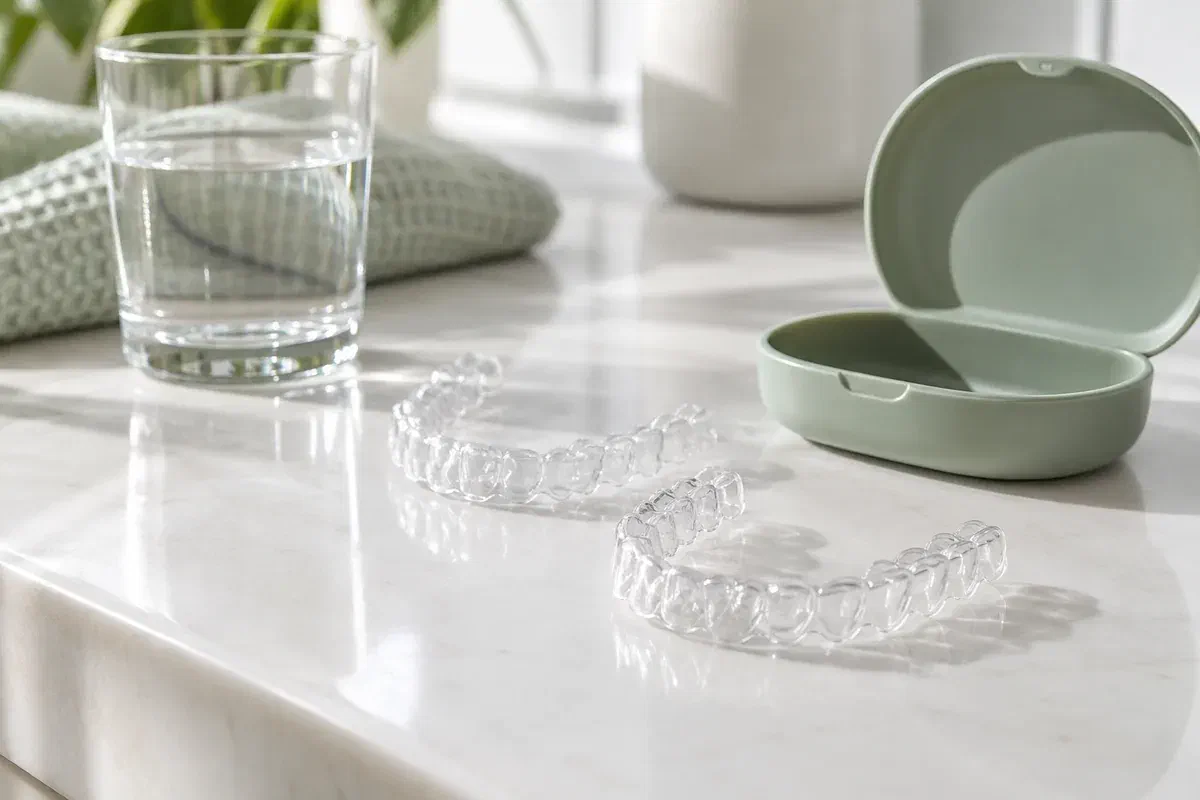
A travel toothbrush, floss and the tray case make it easier to remove trays for meals and clean before reinserting. Clean trays as recommended for their material. Keep regular check-ups and cleanings between trips.
Trays wrapped in napkins are easily lost. Use the case, away from heat. If a tray is lost or damaged, contact the team with its stage number. Don’t switch to a different stage without advice or try to fix it.
Each plan is different, so ask about yours rather than relying on what worked for a friend. Travel logistics are a fair part of the discussion.
Book time at our Bronte Street practice to look at crowding, spacing or a bite concern. We’ll talk about how trays travel, what happens if wear slips while you’re away and the assessment that decides whether this approach is wise.
Suitability and the need for referral are determined after assessment. Duration, appliance choice and outcomes vary for each individual.
