

Illustrative adult patient learning about a clear retainer with a dental clinician
Cosmetic Dentistry

Clear Retainers

Finishing orthodontic treatment is the start of looking after the result. Discuss clear retainers in Milton, including the fit, an individual wear schedule, everyday cleaning, and what to do when a retainer is lost, damaged, or no longer comfortable.

A closer look at clear retainers

Keep the result connected to a routine you understand.

A clear retainer is a removable appliance made to fit over the teeth and help hold their positions after orthodontic treatment. It may look similar to an aligner, but its usual job is retention rather than a new sequence of active tooth movement.

Teeth can change position after treatment and as the years pass. A retention plan addresses that ongoing tendency; it is not limited to the day the braces come off or the last aligner is removed. The recommended type of retainer and wear schedule depend on the individual circumstances.

At Milton Dental Clinic, bring the appliance you use and any instructions from your treating orthodontic clinician. Whether you need advice about fit, a replacement, or coordination after new dental work, the first step is understanding the current tooth positions and the purpose of your existing plan.

Discuss your retainer needs
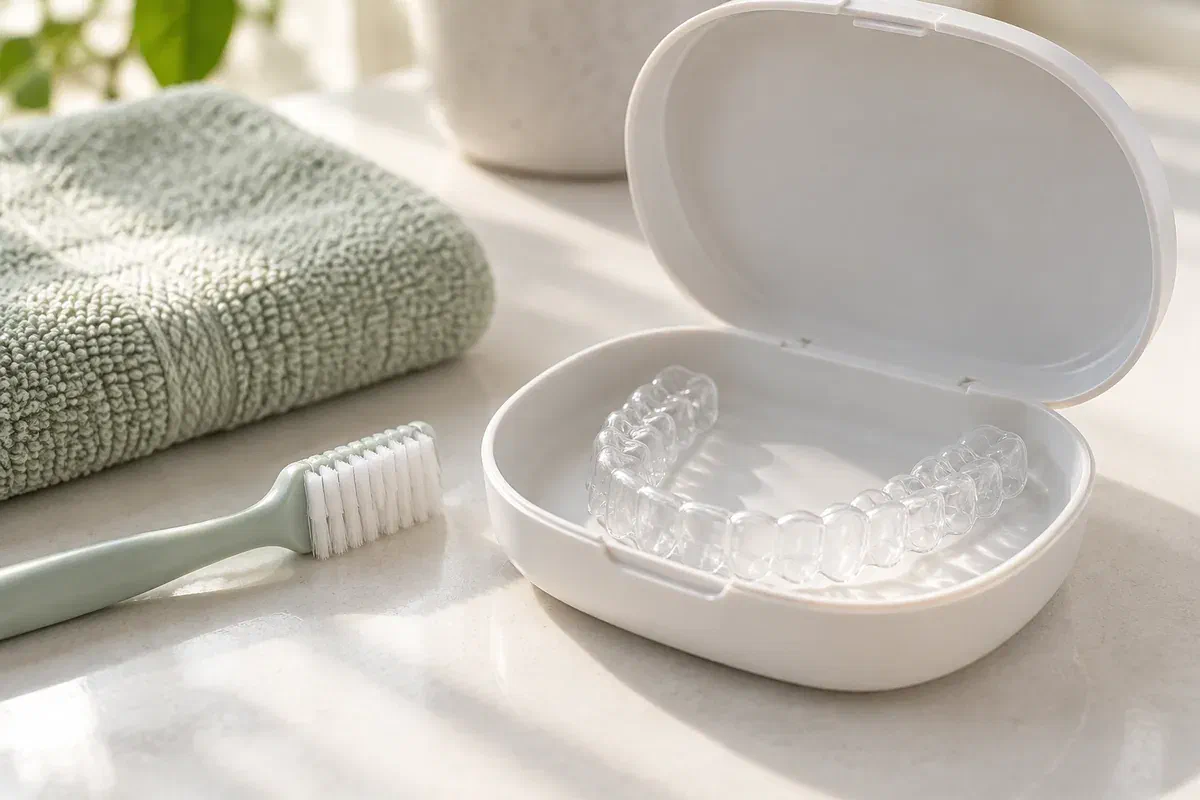
Illustrative clear dental retainer in an open protective case beside a soft cleaning brush
When to ask about your retainer

Pay attention to fit, condition, and interruptions in wear.

A retainer should be assessed in relation to the mouth it is intended to fit. Explain what has changed instead of assuming that every problem can be solved with a duplicate appliance.

A lost, cracked, or distorted appliance

Contact the treating team promptly and explain when you last wore it. Ask what to do while a replacement is considered. Keep any remaining pieces for assessment, but do not glue a crack or use heat to reshape the plastic.

An appliance that no longer seats fully

Mention whether the change followed missed wear, damage, or dental treatment. A retainer that will not fit can reflect a problem with the appliance, a change in the teeth, or both. Do not force it into place or bite hard to seat it.

Uncertainty about the ongoing schedule

If the original instructions are unclear or your circumstances have changed, ask for an updated plan. A friend's routine may not suit your teeth. Confirm who is monitoring retention and when the appliance and tooth positions should be checked.

Bring your current retainer to dental appointments, especially when a filling, crown, or bonding procedure is being planned. Changes to tooth shape can affect the fit and may need coordination with the retention plan.

Why retention deserves attention

Give the finished treatment an ongoing plan.

A well-planned retainer routine can help maintain the positions achieved through orthodontic care. The appliance needs to fit correctly and be worn as prescribed. No retainer offers a guarantee that teeth will never change, so reviews and communication remain useful.

A clear removable design may fit your preferences, but it also relies on remembering wear and storage. Discuss the options with the clinician who understands your treatment history. The best choice accounts for the previous movements, hygiene needs, and ability to follow the routine.

Patient information: British Orthodontic Society — retainers and long-term retention · American Association of Orthodontists — retention after orthodontics

Instructions that explain the purpose of wear

Ask why your schedule has been chosen and whether it is expected to change. Understanding the reason is easier to act on than an unexplained number of hours. Keep the instructions somewhere you can find them when your routine is disrupted.

A way to recognise a fit problem early

At fitting, learn how the retainer should seat and how to remove it safely. Ask which changes warrant a call. You should be able to distinguish a familiar snug fit from an appliance that is damaged, painful, or no longer seating as demonstrated.

A plan for repairs, replacements, and reviews

Ask who to contact if the appliance is lost and how replacement decisions are made. Confirm possible fees and whether new records would be needed. Planning for ordinary wear and unexpected damage makes the next step clearer if a problem occurs.

Arranging a clear retainer

Review the position, make the appliance, and check the fit.

The process differs for a first retainer, a straightforward replacement, and an appliance that no longer fits. Ask which situation applies before assuming an old record can simply be reused.

  1. Review treatment history and the current concern

    Discuss when orthodontic care finished, the prescribed retention routine, and any interruption in wear. Bring the current appliance and relevant records if available. The clinician assesses the teeth and considers whether coordination with your orthodontic provider is needed.

  2. Agree on the retention approach

    Compare an appropriate removable retainer with other options, taking account of the existing plan. If teeth have moved, discuss whether the goal is to retain their current positions or seek an opinion about further treatment. These are different decisions.

  3. Take appropriate records and arrange fabrication

    When a new appliance is indicated, suitable records are used to make it for the intended tooth positions. Ask about timing and what to wear in the meantime. Do not assume a replacement will be ready immediately or will correct an unwanted change.

  4. Fit the retainer and confirm the routine

    The clinician checks seating and comfort and demonstrates insertion and removal. Review the wear schedule, cleaning method, and follow-up arrangements. Ask to practise before leaving and confirm the contact route for a fit problem or loss.

Everyday care for a clear retainer

Keep it clean, protected, and part of the routine.

Follow the instructions for your appliance material. Ask for clarification before trying a cleaning product or changing the wear schedule, especially if advice from different sources seems inconsistent.

Clean gently using the recommended method

Rinse and clean the retainer regularly with the method your clinician recommends. Avoid hot water and abrasive toothpaste, which can damage a clear appliance. Household bleach and harsh chemicals are not substitutes for an appropriate retainer cleaning product.

Store it in the case when it is out

Keep the appliance away from heat, pets, and accidental damage. Wrapping it in a napkin makes it easy to throw away. Take the case when travelling or eating away from home, and clean the case as part of the care routine.

Care for your teeth and keep review appointments

Clean your teeth before wearing the retainer and continue regular dental care. Bring it to the reviews requested by your treating team. Report a persistent sore area, a changed fit, or damage rather than continuing with an appliance that is no longer working as intended.

Patient information: American Association of Orthodontists — cleaning a retainer · American Association of Orthodontists — a tight or poorly fitting retainer

Choosing a retention approach

Clear retainers are one way to support the result.

The choice depends on the treatment history and the teeth that need support. Some plans use more than one type of retainer, with a specific purpose for each.

When a fitted removable appliance suits the plan

A clear removable retainer

A transparent retainer fits over the teeth and is removed according to the instructions provided. Ask about the wear routine, storage, and expected review. Its appearance may be discreet, but it still needs active care and eventual replacement when indicated.

When the retention needs call for another design

A different removable or fixed retainer

A clinician may recommend another removable style, a bonded wire, or a combination. Fixed retainers require careful cleaning and checks for loose attachments. Discuss the practical trade-offs rather than assuming that a fixed option removes all responsibility for maintenance.

When replacing the retainer is not the whole answer

An assessment of unwanted tooth movement

If the teeth have shifted, clarify whether you are comfortable retaining the current position or want to explore further correction. An ordinary replacement retainer should not be presented as automatic active treatment. An orthodontic assessment can help define the options.

Patient information: American Association of Orthodontists — retainer types and care

Questions about clear retainer wear

Small details help make long-term care manageable.

Ask about the appliance you actually have, including its material, fit, and role in your plan. Individual instructions matter more than a generic replacement timetable.

(905) 876-4488
Is a clear retainer meant to move my teeth like the aligners I wore before?
Its usual purpose is to hold the agreed tooth positions, while active aligners are designed as a movement sequence. If you want to correct a new change, ask for an assessment. Do not assume wearing an old retainer harder or longer is a safe treatment plan.
Can I stop wearing my clear retainer once my teeth have felt stable for a year?
Do not stop based on a calendar milestone alone. Teeth can change over time, and retention is commonly a long-term commitment. Ask the treating clinician to confirm your continuing schedule and whether any change is appropriate for your circumstances.
What should I tell the clinic if I lose my clear retainer while travelling?
Explain which appliance is missing, when you last wore it, and whether you have a backup prescribed for use. Ask what to do until you can be assessed. Do not substitute an unrelated tray or move into an old aligner stage without instructions.
Should my clear retainer be checked after I get a new crown or bonding?
Yes. A restoration can change the tooth’s contour and affect how the appliance seats. Bring the retainer when the work is planned and ask how its fit will be reviewed. An adjustment or replacement may need to be coordinated with the treatment.
Can a clear retainer also serve as my sports mouthguard or grinding guard?
Do not assume these appliances are interchangeable. They are designed for different purposes. Tell the clinician about sport and any clenching or grinding concerns so protection and retention can be planned together without an unsuitable appliance or conflicting wear instructions.
Is there a fixed number of months before every clear retainer must be replaced?
No single interval applies to every appliance and person. Fit, damage, material condition, and changes in the teeth all matter. Follow the review schedule and ask about any deterioration. A retainer that is cracked or no longer fits needs assessment even if it is relatively new.
Clear retainers in Milton

Keep the next stage of your smile care clear.

Contact our Bronte Street practice to discuss a retainer concern, replacement, or fit check. Bring your current appliance and previous wear instructions so the conversation can build on the treatment you have already completed.

A replacement depends on assessment of the appliance and current tooth positions. Contact the treating team promptly when a retainer is lost, damaged, painful, or no longer fitting.

Visit Milton Dental Clinic
Unit 1, 342 Bronte St. S, Milton, ON L9T 5B7
Get directions Clinic hours
Monday–Thursday
11am–7pm
Friday–Sunday
By appointment only

How can we help?

Milton Dental Clinic

Have a question about your smile? Choose the option that works best for you.

For urgent dental concerns, please call.
Messages are reviewed during clinic hours.