One tray missing or damaged
Phone soon and say when it was last worn and by whom. Ask how to manage until a replacement is considered. Keep any pieces, but avoid glue or heat, which can distort the plastic further.


Two teenagers, two clear retainers, two identical cases on the same bathroom counter, and nobody sure which is which. For households around Campbellville, we help keep retention organised: checking each tray’s fit, clarifying who wears what and for how long, simplifying cleaning, and planning replacements without extra trips.
In homes where more than one person has finished orthodontic treatment, clear retainers have a way of getting mixed up. They look almost identical, yet each is made for one mouth only. Each one is a thin, removable piece of clear plastic shaped to one person’s teeth so it can hold them where treatment left them. It resembles an aligner, but it is designed to keep teeth steady rather than move them.
Each person’s teeth can drift at their own pace over the years, so every retainer has its own long-term plan. The type, the hours and the review dates can differ even between siblings.
Rural households often prefer to group appointments, and that works well for retainers. Bring every tray in its own labelled case, along with each person’s orthodontic instructions, and we can look at each fit and plan in turn.
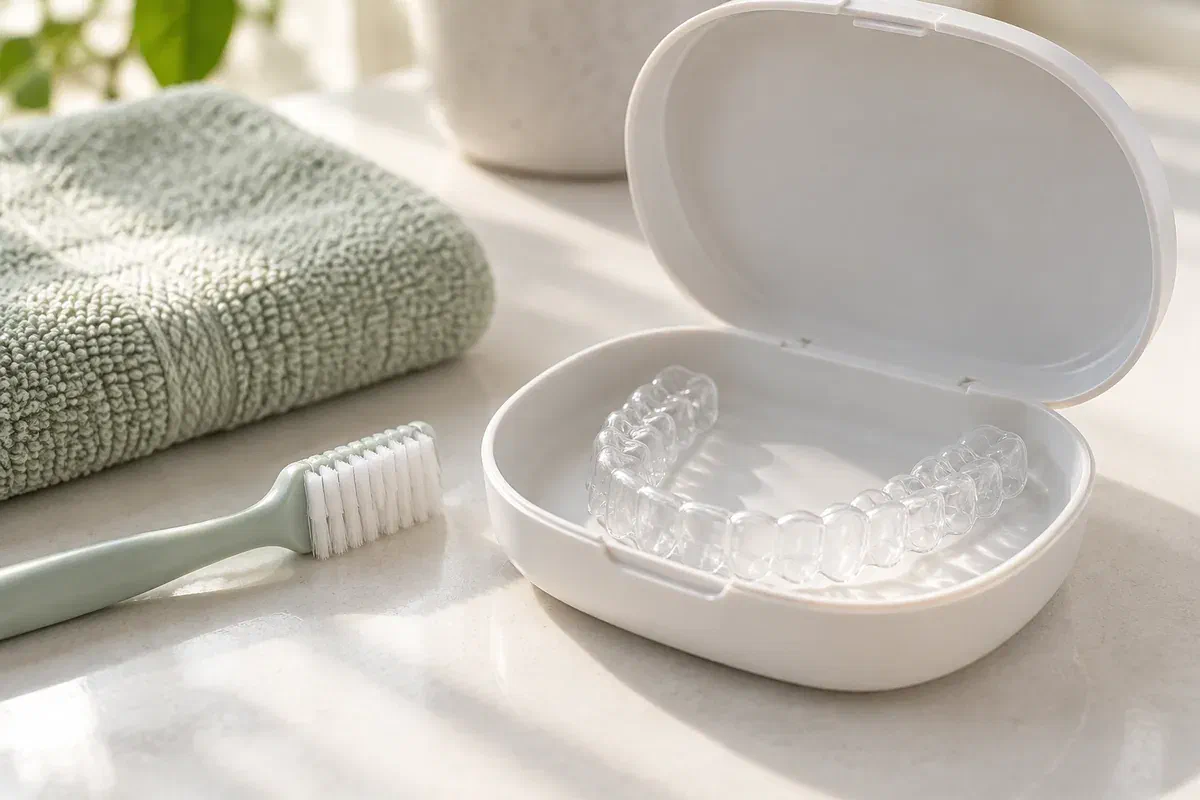
Problems with retainers come in a few familiar shapes. Tell us what happened, including any chance of a swap, rather than assuming a duplicate is all that is needed.
Phone soon and say when it was last worn and by whom. Ask how to manage until a replacement is considered. Keep any pieces, but avoid glue or heat, which can distort the plastic further.
Before anything else, check it is the right person’s retainer. Then think about missed nights, a drop or recent dental work. The appliance, the teeth or both may have changed. Never force it on or bite it into place.
When several people wear retainers, it is easy to apply one person’s routine to everyone. Ask for each plan to be confirmed. Note who is monitoring each person’s retention and when every tray should next be checked.
If anyone in the household is due for a filling, crown or bonding, ask them to bring their retainer to that visit. Changing a tooth’s outline can affect fit and may need coordinating with retention.
A routine that suits each person can help hold the alignment their treatment produced. That relies on each tray fitting its owner and being worn as prescribed. Teeth can still move with time, so periodic reviews are useful for everyone in the house.
Clear trays are popular with teens and adults because they are discreet and come out for brushing. With several in one home, they also need clear labelling and tidy storage. A clinician who knows each person’s treatment can help match the design to their habits.
Patient information: British Orthodontic Society — retainers and long-term retention · American Association of Orthodontists — retention after orthodontics
Ask why each person’s hours were set and whether they may change. Write each schedule on a card inside that person’s case. A plan with reasons is easier for everyone to follow, especially during busy seasons.
At each fitting, have the wearer feel how a seated tray settles and practise removing it gently. Ask which changes are worth a call. Each person should learn to tell their own normal snugness from pain, cracks or a tray that no longer sits right.
Know who to call if a tray is lost and how replacements are decided. Ask about fees and whether new records may be needed. With several wearers, agreeing on this once saves repeated uncertainty.
A first retainer, a replacement and a poor fit each follow their own route, and the route can differ from one family member to the next. We confirm which applies to each person first.
We ask when each person’s treatment finished, what wear was recommended and whether there have been gaps. Bring every appliance and any records. We examine each mouth and consider whether the treating orthodontic provider should be involved.
For every person, a clear tray is weighed against other designs. If someone’s teeth have shifted, they can choose between holding the new position and asking about further correction. Each decision stands on its own.
If a new tray is right for someone, records are taken so it matches the positions they are keeping. Ask about the timeline and what each person should wear meanwhile. A replacement won’t undo earlier movement.
Each tray is checked for seating and comfort, and its owner is shown how to insert and remove it. Hours, cleaning and follow-up are reviewed for each person. Where possible, future reviews can be booked on the same day.
Retainer materials can differ, so follow the care guidance for each tray. If advice seems to conflict, ask before trying a new product on anyone’s appliance.
Rinse each retainer when it comes out and clean it as recommended. Hot water and abrasive toothpaste can warp or scratch clear plastic. Bleach and harsh household products are not a substitute for a retainer cleaner.
Give each person a different colour of case or a clear label. Keep trays away from heat and household pets. A retainer wrapped in a napkin can be thrown out easily. Wash each case regularly.
Everyone should brush before wearing their retainer and keep regular dental visits. Bring the trays to reviews. If someone has a lasting sore spot, a change in fit or a damaged tray, call rather than letting it go.
Patient information: American Association of Orthodontists — cleaning a retainer · American Association of Orthodontists — a tight or poorly fitting retainer
Bring every person’s tray, because the material, fit and role of each one can differ. Individual plans matter, even within one household, and a general rule rarely fits everyone.
Call our Bronte Street practice to arrange retainer checks, a replacement or a fit review for one or more people. Bring each tray in its own case with any instructions, and we will build on the treatment each person has completed.
Replacement decisions depend on assessing each tray and that person’s tooth positions. Contact us quickly if any retainer is lost, damaged, painful or no longer seating.
