Left behind or crushed in a bag
Call when you can and say when it was last worn. Ask what to do until a replacement is considered. If it broke in luggage, bring the pieces; resist taping, gluing or heating it back into shape.


Weekends away, overnight shifts, a week at a relative’s place: these are the nights retainers tend to get skipped or left behind. From Erin village to Hillsburgh, we can help you build a clear retainer routine that travels, with fit checks, wear guidance, cleaning tips and a plan for replacements.
At home the routine runs itself: brush, retainer in, lights out. Away from home it falls apart surprisingly fast. A clear retainer is a close-fitting, removable piece of transparent plastic that keeps your teeth in the positions orthodontic treatment achieved. Although it looks like an aligner, it is designed to hold steady, not to make teeth move.
Teeth can drift slowly over the years, so a few forgotten nights here and there add up. Retention is meant to be lasting, and the kind of retainer and hours you need depend on your own treatment.
For anyone coming from Erin, the visit starts the same way. Bring the tray in its case, any spare you were given, and instructions from your orthodontic clinician, and we can assess the fit and your current tooth positions before planning anything new.
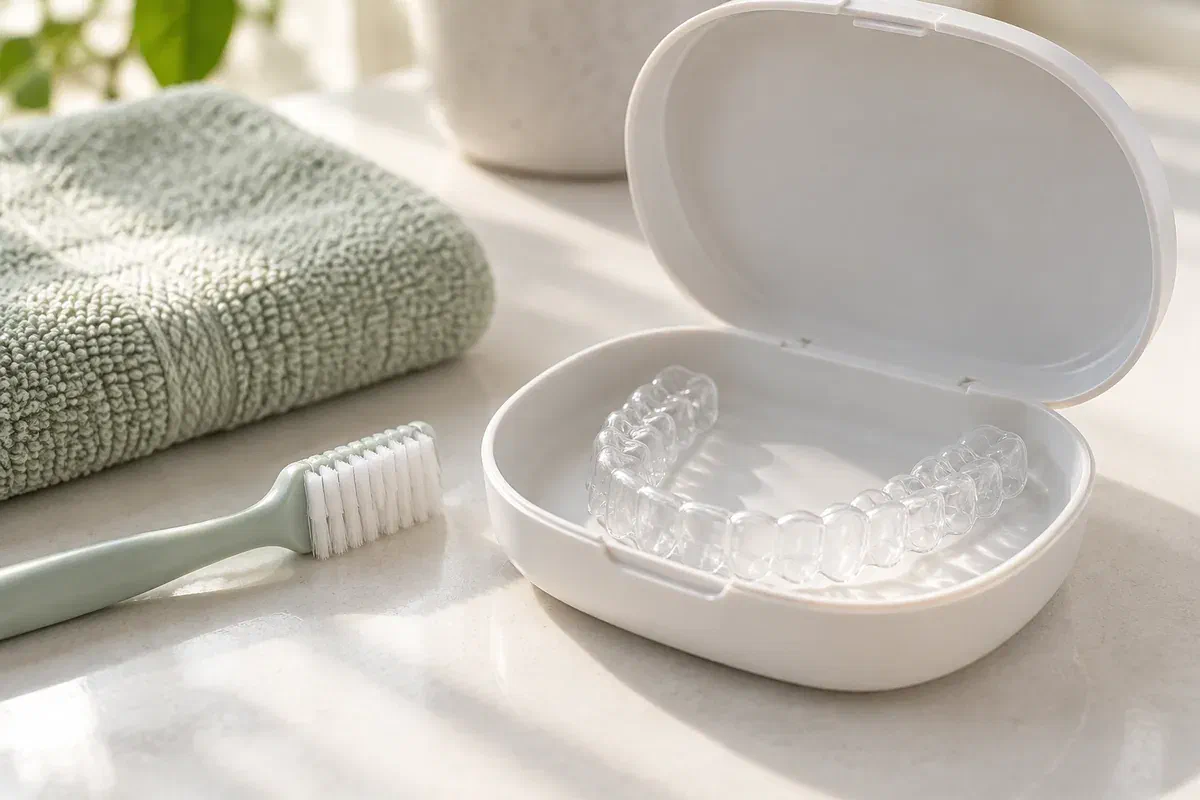
Retainer problems often trace back to a trip or a change in routine. Describe what happened rather than assuming a fresh copy of the tray will solve everything.
Call when you can and say when it was last worn. Ask what to do until a replacement is considered. If it broke in luggage, bring the pieces; resist taping, gluing or heating it back into shape.
A few skipped nights, a drop or a warm car can all change how a tray feels. Teeth may have shifted, the plastic may have warped, or both. Don’t push it down hard or clench to seat it.
Irregular weeks make it easy to forget what you were told. If your hours feel uncertain, ask for a plan that suits your current life. Clarify who follows your retention and when the tray and your teeth are next due a check.
Planning a crown, filling or bonding? Bring your retainer to that appointment. A change to a tooth’s shape can affect the fit and may need to be coordinated with your retention.
A retainer that fits, worn as prescribed even during the busiest weeks of the year, can help maintain the alignment your orthodontic care produced. It cannot guarantee teeth will never move, and that is why reviews stay worthwhile after treatment ends.
Clear removable trays are light and discreet, which makes them easy to pack. They are also easy to forget, crush or leave on a hotel nightstand. A clinician who knows your history can help you choose an approach that fits your travel and your hygiene routine.
Patient information: British Orthodontic Society — retainers and long-term retention · American Association of Orthodontists — retention after orthodontics
Ask why your schedule was set and whether it may relax later. When you understand the reason, it is easier to keep going on the road. Save a photo of the instructions on your phone.
During your fitting, get familiar with how a properly seated tray feels and practise taking it out gently. Ask which signs mean a call. You will then notice sooner if a trip has left the tray warped or tight.
Know who to call if the retainer is left behind and how replacements are decided. Ask about fees and whether new scans would be needed. It is also worth asking whether a backup tray suits your plan, and how it should be stored and checked so it is ready when you need it.
A first retainer, a replacement for one left behind and a tray that has stopped fitting each take a different route. We clarify yours before relying on older impressions or files.
Tell us when treatment ended, what wear was recommended and where it has slipped. Bring the appliance, any spare and your records. We examine your teeth and consider whether to involve your orthodontic provider.
We compare a clear tray with other designs, keeping your plan and travel habits in mind. If teeth have shifted, you will decide between retaining the current position and asking about further treatment.
If a replacement makes sense, we capture your teeth with scans or impressions and the tray is built to hold the positions you choose. Check how long it will take, and whether any trips coming up should shape the timing. A new tray holds; it doesn’t reverse past drift.
The clinician checks seating and comfort, then shows you how to put the tray in and take it out. Wear time, cleaning and follow-up are explained. Practise before leaving, and put the contact number in your phone.
Your retainer material has its own care needs. If travel advice you have read differs from your clinician’s, check before trying something new.
Rinse the tray when you take it out and clean it regularly the way you were shown, at home or away. Hot water and abrasive toothpaste can damage clear plastic. Bleach and harsh household chemicals are not a substitute for a proper retainer cleaner.
Keep the retainer in its case, away from heat, pets and heavy luggage. A tray wrapped in a napkin or tissue is easily thrown away. A spare case kept in your travel kit helps, and every case should be washed regularly.
Brush before the retainer goes in, even on the road, and keep regular dental visits. Bring the tray to reviews. If soreness lingers, the fit changes or damage appears, report it rather than pressing on.
Patient information: American Association of Orthodontists — cleaning a retainer · American Association of Orthodontists — a tight or poorly fitting retainer
Bring your own retainer when you visit. Its material, fit and role in your plan guide our advice more than any general timetable.
Contact our Bronte Street practice about a fit check, a replacement or a wear routine that suits your schedule. Bring your current tray, any spare and the notes from your orthodontic team, and we will pick up from the treatment you have already completed.
Whether a replacement is suitable depends on assessing the tray and your current tooth positions. Get in touch soon if a retainer is lost, broken, sore or not seating as it should.
