Missing, cracked or misshapen
Reach out soon, mentioning the last time it was worn. Ask what to do until a new one has been considered. Save the fragments, though gluing them or softening the plastic with heat is best avoided.


Cloudy plastic, a funny smell, a case that never gets washed: most retainer worries start at the bathroom sink. From anywhere in Halton Hills, you can ask us how to clean and store a clear retainer, how long to wear it, how the fit is checked, and when a replacement makes sense.
Every morning the same small decision comes up: rinse the retainer properly, or drop it in the case and run. A clear retainer is a thin removable tray formed around your teeth, and its role is retention, keeping teeth in the places your orthodontic treatment achieved. It can pass for an aligner, though it is not built to move anything.
Because teeth can wander slowly for years, that small morning habit belongs to a long-term plan. How often you wear the tray, and which kind suits you, depend on your treatment and your mouth.
Households in Georgetown, Acton, Glen Williams and the smaller hamlets of Halton Hills can start in the same way. Bring the tray in its case, along with any instructions from your orthodontic clinician, and we will look at the fit, the plastic and your tooth positions together.
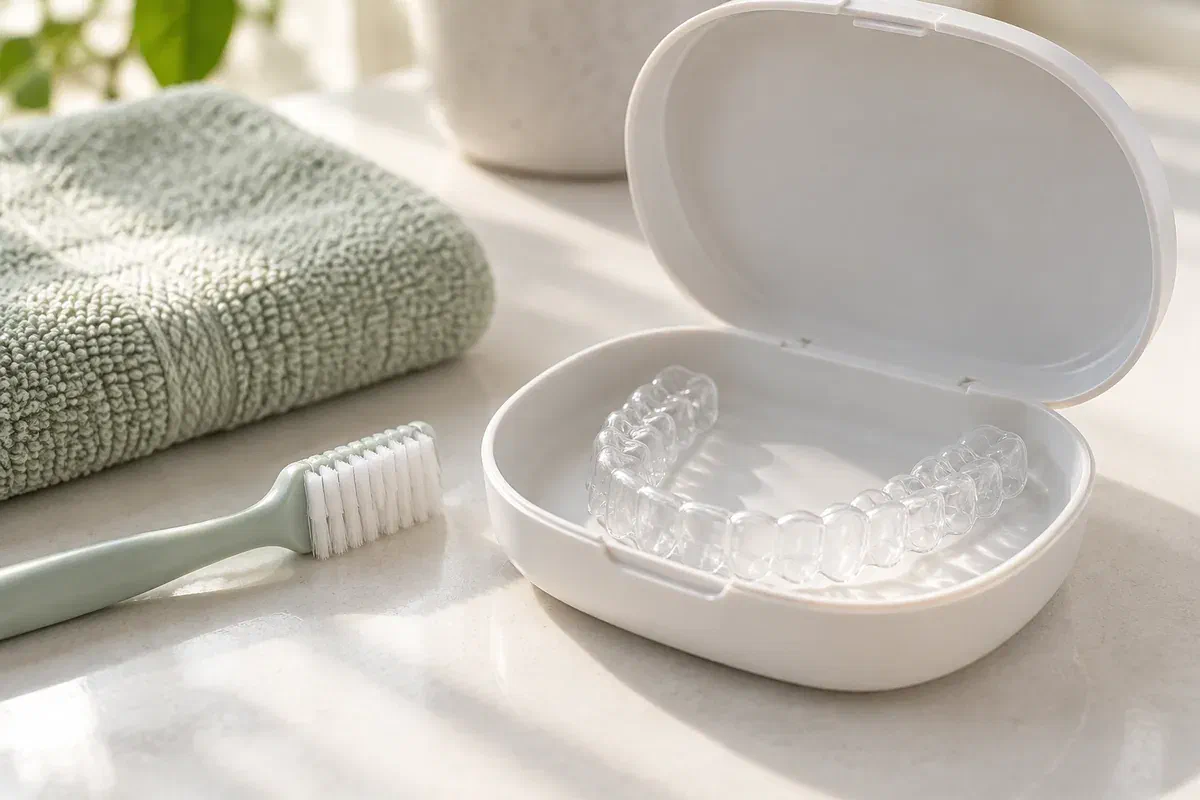
A retainer’s condition and fit can change for different reasons. Explain what you have noticed, and we can tell you whether a duplicate is the answer or something else is going on.
Reach out soon, mentioning the last time it was worn. Ask what to do until a new one has been considered. Save the fragments, though gluing them or softening the plastic with heat is best avoided.
Tell us whether skipped wear, a fall or new dental treatment came before the change. A warped tray, shifted teeth or a mix of both may be responsible. Pressing it down with force or biting it into position can do harm.
If you can no longer remember your instructions, or your routine looks different now, a revised plan is better than copying a relative. Agree on who monitors your retention and when the next look at your teeth and tray should be.
A planned crown, bonding or filling can reshape a tooth enough to affect the tray. Bring the retainer to that appointment so its fit can be considered as part of the work.
A retainer routine you can sustain helps keep the positions orthodontic treatment created. It needs an appliance that fits and wear that follows your prescription. Teeth can still change despite good habits, which is why periodic reviews are part of the picture.
Clear trays are easy to live with because they are hard to see and simple to take out for brushing. In return, they ask you to clean them, store them safely and wear them faithfully. A clinician familiar with your history can help weigh those demands against your daily life.
Patient information: British Orthodontic Society — retainers and long-term retention · American Association of Orthodontists — retention after orthodontics
Learn what your hours are for and whether they may ease off over time. People tend to keep up habits they understand. Store the written plan near where the tray lives, so it is easy to check when a week goes off course.
At the fitting, notice how a properly seated tray feels and practise lifting it out without bending it. Find out what should prompt a call. Soon you will recognise the difference between normal pressure and pain, cracking or a tray that no longer settles.
Note who to call about a lost tray and how a replacement is decided. Ask about likely fees and whether new impressions or scans may be required. Settling these details ahead of time keeps a bad morning from becoming a bad week.
Not every visit leads to a new tray. A first retainer, a replacement and a fit problem each follow their own course, and earlier records are not always usable.
You tell us when orthodontic care finished, what you were asked to do and where the routine has slipped. We examine your mouth and the appliance you bring, and we decide together whether your orthodontic provider needs to be part of the next step.
We weigh a clear tray against other retainer designs with your original plan in mind. Where teeth have drifted, there is a real choice to make: keep them as they now are, or ask about treatment to correct them.
Should a replacement be right for you, fresh scans or impressions capture the positions you want held, and the appliance is made from those. Ask how long that takes and what to wear in between. It will not undo shifting that has already occurred.
We check that the tray seats well and feels comfortable, then show you how it goes in and comes out. Cleaning, wear time and follow-up are explained. Try it a few times yourself, and keep a note of how to reach us about problems.
Clear retainers vary in material, so the right cleaning approach depends on yours. If a tip you read seems to clash with what your clinician said, check before you try it.
Rinse the tray as soon as it comes out and clean it on the schedule you were given. Very hot water can distort it, and abrasive toothpaste can leave fine scratches that hold film. Bleach and harsh household cleaners are not a safe swap for a proper retainer product.
Store the tray in its case whenever it is out, away from heat, pets and edges of counters. A retainer folded into a tissue tends to end up in the garbage. Wash and dry the case regularly, because a dirty case can undo a clean tray.
Brush before each wear so food and plaque are not sealed against the teeth. Keep regular dental visits and bring the tray to reviews. If soreness lingers, the fit changes or you spot a crack, tell us rather than wearing it as is.
Patient information: American Association of Orthodontists — cleaning a retainer · American Association of Orthodontists — a tight or poorly fitting retainer
Bring your own tray along, since its material decides a lot. Cleaning advice is only useful if it matches the appliance you actually have.
Call our Bronte Street practice to ask about cleaning, a fit problem or a replacement. Bring the tray you use now and any notes from your orthodontic team, and we will carry on from the treatment you have completed.
Whether a replacement is advisable depends on examining your tray and how your teeth sit today. Contact us without delay if a retainer goes missing, cracks, hurts or no longer goes on properly.
