

Illustrative adult patient learning about a clear retainer with a dental clinician
Cosmetic Dentistry

Clear Retainers in Mississauga

Braces off, retainer in, and now a teenager has to remember it every night. Families from Mississauga can talk with us about clear retainers for teens and adults: how the fit is checked, how wear is scheduled, how cleaning works, and what to do after a loss or crack.

First retainers, Mississauga families

Help the new smile stay put.

The day the braces come off feels like the finish line, so it can surprise teenagers, and their parents, to learn that another stage starts right away. A clear retainer is a removable tray made to fit closely over the teeth. Its job is to help them stay where treatment moved them. It may look like an aligner, but it is not meant to start a new round of movement.

Teeth can keep shifting as a young person grows and as adults age. Retention is therefore an ongoing commitment, not a few months of nightly wear. The style and schedule depend on the individual.

For households in Meadowvale, Churchill Meadows and other parts of Mississauga, the first step is the same. Bring the retainer and any instructions from the orthodontic team, so we can see the current tooth positions and how the plan was set up.

Ask about a first retainer
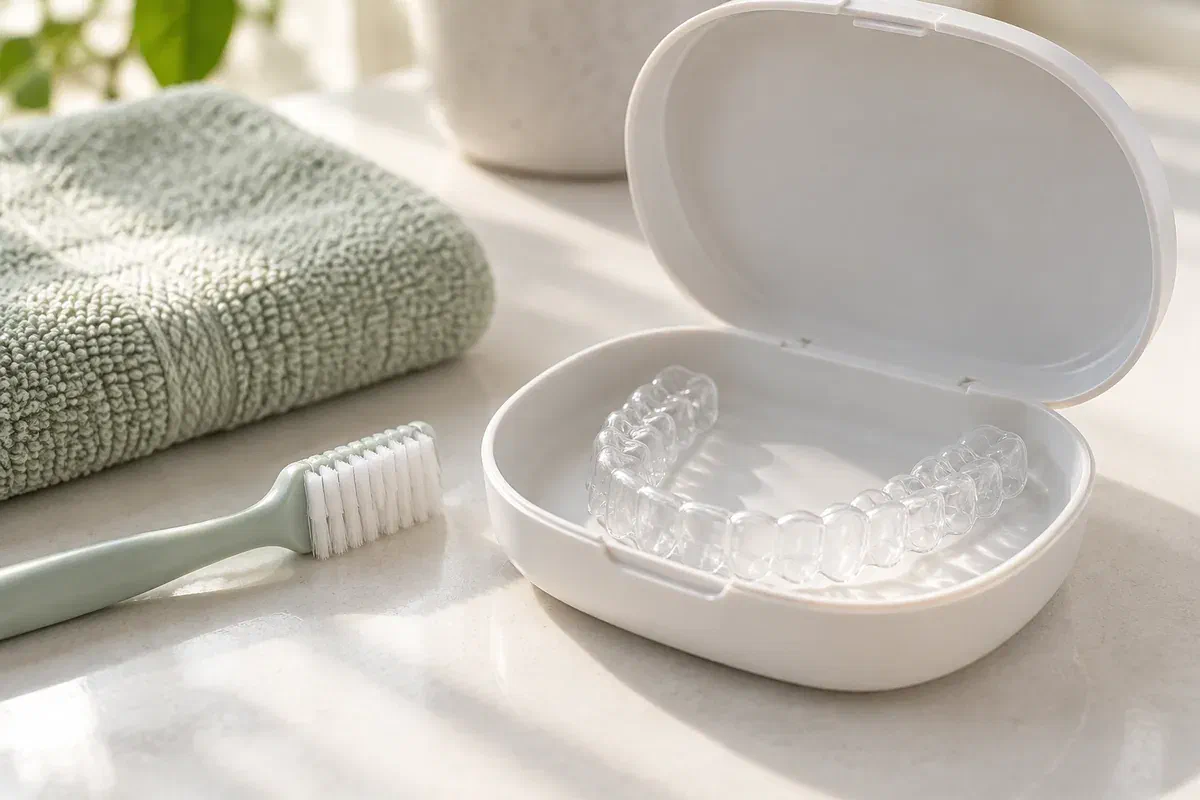
Illustrative clear dental retainer in an open protective case beside a soft cleaning brush
Things parents tend to notice

Three signals to act on

Retainer trouble in a busy household usually falls into a few patterns. Describe what you have seen rather than assuming a duplicate tray is always the solution.

Left at a friend’s, dropped or cracked

Get in touch quickly and say when it was last worn. Ask what to do in the gap before a replacement is considered. Keep any pieces for us to look at, and don’t let anyone glue the crack or run the tray under hot water to reshape it.

Suddenly hard to put in

Mention if this follows a run of missed nights, a fall or recent dental treatment. A poor fit can mean a damaged appliance, moved teeth, or both. Teens sometimes bite a tray down to seat it; that should be avoided.

Confusion over the routine

Instructions given at the end of treatment are easy to lose in a busy week. If no one in the house is sure of the hours, ask for an updated plan. A sibling’s schedule may not apply. Confirm who monitors retention and when the next check is.

Bring the retainer to dental visits, especially if a filling, crown or bonding is planned. A change in tooth shape can affect how the tray fits and may need to be coordinated with the retention plan.

Why the routine is worth the effort

Months of braces deserve a few minutes a night.

A routine that fits family life can help keep the positions orthodontic treatment achieved. The tray has to fit well and be worn as prescribed. No retainer guarantees teeth will never move, so reviews and honest check-ins are still helpful.

Teens often prefer a clear design because it is hard to spot. It also depends on remembering it and putting it away safely. Talk the options through with a clinician who knows the treatment history, including how well a removable tray suits your child’s habits.

Patient information: British Orthodontic Society — retainers and long-term retention · American Association of Orthodontists — retention after orthodontics

An explanation teens can follow

Ask why the hours are set as they are and whether they may drop over time. Young people tend to stick with a routine they understand. Pin the instructions somewhere visible, such as inside a bathroom cabinet, for weeks when schedules go sideways.

Recognising a poor fit early

At the fitting, everyone can learn how the tray should seat and how to take it out without bending it. Ask which changes mean a call. The goal is telling a normal snug feeling apart from a tray that hurts, has split or no longer seats correctly.

A family plan for losses and repairs

Know who to call if the retainer goes missing and how replacement decisions are made. Ask about fees and whether new records may be needed. Agreeing on this early avoids stress the morning a tray goes missing on the way to school.

The retainer appointment

From records to a confident first night

A first retainer, a replacement and a tray that has stopped fitting are not handled identically. We explain which situation you are in before relying on previous records.

  1. Go over the treatment and any concerns

    We ask when orthodontic treatment wrapped up, what the wear instructions were and whether nights have been missed. Bring the appliance and any records. The teeth are examined, and we consider whether the orthodontic provider should be involved.

  2. Choose how to retain

    A clear removable tray is compared with alternatives in light of the existing plan. If teeth have already shifted, families decide whether to retain the current position or ask about further treatment. These are distinct choices.

  3. Record the teeth and order the tray

    If a new appliance is indicated, suitable records are taken so it is made for the intended positions. Ask how long fabrication takes and what to wear meanwhile. A replacement won’t be instant and won’t reverse any movement.

  4. Fit it and practise together

    The clinician checks seating and comfort and shows how to put the tray in and remove it. We review wear time, cleaning and follow-up. Have your teen practise before leaving, and note who to call if the tray is lost or fits poorly.

Home care that sticks

Make cleaning part of bedtime.

Follow care advice for your particular retainer material. If friends or online videos suggest something different, check with your clinician before trying it.

Clean gently and regularly

Rinse the retainer after it comes out and clean it as recommended. Hot water and gritty toothpaste can scratch or distort clear plastic. Bleach and strong cleaners from under the sink are no substitute for a suitable retainer product.

Always back in the case

Keep the tray safe from heat, family pets and being stepped on. A retainer wrapped in a tissue at school or a sleepover is easily tossed. Pack the case in a backpack or sports bag, and rinse the case regularly.

Brush, wear, and keep reviews

Teeth should be brushed before the retainer goes in, and regular dental visits continue. Bring the tray to reviews the treating team requests. Persistent soreness, a changed fit or damage is worth a call rather than pushing on.

Patient information: American Association of Orthodontists — cleaning a retainer · American Association of Orthodontists — a tight or poorly fitting retainer

Retainer types for teens and adults

Choosing a design that fits family life

The choice depends on how the teeth were moved and which ones need the most support. Some plans combine two kinds of retainer for different jobs.

When a removable tray suits the plan

Clear tray worn on schedule

A transparent tray fits over the teeth and is taken out according to the instructions. Ask about wear time, storage and reviews. It is discreet, which many teens like, but it still needs daily care and eventual replacement.

When retention calls for a different design

Bonded wire or another removable style

A clinician may suggest a different removable type, a fixed wire, or both. A wire can’t be forgotten at a sleepover, but it needs careful cleaning and checks for loose bonds. Weigh the trade-offs instead of assuming fixed is maintenance-free.

When replacing the tray isn’t the full answer

An assessment of new movement

If teeth have shifted, decide whether holding the current position is acceptable or whether further correction is wanted. A routine replacement does not straighten teeth. An orthodontic assessment can explain what is possible.

Patient information: American Association of Orthodontists — retainer types and care

Parents ask, we answer

Retainer questions from busy households

Bring the actual retainer so we can talk about its material, fit and purpose. Your child’s own instructions matter more than general advice.

(905) 876-4488
How can I help my teenager remember to wear the retainer?
Tying it to an existing habit, such as brushing before bed, often works. Keep the case in the same spot every night. If wear is being missed often, mention it at the next visit so the plan and any fit concerns can be reviewed honestly.
Does a growing teenager need a new retainer more often?
Growth and changing teeth can affect fit, and teens may be harder on appliances. There is no fixed timeline. Bring the tray to reviews and call if it becomes tight, loose or damaged, so it can be checked.
Can my child wear a clear retainer during hockey or soccer?
A retainer isn’t designed as protection for contact sport. Ask your clinician whether it should come out during games and what mouthguard is suitable. Store the retainer in its case while playing so it doesn’t end up lost in a sports bag.
Is bad breath or a smell from the retainer a concern?
Odour usually points to plaque or film building up on the tray or the teeth. Check that both are being cleaned well and the case is washed. If smell persists despite good cleaning, bring the retainer in to have it looked at.
Who should keep the instructions, the parent or the teen?
Ideally both. A photo of the instructions on a parent’s phone and a printed copy at home help when the original gets lost. Teens benefit from understanding the reasons, but a parent’s reminder can help during busy stretches.
Can a Mississauga family book two retainer checks on the same day?
Often, yes. Let us know when you call how many people need appointments and bring each retainer in its own labelled case. Our Monday to Thursday hours run until 7 pm, with Friday to Sunday by appointment.
Retainer visits for Mississauga

Bring the tray, the case and the questions.

Contact our Bronte Street practice about a first retainer, a replacement or a fit concern. Bring the current appliance and any orthodontic instructions, so the visit builds on treatment already completed.

A replacement depends on assessing both the appliance and the current tooth positions. If a tray goes missing, cracks, hurts or stops seating, get in touch promptly.

Visit Milton Dental Clinic
Unit 1, 342 Bronte St. S, Milton, ON L9T 5B7
Get directions Clinic hours
Monday–Thursday
11am–7pm
Friday–Sunday
By appointment only

Areas we serve

  • Milton
  • Oakville
  • Mississauga
  • Georgetown
  • Halton Hills
  • Acton
  • Campbellville
  • Brampton
  • Burlington
  • Puslinch
  • Rockwood
  • Erin
  • Caledon
  • Etobicoke
  • Old Milton
  • Bronte Meadows
  • Timberlea
  • Dorset Park
  • Dempsey
  • Clarke
  • Beaty
  • Coates
  • Harrison
  • Scott
  • Willmott
  • Ford
  • Bowes
  • Cobden
  • Walker
  • Mountain View
  • Milton Heights
  • Hawthorne Village
  • Valley View
  • Fallingbrook
  • Nassagaweya
  • Trafalgar
  • Esquesing
  • Nelson
  • Brookville
  • Moffat
  • Glen Williams
  • Norval
  • Limehouse
  • Stewarttown
  • Ashgrove
  • Hornby
  • Silver Creek
  • Speyside
  • Scotch Block
  • North Oakville
  • River Oaks
  • Glen Abbey
  • West Oak Trails
  • Palermo
  • Bronte Creek
  • College Park
  • Joshua Creek
  • Uptown Core
  • Preserve
  • Iroquois Ridge
  • Lisgar
  • Meadowvale
  • Meadowvale Village
  • Churchill Meadows
  • Erin Mills
  • Central Erin Mills
  • Streetsville
  • East Credit
  • Creditview
  • Heartland
  • Sheridan
  • Mount Pleasant
  • Credit Valley
  • Huttonville
  • Churchville
  • Springbrook
  • Northwest Brampton
  • Bram West
  • Fletcher's Meadow
  • Fletcher's Creek South
  • Alton Village
  • Orchard
  • Millcroft
  • Headon Forest
  • Tansley
  • Brant Hills
  • Tyandaga
  • Kilbride
  • Lowville
  • Aberfoyle
  • Morriston
  • Arkell
  • Hillsburgh
  • Freelton
  • Carlisle
  • Waterdown
  • Flamborough
  • Mountsberg

How can we help?

Milton Dental Clinic

Have a question about your smile? Choose the option that works best for you.

For urgent dental concerns, please call.
Messages are reviewed during clinic hours.