

Illustrative patient discussing tooth shade and shape with a dental clinician
Cosmetic Dentistry

Composite Veneers in Burlington

How light should a veneer be, and should you whiten first? For people coming from Burlington, shade planning is a good place to begin. We look at the colour of the teeth around it, the order of treatment, preparation and the upkeep a resin surface needs.

Getting the colour right

A shade that belongs in your smile

Colour is usually the part people picture first. A composite veneer is resin in a tooth shade, bonded across the front of a suitable tooth and sculpted so its colour, outline and texture change. Because it sits right beside your natural teeth, the shade has to work with them, not just look bright on its own.

Timing matters as much as the shade guide. Natural enamel can be whitened, but resin keeps the colour it was given, so the order of any whitening and veneer work affects the match. Before that, the clinician checks that a veneer is warranted, and looks at the enamel, gums and bite.

When you visit from Burlington, describe the result you picture: barely noticeable, a little brighter, or simply even. We can talk through what composite could do, whether whitening or another approach might reach the goal on its own, and what keeping the colour consistent would involve.

Plan a veneer shade with us
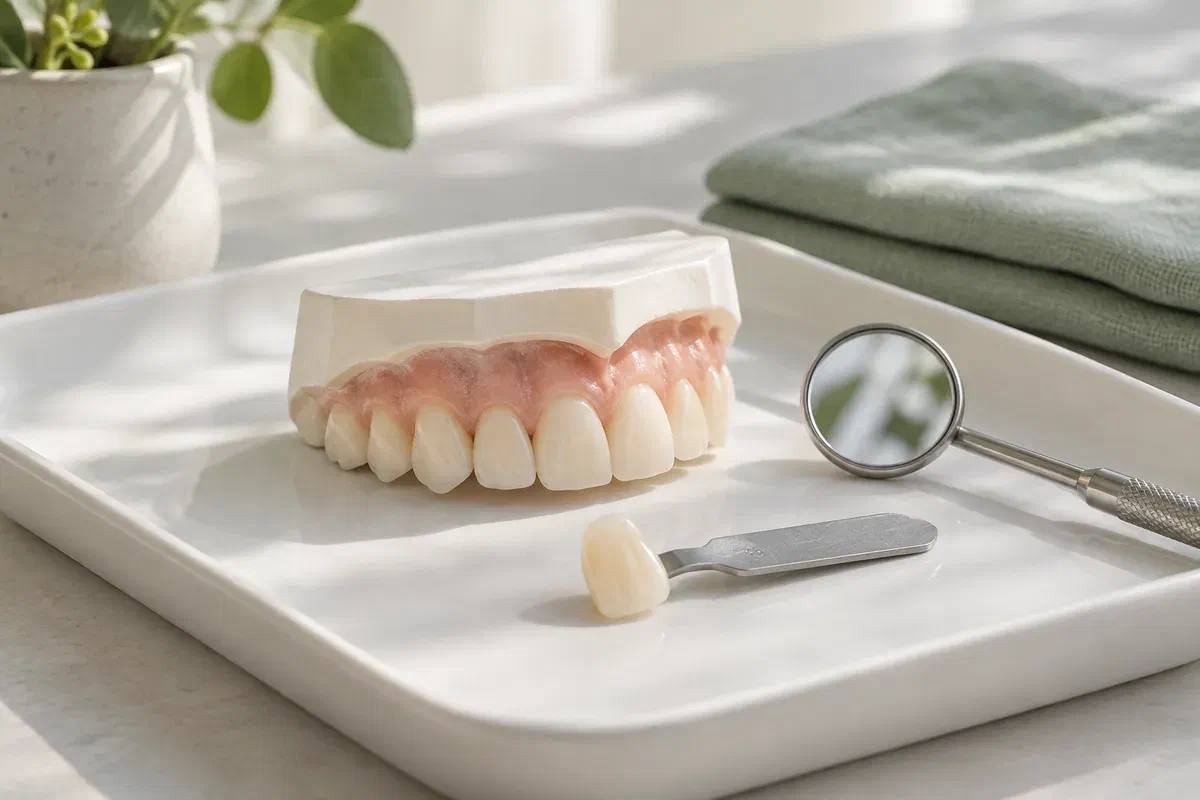
Illustrative front-teeth teaching model beside a shade sample and dental mirror
What is bothering you?

Colour, shape, or something underneath

Tell us the detail you notice and how much it matters. An examination can distinguish a preference about appearance from a dental or gum issue that calls for different care.

One tooth reads darker or greyer

Let us know if the shade has always been there or arrived after an injury or over time. Darkening deserves a look before covering. The clinician may consider cleaning, whitening, a new filling or further tests depending on what is causing it.

Surface or outline you want refined

Describe whether it is length, width, texture or alignment with neighbouring teeth. Treating the whole row is not assumed. Images can help you show the style you like, but they cannot tell us what suits your teeth and bite.

Wear patterns or existing restorations

Grinding, recurring chips and older fillings or bonding all influence planning, and older material may not respond to whitening. Ask whether bite forces or an existing repair should be dealt with before veneer work is planned.

Assessment of decay, gum health and any symptoms comes before cosmetic work. A veneer changes the outside of a tooth and leaves anything underneath untreated.

What composite can add

Natural colour, chosen with care

Composite comes in a range of shades and translucencies and can be layered to resemble enamel on an appropriate tooth. The discussion covers colour, surface character and proportion. A result that looks like your own teeth usually has gentle variation rather than a flat, uniform white.

Colour stability is the main upkeep question. Resin can pick up stain, lose polish, wear or chip over the years, and the remedy could be polishing, repair or replacement. Thinking about that now helps you choose a plan you are comfortable maintaining.

Patient information: American Dental Association — composite and porcelain veneers

Your idea of a natural result

Tell us how subtle or striking you would like the change to be, and what you want kept. Many people want one tooth to stop standing out. Ask how the chosen shade compares with the teeth staying untreated.

An honest look at preparation and care

Ask what, if any, tooth surface would be altered for each suitable option. Resin is not automatically reversible or prep-free. Knowing both the procedure and the maintenance helps you compare fairly.

Focused on the teeth that need it

Ask whether one, several or many teeth are proposed and why. The number should follow your goals and the exam, not a package. Shade-matching limits for a single tooth should be explained clearly.

Step by step

Whitening plans, shade choice, then placement

The visit sequence depends on the teeth and what is being done. Ask what each appointment covers, how your comfort is managed, and when you can look at the proposed colour and shape.

  1. Assessment and colour history

    We discuss your concern, how the colour has changed, past dental work and any symptoms. The clinician examines teeth, gums and bite, noting any further records needed. You decide together whether cosmetic work is suitable now.

  2. Sequence, scope and shade

    Agree whether whitening comes first, which teeth are included and how the veneer shade will relate to its neighbours. Compare a veneer with reasonable alternatives. Confirm preparation, fees, maintenance and the limits of the change.

  3. Placing the resin

    For an agreed direct composite veneer, the enamel is readied and composite goes on in layers that can vary in shade, each hardened by a curing light. The clinician shapes the outline to suit the tooth and the space.

  4. Polish and colour check

    The finished surface is polished, and the bite and contacts are checked. Look at the colour in natural light and mention anything that feels rough or high. Review cleaning, follow-up and changes that are worth a call.

Keeping the colour consistent

Small habits help resin stay bright.

Care for the veneer and for the natural tooth underneath it. Follow your personal instructions, and ask before using whitening toothpaste, abrasive powders or anything meant to change the surface.

Daily cleaning that reaches the edges

Brush with a fluoride toothpaste and clean between teeth in the way you were taught. Ask us to show you how to reach the margin of the veneer. Bleeding, food traps or floss that tears are reasons to book a check.

Go easy on the resin

Do not bite hard things or use treated teeth to open, tear or hold objects. Talk to us about grinding or contact sports so protection can be discussed. Guards and retainers may need checking once the surface changes.

Watch for stain or roughness

Rinsing with water after strongly coloured drinks can help. If you notice dullness, a chip, stain or a change in your bite, let us know. Professional polishing or repair may help; abrasive home remedies can damage the finish.

Patient information: Cleveland Clinic — dental veneers and their care

Other ways to change colour or shape

Could whitening alone do it?

For every option, ask what it would change, how much preparation is needed and what it would not fix. The answer should depend on your teeth and on the feature that matters most.

When composite is suitable for the change

A full veneer or a smaller resin repair

A veneer changes the whole front surface; a small repair deals with one area. Ask which is justified. Composite is useful for both, though its colour and finish will need watching over time.

When a different material or wider coverage comes up

Porcelain or another restoration

Compare preparation, colour stability, repair and replacement needs. Wider coverage should be tied to a clear reason in the tooth. Ask why it is being suggested instead of assuming it will look better.

When colour, position or personal choice points elsewhere

Whitening, alignment or keeping things as they are

Whitening can lighten suitable natural teeth without adding material, and orthodontic care deals with position. Choosing to leave a healthy tooth untouched is also entirely reasonable.

Burlington shade questions

Colour, timing and care

Choosing a veneer involves more than picking a shade. Ask about preparation, how many teeth are involved, upkeep, and what might happen if your oral health or preferences change.

(905) 876-4488
How long after whitening should a composite veneer shade be chosen?
Tooth colour can settle for a period after whitening, so the clinician may suggest waiting before matching the resin. Ask about the recommended gap for the whitening method you are using.
Can a composite veneer itself be whitened later?
No. Whitening products work on natural enamel rather than resin. If you want a lighter shade after placement, polishing or replacing the veneer may be discussed. It helps to plan colour changes before treatment.
Why does the veneer colour look different under some lights?
Teeth and resin reflect light in their own ways, so slight differences can show in certain lighting. Look at the shade in natural light during your appointment and mention any concern before you leave.
Is a brighter veneer shade likely to look less natural?
It can if the veneer is much lighter than the teeth beside it. Many people prefer a shade that blends rather than stands out. Talk through how noticeable you want the change to be.
Do whitening toothpastes help keep a veneer bright?
Some whitening toothpastes are abrasive and may dull a resin surface. Ask which toothpaste suits your veneer before switching, and rely on regular cleaning visits for polishing.
Can I wait to decide on a veneer after a shade discussion?
Yes. You can learn about colour, whitening options and preparation without agreeing to treatment. Taking time to decide is fine, and you can return when you are ready.
From Burlington

Plan the colour before anything is bonded.

Book a shade and veneer consultation at our Bronte Street practice. We can review the teeth involved, how light you would like them to look, whether whitening should come first, and the preparation and upkeep each option brings.

A veneer’s suitability depends on tooth structure, gum health and bite. Settle the planned colour, shape and long-term care before treatment.

Visit Milton Dental Clinic
Unit 1, 342 Bronte St. S, Milton, ON L9T 5B7
Get directions Clinic hours
Monday–Thursday
11am–7pm
Friday–Sunday
By appointment only

Areas we serve

  • Milton
  • Oakville
  • Mississauga
  • Georgetown
  • Halton Hills
  • Acton
  • Campbellville
  • Brampton
  • Burlington
  • Puslinch
  • Rockwood
  • Erin
  • Caledon
  • Etobicoke
  • Old Milton
  • Bronte Meadows
  • Timberlea
  • Dorset Park
  • Dempsey
  • Clarke
  • Beaty
  • Coates
  • Harrison
  • Scott
  • Willmott
  • Ford
  • Bowes
  • Cobden
  • Walker
  • Mountain View
  • Milton Heights
  • Hawthorne Village
  • Valley View
  • Fallingbrook
  • Nassagaweya
  • Trafalgar
  • Esquesing
  • Nelson
  • Brookville
  • Moffat
  • Glen Williams
  • Norval
  • Limehouse
  • Stewarttown
  • Ashgrove
  • Hornby
  • Silver Creek
  • Speyside
  • Scotch Block
  • North Oakville
  • River Oaks
  • Glen Abbey
  • West Oak Trails
  • Palermo
  • Bronte Creek
  • College Park
  • Joshua Creek
  • Uptown Core
  • Preserve
  • Iroquois Ridge
  • Lisgar
  • Meadowvale
  • Meadowvale Village
  • Churchill Meadows
  • Erin Mills
  • Central Erin Mills
  • Streetsville
  • East Credit
  • Creditview
  • Heartland
  • Sheridan
  • Mount Pleasant
  • Credit Valley
  • Huttonville
  • Churchville
  • Springbrook
  • Northwest Brampton
  • Bram West
  • Fletcher's Meadow
  • Fletcher's Creek South
  • Alton Village
  • Orchard
  • Millcroft
  • Headon Forest
  • Tansley
  • Brant Hills
  • Tyandaga
  • Kilbride
  • Lowville
  • Aberfoyle
  • Morriston
  • Arkell
  • Hillsburgh
  • Freelton
  • Carlisle
  • Waterdown
  • Flamborough
  • Mountsberg

How can we help?

Milton Dental Clinic

Have a question about your smile? Choose the option that works best for you.

For urgent dental concerns, please call.
Messages are reviewed during clinic hours.