

Illustrative patient discussing tooth shade and shape with a dental clinician
Cosmetic Dentistry

Composite Veneers in Oakville

The choice of material is often the first thing people ask about. If you are coming from Oakville, we can compare the two on your actual teeth, looking at how much preparation each involves, how the shade would blend, and what each material asks of you over the years.

Resin or porcelain?

Two materials, one tooth to protect

Most veneer questions sooner or later turn into a comparison. With a composite veneer, tooth-coloured resin is bonded directly to the visible face of a tooth and sculpted in place. Porcelain is made as a separate shell. Both can change colour, outline or surface texture on a suitable front tooth, but they differ in preparation, repair and upkeep.

Before choosing a material, though, it helps to ask a simpler question: does this concern need full surface coverage at all? A small bonded repair, whitening or no treatment may serve you better. Whatever the answer, the plan has to respect sound enamel, healthy gums and the way your teeth come together.

For visitors from Oakville, we keep the conversation practical. Tell us what you want to look different, whether it is a shade, a corner or an overall surface, and we will lay out what composite could achieve, where porcelain or another option might be considered, and the care each would require.

Compare veneer materials with us
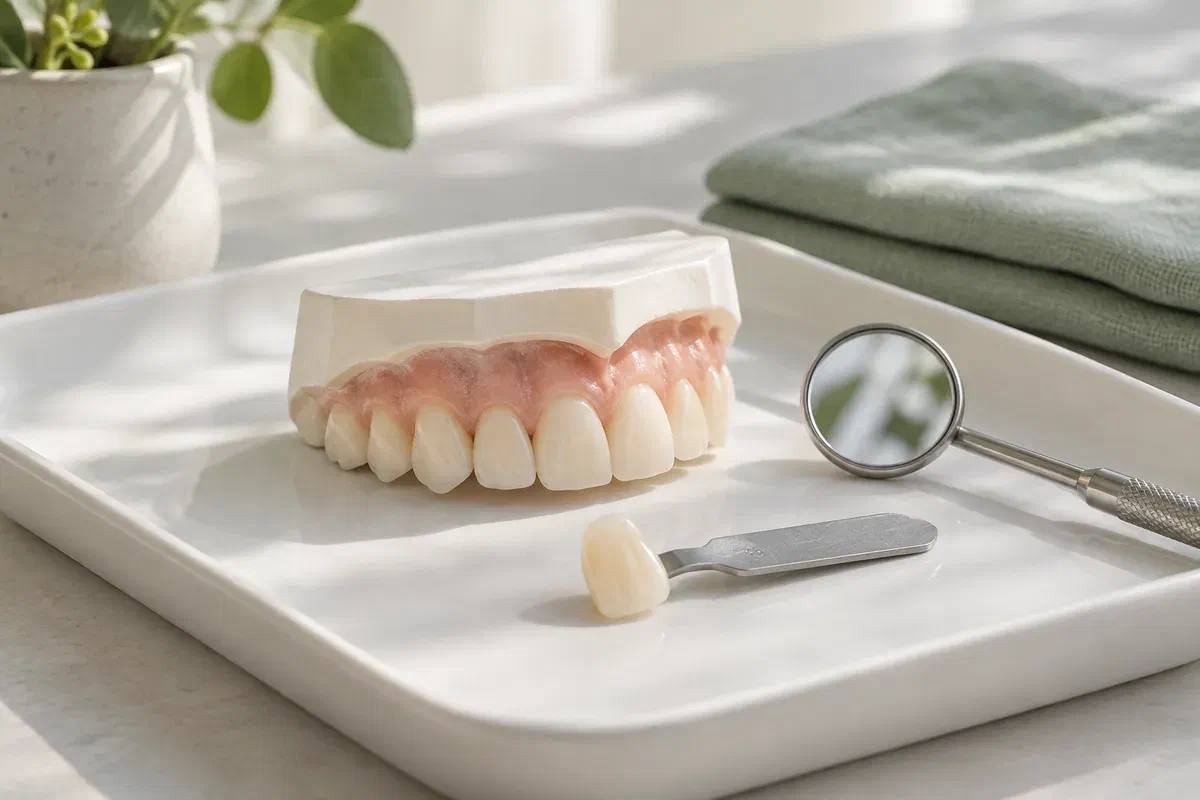
Illustrative front-teeth teaching model beside a shade sample and dental mirror
Before the material question

Define the problem, then pick the tool.

Explain the detail you would like different and how much it matters day to day. An exam helps tell a cosmetic wish apart from decay, gum trouble or bite stress that should be handled differently.

Discolouration that will not blend in

Note whether the tooth has always been this shade or became darker. A change in colour is worth investigating before it is hidden. Depending on the cause, cleaning, whitening, a new restoration or further testing could matter more than either veneer material.

Proportions that feel out of balance

Point out whether the issue is length, width or how a tooth sits in line with others. Neighbouring teeth may not need anything at all. Pictures you like can explain your taste, though they cannot show what your own teeth will support.

Heavy bite forces or past breakage

Grinding, repeated chips and older restorations all affect which material and design make sense. Raise them early. The clinician may want to address the bite or an ageing repair before any veneer is planned.

Decay, gum health and any symptoms are checked first. Neither resin nor porcelain treats a problem that sits beneath the surface.

Where composite tends to fit

Built on the tooth, adjusted on the tooth

Because composite is shaped directly in the mouth, the outline and shade can be refined as the work progresses on a suitable tooth. Talk about colour, surface character and proportions you prefer. A convincing result rarely means uniform teeth or an unusually white shade.

The trade-off is maintenance. Resin can lose its gloss, absorb stain, wear or chip, and that may lead to polishing, a repair or eventual replacement. Porcelain has its own considerations, so compare the long-term care of each before you choose.

Patient information: American Dental Association — composite and porcelain veneers

A conversation led by what you want

Explain the parts of your smile you would like to keep, not only the parts you would change. Often one feature is the real concern. Ask how the planned surface will relate to your other teeth instead of a standard template.

Side-by-side preparation and upkeep

Ask how much enamel each material would require you to give up. A resin veneer is not automatically reversible or free of preparation. Seeing both the starting procedure and the ongoing care makes the choice more informed.

Only the teeth that justify treatment

Ask whether a single tooth, a small group or a larger plan is suggested, and what drives that number. It should come from your goals and the exam. Matching limits should be explained without turning one concern into a full-smile project.

What a composite visit involves

How does the resin actually go on?

The sequence varies with the teeth and the work planned. Ask what will happen at each stage, how you will be kept comfortable, and when you will get to see and approve the proposed look.

  1. Examination and goal-setting

    The clinician reviews your concern, dental history, existing work and any symptoms, then examines teeth, gums and bite. Additional records may be suggested. You will discuss whether cosmetic treatment is appropriate now or whether another issue comes first.

  2. Material, scope and colour

    Weigh composite against porcelain and other reasonable options, and agree on the teeth included. Ask how the shade will relate to untreated teeth and planned whitening. Confirm preparation, fees, maintenance and what the change cannot do.

  3. Layering the composite

    When direct composite is agreed, the tooth surface is prepared and resin is bonded in one or several shaped layers, each set with a curing light. The clinician develops the contour to suit the tooth and the room available.

  4. Finishing and the first check

    The veneer is smoothed and polished, and the bite and contacts are tested. Say so if anything feels proud or rough. You will go over cleaning, any planned review and which changes warrant a call.

The upkeep side of resin

A composite surface rewards steady, gentle care.

The veneer and the tooth it covers both need looking after. Follow the advice tailored to you, and check before reaching for an abrasive paste or trying to touch up the surface on your own.

A thorough, gentle cleaning routine

Brush twice a day with fluoride toothpaste and clean between teeth using the method you were shown. Unfamiliar contours are worth a quick demonstration. If gums keep bleeding or floss catches, come in rather than avoiding the spot.

Keep stress off the edges

Resin edges dislike hard objects, so avoid chewing ice, pens or fingernails and never use the teeth to open things. Raise sports or grinding so protection can be planned. A guard made before treatment may not fit afterward.

A review when the surface changes

Report roughness, chipping, staining you notice or a change in how your teeth meet. The clinician will decide whether polishing, a repair or another step is right. Avoid files, glue or harsh home polishing on the veneer.

Patient information: Cleveland Clinic — dental veneers and their care

Laying out the choices

Composite is one option among several.

With each choice, ask what changes, how much preparation it takes and what it leaves unresolved. The answer should rest on your teeth’s condition and the feature you care about most.

When resin can handle the change

Composite veneer or targeted bonding

A veneer covers a broad front surface; targeted bonding treats a single spot. Ask which scope is warranted for your tooth. Either way, resin will need periodic review and some maintenance.

When a different material or more coverage is proposed

Porcelain veneer or a crown

Compare how much tooth is prepared, how each looks, whether it can be repaired and when it might need replacing. A larger restoration should have a reason tied to the tooth. Ask for that reason rather than assuming more coverage means a better result.

When colour, position or preference suggests another path

Whitening, orthodontics or nothing at all

Whitening lightens suitable natural teeth; orthodontic treatment moves them. Either may address the concern with no veneer involved. You can also decide to leave a healthy tooth exactly as it is.

Oakville veneer questions

Choosing between materials, and whether to choose at all

There is more to decide than colour. Ask about preparation, how many teeth are involved, ongoing care, and how your options change if your oral health or preferences shift.

(905) 876-4488
How do composite and porcelain veneers differ in day-to-day care?
Both need careful brushing and cleaning between teeth. Resin is more prone to surface staining and loss of polish over time, so it may need periodic polishing. Ask the clinician to explain the care routine for whichever material you are considering.
Can composite be repaired more easily than porcelain?
A small chip in resin can often be repaired by adding and polishing material, depending on the damage and the tooth. Porcelain repairs work differently. Ask how each would be handled for your teeth before you choose.
Is composite a reasonable choice if I am not sure about porcelain yet?
Some people choose resin because it is shaped directly and can be adjusted. That is a personal decision based on your teeth and goals. Ask about preparation for each, since what is removed for one option affects what is possible later.
Do composite veneers suit someone who grinds their teeth?
Grinding puts extra force on any restoration. The clinician will look at your bite and wear and may suggest addressing the grinding or using a guard. Mention it early so the plan reflects it.
Will the colour of a resin veneer match teeth I plan to whiten?
Whitening changes natural enamel, not resin. If whitening is part of your plans, discuss the order so the veneer shade is chosen to match your teeth after they have been lightened.
How can I plan composite veneer visits from Oakville around work?
Ask at the first visit how many appointments your plan is likely to need and how long each may take. Our hours run Monday to Thursday from 11am to 7pm, with Friday to Sunday by appointment only, which can help with scheduling.
Coming from Oakville

Weigh the materials on your own teeth.

Book a consultation at our Bronte Street practice to compare composite veneers with porcelain and other options. We will look at the teeth in question, your preferred appearance, and the preparation and upkeep that come with each path.

Whether either material suits depends on tooth structure, gum health and bite. Agree on the planned look and the care it will need before any treatment starts.

Visit Milton Dental Clinic
Unit 1, 342 Bronte St. S, Milton, ON L9T 5B7
Get directions Clinic hours
Monday–Thursday
11am–7pm
Friday–Sunday
By appointment only

Areas we serve

  • Milton
  • Oakville
  • Mississauga
  • Georgetown
  • Halton Hills
  • Acton
  • Campbellville
  • Brampton
  • Burlington
  • Puslinch
  • Rockwood
  • Erin
  • Caledon
  • Etobicoke
  • Old Milton
  • Bronte Meadows
  • Timberlea
  • Dorset Park
  • Dempsey
  • Clarke
  • Beaty
  • Coates
  • Harrison
  • Scott
  • Willmott
  • Ford
  • Bowes
  • Cobden
  • Walker
  • Mountain View
  • Milton Heights
  • Hawthorne Village
  • Valley View
  • Fallingbrook
  • Nassagaweya
  • Trafalgar
  • Esquesing
  • Nelson
  • Brookville
  • Moffat
  • Glen Williams
  • Norval
  • Limehouse
  • Stewarttown
  • Ashgrove
  • Hornby
  • Silver Creek
  • Speyside
  • Scotch Block
  • North Oakville
  • River Oaks
  • Glen Abbey
  • West Oak Trails
  • Palermo
  • Bronte Creek
  • College Park
  • Joshua Creek
  • Uptown Core
  • Preserve
  • Iroquois Ridge
  • Lisgar
  • Meadowvale
  • Meadowvale Village
  • Churchill Meadows
  • Erin Mills
  • Central Erin Mills
  • Streetsville
  • East Credit
  • Creditview
  • Heartland
  • Sheridan
  • Mount Pleasant
  • Credit Valley
  • Huttonville
  • Churchville
  • Springbrook
  • Northwest Brampton
  • Bram West
  • Fletcher's Meadow
  • Fletcher's Creek South
  • Alton Village
  • Orchard
  • Millcroft
  • Headon Forest
  • Tansley
  • Brant Hills
  • Tyandaga
  • Kilbride
  • Lowville
  • Aberfoyle
  • Morriston
  • Arkell
  • Hillsburgh
  • Freelton
  • Carlisle
  • Waterdown
  • Flamborough
  • Mountsberg

How can we help?

Milton Dental Clinic

Have a question about your smile? Choose the option that works best for you.

For urgent dental concerns, please call.
Messages are reviewed during clinic hours.