

Illustrative patient discussing the appearance of uneven teeth during a dental consultation
Cosmetic Dentistry

Cosmetic Correction of Uneven Teeth in Brampton

You wore braces as a teenager, the retainer ended up in a drawer, and now a front tooth has crept out of line. Coming from Brampton, you can have that shift assessed and compare re-treatment, edge refinement, or simply holding things steady.

When straight teeth stop being straight

Your braces worked. Then teeth kept moving.

Teeth are not fixed in place for life. After orthodontic treatment, they tend to drift without consistent retention, and natural changes continue as we age. A lower tooth may overlap its neighbour, or an upper incisor may twist enough that its edge no longer lines up.

So the first job is working out how much of the unevenness is movement and how much is shape. Where position is the main issue, re-treatment with aligners or braces might be considered. Where a worn or chipped edge adds to the look, bonding or modest contouring could refine it. A combination, or stabilizing what you have, are also possibilities.

When you travel from Brampton, bring your old retainer if you still have it, along with any records from your original orthodontist. Tell us when you stopped wearing it and when the change appeared. That history makes the assessment far more useful.

Ask about teeth that shifted after braces
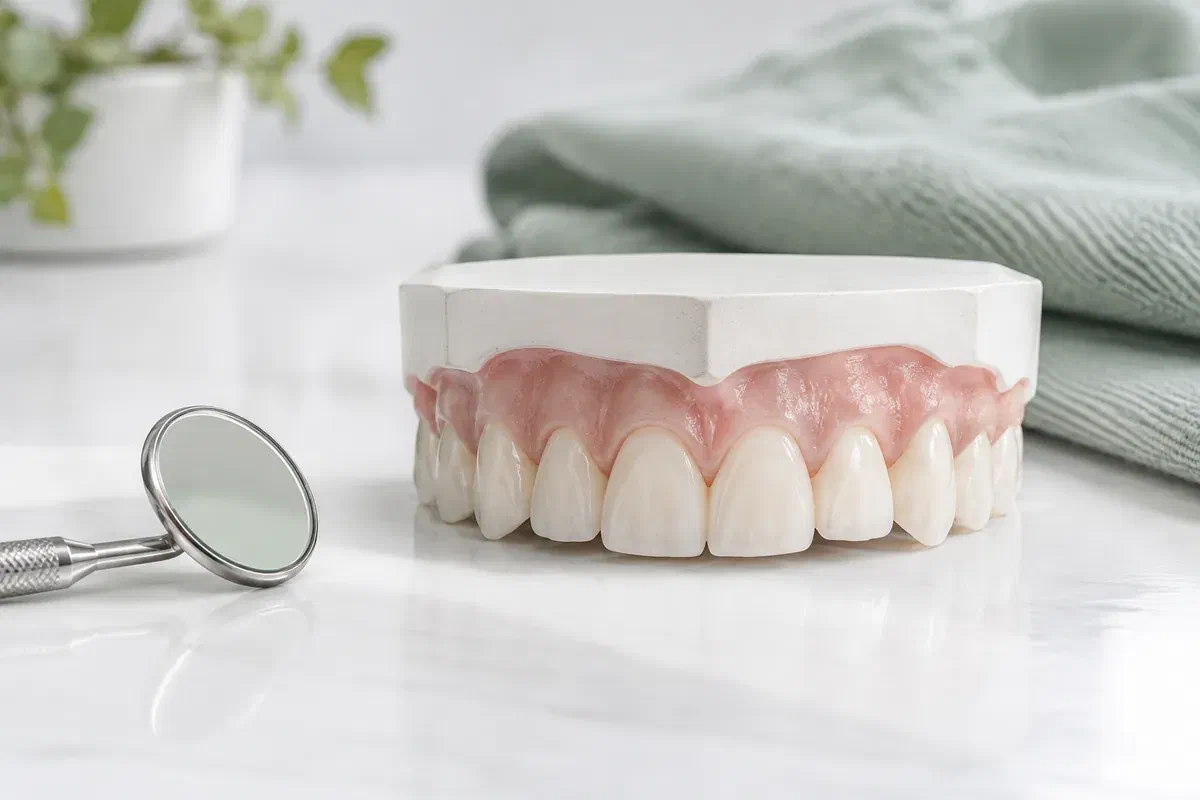
Illustrative teaching model showing modest differences in front-tooth edge lengths
Movement, shape, or surroundings

What exactly has changed since treatment?

Show us the teeth that look different and describe whether the change is cosmetic only, or whether you notice food catching, new wear, or an altered bite.

An edge that no longer lines up

Shifting can expose differences in edge length that were once hidden, and wear can add to the mismatch. Mention any chipping or sensitivity. Ask whether the edge itself needs attention or whether realigning would solve it.

Crowding or rotation that returned

Relapse often shows up as a slight overlap or twist. Bonding can mask a small rotation, but the tooth stays where it is and may continue to move. Ask whether orthodontic re-treatment and retention should come first.

Gum changes or older restorations

Gum recession or an earlier filling can also change how even the teeth look. The examination should consider both. Ask whether the concern is with the tooth, the gum, or existing dental work.

Teeth that are loosening, moving quickly, or painful need assessment. Do not file an edge at home to hide a shift; enamel removal is irreversible and could harm the tooth or bite.

Getting the order right

Why the shift is assessed before the shape

If teeth are still drifting, reshaping their edges first may leave them mismatched again once movement continues. Understanding whether position is stable lets you choose treatment that holds up rather than chasing a moving target.

There is also room to accept a little imperfection. A slight relapse may bother you less once you see it in context. Tell us what level of change matters to you, and ask whether achieving perfect alignment again would require more than you want to commit.

Patient information: Cleveland Clinic — tooth contouring and enamel preservation · American Association of Orthodontists — tooth alignment and bite

A straightforward account of each step

Ask what would be done to each tooth: moving it, adding bonding, removing enamel, or a mix. These steps carry different time commitments and are worth understanding before you agree to any of them.

Protecting what your braces achieved

Much of your earlier result may still be good. Say which parts you want to keep. Planning can focus on the teeth that have moved and leave the rest as they are.

A plan for retention this time

Ask how the new result would be held in place, whether with a fixed or removable retainer, and what reviews are involved. Long-term stability depends on that commitment, not just on the initial treatment.

From relapse to a plan

Four stages of assessment and care

There is no single procedure for teeth that have shifted. The steps depend on how much has moved, what is still moving, and the approach you prefer.

  1. Compare then and now

    Share your orthodontic history and when you noticed the change. The clinician examines tooth positions, edges, gums, restorations, and your bite. Old records and new photos may help show how much has shifted.

  2. Find out what is driving the change

    You hear whether the main factor is relapse, wear, gum change, edge shape, or several together. If anything is unclear, further steps are explained. Ongoing movement is handled differently from a difference that has settled.

  3. Consider re-treatment, refinement, or holding

    Discuss orthodontic re-treatment, bonding, limited contouring, retention alone, or monitoring. Ask how much each changes the teeth and what outcome is expected. If steps are combined, ask why the sequence matters.

  4. Confirm stability and set reviews

    After treatment, the bite, contacts, and appliance fit are checked. Report anything uncomfortable. Agree on a retention routine and the timing of reviews so the result stays where it should.

Keeping teeth where they belong

This time, retention is part of aftercare.

Aftercare for moved teeth differs from aftercare for bonding or contouring. Ask for instructions that match your treatment and your retainer.

Clean around retainers and new edges

Use the brushing and interdental methods you were shown, especially around a bonded retainer wire. Mention any spot where floss snags. Your teeth should remain easy to keep clean.

Address grinding and other wear

If wear contributed to uneven edges, follow the protection plan. A new chip should be assessed rather than smoothed again, because a cosmetic repair cannot control the underlying cause.

Wear the retainer as directed

Retainers only work when worn. Confirm your schedule, bring the appliance to any appointment where dental work is planned, and keep reviews so the clinician can monitor both appearance and function.

Patient information: Cleveland Clinic — tooth erosion and changes in tooth surfaces

Possible directions

Move them back, refine the edges, or hold steady

Each option addresses a different part of the problem. Compare how much natural tooth each keeps, and consider whether a small, stable relapse could simply be left alone.

For edge differences once position is stable

Edge bonding or careful contouring

Bonding can lengthen a shorter edge, and limited contouring can refine a small irregularity where enough healthy enamel exists. Ask whether this is suitable and why. Enamel reduction cannot be reversed.

For relapse in position or bite

Orthodontic re-treatment

When teeth have moved, moving them back can address the concern at its source. Ask about aligner or brace options, how long treatment may take, and the retention that would follow, considering the bite as well as appearance.

When the shift is minor or the cause is elsewhere

Other care, retention, or observation

Receding gums or earlier fillings may need their own review. A slight, stable shift can also be watched or held with a retainer. Ask what would be monitored and what changes should prompt a return visit.

Patient information: American Association of Orthodontists — adult orthodontic options

Brampton questions about relapse

Shifted after braces: your questions

Bring your old retainer and any orthodontic records. Your history helps guide the discussion, and the exam shows what is possible now.

(905) 876-4488
Why did my teeth move after I finished braces?
Teeth naturally tend to shift over time, and without consistent retention they can drift back toward earlier positions. Other factors such as wear and gum changes may also play a part. The assessment can explain what likely happened in your case.
Can my old retainer push my teeth back?
An old retainer may no longer fit if teeth have moved, and forcing it into place can be uncomfortable or harmful. A retainer is designed to hold teeth, not to move them any real distance. Bring it to the visit so the clinician can assess the fit and advise whether it can still be used.
Is bonding enough to hide a small relapse?
For a minor change, bonding may improve the appearance, though it does not reposition the tooth or stop further movement. Ask what it would disguise, what it would leave as it is, and whether re-treatment would be a better choice.
Do adults need braces again or can aligners work?
Either may be suitable depending on the movement needed. Many adults consider aligners, but not every case fits. An assessment can explain the options, the expected commitment, and retention afterwards.
Should edges be reshaped before or after re-treatment?
Usually after, since moving the teeth can change how the edges line up. An edge that looks short today may look fine once its tooth sits in a better position. Ask whether reshaping would still be needed once teeth are aligned, and how any bonding would be planned around the new positions.
Can a small relapse just be left alone?
Yes, if the teeth are healthy and the change is stable. A cosmetic preference does not require treatment. Ask whether anything should be monitored and what signs would suggest the teeth are still moving.
Uneven teeth care for Brampton

Bring the old retainer. We’ll take a look.

Book a visit at our Bronte Street practice to assess teeth that have shifted or edges that no longer match. We will explain the cause and compare re-treatment, refinement, or retention with your goals and oral health in mind.

Every recommendation depends on the cause. A minor, stable shift may not need treatment, and enamel that is removed cannot be restored.

Visit Milton Dental Clinic
Unit 1, 342 Bronte St. S, Milton, ON L9T 5B7
Get directions Clinic hours
Monday–Thursday
11am–7pm
Friday–Sunday
By appointment only

Areas we serve

  • Milton
  • Oakville
  • Mississauga
  • Georgetown
  • Halton Hills
  • Acton
  • Campbellville
  • Brampton
  • Burlington
  • Puslinch
  • Rockwood
  • Erin
  • Caledon
  • Etobicoke
  • Old Milton
  • Bronte Meadows
  • Timberlea
  • Dorset Park
  • Dempsey
  • Clarke
  • Beaty
  • Coates
  • Harrison
  • Scott
  • Willmott
  • Ford
  • Bowes
  • Cobden
  • Walker
  • Mountain View
  • Milton Heights
  • Hawthorne Village
  • Valley View
  • Fallingbrook
  • Nassagaweya
  • Trafalgar
  • Esquesing
  • Nelson
  • Brookville
  • Moffat
  • Glen Williams
  • Norval
  • Limehouse
  • Stewarttown
  • Ashgrove
  • Hornby
  • Silver Creek
  • Speyside
  • Scotch Block
  • North Oakville
  • River Oaks
  • Glen Abbey
  • West Oak Trails
  • Palermo
  • Bronte Creek
  • College Park
  • Joshua Creek
  • Uptown Core
  • Preserve
  • Iroquois Ridge
  • Lisgar
  • Meadowvale
  • Meadowvale Village
  • Churchill Meadows
  • Erin Mills
  • Central Erin Mills
  • Streetsville
  • East Credit
  • Creditview
  • Heartland
  • Sheridan
  • Mount Pleasant
  • Credit Valley
  • Huttonville
  • Churchville
  • Springbrook
  • Northwest Brampton
  • Bram West
  • Fletcher's Meadow
  • Fletcher's Creek South
  • Alton Village
  • Orchard
  • Millcroft
  • Headon Forest
  • Tansley
  • Brant Hills
  • Tyandaga
  • Kilbride
  • Lowville
  • Aberfoyle
  • Morriston
  • Arkell
  • Hillsburgh
  • Freelton
  • Carlisle
  • Waterdown
  • Flamborough
  • Mountsberg

How can we help?

Milton Dental Clinic

Have a question about your smile? Choose the option that works best for you.

For urgent dental concerns, please call.
Messages are reviewed during clinic hours.