

Illustrative patient discussing the appearance of uneven teeth during a dental consultation
Cosmetic Dentistry

Cosmetic Correction of Uneven Teeth in Puslinch

Sometimes the tooth that looks uneven is the one that was already repaired. A crown that sits a little long, a veneer with a squarer edge, or a filling that has worn differently can throw off the line. From Puslinch, plan an assessment that sorts out whether the restoration, the natural teeth, or both need attention.

When dental work stands out

The crown fits. The smile line doesn’t.

Restorations are made to match the teeth around them at the time they are placed. Years later, natural teeth may have worn, shifted, or changed colour while the crown, veneer, or bonded filling stayed the same. The result can be one tooth that looks longer, squarer, or brighter than its neighbours.

Correcting that is rarely about the restoration alone. Sometimes the restoration is still sound and only an edge needs refining. Sometimes it is time for a replacement shaped to the current smile. Natural teeth that have worn might be built back up with bonding, and teeth that have moved may need an orthodontic opinion. Occasionally the gum around a crown has changed, and that becomes the focus.

Households across rural Puslinch often like to group appointments, so it helps to plan the assessment carefully. Bring any records about the restoration, such as when it was placed and what material was used, if you have them. Tell us whether it ever feels loose, sensitive, or high when you bite.

Ask about a crown or filling that looks uneven
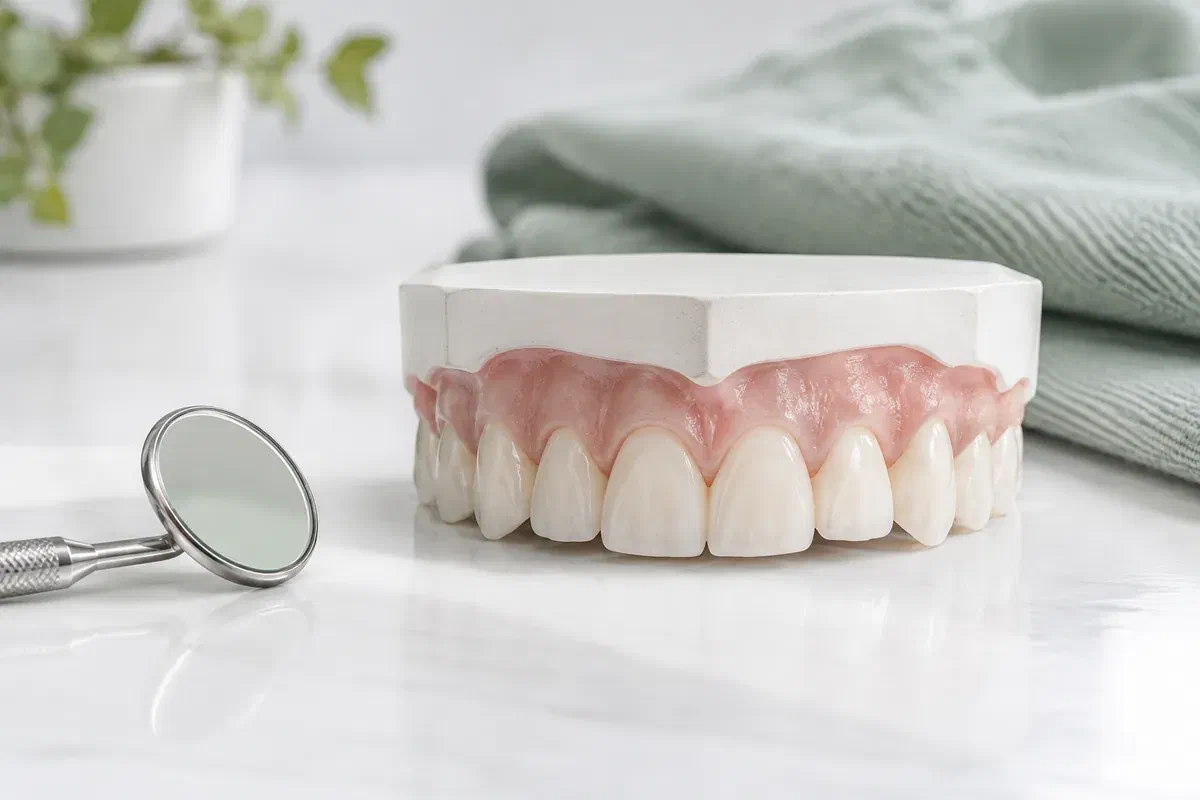
Illustrative teaching model showing modest differences in front-tooth edge lengths
Restoration, tooth, or gum?

What is out of step with the rest of your smile?

Point out the restored tooth and the area that looks uneven. Let us know whether the issue is appearance only, or whether chewing, comfort, or the fit of the restoration has also changed.

An edge that no longer matches the natural teeth

Natural edges and a crown or veneer may not wear at the same rate, so over years the two can drift apart in length. Mention any chips on either. Ask whether the restoration, the natural teeth, or both would be adjusted, and how the bite would be affected.

A restored tooth that has shifted

Teeth with crowns can move just like natural ones, especially if neighbouring teeth were lost or moved. Replacing the crown may not solve a position issue. Ask whether alignment should be addressed before new dental work.

Gums that have changed around dental work

Gum recession can expose the edge of a crown or make a restored tooth look longer. The examination should check gum health around the restoration. Ask whether the concern lies with the crown, the gum, or both.

A crown or filling that feels loose, a restored tooth that aches, or a sudden change in fit needs prompt attention. Please don’t try to file a crown or natural edge at home; damage to either is difficult or impossible to reverse.

Why a careful look pays off

Fix the right tooth, the right way.

When the cause is understood, you can avoid replacing a sound restoration just for appearance, or reshaping natural teeth to match a crown that is itself the outlier. The aim is a plan that brings the smile back into balance with the least change to healthy structure.

There is also room for imperfection. Restored and natural teeth will never be identical, and a small difference may be perfectly acceptable. Explain how close a match you are hoping for, and ask whether chasing a perfect match would mean more work than the benefit warrants.

Patient information: Cleveland Clinic — tooth contouring and enamel preservation · American Association of Orthodontists — tooth alignment and bite

Knowing which tooth would actually change

Ask the clinician to explain whether the restoration would be adjusted or replaced, the natural teeth bonded or contoured, or teeth moved. Each path carries a different commitment and should be described separately.

Keeping the restoration if it is sound

A well-functioning crown may only need a small edge refinement, or nothing at all. Ask whether replacement is truly needed, and say if you would prefer to keep it.

Thinking about how the result will age

Ask how a new or adjusted restoration will relate to natural teeth as they continue to wear. Discuss maintenance, likely future repairs, and whether a night guard would protect both the crown and the teeth around it.

Planning around existing work

Four steps when a restoration is involved

No single procedure corrects uneven teeth. When a crown, veneer, or filling is involved, the steps depend on its condition, the surrounding teeth, and your preferences.

  1. Review the restoration’s history and condition

    Share what you know about when and why the tooth was restored. The clinician examines the restoration, neighbouring teeth, gums, and your bite. Radiographs or photos may be suggested to judge the restoration and the tooth beneath it.

  2. Explain what creates the mismatch

    You learn whether wear on natural teeth, restoration shape, movement, gum change, or a combination is responsible. If anything is unclear, the next step is explained. A stable mismatch is planned differently from one that is still widening.

  3. Compare adjusting, replacing, or leaving it

    Options may include refining the restoration, replacing it, bonding natural edges, orthodontic advice, gum care, or monitoring. Ask how much of each tooth would be changed. If several steps are proposed, ask about the order.

  4. Check the new balance and set reviews

    After treatment, the clinician checks contacts, the bite, and how the restoration sits at the gum. Report anything that feels high or rough. Confirm maintenance and when the area should be reviewed.

Caring for restored and natural teeth

Aftercare for crowns, bonding, and the teeth beside them

The care routine depends on whether a restoration was adjusted or replaced, natural teeth were bonded or contoured, or teeth were moved. Ask for instructions specific to what was done.

Cleaning where crown meets gum

Brush along the gumline and use the interdental cleaning you were shown, especially around the restoration’s margin. Mention any spot where floss shreds or catches. Good cleaning helps the gum and the restoration stay healthy.

Protecting edges from wear and chips

If grinding or heavy biting contributed, follow the protection plan. Report a chip on either a natural tooth or a restoration rather than asking for a quick polish, since a cosmetic fix does not control every cause of damage.

Guards, retainers, and reviews

If a guard or retainer is recommended, wear it as advised and bring it when more work is planned. Reviews help monitor how restorations and natural teeth are wearing together.

Patient information: Cleveland Clinic — tooth erosion and changes in tooth surfaces

Ways to restore balance

Work on the natural teeth, the restoration, or neither

Choose the option that targets the real source of the mismatch. Ask how much natural tooth each one keeps, and whether a small, stable difference could simply be accepted.

When worn natural teeth are the outliers

Bonding or limited contouring of natural edges

Bonding can rebuild worn natural edges to meet a restoration, and limited contouring can refine a small irregularity where enough healthy enamel exists. Ask which suits you. Enamel reduction is permanent.

When a restored or natural tooth has moved

Orthodontic assessment

If position is the main issue, moving teeth may solve it more directly than replacing restorations. Ask about appliance options, commitment, and retention, with appearance and bite considered together.

When the dental work or gum is the source

Restoration replacement, gum care, or monitoring

An ageing crown or veneer may be replaced or refined, and gum changes may need their own care. A stable difference can also be watched. Ask what would be monitored and when to come back.

Patient information: American Association of Orthodontists — adult orthodontic options

Puslinch questions about restored teeth

Crowns, veneers, and an uneven smile line

Bring what you know about the restoration and when it was placed. That history guides the discussion, and the exam confirms the options.

(905) 876-4488
Why does my crown look longer than the tooth beside it now?
Natural teeth wear and gums can recede over time, while a crown keeps its shape. Either can make the crown look longer. The assessment can show which has changed and whether adjustment, replacement, or another approach makes sense.
Can a crown edge be adjusted without replacing it?
Sometimes a small refinement is possible, depending on the material and thickness. Other times adjustment would weaken it. Ask what is safe for your restoration before deciding.
Will whitening make my natural teeth match my crown?
Whitening affects natural teeth but not crowns, veneers, or bonding. If your restoration is lighter than the natural teeth, whitening may help, but if it is darker, the restoration may need attention instead. Ask before starting.
Should I replace an old veneer to even out my smile?
Only if the veneer is failing or its shape is genuinely the problem. Replacement involves removing the old veneer and may require some further preparation. Ask whether natural teeth or the veneer should be the focus.
Can bonding on natural teeth help them match a crown?
In some cases, bonding can rebuild worn natural edges so they line up with a restoration. The bite and cause of wear need to be considered so the bonding lasts. Ask how it would be planned.
Can my visits be grouped since we travel from Puslinch?
Ask when booking. Depending on the plan, assessment and some treatment steps can sometimes be organised to reduce trips, though certain stages need time between them.
Uneven smile lines in Puslinch

Bring the crown’s story. We’ll read the rest.

Request an appointment at our Bronte Street practice about a crown, veneer, or filling that makes your smile look uneven. Once the reason for the mismatch is clear, we can weigh adjusting, replacing, or working on natural teeth against what you want and what your mouth needs.

Recommendations depend on the restoration and the cause. A small, stable difference may be acceptable as it is, and contoured enamel cannot be regained.

Visit Milton Dental Clinic
Unit 1, 342 Bronte St. S, Milton, ON L9T 5B7
Get directions Clinic hours
Monday–Thursday
11am–7pm
Friday–Sunday
By appointment only

Areas we serve

  • Milton
  • Oakville
  • Mississauga
  • Georgetown
  • Halton Hills
  • Acton
  • Campbellville
  • Brampton
  • Burlington
  • Puslinch
  • Rockwood
  • Erin
  • Caledon
  • Etobicoke
  • Old Milton
  • Bronte Meadows
  • Timberlea
  • Dorset Park
  • Dempsey
  • Clarke
  • Beaty
  • Coates
  • Harrison
  • Scott
  • Willmott
  • Ford
  • Bowes
  • Cobden
  • Walker
  • Mountain View
  • Milton Heights
  • Hawthorne Village
  • Valley View
  • Fallingbrook
  • Nassagaweya
  • Trafalgar
  • Esquesing
  • Nelson
  • Brookville
  • Moffat
  • Glen Williams
  • Norval
  • Limehouse
  • Stewarttown
  • Ashgrove
  • Hornby
  • Silver Creek
  • Speyside
  • Scotch Block
  • North Oakville
  • River Oaks
  • Glen Abbey
  • West Oak Trails
  • Palermo
  • Bronte Creek
  • College Park
  • Joshua Creek
  • Uptown Core
  • Preserve
  • Iroquois Ridge
  • Lisgar
  • Meadowvale
  • Meadowvale Village
  • Churchill Meadows
  • Erin Mills
  • Central Erin Mills
  • Streetsville
  • East Credit
  • Creditview
  • Heartland
  • Sheridan
  • Mount Pleasant
  • Credit Valley
  • Huttonville
  • Churchville
  • Springbrook
  • Northwest Brampton
  • Bram West
  • Fletcher's Meadow
  • Fletcher's Creek South
  • Alton Village
  • Orchard
  • Millcroft
  • Headon Forest
  • Tansley
  • Brant Hills
  • Tyandaga
  • Kilbride
  • Lowville
  • Aberfoyle
  • Morriston
  • Arkell
  • Hillsburgh
  • Freelton
  • Carlisle
  • Waterdown
  • Flamborough
  • Mountsberg

How can we help?

Milton Dental Clinic

Have a question about your smile? Choose the option that works best for you.

For urgent dental concerns, please call.
Messages are reviewed during clinic hours.