

Illustrative patient and dental clinician discussing crown treatment with a tooth model
Cosmetic Dentistry

Cosmetic Crown Treatment in Caledon

A single crown often sits inside a bigger picture: whitening you have been meaning to try, a retainer, neighbouring fillings or orthodontic plans. From Bolton and the other villages of Caledon, we examine the tooth, then sequence the crown with everything else so the shade, shape and bite work together.

Coordinated crown care for Caledon

One tooth, planned as part of the whole smile.

Imagine fitting a lovely new crown, then whitening your teeth a month later and discovering the crown now looks darker. Or straightening teeth after a crown is made, only to find its shape no longer lines up. Problems like these come from treating one tooth in isolation, and they are usually avoidable with a little planning.

So we look at the tooth and at its surroundings. A crown is a tailored cover fitted over a reshaped tooth, and that reshaping is lasting. For a cracked, broken or heavily repaired tooth, it can be the right choice. For a tooth with a minor cosmetic flaw, other options may serve better. Either way, the timing and the neighbours both matter.

During your visit, our dentist examines the tooth, asks what else you are considering for your smile, and explains how the pieces could fit together. You might have an older crown that clashes with your teeth, a damaged tooth or a recommendation you want to understand. We map out the order before anything begins.

Plan a crown with your other dental goals
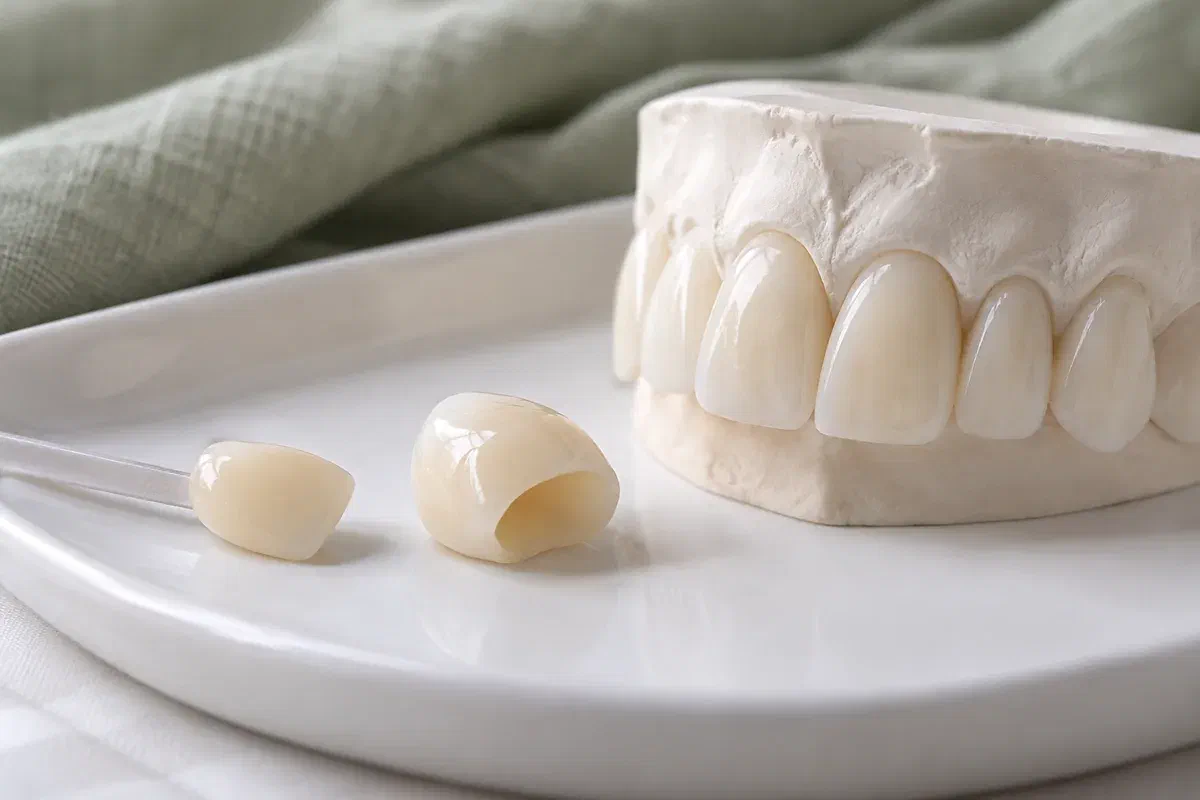
Illustrative tooth-coloured crown beside a front-tooth teaching model and shade sample
Where coordination matters most

Three situations that benefit from a wider view.

Tell us what you see, what you feel when you chew and what other treatment is on your mind. Together, those details help us separate cosmetic, structural and timing questions.

A crown that clashes with nearby teeth

Explain whether the colour, outline or a visible edge is the issue, and whether neighbouring teeth have changed. We examine the crown, the tooth and the gum first. Ask whether replacing only this crown will solve the issue or whether nearby teeth should be considered too.

A weakened tooth beside other planned work

Large fillings, cracks or root canal treatment reduce the tooth's strength. Mention them, along with any other fillings or crowns you expect to need. That helps us decide which tooth to treat first and whether decay elsewhere should be handled beforehand.

A darker tooth you want to brighten with the rest

If one tooth has changed colour, its cause should be understood before it is covered. Tell us about injuries, discomfort and timing. Once its condition is clear, we can plan whitening and any restoration in a sensible order.

Wanting every tooth to match is not, by itself, a reason to crown a sound tooth. Ask whether whitening or a smaller restoration would reach the same goal, and what preparation would mean for the tooth later.

The benefits of planning together

Fewer surprises, a more consistent result.

When a crown is appropriate, it can restore a strong chewing surface and help the tooth sit naturally with its neighbours. The material is chosen according to the tooth's location, what remains of it, your bite and the overall appearance you are working toward.

Planning also means being honest about limits. A crown can need adjusting, repairing or replacing in future, and the tooth beneath still relies on good care. Your plan should explain risks, upkeep and any uncertainty in the tooth's outlook.

Patient information: Canadian Dental Association — crown treatment

A clear case for this particular tooth

Ask what makes a crown suitable here, and look at the evidence with the dentist. The reasoning should be specific. You should also learn what a smaller repair could achieve and where it might not be enough.

A shade target set for the finished smile

Decide whether the crown is meant to blend with your teeth as they are or after planned whitening. Share your preferences on shape. Ask at which visit you will see the crown's colour and how a mismatch would be handled.

A timeline that ties everything together

Mention retainers, aligners, guards, whitening and neighbouring repairs. Each can change the order of treatment or how the crown fits. Building one timeline means the crown supports your other plans instead of working against them.

The order of treatment

Sequence first. Then each step in its place.

The steps depend on the tooth and what else is planned. Ask how many visits the crown alone will take, whether a temporary is needed, and how the sequence would adapt if more damage appeared.

  1. Assess the tooth and your other plans

    We review symptoms, previous work, gum health and X-rays, and ask about whitening, orthodontics or other restorations. The dentist considers whether the tooth is ready for a crown and explains any preliminary care, the risks and the alternatives.

  2. Map out the order and the material

    Together we decide what should happen first, such as whitening or orthodontic movement. We discuss materials, how much reshaping is needed, costs and the number of visits. Ask how comfort is handled and whether a temporary will be used.

  3. Prepare the tooth and record its shape

    When it is the crown's turn, the tooth is shaped and a scan or impression is sent for fabrication. A temporary crown protects it in the meantime and should be treated gently. Call us if it shifts or falls out.

  4. Try in and confirm before cementing

    Fit, contacts, bite and appearance are checked against the neighbouring teeth. Mention any concern about shade or outline now. Once the crown is in, we go over cleaning, appliance fit and when to return.

After the crown is in

Keep the crown and the plan on track.

Instructions for temporary and final crowns differ, and other treatment may add its own steps. Check with us if you are unsure what applies.

Clean the margin and the spaces beside it

Brush gently where crown meets gum and clean between teeth with the tool we suggest. That edge collects plaque, and decay can still start in the natural tooth below. Mention any bleeding that persists.

Tell us if the bite changes

If the crowned tooth hits first, aches or stays sensitive, let us know. This matters especially if other teeth are being treated or moved. The dentist can reassess the bite and the surrounding gum.

Check appliances and avoid damage

Retainers, aligners, whitening trays and guards may need adjusting after a crown is fitted, so bring them in. Avoid biting hard objects or using teeth as tools. Keep your reviews so the crown and its tooth can be monitored.

Patient information: Cleveland Clinic — crowns, risks, and care

Fitting the right treatment into the plan

What does this tooth need, and when?

For each option, ask how much tooth it would cover and how it fits with your other treatment. Appearance counts, along with saving natural structure, function and future care.

When the tooth needs full coverage

A crown coordinated with the rest of the smile

A crown may be the right choice if the tooth is weakened. Discuss material, margin and appearance, plus where it falls in the overall sequence. Understand the preparation and maintenance before agreeing to a permanent change.

When less coverage could work

A veneer or more limited repair

Depending on the damage, a veneer, onlay or bonded repair might fit the plan with less reshaping. Ask what it would achieve and how it would hold up. It will not be right in every case, but the comparison should be explained.

When the crown should wait

Whitening or orthodontics first

Sometimes other treatment needs to come first, or a tooth needs investigation before restoration. A sound tooth might not need coverage at all. Ask whether waiting until other work is done would give a better result.

Coordination questions

Planning a crown alongside everything else.

Ask why a crown is suggested, how it fits with other treatment and what it will need after fitting.

(905) 876-4488
Should a crown be made before or after orthodontic treatment?
Often after, so its shape and bite suit the final tooth positions. A temporary or interim restoration may protect the tooth in the meantime. Your orthodontist and dentist can coordinate timing.
Will my retainer still fit once I have a new crown?
It may need adjusting or remaking if the tooth’s shape changes. Bring the retainer to your fitting appointment so the fit can be checked.
Can I whiten my teeth after the crown is in place?
You can, but the crown will not lighten, so a mismatch may appear. If whitening is part of your plans, it is usually best done before the crown shade is chosen.
Is it better to crown neighbouring teeth together for a matching look?
Only if each tooth genuinely needs treatment. Healthy teeth should not be crowned just for symmetry. We can discuss options that help the teeth blend without unnecessary preparation.
How do I plan crown visits around family schedules in Caledon?
Ask for the full sequence at the start so you can book ahead. Grouping visits where it makes clinical sense, and booking the fitting soon after preparation, helps keep trips manageable.
If one crown needs replacing, should older crowns nearby be replaced too?
Not automatically. Each crown is assessed on its own condition. If shade differences are a concern, we can explain the options so you can decide.

Patient information: American Dental Association — whitening and existing restorations

Crown planning from Caledon

Bring the whole plan, not just the one tooth.

Contact our Bronte Street practice about a crown recommendation, an existing crown that clashes, or a tooth you want treated alongside other work. We will assess it, explain sensible alternatives and lay out an order of treatment, with appearance and care in view.

Whether a crown suits a tooth, and how much it must be prepared, depends on its condition. Aesthetic goals are balanced with structure, risks and maintenance.

Visit Milton Dental Clinic
Unit 1, 342 Bronte St. S, Milton, ON L9T 5B7
Get directions Clinic hours
Monday–Thursday
11am–7pm
Friday–Sunday
By appointment only

Areas we serve

  • Milton
  • Oakville
  • Mississauga
  • Georgetown
  • Halton Hills
  • Acton
  • Campbellville
  • Brampton
  • Burlington
  • Puslinch
  • Rockwood
  • Erin
  • Caledon
  • Etobicoke
  • Old Milton
  • Bronte Meadows
  • Timberlea
  • Dorset Park
  • Dempsey
  • Clarke
  • Beaty
  • Coates
  • Harrison
  • Scott
  • Willmott
  • Ford
  • Bowes
  • Cobden
  • Walker
  • Mountain View
  • Milton Heights
  • Hawthorne Village
  • Valley View
  • Fallingbrook
  • Nassagaweya
  • Trafalgar
  • Esquesing
  • Nelson
  • Brookville
  • Moffat
  • Glen Williams
  • Norval
  • Limehouse
  • Stewarttown
  • Ashgrove
  • Hornby
  • Silver Creek
  • Speyside
  • Scotch Block
  • North Oakville
  • River Oaks
  • Glen Abbey
  • West Oak Trails
  • Palermo
  • Bronte Creek
  • College Park
  • Joshua Creek
  • Uptown Core
  • Preserve
  • Iroquois Ridge
  • Lisgar
  • Meadowvale
  • Meadowvale Village
  • Churchill Meadows
  • Erin Mills
  • Central Erin Mills
  • Streetsville
  • East Credit
  • Creditview
  • Heartland
  • Sheridan
  • Mount Pleasant
  • Credit Valley
  • Huttonville
  • Churchville
  • Springbrook
  • Northwest Brampton
  • Bram West
  • Fletcher's Meadow
  • Fletcher's Creek South
  • Alton Village
  • Orchard
  • Millcroft
  • Headon Forest
  • Tansley
  • Brant Hills
  • Tyandaga
  • Kilbride
  • Lowville
  • Aberfoyle
  • Morriston
  • Arkell
  • Hillsburgh
  • Freelton
  • Carlisle
  • Waterdown
  • Flamborough
  • Mountsberg

How can we help?

Milton Dental Clinic

Have a question about your smile? Choose the option that works best for you.

For urgent dental concerns, please call.
Messages are reviewed during clinic hours.