

Illustrative patient and dental clinician discussing crown treatment with a tooth model
Cosmetic Dentistry

Cosmetic Crown Treatment in Etobicoke

Crown treatment usually takes more than one appointment, which matters when you are coming from Etobicoke. We focus on a thorough first assessment, a clear visit plan and sensible advice for the temporary stage, while still giving shade, shape and fit the attention they need.

Planning a crown from Etobicoke

Fewer trips. Better-prepared ones.

From the west end of Toronto, each dental visit takes a real chunk out of your day. That makes it worth knowing, before you start, how a crown usually unfolds: an assessment, a preparation appointment, often a temporary, and a fitting. Knowing the shape of the process lets you plan around it rather than react to it.

The clinical decision comes before the calendar, though. A crown covers a reshaped tooth with a custom restoration, and reshaping is permanent. Teeth that are cracked or heavily filled may truly need it. A tooth with only a cosmetic flaw may be better served by something smaller. It is fair to ask which of these describes your tooth.

At your first appointment we aim to gather what we need: the history of the tooth, images, your appearance goals and any recommendation you have already received. We then explain the choices and lay out a visit plan you can schedule around. If the tooth is painful or swollen now, call before travelling so we can advise.

Plan your crown visits with us
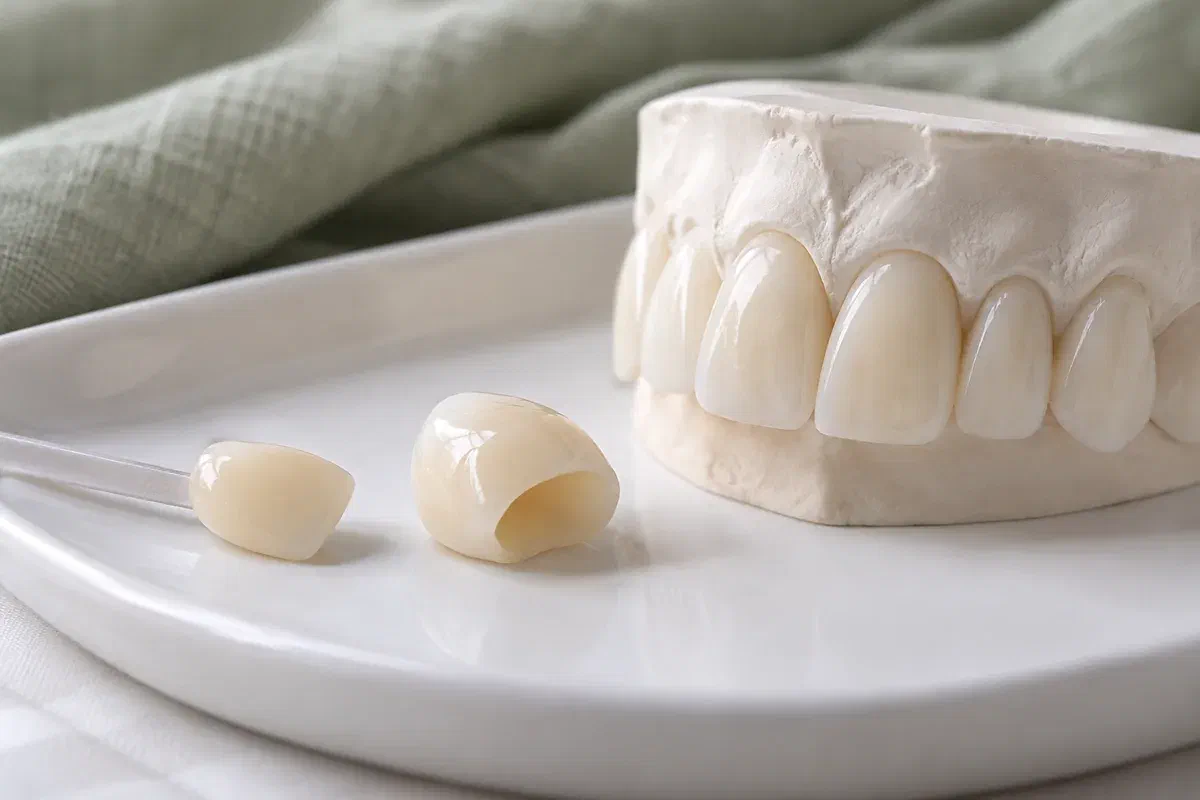
Illustrative tooth-coloured crown beside a front-tooth teaching model and shade sample
Reasons people make the trip

Most crown questions fall into one of three groups.

Before your visit, jot down what bothers you about the tooth's look and what you notice when chewing. Arriving with those notes helps us make the most of one appointment.

A crown that has stopped blending in

Describe whether the shade, contour or a visible edge is the issue, and roughly when it began. We examine the crown, the tooth and the gum before replacing anything. Ask whether a new crown would address the whole concern or only the part you can see.

A fragile tooth with a long repair history

Bring what you know about previous fillings, fractures or root canal care, plus any records from other offices. That history shapes the options. We can explain what a crown would be protecting and whether other treatment should happen first.

A tooth that has gone darker

Discolouration deserves an explanation before it is covered. Mention past knocks, discomfort and timing. The tooth may need testing, and once its condition is known we can talk about which cosmetic options fit.

A long trip is no reason to rush into coverage. A healthy tooth does not need a crown simply to change its colour, so ask about conservative options and what preparation would mean later.

When coverage is the right call

Worth the trip when it is worth doing.

For a tooth that does need broad coverage, a crown can give back a dependable chewing surface and be made to look natural beside your other teeth. Material choice reflects where the tooth sits, how much of it remains, your bite and the appearance you would like.

Go in knowing the limits. A crown may eventually need adjustment, repair or replacement, and the tooth inside still needs looking after. Your plan should be candid about risks, maintenance and any uncertainty in the tooth's future.

Patient information: Canadian Dental Association — crown treatment

A reason you can see and understand

Ask us to show you what makes this tooth suitable for a crown. The explanation should be about your tooth specifically. You should also hear what a smaller repair could manage and where it might fall short.

Appearance agreed before the final fit

Tell us your preferred shade and shape, and whether the crown should match your current teeth or other planned work. Ask how the look will be checked along the way. Matching often needs more than a single shade tab.

Timing that suits other treatment

Mention retainers, guards, whitening or other teeth needing care. These can change the order of visits. Combining or sequencing them thoughtfully can reduce the number of trips while keeping the plan sound.

A visit plan you can schedule

Know every stage before the first one begins.

The number of appointments depends on the tooth and the restoration. Ask for the full sequence, whether a temporary is needed, and what would change if more damage were uncovered.

  1. A thorough first appointment

    We review symptoms, previous dental work, gum health and X-rays, including any you bring. The dentist considers whether this tooth is strong enough to carry a crown. You hear the risks, any preliminary care required, and the case for a crown over other options.

  2. A plan you can book around

    We discuss materials, appearance and how much reshaping is needed, then confirm the estimate and the order of visits. Ask how comfort is managed and how long the temporary stage is likely to last, so you can book the fitting in advance.

  3. Preparation and records

    When you are ready, the tooth is shaped and a scan or impression captures its form for the lab. A temporary crown protects it meanwhile. Ask what to do if it loosens while you are far from the clinic.

  4. Fitting and final checks

    The dentist reviews fit, contacts, bite and appearance before cementing. Speak up about shade or outline while adjustments are still possible. Then we go over cleaning, short-term advice and when to call or come back.

Care between visits

Most of the work happens at home.

Temporary and final crowns come with different instructions. Keep them handy, and ask if you are unsure which ones apply.

Keep the margin clean

Brush gently along the gum line and clean between teeth using the method we recommend. Plaque gathers where crown meets tooth, and the tooth underneath can still decay. Let us know about lasting bleeding or difficulty cleaning.

Report bite problems early

If the crown touches first, hurts when you chew or stays sensitive, tell us rather than waiting for your next trip. Discomfort should be assessed, not endured. A phone call helps us decide whether you need to come in.

Protect the crown day to day

Avoid chewing ice, hard candy or using teeth as tools. Ask about a guard for grinding or sport, and have existing appliances checked. Keep your scheduled reviews so the crown and tooth can be monitored.

Patient information: Cleveland Clinic — crowns, risks, and care

Deciding how far to go

The right amount of treatment, not the most.

Ask how much tooth each option would cover and why. Appearance matters, and so do keeping natural structure, chewing comfort and the care you will need later.

When full coverage is justified

A crown made for the tooth and the smile

If the tooth's condition calls for a crown, discuss material, margin position and look, as well as the structural need behind it. Understand the preparation and future upkeep before agreeing to a permanent change.

When more of the tooth can stay

A smaller repair or a veneer

Depending on the damage, a limited restoration or a veneer might be a fair comparison, sometimes with fewer visits. Ask what it would achieve and whether it would be strong enough. It will not suit every tooth, but the reasoning should be clear.

When a crown is not the first step

Whitening, testing or waiting

Some concerns call for investigation or another treatment first. A healthy tooth may not need elective coverage at all. Ask whether a conservative approach is possible, or whether monitoring makes sense while you consider things.

Planning questions

Practical questions about distance, timing and care.

Ask why a crown is proposed, what the material can do and what follow-up the tooth will need.

(905) 876-4488
How many appointments does a crown usually take?
Often more than one: an assessment, a preparation visit and a fitting, sometimes with a review afterward. The exact number depends on the tooth. We will outline the sequence at the start so you can plan.
Can the assessment and preparation happen on the same day?
Sometimes, if the diagnosis is clear and you have had time to decide. In other cases, preliminary care or further thought is needed first. Ask whether combining visits is sensible for your tooth.
What should I do if my temporary crown comes off at home in Etobicoke?
Keep the temporary, avoid chewing on it and call us for advice. Do not use household glue. If there is severe pain or swelling and you cannot reach us, seek urgent care nearer to home.
Should I bring records from my regular dentist?
Yes, if you have them. Recent X-rays and notes about the tooth’s history help us plan, although we may still need our own examination.
Is a cosmetic crown handled differently from a crown for a damaged tooth?
The term mainly reflects appearance goals, but the restoration still covers a prepared tooth. Ask about both the structural reason and the planned colour and contour.
Could more work be needed under a crown that is being replaced?
Yes. Decay or damage may only become visible once the old crown is removed. Ask how such findings would be discussed and whether they could add a visit or change the estimate.

Patient information: American Dental Association — whitening and existing restorations

Etobicoke crown consultations

Make the first visit count.

Contact our Bronte Street practice to plan a crown consultation that gathers everything we need in one go. We will assess the tooth, explain reasonable alternatives and set out a visit plan, including appearance and care, before treatment begins.

Whether a crown suits the tooth, and how much preparation it needs, depends on that tooth. Appearance is weighed with structure, risks and ongoing care.

Visit Milton Dental Clinic
Unit 1, 342 Bronte St. S, Milton, ON L9T 5B7
Get directions Clinic hours
Monday–Thursday
11am–7pm
Friday–Sunday
By appointment only

Areas we serve

  • Milton
  • Oakville
  • Mississauga
  • Georgetown
  • Halton Hills
  • Acton
  • Campbellville
  • Brampton
  • Burlington
  • Puslinch
  • Rockwood
  • Erin
  • Caledon
  • Etobicoke
  • Old Milton
  • Bronte Meadows
  • Timberlea
  • Dorset Park
  • Dempsey
  • Clarke
  • Beaty
  • Coates
  • Harrison
  • Scott
  • Willmott
  • Ford
  • Bowes
  • Cobden
  • Walker
  • Mountain View
  • Milton Heights
  • Hawthorne Village
  • Valley View
  • Fallingbrook
  • Nassagaweya
  • Trafalgar
  • Esquesing
  • Nelson
  • Brookville
  • Moffat
  • Glen Williams
  • Norval
  • Limehouse
  • Stewarttown
  • Ashgrove
  • Hornby
  • Silver Creek
  • Speyside
  • Scotch Block
  • North Oakville
  • River Oaks
  • Glen Abbey
  • West Oak Trails
  • Palermo
  • Bronte Creek
  • College Park
  • Joshua Creek
  • Uptown Core
  • Preserve
  • Iroquois Ridge
  • Lisgar
  • Meadowvale
  • Meadowvale Village
  • Churchill Meadows
  • Erin Mills
  • Central Erin Mills
  • Streetsville
  • East Credit
  • Creditview
  • Heartland
  • Sheridan
  • Mount Pleasant
  • Credit Valley
  • Huttonville
  • Churchville
  • Springbrook
  • Northwest Brampton
  • Bram West
  • Fletcher's Meadow
  • Fletcher's Creek South
  • Alton Village
  • Orchard
  • Millcroft
  • Headon Forest
  • Tansley
  • Brant Hills
  • Tyandaga
  • Kilbride
  • Lowville
  • Aberfoyle
  • Morriston
  • Arkell
  • Hillsburgh
  • Freelton
  • Carlisle
  • Waterdown
  • Flamborough
  • Mountsberg

How can we help?

Milton Dental Clinic

Have a question about your smile? Choose the option that works best for you.

For urgent dental concerns, please call.
Messages are reviewed during clinic hours.