

Illustrative patient and dental clinician discussing crown treatment with a tooth model
Cosmetic Dentistry

Cosmetic Crown Treatment in Georgetown

After a root canal or a run of large fillings, a visible tooth can be both fragile and noticeably different in colour. From Georgetown, you can have the tooth assessed, learn what kind of coverage it really needs, and plan a crown's material, shade and outline so it sits naturally in your smile.

Restoring a weakened tooth, from Georgetown

Root canal done. What should cover the tooth now?

Teeth that have been through a lot often end up with little original enamel left: a root canal here, a broad filling there, perhaps a crack along the way. Such teeth can look duller than their neighbours and may be more prone to breaking. That combination is often when a crown enters the conversation.

A crown fits over the whole visible portion of a reshaped tooth. It can protect what is left and, with the right material and shade, restore a natural look. Still, not every treated tooth needs one, and the preparation is irreversible. Ask how much structure remains and whether an onlay or other partial restoration would be enough.

When you visit, our dentist reviews the tooth's history, takes the images needed and asks how you would like it to look. If your own dentist or a specialist has recommended a crown, we can explain the reasoning. If you have an older crown that no longer suits you, we can talk about that as well.

Talk about protecting a treated tooth
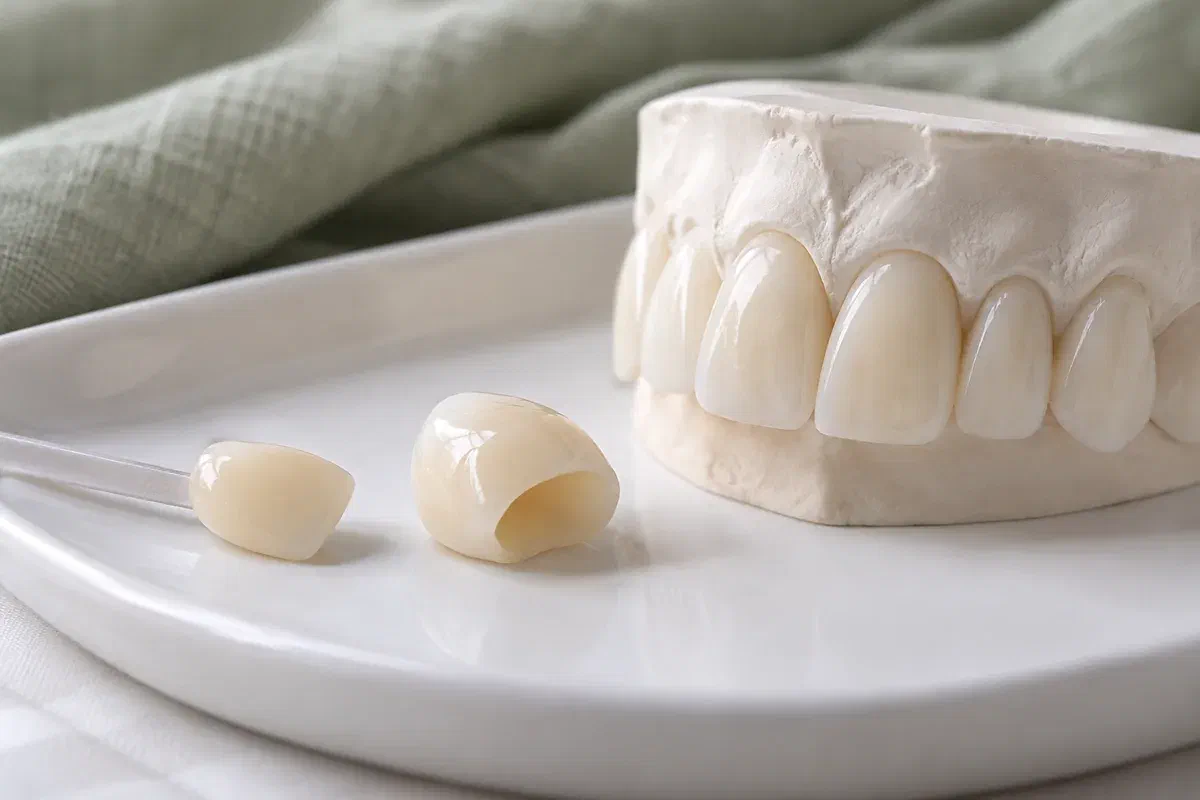
Illustrative tooth-coloured crown beside a front-tooth teaching model and shade sample
Typical reasons for a consultation

When a repaired tooth starts to worry you.

Let us know what you see and what you feel. A treated tooth that looks fine but feels weak, or one that feels solid but looks dark, points toward different priorities.

A crown that no longer looks right

Note whether the colour, the shape or a margin near the gum bothers you and when it became obvious. The tooth and gum need checking before a replacement is planned. Ask whether a new crown would fix the full concern, or only one aspect of it.

A root-canal-treated or heavily filled tooth

Tell us when the root canal was done, how big the fillings are and whether the tooth has cracked before. The amount of remaining structure guides the options. We can explain what job a crown would do and whether anything else must be completed first.

A tooth that has become darker or changed shape

Treated teeth sometimes darken over time, and worn edges can change a tooth's outline. Mention when you noticed the change and any discomfort. Once the tooth's condition is confirmed, we can discuss which appearance-focused choices make sense.

Not every root-canal-treated tooth needs full coverage, and a healthy tooth should not be crowned for looks alone. Ask about partial restorations and how preparation would affect the tooth later.

What coverage can give back

Protection for a fragile tooth, with a natural finish.

For a tooth that needs it, a crown can help hold the remaining structure together and give you a dependable surface for chewing. The material is chosen around the tooth's position, how much natural tooth is left, your bite forces and the look you want.

No crown lasts forever or makes the tooth problem-free. It may need adjusting, mending or eventually replacing, and the treated tooth still needs regular care. A good plan explains these risks and maintenance needs, along with any doubt about the tooth's outlook.

Patient information: Canadian Dental Association — crown treatment

An explanation grounded in your tooth

Ask what about this tooth calls for a crown: thin walls, a large filling, a crack, or its position in your bite. The explanation should be specific. You should also understand what an onlay or filling could offer and why it may not be enough.

A look you have helped choose

Describe the colour and shape you would like, and whether the crown should blend with your current teeth or upcoming cosmetic work. Ask how the appearance will be reviewed. A treated tooth that has darkened may influence material choice.

A crown that fits with other care

Tell us about retainers, guards, whitening plans or other teeth needing treatment. Each may change the order or the fit. Planning them together keeps the crown part of a coherent approach to your mouth.

The treatment path

First the foundation, then the finish.

The sequence depends on the tooth and the restoration chosen. Ask how many visits to expect, whether a temporary is part of the plan, and how decisions would be made if more damage appears.

  1. Review the treated tooth

    We look at symptoms, past root canal or filling work, gum health and current X-rays. The dentist judges whether the remaining structure can hold a crown and whether a post or core build-up may be needed. The risks and alternatives are explained.

  2. Settle on design and material

    Your appearance goals, suitable materials and the amount of reshaping are discussed. The estimate and the order of visits are confirmed. Ask how comfort will be looked after and whether you will have a temporary crown in between.

  3. Shape the tooth and take records

    If you go ahead, the tooth is prepared and impressions or a scan are made so the crown can be crafted. A temporary crown may protect it meanwhile and should be treated gently. Ask what to do if it dislodges.

  4. Fit, check and secure

    The crown's fit, contacts, bite and appearance are assessed before it is cemented. Mention any concern about shade or contour at this stage. Afterward, we go over cleaning, short-term advice and when to return or get in touch.

Caring for a crowned, treated tooth

The root canal and the crown both need you.

Your care instructions will depend on whether a temporary or final crown is in place. Ask if you are unsure which applies.

Keep the crown edge free of plaque

Brush gently at the gum line and clean between teeth with floss or a small brush. The point where the crown meets the tooth is vulnerable, and new decay there can affect a treated tooth. Tell us about any bleeding that does not settle.

Notice how it feels when you bite

Contact us if the tooth feels high, aches on chewing or becomes tender again. Do not assume it is something to live with. The dentist can review the bite, the treated tooth and the surrounding tissue.

Avoid the habits that break crowns

Treated teeth can be brittle, so avoid biting hard items or using them as tools. Ask about a night guard if you grind, and have appliances rechecked. Keep regular reviews so the crown and the tooth beneath can be monitored.

Patient information: Cleveland Clinic — crowns, risks, and care

Coverage options for treated teeth

Full crown, partial cover, or a different first step.

Ask how much tooth each restoration would cover and what protection it offers. Appearance counts, as do preserving structure, chewing comfortably and planning future care.

When the tooth needs complete coverage

A full crown designed for strength and looks

A crown may be advised when thin walls or extensive repair leave the tooth at risk. Talk about the material, the margin and the expected appearance, alongside the reason for coverage. Be sure you understand preparation and upkeep before you agree.

When enough tooth can stay uncovered

An onlay, filling or veneer

If the remaining structure is strong enough, a partial restoration might protect the tooth with less reshaping. Find out what it would achieve and how it would cope with your bite. It will not suit every tooth, but the comparison should be clear.

When a crown should wait

Further treatment or a review period

Some teeth need further assessment or treatment before any final restoration. A tooth with only a cosmetic concern may not need coverage. Ask whether a more conservative option, or a period of monitoring, would suit you better.

Questions from Georgetown

Crowns and root canals, explained.

Come with questions about why a crown is needed, what the material can achieve and what the tooth will require afterward.

(905) 876-4488
Does every tooth with a root canal need a crown afterward?
Not necessarily. Back teeth and teeth with little remaining structure often benefit from coverage, but some front teeth may be restored differently. The decision depends on the individual tooth.
What is a post or core build-up, and will I need one?
When a lot of tooth is missing, a build-up may be placed to give the crown something to hold onto. Whether you need one depends on how much structure remains. We will explain if it applies.
Why does my root-canal-treated tooth look darker than the others?
Treated teeth can change colour over time. Options include internal bleaching, a veneer or a crown, depending on the tooth’s condition. We can talk through which might suit you.
How long can I wait between a root canal and the crown?
Waiting too long can leave a weakened tooth at risk of cracking. Ask your treating dentist about timing, and contact us to plan the crown once the tooth is ready.
Can a crowned, root-canal-treated tooth still get decay?
Yes. The tooth structure at the crown’s edge can decay, even if the nerve has been treated. Daily cleaning and regular checkups help catch problems early.
Is a cosmetic crown chosen any differently from a standard crown?
The difference lies mainly in how much attention is given to appearance. The crown still covers a prepared tooth, so ask about both the structural reason and the planned shade.

Patient information: American Dental Association — whitening and existing restorations

Crown consultations for Georgetown

A treated tooth deserves a careful plan.

Reach out to our Bronte Street practice about a root-canal-treated tooth, a heavily filled one, or an existing crown you are unhappy with. We will examine it, explain realistic alternatives and discuss appearance and long-term care before treatment begins.

Crown suitability and preparation depend on the condition of the tooth. Appearance goals are balanced with structure, risk and future maintenance.

Visit Milton Dental Clinic
Unit 1, 342 Bronte St. S, Milton, ON L9T 5B7
Get directions Clinic hours
Monday–Thursday
11am–7pm
Friday–Sunday
By appointment only

Areas we serve

  • Milton
  • Oakville
  • Mississauga
  • Georgetown
  • Halton Hills
  • Acton
  • Campbellville
  • Brampton
  • Burlington
  • Puslinch
  • Rockwood
  • Erin
  • Caledon
  • Etobicoke
  • Old Milton
  • Bronte Meadows
  • Timberlea
  • Dorset Park
  • Dempsey
  • Clarke
  • Beaty
  • Coates
  • Harrison
  • Scott
  • Willmott
  • Ford
  • Bowes
  • Cobden
  • Walker
  • Mountain View
  • Milton Heights
  • Hawthorne Village
  • Valley View
  • Fallingbrook
  • Nassagaweya
  • Trafalgar
  • Esquesing
  • Nelson
  • Brookville
  • Moffat
  • Glen Williams
  • Norval
  • Limehouse
  • Stewarttown
  • Ashgrove
  • Hornby
  • Silver Creek
  • Speyside
  • Scotch Block
  • North Oakville
  • River Oaks
  • Glen Abbey
  • West Oak Trails
  • Palermo
  • Bronte Creek
  • College Park
  • Joshua Creek
  • Uptown Core
  • Preserve
  • Iroquois Ridge
  • Lisgar
  • Meadowvale
  • Meadowvale Village
  • Churchill Meadows
  • Erin Mills
  • Central Erin Mills
  • Streetsville
  • East Credit
  • Creditview
  • Heartland
  • Sheridan
  • Mount Pleasant
  • Credit Valley
  • Huttonville
  • Churchville
  • Springbrook
  • Northwest Brampton
  • Bram West
  • Fletcher's Meadow
  • Fletcher's Creek South
  • Alton Village
  • Orchard
  • Millcroft
  • Headon Forest
  • Tansley
  • Brant Hills
  • Tyandaga
  • Kilbride
  • Lowville
  • Aberfoyle
  • Morriston
  • Arkell
  • Hillsburgh
  • Freelton
  • Carlisle
  • Waterdown
  • Flamborough
  • Mountsberg

How can we help?

Milton Dental Clinic

Have a question about your smile? Choose the option that works best for you.

For urgent dental concerns, please call.
Messages are reviewed during clinic hours.