

Illustrative patient and dental clinician discussing crown treatment with a tooth model
Cosmetic Dentistry

Cosmetic Crown Treatment in Old Milton

Dental work placed decades ago does not always age the way your natural teeth do. For crowns that have outlived their looks, and teeth that have been patched more than once, we examine what lies underneath before planning shade, shape and fit with you.

Older dental work in Old Milton

What happens when yesterday's crown no longer fits today's smile?

Plenty of people in Milton's historic downtown carry dental work that has been in place for a long time. A crown fitted twenty years ago may have been a good match then. Since that time, the natural teeth around it may have darkened or lightened, gums may have shifted, and the crown can start to look like a visitor in your smile.

Replacing it is a real decision rather than a simple swap. The old crown covers a tooth that was prepared once already, and that tooth may hold surprises: decay at the edge, a crack, or a large filling beneath. Because crown preparation cannot be undone, ask why another full crown is the suggestion and whether a narrower approach could serve instead.

For anyone coming from Old Milton, our Bronte Street practice is close by, and we begin with an honest look at that tooth and at your own priorities. Some people mainly want a closer colour match. Others have a chipped front tooth or a crown recommendation they would like explained. Either way, the options come first and the decision follows.

Ask about replacing an older crown
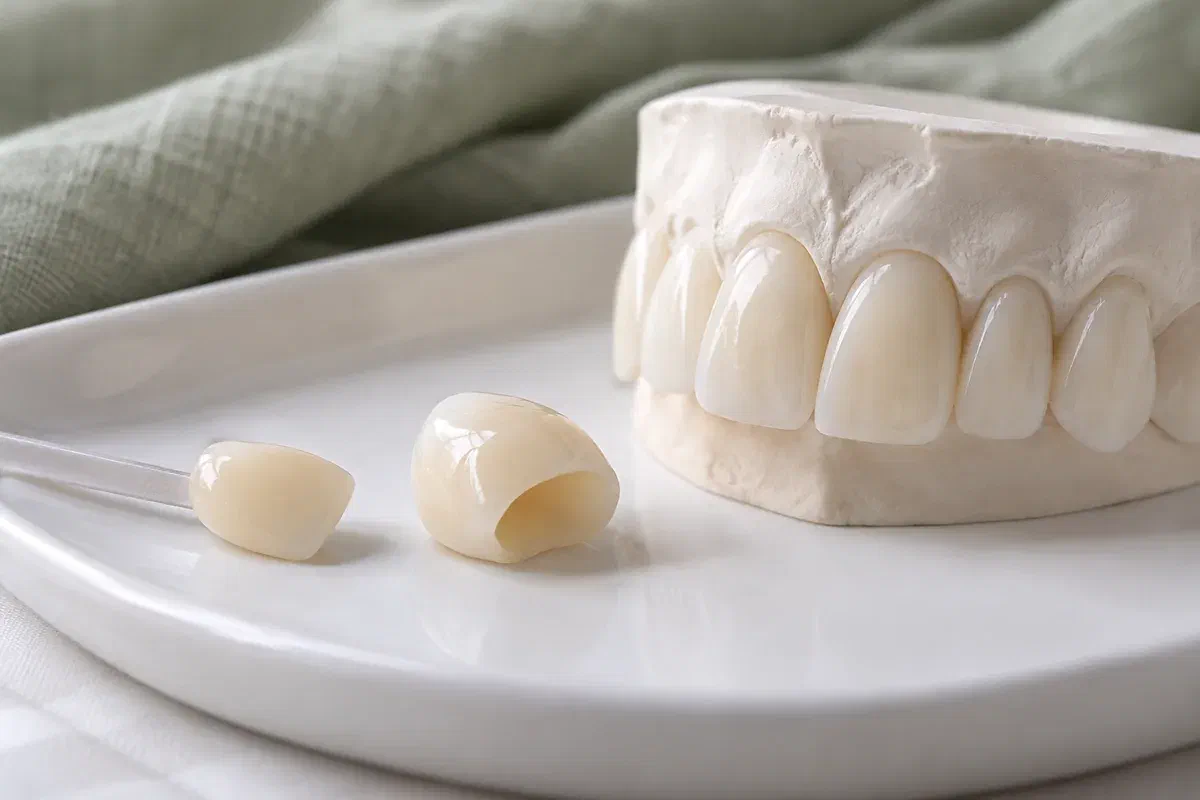
Illustrative tooth-coloured crown beside a front-tooth teaching model and shade sample
Signs worth raising at your visit

Is this about looks, strength, or both?

Mention what you see and what you feel. A crown that looks fine but catches floss, or a tooth that looks odd but feels perfectly normal, each point toward a different kind of conversation.

An old crown with a grey edge or flat finish

Tell us whether the issue is shade, the shape, or a line showing at the gum, and how long it has been noticeable. Before anyone plans a replacement, the tooth and surrounding gum need a proper look. Ask whether a new crown would fix the whole problem or only the visible part.

A tooth rebuilt again and again

Years of fillings, a past break or a root canal all leave their mark on how much tooth remains. Share that history. It shapes which restorations are possible, what job a crown would actually do, and whether something else should be treated before a final crown is made.

A tooth that has slowly turned darker

A colour change deserves an explanation before it is simply covered up. Tell us about any old injury, any ache, and when you first noticed it. The tooth may need checking, and once its health is clear we can talk about suitable cosmetic choices.

A healthy tooth is not automatically a candidate for a crown just because its colour bothers you. Ask about more conservative options and what preparing that tooth would mean for its care in later years.

What a new crown can offer

One plan for the surface, the shape and the shade.

When coverage is the right call, a well-designed crown can give you a sturdy surface to chew on and a more natural look. Materials are chosen according to the tooth's position, the remaining structure, the bite forces on it and the appearance you have in mind.

Every crown has limits worth knowing about. It may later need adjustment, repair or replacement, and the tooth inside still requires care. Your plan should cover the risks, the maintenance involved and any doubt about how the tooth will hold up.

Patient information: Canadian Dental Association — crown treatment

A reason tied to your own tooth

We should be able to show you why a crown suits this tooth, using images or what we see in the mouth. The reasoning belongs to your situation, not to a habit of choosing crowns. You should also learn what a smaller repair could manage and where it might fall short.

A say in the finished look

Describe the shade and shape you would like, including whether you want to match your current teeth or plan around other cosmetic work. Ask how the look will be checked. A natural match often depends on more than a single shade tab.

Care that fits around neighbouring teeth

Let us know about retainers, guards, planned whitening or other fillings and crowns. Each can affect the order of treatment or the fit. Talking them through early keeps your crown part of a joined-up plan instead of a stand-alone cosmetic change.

The steps, in order

Check the foundations, then polish the details.

The order of visits depends on the tooth and the restoration chosen. Ask how many appointments are likely, whether a temporary will be placed, and what the plan is if extra damage appears once the old crown is off.

  1. Look at the tooth and talk through alternatives

    We review your symptoms, the history of the tooth, the gums and any X-rays. The dentist weighs whether the tooth can carry a new crown. You will hear about any treatment needed first, the risks, and why a crown is favoured over the other reasonable paths.

  2. Choose the material and agree on the plan

    We discuss your cosmetic goals, the materials that would suit, and how much the tooth needs to be shaped. The estimate and sequence are confirmed. Ask how your comfort will be looked after and whether a temporary will cover the tooth in the meantime.

  3. Remove the old work and record the fit

    If you decide to proceed, the old crown is taken off, the tooth is prepared, and scans or impressions are made for the new one. A temporary crown needs some extra care until the final one is ready. Ask what to do should it loosen.

  4. Try the crown before it is fixed in place

    Fit, contacts, bite and appearance are all checked. Mention any doubts about the colour or outline before it is cemented. Afterward, we go through cleaning, any short-term advice and when to reach out or return.

Looking after it for years

A new crown asks for steady, ordinary care.

Your instructions will depend on whether you have a temporary or a permanent crown. If you are not certain which advice applies, give us a call.

Brush and clean right to the edges

Brush gently along the gum line and clean between the teeth with the method we suggest. The margin where crown meets tooth is a common trouble spot, and the natural tooth can still decay. Tell us if the gum keeps bleeding or cleaning is difficult.

Notice anything odd in your bite

If the crowned tooth touches first, aches when you bite, or stays sensitive for longer than you expected, let us know. A new crown should not be a reason to put up with discomfort. We can check the bite, the tooth and the surrounding gum.

Guard against avoidable breaks

Avoid cracking nuts or hard candy on it, and do not use it to open things. Ask about a night guard if you grind, and have partial dentures or retainers checked for fit. Regular reviews help us monitor both the crown and the tooth beneath.

Patient information: Cleveland Clinic — crowns, risks, and care

Weighing the alternatives

More coverage is not always better coverage.

Ask how much tooth each option would cover and why it is suggested. Looks matter, and so do keeping natural structure, chewing well and planning for future care.

When full coverage is warranted

A replacement crown designed for your smile

A new crown may make sense when the tooth's condition supports it. Talk about the material, where the edge will sit and the look you want, alongside the structural reason. Be clear on preparation and upkeep before agreeing to a permanent change.

When some of the tooth can stay exposed

A smaller filling, onlay or veneer

Depending on the damage and how much tooth is left, a more limited restoration or a veneer may be worth a look. Ask what it would achieve and whether it would be strong enough. Less coverage will not suit every tooth, but the comparison should be explained.

When a crown can wait

Whitening, investigation or simply watching

Some cosmetic worries need tests or a different approach rather than coverage straight away. A healthy tooth may not need an elective crown at all. Ask whether a gentler option is possible or whether monitoring makes sense while you think it over.

Old Milton crown questions

Straight answers about long-standing dental work.

Bring your questions about why a crown is suggested, what the chosen material can do, and what the tooth will need once the work is done.

(905) 876-4488
My crown is decades old and still feels fine. Does it need replacing just because it looks dated?
Not necessarily. If the crown fits well and the tooth is healthy, replacement is a cosmetic choice rather than a requirement. We can check the margins and the tooth so you can decide with the full picture.
What might the dentist find once an old crown is taken off?
Sometimes the tooth beneath has decay, a crack or an old filling that needs attention. These findings can change the plan. Ask how we would talk you through any surprises and how they could affect the estimate.
Can several old crowns be replaced at the same time to match each other?
It can be possible, depending on the health of each tooth and your goals. Planning them together helps with a consistent shade and shape. We can discuss whether doing them together or in stages suits your situation.
Why is there a dark line at the gum around my older crown?
Some older crowns have a metal layer that can show as the gum changes, and gum recession can expose more of the tooth. We can look at the cause and explain whether replacement or another option would help.
If I whiten my natural teeth, will my old crown become lighter too?
Whitening does not change crown material the way it changes enamel. If you want both, the usual approach is to plan the order first. We can explain how matching would work for your mouth.
Is a crown on a front tooth made differently from one on a back tooth?
Material and design depend on where the tooth sits, the forces on it and how visible it is. We can explain which materials suit your particular tooth and why.

Patient information: American Dental Association — whitening and existing restorations

Crown care near Old Milton

Bring in the crown you have been meaning to ask about.

Reach out to our Bronte Street office about an existing crown, a tooth that keeps needing repair, or a recommendation you would like a second look at. We will examine the tooth, explain reasonable alternatives, and walk through the cosmetic and care questions before you decide.

How much a tooth must be prepared, and whether it suits a crown at all, depends on that tooth. Appearance goals are balanced with structure, risks and future upkeep.

Visit Milton Dental Clinic
Unit 1, 342 Bronte St. S, Milton, ON L9T 5B7
Get directions Clinic hours
Monday–Thursday
11am–7pm
Friday–Sunday
By appointment only

Areas we serve

  • Milton
  • Oakville
  • Mississauga
  • Georgetown
  • Halton Hills
  • Acton
  • Campbellville
  • Brampton
  • Burlington
  • Puslinch
  • Rockwood
  • Erin
  • Caledon
  • Etobicoke
  • Old Milton
  • Bronte Meadows
  • Timberlea
  • Dorset Park
  • Dempsey
  • Clarke
  • Beaty
  • Coates
  • Harrison
  • Scott
  • Willmott
  • Ford
  • Bowes
  • Cobden
  • Walker
  • Mountain View
  • Milton Heights
  • Hawthorne Village
  • Valley View
  • Fallingbrook
  • Nassagaweya
  • Trafalgar
  • Esquesing
  • Nelson
  • Brookville
  • Moffat
  • Glen Williams
  • Norval
  • Limehouse
  • Stewarttown
  • Ashgrove
  • Hornby
  • Silver Creek
  • Speyside
  • Scotch Block
  • North Oakville
  • River Oaks
  • Glen Abbey
  • West Oak Trails
  • Palermo
  • Bronte Creek
  • College Park
  • Joshua Creek
  • Uptown Core
  • Preserve
  • Iroquois Ridge
  • Lisgar
  • Meadowvale
  • Meadowvale Village
  • Churchill Meadows
  • Erin Mills
  • Central Erin Mills
  • Streetsville
  • East Credit
  • Creditview
  • Heartland
  • Sheridan
  • Mount Pleasant
  • Credit Valley
  • Huttonville
  • Churchville
  • Springbrook
  • Northwest Brampton
  • Bram West
  • Fletcher's Meadow
  • Fletcher's Creek South
  • Alton Village
  • Orchard
  • Millcroft
  • Headon Forest
  • Tansley
  • Brant Hills
  • Tyandaga
  • Kilbride
  • Lowville
  • Aberfoyle
  • Morriston
  • Arkell
  • Hillsburgh
  • Freelton
  • Carlisle
  • Waterdown
  • Flamborough
  • Mountsberg

How can we help?

Milton Dental Clinic

Have a question about your smile? Choose the option that works best for you.

For urgent dental concerns, please call.
Messages are reviewed during clinic hours.