
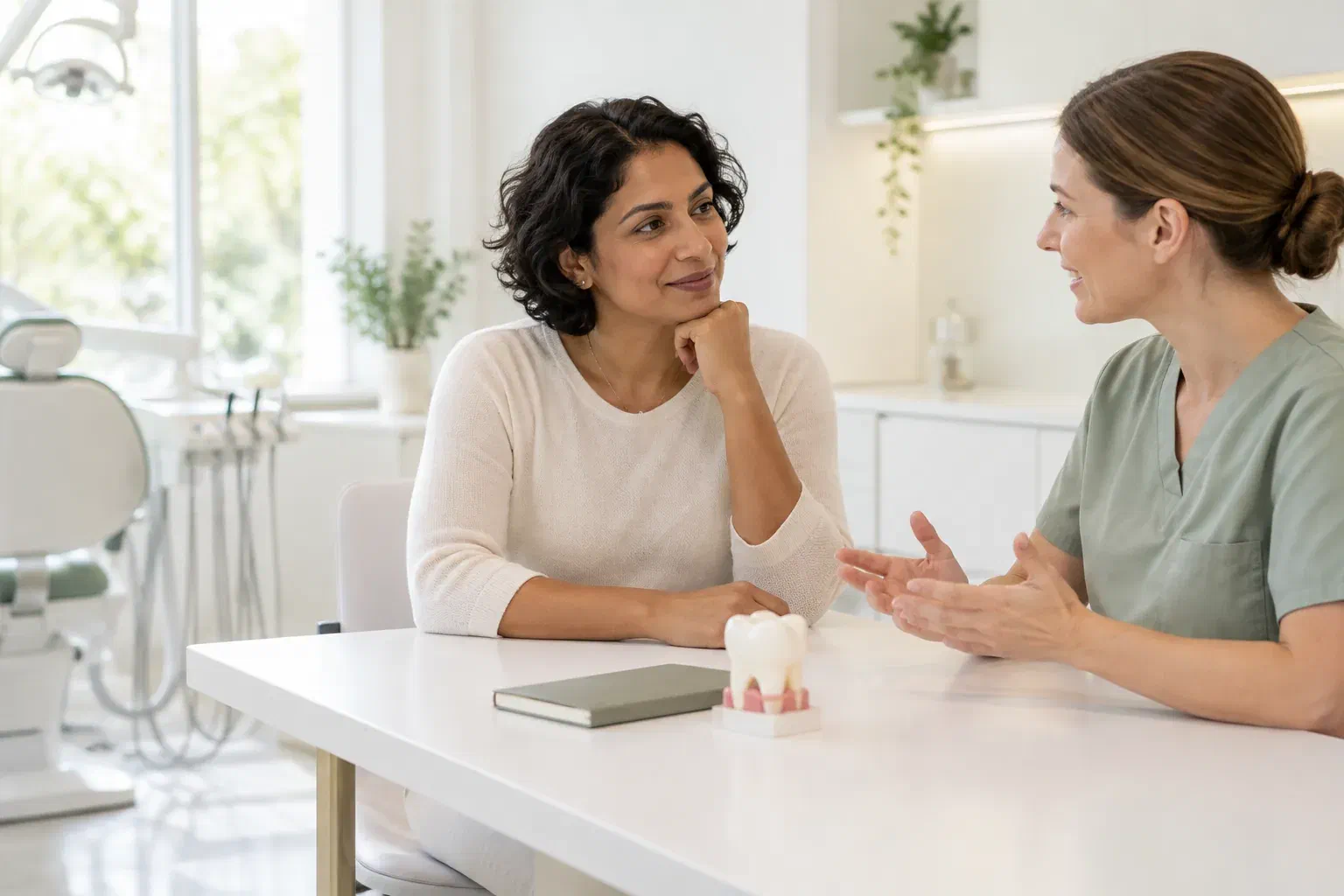
Illustrative patient sharing smile goals with a dental clinician at a consultation table
Cosmetic Dentistry

Cosmetic Dental Consultation in Campbellville

One tooth that has turned greyer or more yellow than the rest is a common reason to ask about cosmetic care. For households in Campbellville, this cosmetic dental consultation finds out why it changed, then compares suitable options, their limits, and the care they would need.

When one tooth stands apart

Find out why that tooth changed colour before choosing a fix.

It often happens slowly. A front tooth looks a shade darker in a photo, then you notice it in the rear-view mirror, and soon it is all you see. Sometimes there was a knock years ago; sometimes there is no obvious reason. Either way, a consultation is a sensible next step.

The cause shapes the options. Staining on the outer enamel behaves differently from discolouration inside a tooth, and a tooth that has had a root canal or an old filling may darken for its own reasons. Some causes need dental care before cosmetics. Knowing the reason tells you whether cosmetic treatment, other care, more records, or no change is right.

Rural households around Campbellville often fold appointments into a single trip into town, so say what scheduling suits you. Mention, too, whether you want the tooth to blend quietly, how carefully costs need planning, and whether you would rather avoid altering healthy enamel. The aim is a decision you understand fully.

Ask about a tooth that has darkened
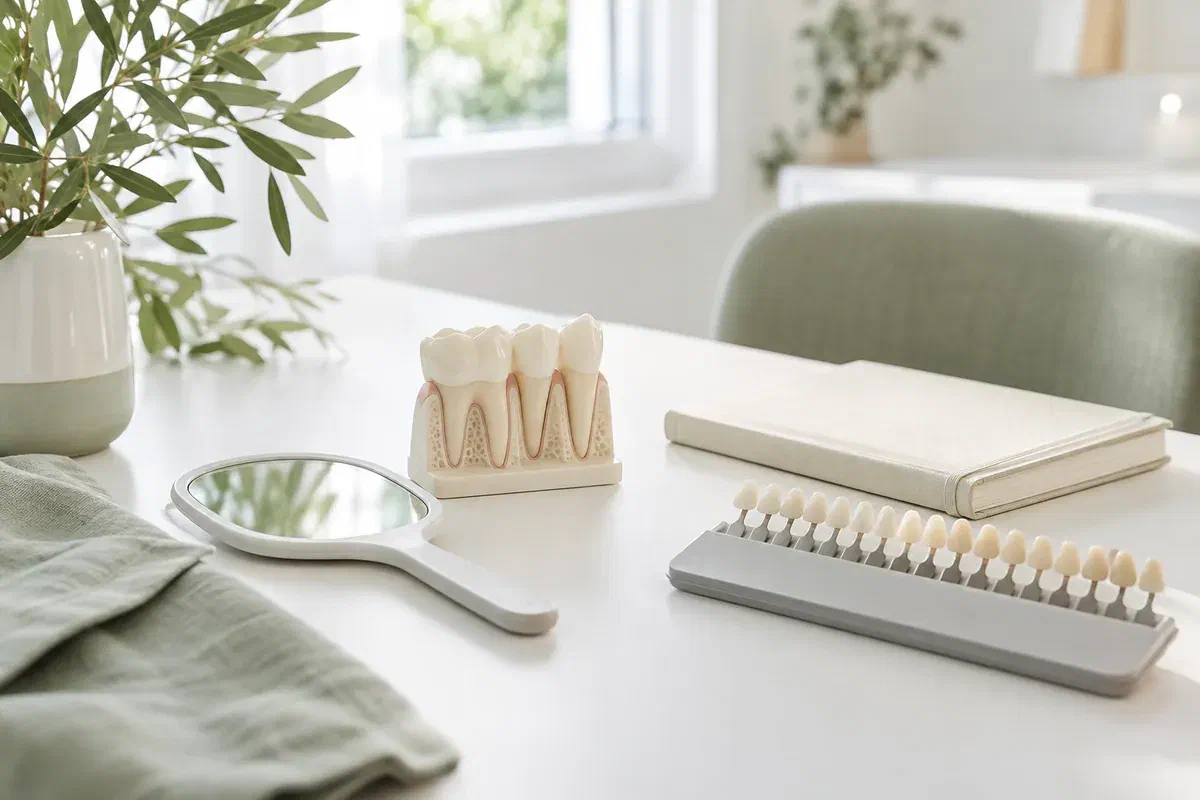
Illustrative consultation table with a teaching model, mirror, notebook, and tooth-shade guide
Useful clues to share

When it changed, how it feels, and what you hope for

Simple words are enough. Describe which tooth looks different, roughly when you first noticed, and any limits on time or cost the options will need to respect.

The tooth and the shade that bother you

Show which tooth stands out and whether it looks grey, yellow, or patchy. If other teeth concern you too, say which matters most. A photo from before the change can help, giving the clinician a sense of how the tooth once looked.

Old knocks, treatment, and new sensations

Mention any past injury to the tooth, even one from childhood, along with root canals, fillings, crowns, or braces. Report tenderness, swelling, or sensitivity. These details can point to the cause and may mean health care comes before any cosmetic step.

Trips, timing, and ongoing care

Say how often you can come in and whether combining visits would help. Be clear about how much upkeep you would take on, and ask about fees without any pressure to commit. Practical limits make a plan easier to judge when they are known early.

A consultation does not oblige you to start elective treatment. When booking, mention the darkened tooth, and ask whether radiographs or other checks might be suggested during the visit.

Why the cause is worth knowing

Answers about the tooth, not just its colour

Separating the result you want from the method helps here. A darker tooth might be lightened, covered, or treated in another way depending on what caused the change. Each possibility carries its own limits, preparation, upkeep, and potential impact on how it matches nearby teeth.

Some answers need further information. The clinician might want X-rays, tests on the tooth, or a specialist's opinion before recommending a cosmetic option. Ask what is still uncertain, so you understand which suggestions are firm and which depend on those results.

Patient information: Cleveland Clinic — cosmetic dentistry options and considerations

Health findings kept distinct from appearance choices

A colour change can be purely cosmetic, or it can reflect something inside the tooth that needs care. Ask which is which in your case. That distinction explains why a question about shade might lead first to another kind of assessment.

Less involved options considered fairly

Ask whether a conservative approach, a staged plan, or simply monitoring the tooth would be reasonable. The discussion should explain what each choice gains and what it leaves as it is. The most involved option is not automatically the best.

A plan that makes sense to you

Explain the proposed steps back in your own words and ask about anything unclear. Find out which changes are permanent, what might need redoing later, and who provides each part. Notes can help when you think it through at home.

At the appointment

History, a careful look, options, and a clear next decision

Time is made for your questions as well as the clinical review. Before the day, ask what the visit covers and whether imaging or tests on the tooth may be needed.

  1. Explain the change and its history

    Describe when the tooth started to look different, any injury you recall, and what you would like it to look like. Cover medical history, medications, and earlier dental work. If a date matters, say so, so timing can be discussed without rushing.

  2. Examine the tooth and its surroundings

    The clinician looks at the discoloured tooth, the gums around it, nearby restorations, and your bite. Radiographs or other tests may be suggested to understand what is happening inside. Ask what each one is meant to reveal.

  3. Weigh the options for colour and health

    Discuss what each reasonable approach would achieve, how the tooth would be prepared, and how the result is maintained. Find out what could go wrong, how many trips each choice would need, what other routes exist, and the likely cost. Should a referral come up, ask what that clinician would assess.

  4. Decide on the next step together

    You may need further assessment, time to consider, or a suitable plan. Be sure you know what has been agreed before you head home. Ask how to send questions later and whether the tooth itself needs any care while you decide.

After the visit

Keep an eye on the tooth and think it over.

Much of what follows is reviewing information and setting priorities. Continue normal brushing and flossing, and follow any advice about the darkened tooth or other findings.

Go through the proposal and estimate

Check whether the proposal covers only the dark tooth or others as well, how any stages link, and what might add cost. Ask about long-term maintenance and how well the result is likely to match over time. Clarify anything vague before relying on the figures as a full plan.

Note questions as they occur

Questions often come up on the drive home or days later. Write down anything about preparation, shade, comfort, or timing. A short list helps a follow-up conversation cover everything in one go.

Share news of other care or appliances

If an endodontist or another dentist has seen this tooth, or you sleep in a night guard, the team will want to know. Avoid starting whitening products on your own while a coordinated plan is being considered, since a single dark tooth may respond differently. Ask how sequence affects shade.

Possible outcomes

Lighten, cover, treat, or simply watch

The consultation may lead to a focused plan, a staged approach, or reassurance that the tooth is healthy and can be left as it is. You should understand the reasoning behind whichever step you take.

When the cause is understood and one change fits

A targeted cosmetic option for one tooth

A single discoloured tooth may have a focused solution once the cause is known. Ask what it would change and how it would be matched to its neighbours. You should hear how that tooth would be prepared and looked after, and the work should stay with that tooth unless you ask otherwise.

When health needs attention before colour

Care for the tooth itself first

If the colour change reflects a problem inside the tooth, gum concern, or structural issue, that may need treatment first. You should learn what needs settling first and roughly when the colour question can return. Any further test ought to answer something specific.

When the tooth is stable and you are unsure

Monitoring, a second opinion, or no change

Compare the advice with your priorities and seek another opinion if it would help. Ask whether the tooth should be checked again later. Leaving a stable, healthy tooth as it is can be a reasonable choice.

Questions about a darkened tooth

What people ask when one tooth stands out

Use the consultation to make the decision clearer. Questions about fees, how much treatment is involved, and whether waiting is reasonable are all welcome.

(905) 876-4488
Why would just one tooth turn darker than the others?
Possible reasons include an old injury, changes inside the tooth, previous treatment, or staining around a filling. The cause is not always obvious from the outside, which is why an examination and sometimes X-rays are helpful.
Will whitening lighten a single dark tooth?
Surface whitening may not match a tooth that has darkened from inside, and it generally does not change crowns or fillings. The clinician can explain whether whitening, another approach, or a combination might suit your tooth.
Can a tooth that has had a root canal be made to match again?
There are options to discuss, depending on the tooth’s condition and existing restoration. Ask how each approach would affect the tooth and how closely it is likely to match the neighbouring teeth.
Is a darkened tooth something that needs attention soon?
It can be worth checking promptly, especially after an injury or if there is tenderness or swelling. The clinician can explain whether the colour change suggests a health concern or is mainly cosmetic.
Can I book my consultation alongside another family member's appointment?
Ask the team when you call. Arranging visits close together may suit a household that travels into town together, depending on availability.
Should I bring an old photo showing the tooth before it changed?
Yes, if you have one. It can help show how much the shade has changed and when. The clinician will use it as a reference while assessing the tooth as it is now.
Arranging a visit from Campbellville

One tooth, one conversation, a clearer answer

Get in touch with our Bronte Street practice to book a cosmetic dental consultation. Mention the tooth that has changed colour, any past injury or tenderness, and the scheduling and priorities you would like considered as next steps are explored.

A consultation explains options and does not guarantee a particular treatment will suit your tooth. Ask about the visit's scope and fees when booking.

Visit Milton Dental Clinic
Unit 1, 342 Bronte St. S, Milton, ON L9T 5B7
Get directions Clinic hours
Monday–Thursday
11am–7pm
Friday–Sunday
By appointment only

Areas we serve

  • Milton
  • Oakville
  • Mississauga
  • Georgetown
  • Halton Hills
  • Acton
  • Campbellville
  • Brampton
  • Burlington
  • Puslinch
  • Rockwood
  • Erin
  • Caledon
  • Etobicoke
  • Old Milton
  • Bronte Meadows
  • Timberlea
  • Dorset Park
  • Dempsey
  • Clarke
  • Beaty
  • Coates
  • Harrison
  • Scott
  • Willmott
  • Ford
  • Bowes
  • Cobden
  • Walker
  • Mountain View
  • Milton Heights
  • Hawthorne Village
  • Valley View
  • Fallingbrook
  • Nassagaweya
  • Trafalgar
  • Esquesing
  • Nelson
  • Brookville
  • Moffat
  • Glen Williams
  • Norval
  • Limehouse
  • Stewarttown
  • Ashgrove
  • Hornby
  • Silver Creek
  • Speyside
  • Scotch Block
  • North Oakville
  • River Oaks
  • Glen Abbey
  • West Oak Trails
  • Palermo
  • Bronte Creek
  • College Park
  • Joshua Creek
  • Uptown Core
  • Preserve
  • Iroquois Ridge
  • Lisgar
  • Meadowvale
  • Meadowvale Village
  • Churchill Meadows
  • Erin Mills
  • Central Erin Mills
  • Streetsville
  • East Credit
  • Creditview
  • Heartland
  • Sheridan
  • Mount Pleasant
  • Credit Valley
  • Huttonville
  • Churchville
  • Springbrook
  • Northwest Brampton
  • Bram West
  • Fletcher's Meadow
  • Fletcher's Creek South
  • Alton Village
  • Orchard
  • Millcroft
  • Headon Forest
  • Tansley
  • Brant Hills
  • Tyandaga
  • Kilbride
  • Lowville
  • Aberfoyle
  • Morriston
  • Arkell
  • Hillsburgh
  • Freelton
  • Carlisle
  • Waterdown
  • Flamborough
  • Mountsberg

How can we help?

Milton Dental Clinic

Have a question about your smile? Choose the option that works best for you.

For urgent dental concerns, please call.
Messages are reviewed during clinic hours.