
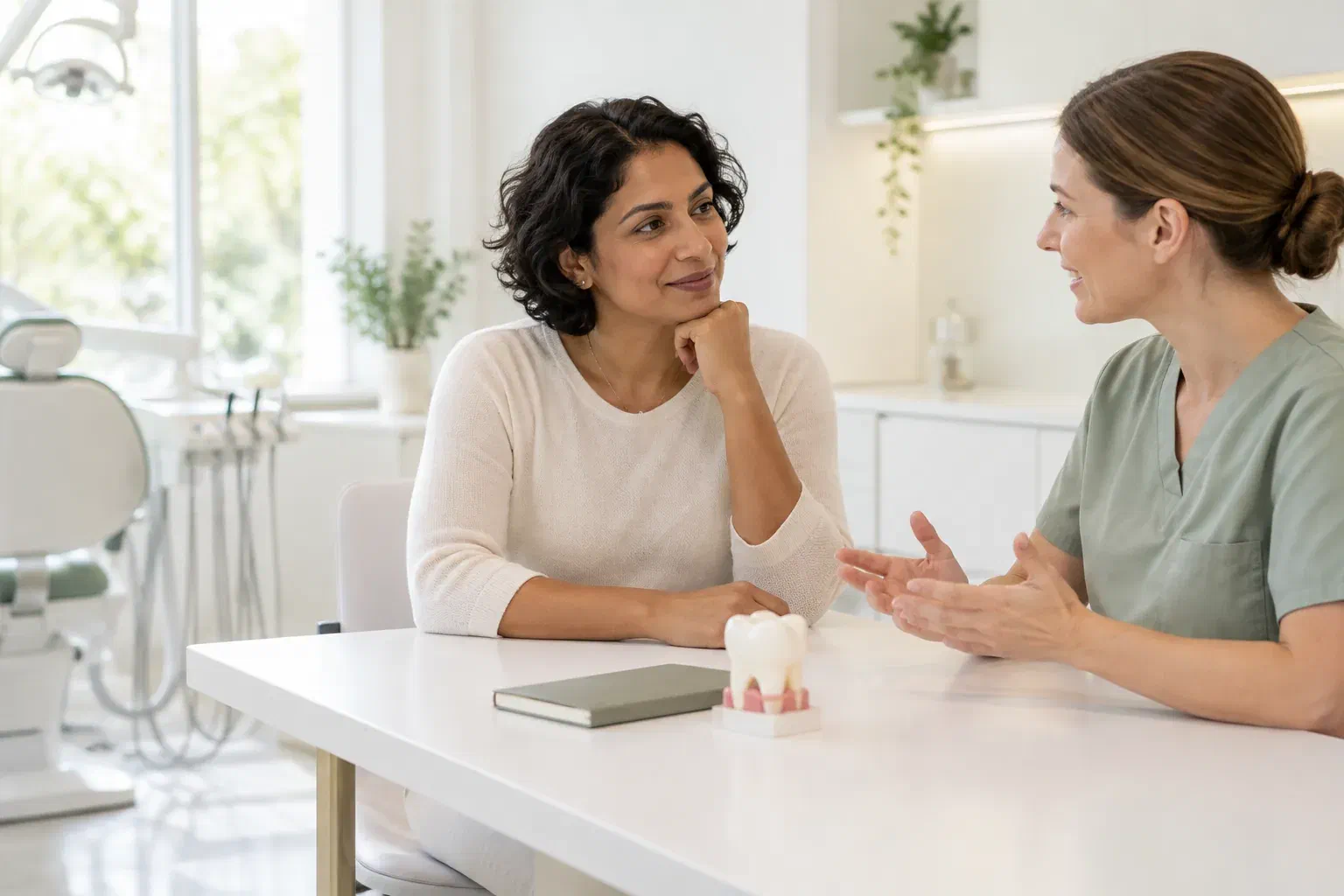
Illustrative patient sharing smile goals with a dental clinician at a consultation table
Cosmetic Dentistry

Cosmetic Dental Consultation in Erin

A cosmetic change is only part of the story; living with it is the rest. For anyone coming from Erin or Hillsburgh, a cosmetic dental consultation looks at your oral health, the options that suit you, and what each would ask of your daily routine, diet, and future visits.

Thinking beyond the first appointment

Choose a change you can live with every day.

Morning coffee, an evening cup of tea, a habit of grinding at night: daily life affects how teeth look and how any cosmetic work holds up. A consultation is a good time to talk about the change you want and the routine it would need to fit into, from brushing to future visits.

Different causes call for different care. Surface staining from food and drink, colour from within a tooth, and an older filling that has darkened respond in different ways, and each option brings its own maintenance. Understanding the cause shows whether a cosmetic step, other dental treatment, more information, or no change suits you best.

Many rural households around Erin plan their dental visits carefully, so it helps to know how often an option would need checking or touching up. Say whether you want a gentle improvement, how costs fit in, and how you feel about permanent changes. A good consultation weighs the long run, not just the first result.

Talk about options that suit your routine
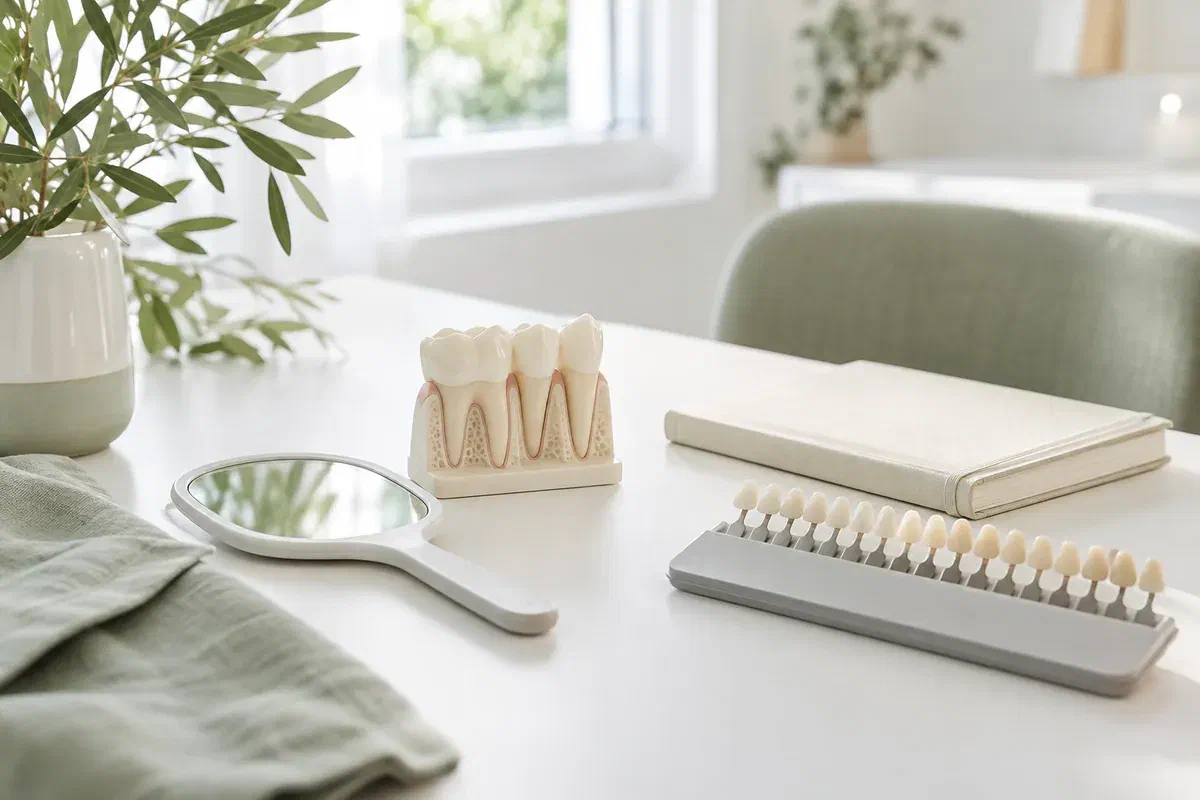
Illustrative consultation table with a teaching model, mirror, notebook, and tooth-shade guide
Things to tell the clinician

Your goal, your habits, and how often you can come in

There is no need for dental terms. Describe what you notice, the daily habits that might affect it, and any limits on travel, time, or budget.

The change you have in mind

Point to the tooth or area and say which concern matters most if there are several. A photo can help explain a shade or shape you prefer. It is a guide to your taste, while your own teeth, gums, and bite decide what is realistic.

Habits, symptoms, and past dental work

Mention coffee, tea, smoking, grinding, or clenching, along with sensitivity, pain, bleeding, or recent injury. Share what you know about fillings, crowns, braces, or a night guard. These details affect which options are durable for you and what should happen first.

Upkeep and visits you can manage

Explain how often you could realistically return for checks or touch-ups, and how much extra daily care you would take on. Fees are welcome to discuss, without pressure to agree that day. Long-term demands are easier to judge when raised early.

Coming in to talk is not the same as agreeing to treatment. When booking, ask what the appointment includes and whether additional records or a full exam might be recommended.

What the conversation should give you

A comparison that includes the years after treatment

Treating the goal and the method as separate questions helps you compare more fairly. A tooth that looks dull might be approached in several ways, and they can differ in durability, stain resistance, and how often they need attention. Each also has limits, preparation, and effects on neighbouring teeth.

Some answers may depend on more information. A firm recommendation could need a full exam, radiographs, treatment of gum or decay concerns, or a specialist's view. Ask what is still uncertain, so an early suggestion is not mistaken for a complete long-term plan.

Patient information: Cleveland Clinic — cosmetic dentistry options and considerations

Oral health findings separate from preferences

Some things the clinician spots will be about keeping teeth and gums sound; others will be a matter of taste. They may overlap. Knowing the difference helps you put health first and explains why a cosmetic question might lead to another assessment.

Lower-maintenance and smaller options

Ask whether a modest change, a staged plan, or monitoring would be reasonable, and how much upkeep each involves. The discussion should cover what you gain and what you accept. The most extensive option is not necessarily the easiest to live with.

A plan you can maintain

Check your understanding by summarizing the proposal, and query any step that sounds vague. Find out what is permanent, what may need replacing, how often it should be checked, and who provides each part. Notes help you remember the routine later.

What the consultation involves

Talk about your life, look at your teeth, then compare

How you live matters as much as what the examination shows. Since the trip takes planning, find out ahead of time whether radiographs or a complete checkup could be done during the same appointment.

  1. Describe your goal and your daily routine

    Explain the change you would like and what you already like. Go over medical history, medications, past dental care, and habits such as grinding or smoking. A date you are working towards is worth naming, so the schedule can be talked about frankly.

  2. Examine what relates to your concern

    The clinician checks the relevant teeth, gums, restorations, and bite. Photographs or radiographs may be recommended for a particular reason. It is fine to ask what question each one answers and whether older records could stand in.

  3. Compare options by result and upkeep

    Discuss what each suitable approach would achieve, its preparation, and its maintenance over the years. Ask about risks, visit numbers, alternatives, expected touch-ups, and estimated fees. If a referral is raised, ask what it would clarify.

  4. Agree on a next step that suits you

    You might choose further assessment, time to think, or a suitable plan. Be clear about what has been decided before you leave. Ask how to reach the team with later questions and whether any health issue should be treated meanwhile.

After you leave

Think about the routine, not only the result.

Afterwards, the main work is reviewing what you learned and considering how each option fits your life. Your usual brushing and flossing carry on as before, along with anything the clinician asked you to do about a specific finding.

Review scope, estimate, and upkeep

Note which teeth and procedures are included, how stages link, and what could add cost. Ask about likely maintenance, check-ups, and eventual replacement. A vague line is worth a phone call before you build long-term plans on the figures.

Write down questions about daily life

Questions often come up over breakfast or at bedtime. Note anything about foods and drinks, cleaning, comfort, or how often visits would be needed. Keeping them on the fridge or in your phone means nothing is forgotten when you next speak with us.

Let us know about guards and other care

If you wear a night guard or retainer, or another clinician is planning treatment, share that with the team. Avoid starting whitening or other cosmetic products on your own while a plan is being considered. Ask how sequence affects shade and fit.

Possible paths forward

Focused change, health first, or a considered pause

The consultation may lead to a straightforward plan, a staged approach, or reassurance that a healthy feature can stay as it is. Whichever you choose, the reasoning and upkeep should be clear.

When one suitable change fits your goal and routine

A focused cosmetic option

A colour, shape, or restoration concern may have a targeted solution. Ask what it would alter, what it would leave as it is, and how it should be cared for. The plan should stay within the teeth you asked about.

When a sound choice needs more detail

Health care or more information first

Gum, structural, bite, or symptom concerns may need treatment before elective work. Find out what must be addressed first and when cosmetic options can return. Additional assessment should have a specific purpose.

When you would like to be confident first

A pause, another view, or leaving it

Weigh the advice against your priorities and routine, and seek another opinion if it would help. Double-check that nothing found during the exam is left without treatment. Keeping a healthy feature unchanged is a perfectly reasonable outcome.

Living-with-it questions

What would this mean for my everyday routine?

Day-to-day questions are as important as clinical ones. Costs, the amount of treatment, and the choice to change nothing can all be raised.

(905) 876-4488
Will coffee and tea stain cosmetic work the way they stain natural teeth?
Different materials respond differently to staining over time. Ask the clinician how the option you are considering is likely to hold up with your habits, and what cleaning or maintenance may help.
How long do cosmetic dental results usually last?
It varies widely with the type of treatment, your bite, habits such as grinding, and how the work is cared for. Ask for a realistic explanation for each option rather than a single figure.
Does grinding my teeth affect which cosmetic options suit me?
It can. Grinding or clenching may place extra stress on teeth and some restorations. Mention it, and ask whether a night guard or another approach should be considered as part of any plan.
How often would I need to come in after cosmetic treatment?
That depends on the treatment and your oral health. Ask how often each option would need checking, polishing, or adjustment, so you can plan visits that suit your schedule.
Can I book a consultation without knowing which procedure I want?
Yes. Point out what catches your eye and the kind of change you picture. Identifying the cause and suitable options is the clinician’s role, so you can arrive with a goal rather than a treatment name.
Could I maintain any results with care at home?
Good daily oral care supports any cosmetic work. Some options may also have specific home-care advice. Ask the clinician what routine would help for the approach you are considering.
Booking from Erin

A conversation about the result and the years after it

Reach our Bronte Street practice by phone when you are ready for a cosmetic dental consultation. Share the change you are considering, the daily habits that might matter, any symptoms, and how often you could come in, so options can be weighed realistically.

Suitability for any procedure is decided after assessment, so a consultation cannot promise one in advance. The team can tell you what the visit covers and what it costs.

Visit Milton Dental Clinic
Unit 1, 342 Bronte St. S, Milton, ON L9T 5B7
Get directions Clinic hours
Monday–Thursday
11am–7pm
Friday–Sunday
By appointment only

Areas we serve

  • Milton
  • Oakville
  • Mississauga
  • Georgetown
  • Halton Hills
  • Acton
  • Campbellville
  • Brampton
  • Burlington
  • Puslinch
  • Rockwood
  • Erin
  • Caledon
  • Etobicoke
  • Old Milton
  • Bronte Meadows
  • Timberlea
  • Dorset Park
  • Dempsey
  • Clarke
  • Beaty
  • Coates
  • Harrison
  • Scott
  • Willmott
  • Ford
  • Bowes
  • Cobden
  • Walker
  • Mountain View
  • Milton Heights
  • Hawthorne Village
  • Valley View
  • Fallingbrook
  • Nassagaweya
  • Trafalgar
  • Esquesing
  • Nelson
  • Brookville
  • Moffat
  • Glen Williams
  • Norval
  • Limehouse
  • Stewarttown
  • Ashgrove
  • Hornby
  • Silver Creek
  • Speyside
  • Scotch Block
  • North Oakville
  • River Oaks
  • Glen Abbey
  • West Oak Trails
  • Palermo
  • Bronte Creek
  • College Park
  • Joshua Creek
  • Uptown Core
  • Preserve
  • Iroquois Ridge
  • Lisgar
  • Meadowvale
  • Meadowvale Village
  • Churchill Meadows
  • Erin Mills
  • Central Erin Mills
  • Streetsville
  • East Credit
  • Creditview
  • Heartland
  • Sheridan
  • Mount Pleasant
  • Credit Valley
  • Huttonville
  • Churchville
  • Springbrook
  • Northwest Brampton
  • Bram West
  • Fletcher's Meadow
  • Fletcher's Creek South
  • Alton Village
  • Orchard
  • Millcroft
  • Headon Forest
  • Tansley
  • Brant Hills
  • Tyandaga
  • Kilbride
  • Lowville
  • Aberfoyle
  • Morriston
  • Arkell
  • Hillsburgh
  • Freelton
  • Carlisle
  • Waterdown
  • Flamborough
  • Mountsberg

How can we help?

Milton Dental Clinic

Have a question about your smile? Choose the option that works best for you.

For urgent dental concerns, please call.
Messages are reviewed during clinic hours.