

Illustrative patient sharing smile goals with a dental clinician at a consultation table
Cosmetic Dentistry

Cosmetic Dental Consultation in Rockwood

Sometimes the thing you notice is not the teeth but the frame around them: an uneven gumline, teeth that look longer, or small dark gaps near the gums. A cosmetic dental consultation for those travelling from Rockwood checks gum health first and then explains options, limits, and care.

Teeth, gums, and the whole smile

What if the part that bothers you is the gumline?

People tend to describe a smile concern in terms of teeth, yet the gums shape how teeth look. A tooth may seem longer than its neighbour, more gum may show on one side, or small dark triangles may appear between teeth. Any of those observations is a reasonable reason to book a consultation.

Gum appearance can reflect health as well as anatomy. Recession, inflammation, tooth position, and the natural shape of the gum tissue are all possible contributors, and each leads somewhere different. Working out the cause shows whether a cosmetic step, gum care, a specialist referral, more records, or no change is appropriate.

For households in Rockwood, it helps to know early whether more than one clinician may be involved. Mention how many visits you can manage, whether you want a subtle change, how costs fit your plans, and whether you prefer to avoid surgical or irreversible approaches. The consultation should help you understand each path clearly.

Ask about your gumline and smile
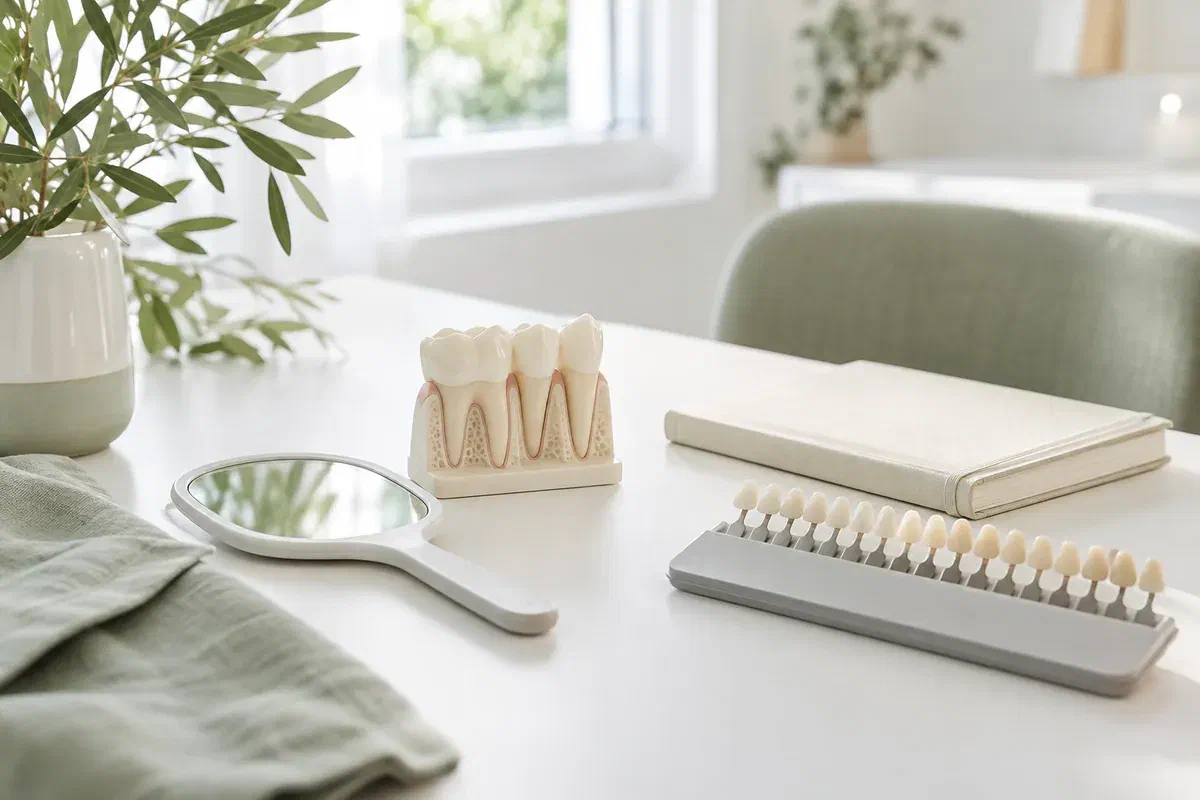
Illustrative consultation table with a teaching model, mirror, notebook, and tooth-shade guide
Points to mention

Where you notice it, how your gums feel, and what you can manage

Everyday words work well. Describe what you see near the gums or teeth, how long it has been noticeable, and the time, travel, or budget limits to keep in mind.

The area of your smile you would change

Show which tooth or section of gumline catches your eye, and say which concern comes first if there are several. A photo of your own smile from a few years ago can show what has changed. It is a helpful reference for your own anatomy.

Bleeding, tenderness, or sensitivity

Tell the clinician about gum bleeding, soreness, sensitivity near the gumline, or any recent change. Mention past gum treatment, orthodontics, restorations, or appliances, and whether you smoke or have relevant health conditions. These details may mean gum care comes first.

Practical limits on visits and care

Explain how often you can travel in, and whether you would be willing to see a specialist if one were suggested. Say how much daily care you would take on. Fees are welcome to discuss, with no expectation of a decision that day.

Booking a consultation does not commit you to treatment. When arranging it, mention any gum concerns and ask whether a gum assessment or further records may be part of the visit.

What you can learn from the visit

A clearer view of the frame as well as the picture

Separating the look you want from a specific procedure is especially useful with gum concerns. A tooth that appears long might be approached through gum care, a restoration, orthodontics, or leaving it alone. Each carries its own limits, preparation, maintenance, and possible effects on surrounding teeth and tissue.

Uncertainty is common at this stage. Advice may depend on a detailed gum assessment, radiographs, managing inflammation, or a periodontist's opinion. Asking what is still unknown helps you treat an early suggestion as a starting point rather than a final plan.

Patient information: Cleveland Clinic — cosmetic dentistry options and considerations

Gum health set apart from gum appearance

Ask which findings matter for the health of your gums and which relate only to how they look. They often overlap with gum concerns. Seeing the difference helps you decide priorities and understand why cosmetic options may wait until gums are stable.

Less invasive choices given proper weight

Find out whether a smaller change, a step-by-step approach, or monitoring would be reasonable. Each option should be explained in terms of what you gain and what you accept. A surgical or extensive approach is not automatically the better one.

A plan that names who does what

Restate the proposed steps in your own words and question anything unclear. Ask which changes are permanent, what may need further care later, and whether a dentist or a specialist would provide each part. Notes make it easier to compare later.

How the visit runs

Listen, assess the gums and teeth, compare, and decide

Your questions shape the appointment alongside the clinical findings. When booking, ask what is included and whether a gum assessment or radiographs might be scheduled at the same time.

  1. Share what you see and your history

    Describe the change you would like and what you already like about your smile. Cover medical history, medications, smoking, past gum or orthodontic treatment, and symptoms. If timing matters, say so, so it can be discussed realistically.

  2. Assess gums, teeth, and bite

    The clinician examines the gumline, gum health, teeth, restorations, and how your bite meets, as relevant. Measurements, photographs, or radiographs may be suggested for a specific purpose. Ask what each would help clarify.

  3. Compare options across dentistry and gum care

    Discuss what each reasonable approach would achieve, what it involves, and how it is maintained. Healing time, possible complications, how many appointments are needed, other routes, and approximate cost all deserve a mention. If a periodontist is mentioned, ask what their assessment would add.

  4. Choose the next decision

    You might start with gum care, seek a specialist's view, take time to reflect, or move ahead with a suitable plan. Confirm what is decided before leaving. Ask how to follow up, and whether any gum concern should be treated while you decide.

Once you are back home

Care for your gums while you consider the options.

Afterwards, the main job is reviewing information and setting priorities. Keep up careful brushing and cleaning between teeth, and follow any advice given about gum health.

Check the plan, providers, and estimate

Note which teeth and procedures are included, which parts a specialist might provide, and what could add cost. Ask about maintenance and how results may change over time. Clarify anything vague before treating the estimate as complete.

Jot down questions as they come up

New questions often arise after you have looked in the mirror at home. Note anything about preparation, appearance, comfort, healing, or timing. A short list makes a follow-up call more useful.

Keep everyone involved informed

A periodontist, orthodontist, or another dentist may already be part of your care, and a retainer or night guard may be in the picture too. Share all of that with the team, and hold off on other cosmetic treatment for now. Sequencing between providers can change the final result.

Possible next steps

Gum care, a cosmetic step, or no change

The consultation may lead to a focused plan, a staged approach that starts with gum health, or reassurance that what you see is healthy and can be left. The reasoning should always be clear.

When gums are healthy and one change fits

A focused cosmetic change

A tooth shape or restoration that affects how the gumline looks may have a targeted option. Ask what it would change and what would remain untouched. The plan should stay limited to the teeth and tissue you asked about.

When gum findings need attention

Gum health or specialist advice first

Inflammation, recession, or bite concerns may need care before any cosmetic work. Find out what needs addressing and when appearance options can be revisited. A referral should answer a defined question so you know why it is suggested.

When you would like to consider things first

Time, another opinion, or no change

Take the recommendation home, think about what matters to you, and get a second view from another clinician if you wish. Check whether the gums should be monitored. Leaving a healthy, stable gumline as it is can be a sound decision.

Gum and smile questions from Rockwood

Answers about the gumline and the teeth it frames

The consultation should make the decision clearer. Ask about fees, how involved a plan would be, and whether leaving things alone is reasonable.

(905) 876-4488
Why do some of my teeth look longer than they used to?
Gum recession is one possible reason, and wear or tooth position can also play a part. The clinician can assess the gums and explain the likely cause, including whether it is a health concern.
Do my gums need to be healthy before cosmetic treatment?
Generally, gum health is addressed before elective work, because inflammation can affect both the result and the long-term health of your mouth. The clinician can explain what your gums need first.
What can be done about small dark gaps between my teeth near the gums?
There are several possible causes and approaches to discuss, depending on gum health, tooth shape, and spacing. Ask the clinician to explain the options, their limits, and whether a specialist opinion would help.
Would a gum specialist be involved in my care?
Possibly. Some gum concerns are best assessed by a periodontist. If a referral is suggested, ask what question it would answer and how care would be coordinated between offices.
My gums bleed when I brush. Should I still book a cosmetic consultation?
Yes, but mention the bleeding when you book. It may need attention before any cosmetic discussion goes further, and the clinician can explain what is likely to be needed first.
Can I ask for options that avoid gum surgery?
Yes. Explain your preference early. The clinician can describe non-surgical approaches where appropriate and explain the trade-offs, so you can compare them fairly.
Booking from Rockwood

Look at the whole smile, gums included.

Phone our Bronte Street practice to set up a cosmetic dental consultation. Describe what you notice about your gumline or teeth, whether your gums bleed or feel tender, and the priorities you want considered while next steps are explored.

No consultation can promise in advance that a specific procedure will suit you. When you call, feel free to ask what the appointment involves and what it costs.

Visit Milton Dental Clinic
Unit 1, 342 Bronte St. S, Milton, ON L9T 5B7
Get directions Clinic hours
Monday–Thursday
11am–7pm
Friday–Sunday
By appointment only

Areas we serve

  • Milton
  • Oakville
  • Mississauga
  • Georgetown
  • Halton Hills
  • Acton
  • Campbellville
  • Brampton
  • Burlington
  • Puslinch
  • Rockwood
  • Erin
  • Caledon
  • Etobicoke
  • Old Milton
  • Bronte Meadows
  • Timberlea
  • Dorset Park
  • Dempsey
  • Clarke
  • Beaty
  • Coates
  • Harrison
  • Scott
  • Willmott
  • Ford
  • Bowes
  • Cobden
  • Walker
  • Mountain View
  • Milton Heights
  • Hawthorne Village
  • Valley View
  • Fallingbrook
  • Nassagaweya
  • Trafalgar
  • Esquesing
  • Nelson
  • Brookville
  • Moffat
  • Glen Williams
  • Norval
  • Limehouse
  • Stewarttown
  • Ashgrove
  • Hornby
  • Silver Creek
  • Speyside
  • Scotch Block
  • North Oakville
  • River Oaks
  • Glen Abbey
  • West Oak Trails
  • Palermo
  • Bronte Creek
  • College Park
  • Joshua Creek
  • Uptown Core
  • Preserve
  • Iroquois Ridge
  • Lisgar
  • Meadowvale
  • Meadowvale Village
  • Churchill Meadows
  • Erin Mills
  • Central Erin Mills
  • Streetsville
  • East Credit
  • Creditview
  • Heartland
  • Sheridan
  • Mount Pleasant
  • Credit Valley
  • Huttonville
  • Churchville
  • Springbrook
  • Northwest Brampton
  • Bram West
  • Fletcher's Meadow
  • Fletcher's Creek South
  • Alton Village
  • Orchard
  • Millcroft
  • Headon Forest
  • Tansley
  • Brant Hills
  • Tyandaga
  • Kilbride
  • Lowville
  • Aberfoyle
  • Morriston
  • Arkell
  • Hillsburgh
  • Freelton
  • Carlisle
  • Waterdown
  • Flamborough
  • Mountsberg

How can we help?

Milton Dental Clinic

Have a question about your smile? Choose the option that works best for you.

For urgent dental concerns, please call.
Messages are reviewed during clinic hours.