

Illustrative patient discussing smile planning with a dental clinician at a consultation desk
Cosmetic Dentistry

Digital Smile Design in Acton

A new shape on screen is easy to like. The harder question is what would happen to the real tooth to get there. Digital smile design for Acton helps you see a proposal and then ask which parts are reversible, which are permanent, and what the image can't promise.

Behind the picture

What would happen to the tooth itself?

On a screen, a tooth can be lengthened, narrowed or squared off with a few clicks. In the mouth, each of those changes means something physical: material bonded on, enamel taken away, or the tooth moved. Digital smile design uses clinical photographs, other relevant records and software to illustrate a proposed change, and that illustration is the right moment to ask what it would cost the tooth.

No picture can confirm that the gums, bite or remaining structure would support a change, nor fix how the finished result will look. What it can do is prompt a clear conversation about the procedures behind it, how much preparation each would involve, and the maintenance that would follow for years afterwards.

From Acton, you might want to begin by saying how you feel about permanent changes. Some people are comfortable with them; others would rather keep as much natural tooth as possible. Either way, we'll explain which planning steps would help and what the first consultation covers.

Ask what a proposal would mean for your teeth
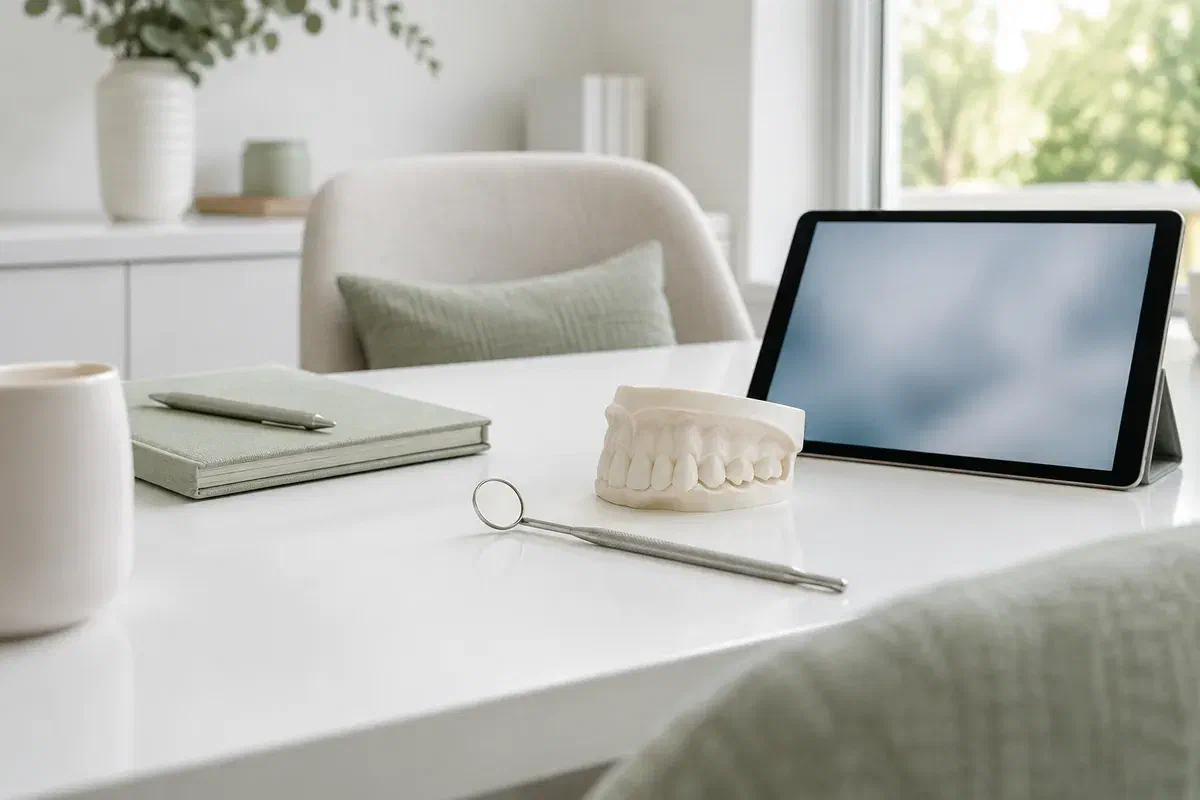
Illustrative dental planning desk with a teaching model, mirror, and tablet
Concerns worth raising early

Adding, removing or moving: three very different paths

Say which feature you would like to change and how much natural tooth you'd like to keep. A careful discussion clarifies the goal, and sometimes confirms that a difference is best left untouched.

A shape you'd like to alter

A tooth might look short, broad or tilted. Once the proposal shows the outline in question, ask directly whether reaching it would mean building the tooth up, trimming enamel away, or repositioning it, and which of those could be undone later.

Treatments that look alike but aren't

Composite bonding, veneers, crowns and aligners can produce previews that seem almost identical. Their effect on the tooth is not. Ask how much of the natural surface each would alter and what it would leave in place, since the image can't show that.

Steps that lock in later choices

Some treatments make others necessary in the future. Preparing a tooth for a veneer, for example, usually means it will need a restoration from then on. Ask how each stage affects the next, and make sure the plan explains those consequences plainly.

The preview represents an idea. It is not a diagnosis or a promise, so ask what the exam has confirmed and what still needs to be checked.

What a visual makes possible

A way to ask the harder questions sooner

With a proposal in view, you can point to a precise edge or curve and ask what would physically be done to produce it. That is a far more useful question than whether something looks nice, and it gets you to the important answers faster.

You should be free to question every part of the proposal and to compare it with options that alter less tooth. A beautiful image should never make a permanent change feel like the default.

Patient information: Research — smile documentation and digital planning · Clinical study — digital and conventional smile design

Clarity about your own limits

Some people find that, faced with a concrete proposal, they'd prefer a milder change that keeps more of their own tooth. Saying so shapes the plan. Personal preference works alongside the clinical findings rather than replacing them.

One reference if a lab or specialist is involved

When others contribute, shared records help everyone understand how conservative you want the work to be. Ask how that will be communicated, who is responsible for each part, and who will explain any change of approach.

Permanent and reversible steps, side by side

For each option, ask about preparation, visits, fees and the care it would need in future. Seeing which steps are permanent may make a reversible or smaller change the better fit for you.

The planning path

Understand the tooth before shaping the picture.

Every case calls for its own records and tools. Ask what is advised, what each step costs, and whether a further assessment or a referral would be part of it.

  1. Describe the goal and get examined

    Tell the clinician what you'd like to change, your history, any symptoms and earlier cosmetic work. The teeth, gums and bite are assessed, including how much healthy structure is present. Mention how you feel about irreversible treatment.

  2. Records that show the starting point

    Clinical photographs and other appropriate records may be suggested so the proposal reflects your real teeth. Ask what each record shows. A design based on proper information is more trustworthy than a sketch made from a casual photo.

  3. Proposal, procedures and permanence

    The proposed shapes are reviewed with the treatments needed to achieve them. Ask which steps are reversible, what alternatives exist, and whether a temporary try-in or more assessment would help. Find out what is still provisional.

  4. Choose, revise or wait

    You can ask for a gentler proposal, arrange another discussion or decide on treatment. Confirm the scope, estimate and next step before going further. Reviewing a design never commits you to the procedures shown.

When you get home

Weigh what can and can't be undone.

Most planning reviews end with a decision to think over. Read back through the explanation as well as the image, and ask further questions before agreeing to anything permanent.

Sort the plan by permanence

Note which teeth would be involved, what each would undergo, and which steps could be reversed. Ask whether a more conservative approach could reach a similar result. Keep questions about records, referrals or preparation on a list.

Remember the image is flat

A screen can't show how a restoration will feel, how it will catch the light outdoors, or how it will age. Ask how comfort, bite and appearance would be assessed before anything is finalised, and what a mock-up won't reveal.

Look after your teeth in the meantime

Keep routine visits and treatment for active problems going. Tell the team about new symptoms or care from another provider. If your teeth change while you decide, the proposal may need reconsidering.

How far to take the planning

The least involved method that still answers the question

Digital design is one planning method. Whether it's worthwhile depends on the change you're thinking about and the information needed to decide responsibly.

Helps when a visual comparison would sharpen the goal

Digital proposal

An on-screen illustration can be useful when proportions or several teeth are in question. Ask what records support it and what it represents. You'll still need a clinical explanation of what is achievable and how much tooth it would involve.

Helps when you want to see a shape before anything permanent

A reversible trial or study models

Where suitable, a temporary mock-up, models or extra records can show aspects a screen can't. Ask what each method can tell you and what remains unknown. None replaces the examination or confirms the final result.

Helps when the concern is limited

Assessment only

A single small issue may be handled after a straightforward consultation. You can decide afterwards whether more planning is worth the time and cost. Ask about scope and fees before any further records are taken.

Acton questions about smile proposals

Permanent, reversible and in between

These answers focus on what a proposal would mean for your natural teeth. Raise anything else at your visit.

(905) 876-4488
Which smile treatments can be reversed and which can't?
It depends on the procedure. Some additive treatments may be adjusted or removed, while preparing enamel for veneers or crowns is generally permanent. Ask the clinician to explain where each option in your proposal sits.
Can a mock-up let me try the new shape without changing my teeth?
In some cases, a temporary mock-up placed over the teeth can give a preview in your own mouth, where suitable. Ask whether it’s appropriate for you, what it can show and what it cannot.
Does a proposed veneer smile mean my enamel will be removed?
Not always, but many veneer approaches involve some preparation. Ask how much, if any, would be needed for the proposal you’ve seen, and whether a different option could reach a similar shape with less.
Is the final result guaranteed to match the design?
No. The proposal is limited by the records and method used, and materials, clinical conditions and treatment response all affect the physical outcome. Ask which features are realistic targets.
Will treatment shown in the design need replacing in the future?
Many restorations need maintenance and, eventually, replacement. Ask what the expected care would be for each option, and how future replacements might affect the tooth.
Can I book a first discussion from Acton before deciding on records?
Yes. You can start with a consultation and decide afterwards whether records or a design would help. Ask when booking what the visit includes and how long it is likely to take.
Smile planning for Acton

Know what changes, and what stays.

Arrange a visit with our team on Bronte Street to discuss the change you're considering and how much of your natural tooth you'd like to keep. We'll explain the information needed and how a proposal can make the permanent and reversible choices clearer.

Planning methods depend on individual circumstances. A preview on screen illustrates a proposal only, and does not replace an exam or an informed decision about treatment.

Visit Milton Dental Clinic
Unit 1, 342 Bronte St. S, Milton, ON L9T 5B7
Get directions Clinic hours
Monday–Thursday
11am–7pm
Friday–Sunday
By appointment only

Areas we serve

  • Milton
  • Oakville
  • Mississauga
  • Georgetown
  • Halton Hills
  • Acton
  • Campbellville
  • Brampton
  • Burlington
  • Puslinch
  • Rockwood
  • Erin
  • Caledon
  • Etobicoke
  • Old Milton
  • Bronte Meadows
  • Timberlea
  • Dorset Park
  • Dempsey
  • Clarke
  • Beaty
  • Coates
  • Harrison
  • Scott
  • Willmott
  • Ford
  • Bowes
  • Cobden
  • Walker
  • Mountain View
  • Milton Heights
  • Hawthorne Village
  • Valley View
  • Fallingbrook
  • Nassagaweya
  • Trafalgar
  • Esquesing
  • Nelson
  • Brookville
  • Moffat
  • Glen Williams
  • Norval
  • Limehouse
  • Stewarttown
  • Ashgrove
  • Hornby
  • Silver Creek
  • Speyside
  • Scotch Block
  • North Oakville
  • River Oaks
  • Glen Abbey
  • West Oak Trails
  • Palermo
  • Bronte Creek
  • College Park
  • Joshua Creek
  • Uptown Core
  • Preserve
  • Iroquois Ridge
  • Lisgar
  • Meadowvale
  • Meadowvale Village
  • Churchill Meadows
  • Erin Mills
  • Central Erin Mills
  • Streetsville
  • East Credit
  • Creditview
  • Heartland
  • Sheridan
  • Mount Pleasant
  • Credit Valley
  • Huttonville
  • Churchville
  • Springbrook
  • Northwest Brampton
  • Bram West
  • Fletcher's Meadow
  • Fletcher's Creek South
  • Alton Village
  • Orchard
  • Millcroft
  • Headon Forest
  • Tansley
  • Brant Hills
  • Tyandaga
  • Kilbride
  • Lowville
  • Aberfoyle
  • Morriston
  • Arkell
  • Hillsburgh
  • Freelton
  • Carlisle
  • Waterdown
  • Flamborough
  • Mountsberg

How can we help?

Milton Dental Clinic

Have a question about your smile? Choose the option that works best for you.

For urgent dental concerns, please call.
Messages are reviewed during clinic hours.