

Illustrative patient discussing smile planning with a dental clinician at a consultation desk
Cosmetic Dentistry

Digital Smile Design in Burlington

Bonding, aligners, veneers and crowns can all be offered for what looks like the same goal. Digital smile design for Burlington puts a proposed shape on screen so you can ask which route it really stands for, what each would involve, and where its limits lie.

One goal, several routes

Same picture, very different treatment

Perhaps you have read about veneers, heard a friend mention aligners, and wondered whether bonding would do. Each could change how front teeth look, yet they differ a great deal in what they ask of the tooth. Digital smile design uses photographs, suitable records and planning software to show a proposed shape, giving those options something concrete to be compared against.

The image is a starting point for that comparison, never the conclusion. It can't confirm that your gums, bite or tooth structure suit a particular approach, and it doesn't fix the final appearance. Those answers depend on examination and on a plain explanation of preparation, number of visits and maintenance.

Coming from Burlington, you might find it useful to arrive with the options you have already heard about. We can talk through which planning steps would help you choose between them, what the consultation covers, and when no treatment is a reasonable answer.

Compare your options with a visual plan
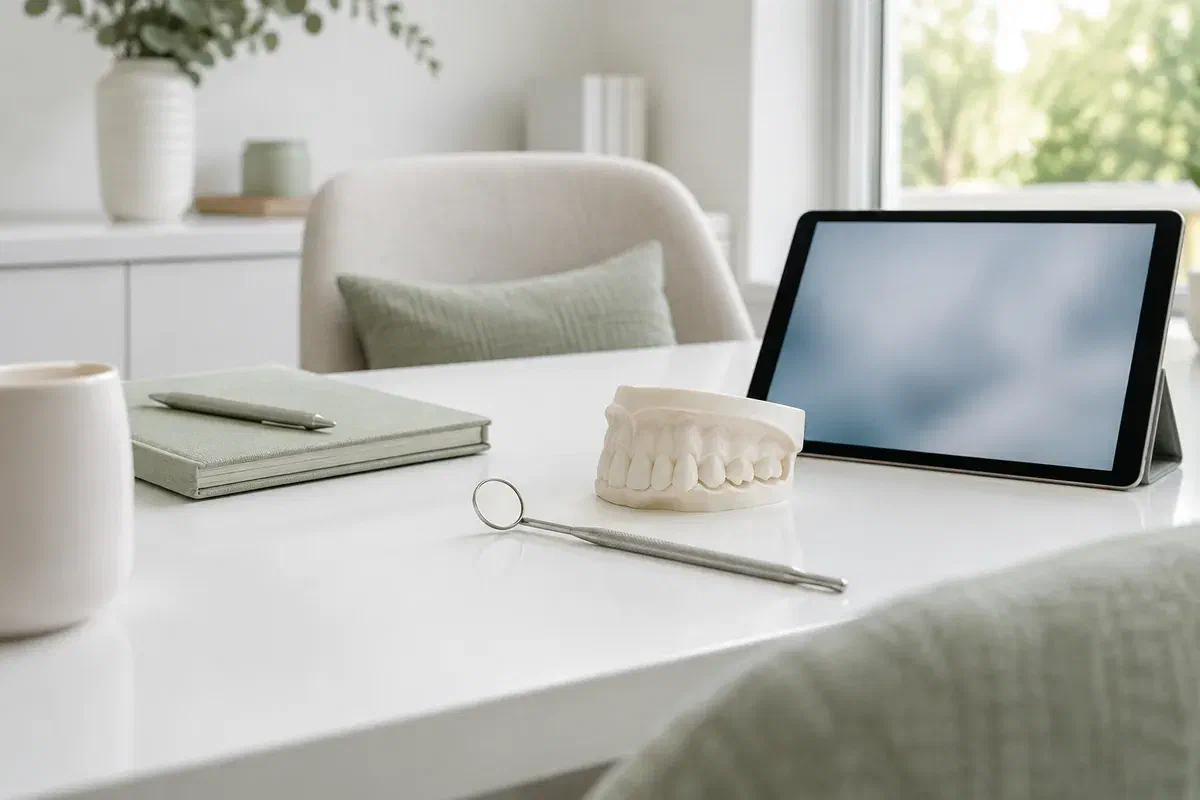
Illustrative dental planning desk with a teaching model, mirror, and tablet
Where comparisons get confusing

Which procedure is this preview really showing?

Tell us the feature you want to change and what matters most to you, whether that is keeping natural tooth, fewer visits or a particular look. The answer may also be that a difference is best left alone.

Proportions that are hard to judge

You may sense that a tooth is too short or too prominent without being sure why. A visual proposal can isolate the feature. From there, ask whether the new outline would rely on adding material, reducing enamel, or moving the tooth into a new position.

Different paths behind a similar result

A row of evenly shaped teeth on screen could represent composite bonding, porcelain veneers, crowns or orthodontic movement. Each carries different preparation and upkeep. Ask what every option would alter and what it would leave intact, since the picture can't show this.

Combining treatments in a sensible order

Moving teeth first can change what restorations are needed later, and whitening may need to come before new work is matched. Ask how the stages depend on one another. A thorough plan makes the order visible instead of hiding it behind a neat image.

No preview is a diagnosis or a guarantee. Ask which parts of it rest on clinical findings and which still need confirming.

How a visual helps you choose

A fixed reference makes options easier to weigh.

Comparing treatments in the abstract can feel like comparing brochures. With a proposed shape in view, you can ask how close each route would get to it, what each would cost the tooth, and which parts of the image are out of reach for a given option.

The value is in that questioning. You should feel able to challenge the proposal and set it against simpler alternatives. A striking image should not tilt you toward the most extensive option before its consequences have been laid out.

Patient information: Research — smile documentation and digital planning · Clinical study — digital and conventional smile design

Clearer priorities

Seeing a proposal can reveal what you care about most: shape, colour, keeping enamel, or limiting time in the chair. Saying so helps narrow the options. Personal preference shapes the plan, but it works alongside the clinical findings rather than overriding them.

A common brief for everyone involved

If an orthodontist, another clinician or a laboratory takes part, shared records help keep everyone working toward one result. Ask how the plan will be communicated and who will explain it if the approach needs to change.

Honest trade-offs, side by side

For each route, ask about tooth preparation, appointments, fees and future maintenance. With that comparison in hand, a more conservative option or a smaller change may look more attractive than the full design.

How the comparison takes shape

Findings first, options second, decision last

Which records and tools are used depends on the situation. Ask what is advised, the fees involved, and whether an assessment by another clinician might be suggested.

  1. Goals, history and an exam

    Describe what you want, any treatments you are curious about, previous cosmetic work and current symptoms. The clinician assesses the teeth, gums and bite. Let us know if there is a timeline to work around or something you want kept.

  2. Records matched to the question

    Photographs and other relevant records may be recommended so different options can be judged against the same baseline. Ask what each record contributes. A careful baseline makes comparisons more meaningful than a quick snapshot would.

  3. Options measured against the proposal

    The proposed shapes are discussed with the procedures that could produce them. Ask how each route differs in preparation, timing and limits, and whether a mock-up or extra assessment would clarify the choice. Note which elements are still provisional.

  4. A decision, a revision or more time

    You might choose one route, ask for a revised proposal, or seek another opinion. Confirm scope, estimate and next stage before committing. Reviewing a design leaves you free to decline any part of it.

Weighing it up afterwards

Compare the routes, not just the result.

Planning visits usually end with a choice to consider. Look again at what each option involves as well as the image, and raise any doubts before agreeing to irreversible steps.

Write out each option

For every route discussed, note which teeth it involves and what would be done to them. Ask if any option could be staged or reversed. Keep track of open questions about referrals, records or preparation so they are answered beforehand.

Remember what the screen leaves out

Bonding, porcelain and natural enamel can look different in daylight and indoors, and none of that is fully captured on screen. Ask how comfort, bite and appearance will be checked in person, and what a mock-up could and couldn't tell you.

Keep regular appointments going

Continue routine care and treatment for any active problem while you decide. Mention new symptoms or plans with another provider. If your teeth change, or you lean toward a different route, the proposal may need revisiting.

How much planning suits the choice

Plan as much as the decision needs, and no more.

A digital design is one way to plan. Its usefulness depends on the change you are weighing and the information needed to choose responsibly.

Helpful when you are comparing several routes to one look

Digital illustration

A digital proposal gives competing options a shared target. Ask which records it was built on and what it represents. Each route still needs a clinical explanation of whether it can reach that target and what it would mean for upkeep.

Helpful when seeing and feeling the shape matters

Physical models or a trial in the mouth

Models, extra records or a temporary mock-up can sometimes show what a screen cannot, where appropriate. Ask what each method reveals and what it leaves uncertain. None of them replaces the exam or settles every detail of the final work.

Helpful when one simple option is already likely

A focused assessment

If the change is small, such as smoothing an uneven edge, a full design process may be unnecessary. Begin with an assessment and decide whether more planning is worthwhile. Ask about scope and fees before further records are arranged.

Burlington smile-planning questions

Choosing between routes

These questions focus on how a proposal relates to the options behind it. Bring your own list to the visit.

(905) 876-4488
How do I know whether bonding or veneers fits the shape in my design?
That depends on the size of the change, your bite, the condition of the teeth and how much preparation each option needs. Ask the clinician to explain what each would involve for your teeth and how long each is generally expected to last with care.
Should I see an orthodontist before agreeing to a cosmetic design?
If tooth position is part of the concern, an orthodontic opinion may be worth considering before permanent changes to tooth structure. Ask whether moving teeth could reduce the amount of restorative work, and how the two would be sequenced.
Can one design be used to compare options from different clinics?
Ask whether you can have copies of your records and what format they come in. Another clinician may want their own assessment. Comparing plans works best when you understand what each one actually proposes to do.
Does seeing my smile with veneers mean veneers are what I need?
Not at all. A proposal can show a shape that several approaches might reach, or that none is suited to. Ask which options are reasonable for you, including a smaller change or leaving the teeth as they are.
If I go with a simpler option, will it limit what I can do later?
Sometimes a conservative approach keeps more choices open; sometimes it changes what is possible later. Ask how each option would affect future treatment, so the decision is made with the longer view in mind.
Is the consultation the same if I'm travelling from Burlington for it?
The assessment is the same wherever you come from. It can help to ask when booking what the first appointment includes and whether records might be taken at the same visit, so you can plan your trips sensibly.
Comparing options from Burlington

See the target, then choose the path.

Arrange a consultation at our Bronte Street practice to discuss the look you're after and the treatments you're weighing. We'll explain the information needed and how a visual proposal can make the comparison clearer.

The right amount of planning varies from person to person. A proposal on screen shows an idea, not a certain outcome, and it cannot take the place of an examination and a full talk about treatment.

Visit Milton Dental Clinic
Unit 1, 342 Bronte St. S, Milton, ON L9T 5B7
Get directions Clinic hours
Monday–Thursday
11am–7pm
Friday–Sunday
By appointment only

Areas we serve

  • Milton
  • Oakville
  • Mississauga
  • Georgetown
  • Halton Hills
  • Acton
  • Campbellville
  • Brampton
  • Burlington
  • Puslinch
  • Rockwood
  • Erin
  • Caledon
  • Etobicoke
  • Old Milton
  • Bronte Meadows
  • Timberlea
  • Dorset Park
  • Dempsey
  • Clarke
  • Beaty
  • Coates
  • Harrison
  • Scott
  • Willmott
  • Ford
  • Bowes
  • Cobden
  • Walker
  • Mountain View
  • Milton Heights
  • Hawthorne Village
  • Valley View
  • Fallingbrook
  • Nassagaweya
  • Trafalgar
  • Esquesing
  • Nelson
  • Brookville
  • Moffat
  • Glen Williams
  • Norval
  • Limehouse
  • Stewarttown
  • Ashgrove
  • Hornby
  • Silver Creek
  • Speyside
  • Scotch Block
  • North Oakville
  • River Oaks
  • Glen Abbey
  • West Oak Trails
  • Palermo
  • Bronte Creek
  • College Park
  • Joshua Creek
  • Uptown Core
  • Preserve
  • Iroquois Ridge
  • Lisgar
  • Meadowvale
  • Meadowvale Village
  • Churchill Meadows
  • Erin Mills
  • Central Erin Mills
  • Streetsville
  • East Credit
  • Creditview
  • Heartland
  • Sheridan
  • Mount Pleasant
  • Credit Valley
  • Huttonville
  • Churchville
  • Springbrook
  • Northwest Brampton
  • Bram West
  • Fletcher's Meadow
  • Fletcher's Creek South
  • Alton Village
  • Orchard
  • Millcroft
  • Headon Forest
  • Tansley
  • Brant Hills
  • Tyandaga
  • Kilbride
  • Lowville
  • Aberfoyle
  • Morriston
  • Arkell
  • Hillsburgh
  • Freelton
  • Carlisle
  • Waterdown
  • Flamborough
  • Mountsberg

How can we help?

Milton Dental Clinic

Have a question about your smile? Choose the option that works best for you.

For urgent dental concerns, please call.
Messages are reviewed during clinic hours.