

Illustrative patient discussing smile planning with a dental clinician at a consultation desk
Cosmetic Dentistry

Digital Smile Design in Campbellville

A smile looks one way on a bright monitor and another in the rear-view mirror on a grey morning. Digital smile design for Campbellville uses a visual proposal as a starting point, then looks honestly at how a change would feel, wear and look in ordinary life.

From the screen to everyday life

A picture is still, but a smile moves.

You talk, laugh, chew and squint into the sun, and your teeth are seen from every angle while you do it. Digital smile design works from clinical photographs, other relevant records and planning software to illustrate a proposed shape or proportion. It is a helpful way to picture a change, provided you remember it shows one moment, in one light.

That limitation matters. A proposal on screen can't confirm that the gums, bite or tooth structure suit it, and it doesn't fix how the finished teeth will look when you're actually using them. Answers to those questions come from the examination and from a frank talk about procedures, preparation and long-term upkeep.

For households in Campbellville, where a dental trip is often fitted around other errands, it helps to know in advance what the first visit covers. Bring what you've noticed about your smile and what you'd like to keep. We'll suggest planning steps that suit you and explain each one before it happens.

Talk about how a change would look in real life
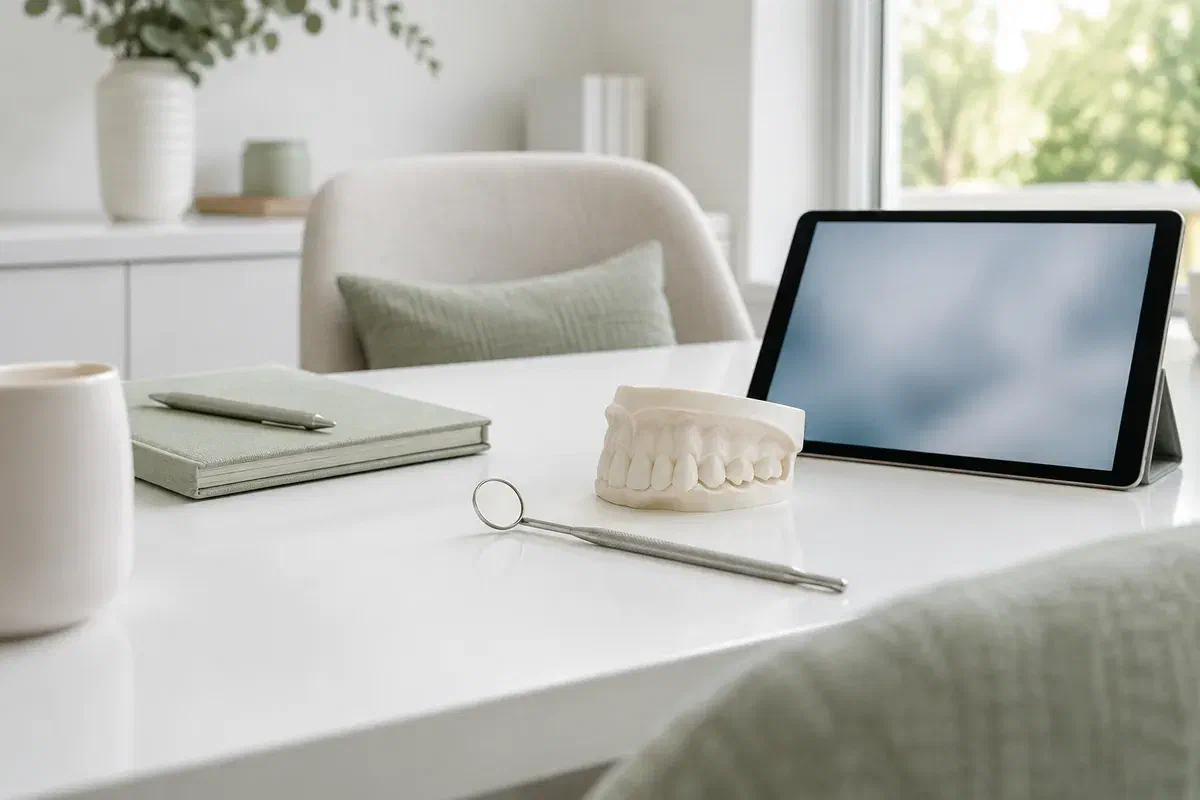
Illustrative dental planning desk with a teaching model, mirror, and tablet
Where a preview needs a second look

Does it hold up outside the office?

Point out the feature that bothers you and the ones you like. The conversation should turn a general wish into a specific goal, and it may show that a difference isn't worth treating.

Teeth that look unbalanced when you speak

Sometimes a tooth only seems too long or too prominent when your lips move. A still proposal may not capture that. Ask how the design accounts for speech and smiling, and whether changing the outline would mean adding material, reshaping or moving the tooth.

Very different work behind similar previews

Bonding, porcelain, crowns and tooth movement can all produce a neat image. They behave differently in daily use, from how they stain to how they wear. Ask what each option would change, what it would leave alone, and what it would need from you over time.

Fitting several stages into a rural calendar

If gums, position, shade and restorations are all involved, the order affects how many trips you make. Ask which stages depend on others and which might share a visit. A good plan makes the sequence clear instead of hiding it behind a glossy screen.

A preview is an illustration of a proposal, not a diagnosis or a promise. Ask which elements the exam supports and which still need confirming.

What a proposal is good for

Agreeing on the target before testing it

A visual makes it easier to agree on which feature you mean. Rather than describing a tooth as too pointed or too square, you can indicate it, and the clinician can show how a proposal would change it.

Once the target is agreed, the real test begins: how would it feel, how would it hold up, what would it ask of you? Keep questioning the proposal and comparing it with lighter options. A good image is no substitute for those answers.

Patient information: Research — smile documentation and digital planning · Clinical study — digital and conventional smile design

Honest feedback on your own taste

Looking at a proposal often shows people that they prefer a gentle change to a perfect row. Telling the clinician helps shape a plan that suits you, with the clinical findings setting the limits.

Shared records if someone else helps

Where a laboratory or specialist is involved, the same records help everyone work toward one result. Ask how the goal will be communicated, who looks after each stage, and how you'll hear about changes.

The practical side, laid out early

Ask what the illustrated change would require: tooth preparation, appointments, fees and the care it needs afterwards. Seeing the whole commitment may point you toward a smaller step, especially if trips need careful planning.

What planning looks like

Four steps from a question to a choice

Records and tools vary from case to case. You can ask what is recommended, the fees involved, and whether another assessment or a referral may be needed.

  1. Start with how your smile feels to you

    Tell us your goals, dental history, current symptoms and any cosmetic treatment you've had. The clinician looks at your teeth, gums and bite. Mention what you notice when you speak or laugh, and any features to keep.

  2. Records that reflect real use

    Clinical photographs, sometimes from several angles, and other suitable records may be recommended. You're welcome to ask what each contributes. Good records make a proposal far more dependable than an informal snapshot.

  3. Test the proposal against daily life

    The proposed shapes are discussed together with the procedures they need. Raise how they would affect chewing, speech and upkeep, and whether a temporary try-in in the mouth would help. Check which details are not yet settled.

  4. Decide on the next step

    You can request changes, book a follow-up or choose treatment. Before anything else, confirm scope, estimate and next appointment. Looking at a design does not oblige you to go ahead with any of it.

After seeing the design

Picture it on an ordinary day.

It's normal to leave a planning visit with a decision still open. Go over the explanation alongside the image, and get answers to any doubts before agreeing to permanent work.

Connect the look to the work

For each tooth involved, note what would actually be done. Ask if a different approach could reach a similar effect with less. Keep open questions about referrals, preparation or records together so they can be dealt with in one go.

Think beyond the bright screen

A monitor shows teeth in perfect light from a fixed angle. In real life, restorations are felt by your tongue and lips and seen outdoors. Find out how fit and feel will be checked in person, and what a mock-up still can't reveal.

Carry on with ordinary dental visits

Routine checkups and treatment for any active issue should continue. Mention new symptoms or treatment received elsewhere. Should your teeth or the planned order of care change, the proposal may need another look.

Choosing a planning method

Screen, model or simple conversation?

Software-based design is one of several ways to plan. Which suits you depends on the change being considered and the information needed for a sound choice.

When seeing a comparison would help define the goal

A digital design

Useful when several teeth or overall proportions are in question. Ask which records support it and what it is meant to show. Feasibility, preparation and future care must still be explained by the clinician.

When you'd like to feel or see the shape in three dimensions

A trial smile, study models or added records

Where appropriate, a temporary mock-up or study models can show things a flat image misses, such as how a shape feels when you speak. Ask what each can and can't tell you. None replaces the exam.

When the issue is small or you're just curious

A straightforward consultation

A minor concern might not need a full design process. You can start with an assessment and decide later whether more planning makes sense. Ask about scope and fees before any additional records are made.

Campbellville questions about smile design

How a design translates into real life

These answers look at the gap between a preview and the teeth you use every day. Bring other questions to your visit.

(905) 876-4488
Does a smile design account for how my teeth look when I talk?
Photographs from different angles and positions can help, but a still image has limits. Ask how movement, speech and smiling were considered, and whether a temporary try-in would show more.
Will the new teeth feel different from my natural ones?
Any change in shape or material can feel different at first, and some people adapt quickly while others take longer. Ask what to expect for the options in your proposal and how fit and comfort will be checked.
Do different materials stain or wear differently over time?
They can. Natural enamel, composite and porcelain each behave in their own way. Ask how each option in your plan would be maintained and what changes over time are common.
Can a proposal guarantee the shade I see on the screen?
No. Screens, lighting and materials all affect how colour appears. Shade is usually assessed in person. Ask how it will be matched and checked if restorations are part of the plan.
If I like the proposal, do I have to start treatment right away?
No. You can take your time, ask for a revision, or decide not to proceed. Approving a look and consenting to treatment are separate decisions.
Can I group my planning appointments to save trips from Campbellville?
Ask when booking whether records might be taken during your consultation, and how many visits the planning is likely to take. Knowing the steps in advance makes it easier to combine them where clinically sensible.
Planning a visit from Campbellville

See the idea, then test it against real life.

Book a consultation with us on Bronte Street to talk about the change you're considering and how it would work day to day. We'll explain what information is involved and how a proposal can help you weigh your options.

Planning depends on individual needs. An on-screen proposal is an illustration rather than a promised result, and it can't replace an examination or an informed treatment discussion.

Visit Milton Dental Clinic
Unit 1, 342 Bronte St. S, Milton, ON L9T 5B7
Get directions Clinic hours
Monday–Thursday
11am–7pm
Friday–Sunday
By appointment only

Areas we serve

  • Milton
  • Oakville
  • Mississauga
  • Georgetown
  • Halton Hills
  • Acton
  • Campbellville
  • Brampton
  • Burlington
  • Puslinch
  • Rockwood
  • Erin
  • Caledon
  • Etobicoke
  • Old Milton
  • Bronte Meadows
  • Timberlea
  • Dorset Park
  • Dempsey
  • Clarke
  • Beaty
  • Coates
  • Harrison
  • Scott
  • Willmott
  • Ford
  • Bowes
  • Cobden
  • Walker
  • Mountain View
  • Milton Heights
  • Hawthorne Village
  • Valley View
  • Fallingbrook
  • Nassagaweya
  • Trafalgar
  • Esquesing
  • Nelson
  • Brookville
  • Moffat
  • Glen Williams
  • Norval
  • Limehouse
  • Stewarttown
  • Ashgrove
  • Hornby
  • Silver Creek
  • Speyside
  • Scotch Block
  • North Oakville
  • River Oaks
  • Glen Abbey
  • West Oak Trails
  • Palermo
  • Bronte Creek
  • College Park
  • Joshua Creek
  • Uptown Core
  • Preserve
  • Iroquois Ridge
  • Lisgar
  • Meadowvale
  • Meadowvale Village
  • Churchill Meadows
  • Erin Mills
  • Central Erin Mills
  • Streetsville
  • East Credit
  • Creditview
  • Heartland
  • Sheridan
  • Mount Pleasant
  • Credit Valley
  • Huttonville
  • Churchville
  • Springbrook
  • Northwest Brampton
  • Bram West
  • Fletcher's Meadow
  • Fletcher's Creek South
  • Alton Village
  • Orchard
  • Millcroft
  • Headon Forest
  • Tansley
  • Brant Hills
  • Tyandaga
  • Kilbride
  • Lowville
  • Aberfoyle
  • Morriston
  • Arkell
  • Hillsburgh
  • Freelton
  • Carlisle
  • Waterdown
  • Flamborough
  • Mountsberg

How can we help?

Milton Dental Clinic

Have a question about your smile? Choose the option that works best for you.

For urgent dental concerns, please call.
Messages are reviewed during clinic hours.