

Illustrative patient discussing smile planning with a dental clinician at a consultation desk
Cosmetic Dentistry

Digital Smile Design in Etobicoke

When the trip is a longer one, it pays to know what each appointment is for. Digital smile design for Etobicoke can be planned in well-organised stages, with a visual proposal of tooth shape reviewed against your exam, your options and the limits of the picture.

Making each visit count

How many trips will this take?

That is often the first practical question, and a fair one. Digital smile design is a way of planning a cosmetic change: clinical photographs, other appropriate records and software are combined to illustrate a different tooth shape or proportion against your face. Knowing which records are needed, and when, helps keep the number of visits sensible.

However efficient the scheduling, the image itself remains a proposal. It can't show whether the gums, bite or available tooth structure would allow the change, and it doesn't guarantee the finished look. The examination and an open discussion of procedures, preparation and maintenance fill in what the picture leaves out.

Coming in from Etobicoke, it makes sense to ask before booking what the first appointment covers and whether records can be taken during it. Tell us what you'd like to understand about your smile. We'll suggest planning steps that fit, and group them where we reasonably can.

Plan an efficient smile-design visit
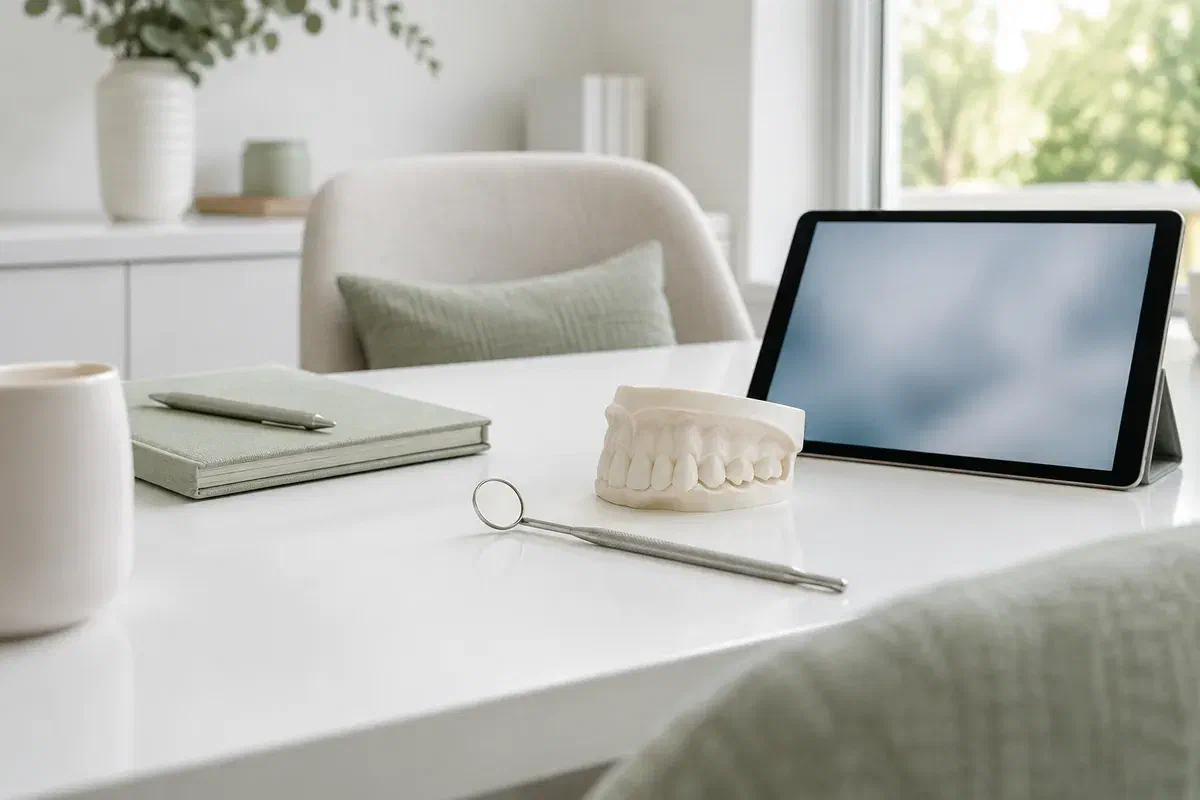
Illustrative dental planning desk with a teaching model, mirror, and tablet
Clarifying the goal early

Settle the question in as few steps as possible

Say which feature bothers you and what you want to keep. A focused discussion avoids extra appointments, and it may show that a particular difference doesn't need treatment.

A tooth that seems the wrong size or shape

Length, width and prominence are difficult to judge on your own. A visual proposal can show which one you are noticing. Then ask whether the outline it suggests would need material added, enamel reduced, or orthodontic movement.

More than one treatment behind the preview

A similar on-screen result might come from bonding, veneers, crowns or aligners, and each has a very different visit pattern. Ask what each would change and leave alone, and how many appointments each would typically involve.

Several stages that need coordinating

Gum care, tooth position, shade and restorations can depend on one another. Ask about the order and which stages could reasonably share an appointment. A clear plan sets this out openly rather than leaving it hidden behind a well-presented image.

A preview illustrates a proposal. It isn't a diagnosis or a promise, so ask which parts the exam has confirmed and which still need assessing.

What good planning saves

Agree on the goal before the long drive back.

A shared visual makes it easier to settle the goal in one conversation. You can point to the exact edge or proportion you mean, and the clinician can show how a proposal handles it, instead of trading descriptions over several visits.

That efficiency matters only if you still feel free to question the proposal, see its limits and compare simpler options. A polished image is not a reason to commit sooner than you would otherwise.

Patient information: Research — smile documentation and digital planning · Clinical study — digital and conventional smile design

Feedback you can give on the spot

Reacting to a concrete proposal lets you say right away what feels right and what doesn't. You may prefer a gentle change over perfectly matched teeth. Your view is part of the plan, alongside the clinical findings.

Smooth hand-offs if others are involved

When a specialist or laboratory contributes, shared records can reduce repeated steps. Ask how the goals will be communicated, who handles each stage, and who will contact you if plans change.

The full commitment, known in advance

Ask what the illustrated change would take: preparation, number of visits, fees and maintenance. For someone with a longer trip, that knowledge can make a smaller or staged change look more appealing.

A planning sequence

Organised stages, with nothing assumed

The records and tools vary by case. Ask what is recommended, the cost of each stage, which steps can be combined, and whether a referral might be required.

  1. An unhurried first discussion

    You share your goals, history, symptoms and any earlier cosmetic treatment, and the clinician examines your teeth, gums and bite. Mention your travel constraints, any deadlines and the features you want to stay as they are.

  2. Records gathered with purpose

    Clinical photographs and other suitable records may be recommended, sometimes at the same visit. Ask what each one is for. A proposal based on real clinical information is far more useful than one built from a casual snapshot.

  3. Reviewing the proposal in detail

    Shapes and proportions are discussed alongside the procedures they imply. Ask about alternatives, limits, and whether a try-in or further assessment would help. Confirm which details are still provisional before you leave.

  4. A clear next step

    You may ask for a revision, arrange another discussion or decide on treatment. Confirm the scope, estimate and next appointment in writing. Looking at a design never obliges you to accept everything it shows.

Between appointments

Use the time at home well.

After a planning review, there is usually a decision to think over. Read through the explanation alongside the image and send any questions before agreeing to work that can't be undone.

Line up the teeth and the treatments

Write down which teeth would be involved and what would happen to each. Ask whether the same goal could be approached in fewer stages. Keep unanswered questions about referrals, records or preparation on a list for your next call.

Keep the preview in perspective

A screen can't tell you how a restoration will feel or how a material will look in changing light. Ask how bite and comfort will be checked in person. A mock-up also has limits, so ask about those too.

Keep routine care close to home in mind

Regular checkups and treatment for active problems should continue while you decide. Let the team know about new symptoms or care from another provider. The proposal may need revisiting if anything changes.

Right-sizing the planning

Plan only as much as the decision calls for.

A digital design is one of several planning approaches. Whether it adds value depends on the change and the information needed for a responsible decision.

Worth it when a visual comparison would clarify the goal

Digital visual proposal

A proposal can help when proportions or several teeth are in question. Ask what records it is built on and what it represents. Its feasibility, preparation and maintenance still need to be explained clinically.

Useful if a physical view adds information

Models, records or a mock-up

Study models, more records or a temporary trial can sometimes show what a screen can't, where suitable. Ask what each reveals and what stays uncertain, and whether it can be done during a visit you're already making.

Enough for a single, clearly defined concern

Assessment and advice

A small issue might be addressed after one consultation, without a full design process. You can decide later whether more planning is needed. Ask about scope and fees before booking any extra records or design stages.

Questions about planning from Etobicoke

Practical answers for a longer trip

These answers focus on what a proposal shows and how planning is organised. Ask about anything else when you call.

(905) 876-4488
Can photographs and records be taken at my first consultation?
Sometimes, depending on what the assessment shows and what is needed. Ask when booking whether records might be taken the same day, so you can allow enough time and avoid an extra trip. Whether they are needed at all depends on the question your consultation is trying to answer.
Can parts of the design review happen without an office visit?
Ask the clinic what can be discussed by phone and what needs to be done in person. Clinical checks, records and any try-in require a visit, but some follow-up questions may be handled more simply.
What should I do if a tooth breaks while I'm still deciding?
Call the clinic for advice. If you are in pain, have swelling or the situation is urgent, getting care closer to home may be the better choice. Let us know afterwards so the proposal can be reviewed if needed.
Is the design a guarantee of how my teeth will look?
No. It is an illustration of a proposal, limited by the records and method used. Materials, clinical conditions and the course of treatment all shape the physical result. Ask which details are realistic goals.
Do I have to accept every treatment shown in the proposal?
No. You can choose part of a plan, ask for a revision, or decline altogether. Each procedure should be explained with its risks, costs and alternatives before you agree to it.
Is there any downside to staging treatment to reduce trips?
Staging can be practical, but the order of some treatments matters clinically. Ask which steps can sensibly be grouped and which need time between them, so convenience doesn’t compromise the plan.
Planning from the west end

A well-organised first step

Book a consultation with us on Bronte Street. We'll talk about your goals, explain what records might help, and suggest a sequence that keeps your trips sensible while giving each decision the time it needs.

Planning depends on individual needs. A proposal on screen is an illustration, not a promised result, and it doesn't replace an exam or a full discussion of treatment.

Visit Milton Dental Clinic
Unit 1, 342 Bronte St. S, Milton, ON L9T 5B7
Get directions Clinic hours
Monday–Thursday
11am–7pm
Friday–Sunday
By appointment only

Areas we serve

  • Milton
  • Oakville
  • Mississauga
  • Georgetown
  • Halton Hills
  • Acton
  • Campbellville
  • Brampton
  • Burlington
  • Puslinch
  • Rockwood
  • Erin
  • Caledon
  • Etobicoke
  • Old Milton
  • Bronte Meadows
  • Timberlea
  • Dorset Park
  • Dempsey
  • Clarke
  • Beaty
  • Coates
  • Harrison
  • Scott
  • Willmott
  • Ford
  • Bowes
  • Cobden
  • Walker
  • Mountain View
  • Milton Heights
  • Hawthorne Village
  • Valley View
  • Fallingbrook
  • Nassagaweya
  • Trafalgar
  • Esquesing
  • Nelson
  • Brookville
  • Moffat
  • Glen Williams
  • Norval
  • Limehouse
  • Stewarttown
  • Ashgrove
  • Hornby
  • Silver Creek
  • Speyside
  • Scotch Block
  • North Oakville
  • River Oaks
  • Glen Abbey
  • West Oak Trails
  • Palermo
  • Bronte Creek
  • College Park
  • Joshua Creek
  • Uptown Core
  • Preserve
  • Iroquois Ridge
  • Lisgar
  • Meadowvale
  • Meadowvale Village
  • Churchill Meadows
  • Erin Mills
  • Central Erin Mills
  • Streetsville
  • East Credit
  • Creditview
  • Heartland
  • Sheridan
  • Mount Pleasant
  • Credit Valley
  • Huttonville
  • Churchville
  • Springbrook
  • Northwest Brampton
  • Bram West
  • Fletcher's Meadow
  • Fletcher's Creek South
  • Alton Village
  • Orchard
  • Millcroft
  • Headon Forest
  • Tansley
  • Brant Hills
  • Tyandaga
  • Kilbride
  • Lowville
  • Aberfoyle
  • Morriston
  • Arkell
  • Hillsburgh
  • Freelton
  • Carlisle
  • Waterdown
  • Flamborough
  • Mountsberg

How can we help?

Milton Dental Clinic

Have a question about your smile? Choose the option that works best for you.

For urgent dental concerns, please call.
Messages are reviewed during clinic hours.