

Illustrative patient discussing smile planning with a dental clinician at a consultation desk
Cosmetic Dentistry

Digital Smile Design in Georgetown

Some smile changes involve an orthodontist, a periodontist or a dental laboratory as well as your dentist. Digital smile design for Georgetown can give everyone one visual reference, so you know who is doing what, in which order, and what the proposal can and cannot tell you.

When more than one provider is involved

Who does what, and when?

A cosmetic plan can quickly involve more people than you expected. Teeth may need moving before they are reshaped, gums may need attention first, and restorations are often made by a laboratory. Digital smile design brings photographs, suitable clinical records and planning software together to illustrate a proposed shape and proportion, which can act as a common reference for everyone taking part.

A common reference is still not a confirmed plan. The image can't establish that gums, bite or remaining tooth structure are ready for the change, and it does not settle how the finished teeth will look. Each provider's assessment, and a straightforward explanation of procedures, preparation and upkeep, is what turns a picture into a plan you can follow.

Travelling down from Georgetown, you might find it useful to bring notes from any other dental opinions you've had. Tell us what you'd like to understand. We can explain which planning steps would help, what our consultation includes, and where another clinician's input might be worthwhile.

Ask how a shared plan would work for you
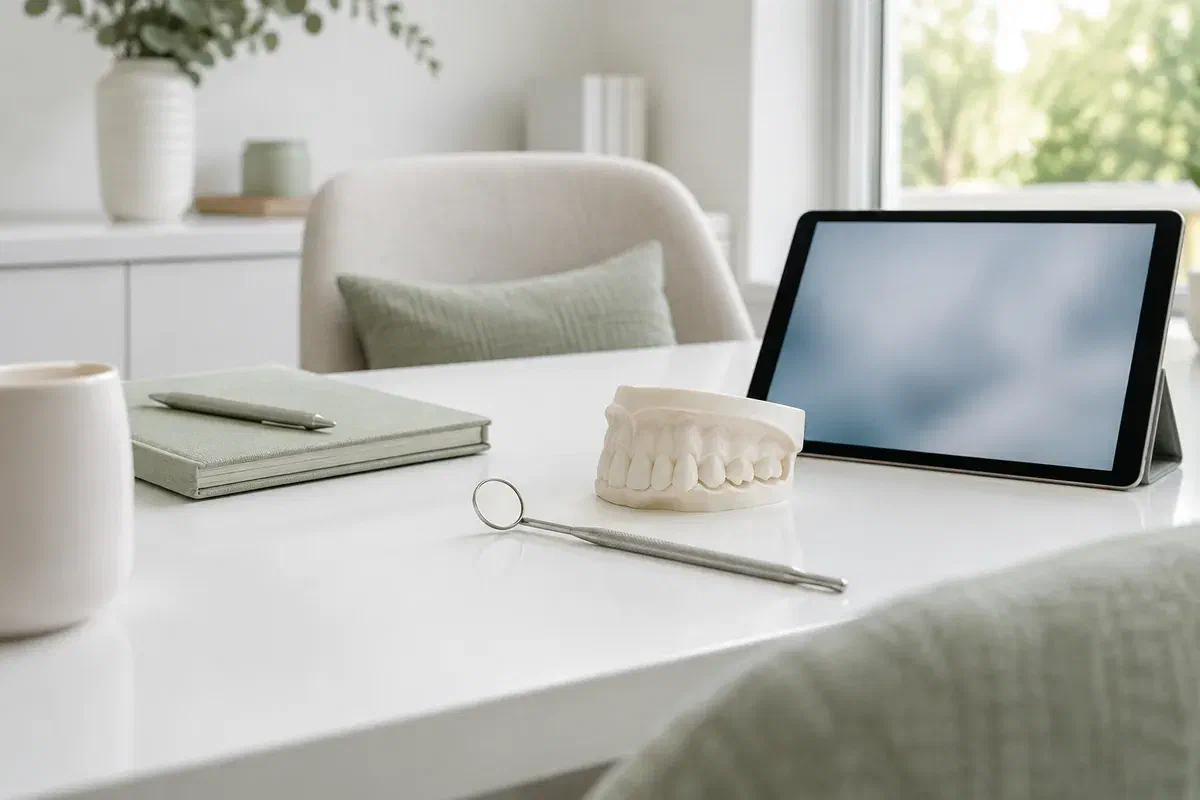
Illustrative dental planning desk with a teaching model, mirror, and tablet
Questions to settle at the start

Before anyone picks up an instrument

Explain what you want to change and what you'd like to keep. A design conversation should make the goal specific enough to share, and it may also show that some differences don't need treatment.

Describing the goal so others understand it

Telling several providers that a tooth looks too short leaves room for misunderstanding. A proposal shows the intended outline. Ask whether achieving it would depend on adding material, reducing tooth, or orthodontic movement, and who would carry out each part.

Hearing different suggestions from different clinicians

An orthodontist and a restorative dentist might each see a different route to a similar look. The preview can't show which route it assumes. Ask what each approach would alter, what it would keep, and why one is being recommended over another.

Getting the order right

Gum treatment, tooth movement, whitening and restorations frequently depend on one another. Ask which stage comes first, how long each takes, and what happens if one stage changes the next. The plan should make these links obvious rather than smoothing them over.

Remember that the preview illustrates a proposal. It is not a diagnosis or a guarantee, so ask what each provider has confirmed and what still needs assessment.

Why one reference helps a team

Everyone aims at the same smile.

When several people contribute, a visual reference reduces the chance that each works toward a slightly different idea. You can point to the feature you mean, and every clinician can see how the proposal is meant to address it.

It works best as a basis for questions. You should be able to ask how each provider interprets the proposal, what it leaves out and how it compares with simpler options. A smooth presentation is no reason to sign off on a multi-stage plan you don't yet understand.

Patient information: Research — smile documentation and digital planning · Clinical study — digital and conventional smile design

Your preferences carried through

Preferences can get lost between appointments. A concrete proposal records what you want changed and what you want kept, so it can be referred back to later. Clinical findings still shape the plan, but your goals stay visible.

Clear roles and communication

Ask how records and goals will be shared between providers, who is responsible for each stage, and who you should contact with questions. Find out who will explain things to you if one provider's findings change the plan.

The whole commitment in one place

Ask for an outline of preparation, number of appointments, fees and long-term care across all providers. Seeing the total may make a smaller change, or a different sequence, more appealing than the full design.

How a coordinated plan comes together

Assessment, records, proposal, then a decision you understand

Records and tools depend on the situation. Ask what is advised, what each part costs, and whether a referral to another clinician is likely to be suggested.

  1. Start with your goals and history

    Share what you'd like to change, dental history, symptoms, any previous cosmetic work and any opinions you've had elsewhere. The clinician examines your teeth, gums and bite. Mention timing constraints and the features you want to preserve.

  2. Collect records others can use too

    Clinical photographs and other appropriate records may be recommended. Ask what each one is for and whether it would be shared with another provider. Proper records make a proposal more reliable than one drawn over an informal photo.

  3. Review the proposal and each provider's role

    The proposed shapes are discussed together with the procedures behind them and who would perform each. Ask about alternatives, limits, and whether a trial in the mouth or a specialist assessment would add useful information. Identify what is still provisional.

  4. Agree a path, or ask for more time

    You might request a revised proposal, see another clinician first, or choose to proceed. Confirm the scope, estimate and next stage before committing. Reviewing a design never binds you to every procedure in it.

Following up after the review

Keep track of who you're waiting to hear from.

Multi-provider plans often have pauses between stages. Look back at the explanation as well as the image, and clear up questions before agreeing to any step that can't be reversed.

Make a simple map of the plan

Note each tooth involved, the procedure planned for it and which provider will do it. Ask whether a less involved route could reach a similar goal. List any open questions about referrals or records so they are answered before treatment starts.

Treat the screen as a guide, not a model

An image can't show how a finished restoration feels against your tongue or how a lab-made material looks in different light. Ask how fit, comfort and appearance will be checked at each stage, and what a temporary try-in cannot reveal.

Let each provider know about changes

Keep your routine checkups and any treatment for active problems. Tell every clinician involved about new symptoms or care received elsewhere. If one stage changes your teeth, the proposal may need reviewing before the next begins.

Deciding on the planning approach

The method depends on the question being asked.

Digital design is one way to plan, among several. Its value depends on the proposed change and the information the people involved need to make a responsible decision.

Useful when several providers need a common target

A digital design to share

A digital illustration can help coordinate a change involving proportions or several teeth. Ask what records it was built on and what it is meant to represent. Each provider will still explain what is feasible within their part of the work.

Useful when a physical reference would help a lab or specialist

Models, extra records or a try-in

Study models, additional records or a temporary mock-up may sometimes communicate details a screen can't, where suitable. Ask what each shows and what stays uncertain. No planning aid replaces the clinical examination.

Useful when only one provider and one tooth are involved

A consultation without a full design

A straightforward concern may not need a coordinated design process. Begin with an assessment and decide whether more planning is helpful. Ask about scope and fees before agreeing to additional records or design stages.

Georgetown questions about shared planning

Working with more than one clinician

These answers cover how a proposal fits a plan involving several providers. Bring anything else to your appointment.

(905) 876-4488
Why might I be referred to a specialist during smile planning?
A referral may be suggested when tooth position, gum health or another issue is best assessed by someone with particular training. Ask what the referral is for, what that clinician would do and how their findings might change the proposal.
Who is in charge of my plan if several clinicians are involved?
Ask who coordinates the plan and who you should contact with questions. It is reasonable to expect a clear explanation of each provider’s responsibilities and of how changes will be communicated to you.
Will a dental laboratory see my smile design?
If restorations are being made, the laboratory may receive relevant records to guide the work. Ask what is shared and why. The lab works from the agreed plan, and any change should be explained to you first.
Could a specialist's assessment change what the design shows?
Yes. Another clinician may find something that affects what is realistic or the order of treatment. Ask how the proposal would be revised in that case and whether any fees would change.
Can I agree to one stage without agreeing to the whole plan?
You can. Some people choose to complete one stage and then reassess. Ask how stopping after a particular stage would leave your teeth, so the decision is an informed one.
How do I keep appointments with several providers manageable from Georgetown?
Ask each provider how many visits their stage is likely to need and whether any steps can be combined. A written outline of the sequence can make it much easier to plan around work and home life.
Coordinated smile planning for Georgetown

Bring the pieces. We'll help you see how they fit.

Book a consultation at our Milton office on Bronte Street to talk through your goals and any opinions you've already had. We'll explain what information is needed, who might be involved and how a shared proposal can keep the plan clear.

Planning approaches depend on individual needs and may involve other providers. A design on screen illustrates a proposal and is not a substitute for clinical assessment and informed consent.

Visit Milton Dental Clinic
Unit 1, 342 Bronte St. S, Milton, ON L9T 5B7
Get directions Clinic hours
Monday–Thursday
11am–7pm
Friday–Sunday
By appointment only

Areas we serve

  • Milton
  • Oakville
  • Mississauga
  • Georgetown
  • Halton Hills
  • Acton
  • Campbellville
  • Brampton
  • Burlington
  • Puslinch
  • Rockwood
  • Erin
  • Caledon
  • Etobicoke
  • Old Milton
  • Bronte Meadows
  • Timberlea
  • Dorset Park
  • Dempsey
  • Clarke
  • Beaty
  • Coates
  • Harrison
  • Scott
  • Willmott
  • Ford
  • Bowes
  • Cobden
  • Walker
  • Mountain View
  • Milton Heights
  • Hawthorne Village
  • Valley View
  • Fallingbrook
  • Nassagaweya
  • Trafalgar
  • Esquesing
  • Nelson
  • Brookville
  • Moffat
  • Glen Williams
  • Norval
  • Limehouse
  • Stewarttown
  • Ashgrove
  • Hornby
  • Silver Creek
  • Speyside
  • Scotch Block
  • North Oakville
  • River Oaks
  • Glen Abbey
  • West Oak Trails
  • Palermo
  • Bronte Creek
  • College Park
  • Joshua Creek
  • Uptown Core
  • Preserve
  • Iroquois Ridge
  • Lisgar
  • Meadowvale
  • Meadowvale Village
  • Churchill Meadows
  • Erin Mills
  • Central Erin Mills
  • Streetsville
  • East Credit
  • Creditview
  • Heartland
  • Sheridan
  • Mount Pleasant
  • Credit Valley
  • Huttonville
  • Churchville
  • Springbrook
  • Northwest Brampton
  • Bram West
  • Fletcher's Meadow
  • Fletcher's Creek South
  • Alton Village
  • Orchard
  • Millcroft
  • Headon Forest
  • Tansley
  • Brant Hills
  • Tyandaga
  • Kilbride
  • Lowville
  • Aberfoyle
  • Morriston
  • Arkell
  • Hillsburgh
  • Freelton
  • Carlisle
  • Waterdown
  • Flamborough
  • Mountsberg

How can we help?

Milton Dental Clinic

Have a question about your smile? Choose the option that works best for you.

For urgent dental concerns, please call.
Messages are reviewed during clinic hours.